Table of Contents >> Show >> Hide
- What Group Therapy Is (and What It Isn’t)
- Benefits of Group Therapy
- Types of Group Therapy
- Common Group Therapy Techniques (What Actually Happens in the Room)
- 1) Group agreements and confidentiality
- 2) Check-ins (structured sharing)
- 3) Guided discussion and pattern-spotting
- 4) Skills practice (role-play, scripts, and behavioral experiments)
- 5) CBT tools: thoughts, feelings, behaviors
- 6) Mindfulness and emotion regulation strategies
- 7) Interpersonal feedback (done with care)
- 8) Between-session practice (a.k.a. the part where change actually happens)
- Who Is Group Therapy For?
- What to Expect (Especially in Your First Session)
- How to Choose the Right Group
- Online Group Therapy: Pros, Cons, and Privacy Tips
- Common Myths (Let’s Retire These)
- Experiences: What Group Therapy Feels Like in Real Life (500+ Words)
- Conclusion
If “therapy” makes you picture a leather couch and someone asking, “And how did that make you feel?”group therapy is the plot twist.
It’s therapy, yes… but with other real humans in the room (or on-screen), which means you get support, perspective, and the occasional
“Wait, I do that too!” moment that hits harder than a self-help book ever could.
Group therapy isn’t reality TV. No one gets voted off the island. It’s a structured, clinically guided way to work on mental health,
relationships, coping skills, and life stresswith the added benefit that you don’t have to do it alone.
In this guide, we’ll break down what group therapy is, why it works, the main types, the most common techniques, what to expect, and how to
find a group that actually fits you (not just the first one that has an opening on Tuesdays).
What Group Therapy Is (and What It Isn’t)
A simple definition
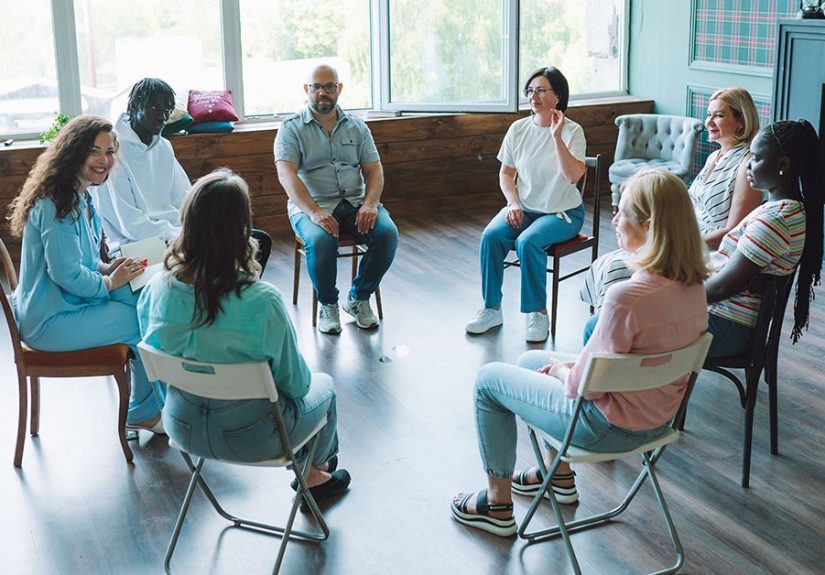
Group therapy (also called group psychotherapy or group counseling) is a form of psychotherapy where a trained, licensed clinician leads a small
group of people working on similar concerns. The group helps members learn about themselves, practice new skills, and improve relationshipswhile
the therapist keeps the process safe, focused, and productive.
Group therapy vs. support groups: cousins, not twins
People often mix these up, and it’s understandableboth can be deeply supportive. The main difference is structure and clinical treatment.
Group therapy is treatment led by a licensed professional using therapeutic methods (like CBT, ACT, interpersonal therapy, and more).
Support groups are often peer-led (sometimes professionally facilitated) and focus on shared experience, encouragement, and practical
copingoften at low or no cost.
Both can be valuable. Some people do both at the same time: group therapy for targeted clinical work, and a support group for extra community and
day-to-day “you get it” energy.
How sessions usually work
- Size: Many therapy groups land around 7–10 members (it varies by setting and purpose).
- Length: Sessions commonly run 60–120 minutes.
- Format: In-person or online (virtual). Some are discussion-based; others are skills-based with worksheets and practice.
- Open vs. closed groups: Open groups allow new members to join over time. Closed groups start and end with the same cohort.
- Screening: Many groups include a brief intake to make sure the group is a good fit (for you and for the group).
Benefits of Group Therapy
Group therapy can be as effective as individual therapy for many concerns, and it offers unique benefits you simply can’t replicate one-on-one.
Here are the big wins.
1) You realize you’re not the only one (and that matters)
Isolation is a sneaky amplifier. When you believe your anxiety, grief, trauma, or relationship struggles are “just you,” shame grows in the dark.
In a good group, people regularly have that “Me too” momentsometimes silently, sometimes out loud. That shared reality can lower stigma and make
change feel possible.
2) Hope is contagious
Seeing someone a few steps aheadmanaging panic attacks better, setting boundaries, staying sober, speaking up in relationshipscan spark a very
practical kind of hope: “If it worked for them, maybe it can work for me.” That’s not cheesy; it’s a real psychological lever.
3) You get multiple mirrors, not just one
In individual therapy, you get one smart, trained mirror (your therapist). In group therapy, you get several. Members can reflect patterns you
don’t noticelike how you minimize your feelings, jump to fix others, or assume rejection before anyone actually rejects you.
Done well, that feedback is offered with care, and it can accelerate insight.
4) It’s a live practice field for relationships
If your goals involve communication, intimacy, trust, conflict, or boundaries, group therapy is basically a relationship gym. You practice:
- Speaking honestly without blowing up
- Listening without disappearing
- Asking for support without apologizing for existing
- Handling disagreement without panic (or sarcasm, your favorite emotional shield)
5) It can be more affordable and easier to access
Groups are often less expensive than individual therapy and may be available when one-on-one providers have long waitlists. For many people,
this is the difference between getting help now versus “sometime after the sun burns out.”
6) The “secret sauce”: group therapeutic factors
Researchers and clinicians have long noted that groups have built-in healing mechanismsthings like instilling hope, building cohesion,
experiencing universality, offering and receiving support (altruism), learning from others, and having a safe place for emotional expression.
In plain English: the group becomes part of the therapy.
Types of Group Therapy
Not all groups are the same. Some are structured and skills-focused. Others are more process-oriented, exploring emotions and relationships in real time.
Below are common types you’ll see in clinics, hospitals, community programs, and private practices.
Psychoeducational groups
These groups teach you about a condition and its patternslike depression, anxiety, PTSD, substance use, chronic pain, or grief. You learn
“what’s happening and why,” plus practical tools. Think of it as: education + support + a plan you can actually use on a random Tuesday.
Example: A panic management group might cover the physiology of panic, common avoidance loops, breathing misconceptions,
and step-by-step exposure practicewhile members compare notes on what works in real life.
Skills development groups
Skills groups are training-focused. You practice coping strategies, communication tools, emotion regulation, and distress tolerance.
Some follow specific evidence-based formats (for example, DBT skills groups often teach mindfulness, distress tolerance, emotion regulation,
and interpersonal effectiveness).
Example: A skills group for relationship conflict might practice “I statements,” boundary-setting scripts, and repair attempts
(how to come back after you’ve said something you wish you could un-say).
Cognitive-behavioral (CBT) and problem-solving groups
CBT groups tend to be structured and goal-driven. You learn to spot unhelpful thought patterns, test assumptions, change behaviors, and track progress.
Homework is commonbecause therapy that stays in the room is like buying a treadmill to use as a coat rack.
Example: A CBT group for depression may focus on behavioral activation (adding meaningful activities),
challenging “all-or-nothing” thoughts, and building routines that support sleep and energy.
Support-oriented therapy groups
Some therapy groups lean more toward sharing and support, while still being clinician-led and treatment-focused. These can be helpful when you
need connection, normalization, and steady guidanceespecially during major life transitions, illness, caregiving, or recovery work.
Interpersonal process groups
Process groups focus on relationshipshow you show up with others, how you interpret reactions, what you avoid, and what you need.
The “here and now” matters: what happens between members is often the material for growth.
These groups can be powerful for issues like loneliness, people-pleasing, conflict avoidance, relationship anxiety, or patterns that keep repeating
with different people in different decades (same movie, different cast).
Specialty groups
You’ll also see groups tailored to specific needs, such as:
- Trauma-informed groups (with careful pacing and strong safety guidelines)
- Grief groups (loss, bereavement, complicated grief)
- Substance use recovery groups (often including relapse prevention and coping planning)
- Chronic illness or chronic pain groups (coping, pacing, emotional support)
- Social anxiety groups (exposure practice and social skills)
- Expressive groups (art-based, movement-based, psychodrama-style approaches in some settings)
Common Group Therapy Techniques (What Actually Happens in the Room)
The best groups aren’t just “everyone talks and time magically heals us.” Skilled facilitators use specific methods to create safety,
build momentum, and help members translate insight into change.
1) Group agreements and confidentiality
Most groups start with ground rules: confidentiality, respectful communication, time-sharing, and expectations about attendance.
Therapists are legally and ethically bound to confidentiality; group members are asked to commit to it toobecause trust is the foundation.
(A group can’t be a safe place if people are treating it like a group chat screenshot opportunity.)
2) Check-ins (structured sharing)
Many groups begin with quick check-ins: how you’re doing, what you’re working on, and what you need today. This helps the facilitator
spot themes and ensures quieter members aren’t accidentally turned into background characters.
3) Guided discussion and pattern-spotting
In process-oriented groups, the therapist helps members notice patterns:
How do you react to feedback? What do you assume others think? Where do you shut down?
The goal isn’t to judgeit’s to understand and create options.
4) Skills practice (role-play, scripts, and behavioral experiments)
Skills groups often include real practice:
- Role-play: rehearsing a boundary-setting conversation, a difficult apology, or a calm disagreement.
- Coaching: the therapist and group members help refine wording and tone.
- Behavioral experiments: testing assumptions like “If I speak up, everyone will hate me.”
5) CBT tools: thoughts, feelings, behaviors
CBT groups commonly use:
- Thought records (to challenge distortions like catastrophizing or mind-reading)
- Behavioral activation plans (especially for depression)
- Exposure hierarchies (especially for anxiety and OCD-related patterns)
- Problem-solving steps (define the problem, brainstorm options, pick one, test it, adjust)
6) Mindfulness and emotion regulation strategies
Many groups incorporate mindfulness practices, grounding skills, and ways to regulate strong emotions. This can include brief breathing exercises,
body scans, urge-surfing (for cravings), and “name it to tame it” emotional labeling.
7) Interpersonal feedback (done with care)
A hallmark of effective groups is supportive feedback that is specific and kind:
“When you joked just now, I wondered if you were protecting yourself from feeling sad.”
Done well, feedback helps members understand impact, build empathy, and try new behaviors.
8) Between-session practice (a.k.a. the part where change actually happens)
Many groups encourage practice between sessionsusing coping tools, trying a new communication skill, completing a worksheet, or gently facing an avoided situation.
The next session becomes a review: what worked, what didn’t, and what you learned. That loop is where progress gets traction.
Who Is Group Therapy For?
Group therapy can help with a wide range of concernsanxiety, depression, PTSD, ADHD-related coping, relationship struggles, grief, and substance use recovery,
among others. It can also support people managing chronic health conditions who want coping strategies and emotional support.
When group therapy can be an especially good match
- You feel isolated or misunderstood and want safe connection
- Your challenges show up in relationships (communication, trust, boundaries)
- You want skill-building and accountability (CBT/DBT-style formats)
- You learn well by hearing real examples from others
- You want more frequent care at a lower cost
When to be cautious (or consider individual support first)
Some situations may need stabilization before a group is the best fitlike an acute crisis, severe mania, active psychosis, or a high risk of harming yourself
or others. That doesn’t mean “no group ever.” It means “let’s get the right level of support first.”
A screening visit with the facilitator can help you decide safely.
If you’re in immediate danger or thinking about harming yourself, call or text 988 in the U.S. for the Suicide & Crisis Lifeline,
or go to the nearest emergency room.
What to Expect (Especially in Your First Session)
First sessions vary by group type, but you’ll usually see some mix of:
- Introductions: Often first names only. You can share as little or as much as you’re comfortable with.
- Guidelines: Confidentiality, respect, time-sharing, and “here-and-now” focus are common.
- Structure: A topic, a skill, or an open discussion guided by the therapist.
- Permission to pass: In many groups, you’re not forced to speak. Listening counts as participating.
You might feel nervous. That’s normal. New groups can trigger “Do I belong here?” thoughts. The ironic part is that many people in the group are having the
same thought… quietly… while making polite eye contact.
How to Choose the Right Group
Finding a good-fit group is part logistics, part vibe, and part clinical match. Start with your goal:
Do you want support and shared experience, or a structured treatment protocol and skills training? Either can be greatbut clarity helps you choose.
Questions to ask the facilitator
- What is the focus and format of the group (skills-based, process-based, psychoeducational)?
- Is it open or closed? How long does it run?
- How do you handle confidentiality and group agreements?
- What’s your training and licensure?
- What kind of people tend to do well in this group? Who might not be a good fit right now?
- What does progress typically look like by the end?
Practical fit matters (more than you think)
Even a great group can fail if it’s impossible to attend. Consider:
- Schedule: Can you consistently show up?
- Cost/coverage: Is it insurance-covered or self-pay?
- Modality: In-person vs online (and what feels safer for you)?
- Group composition: General mental health vs condition-specific vs life-stage (teens, college, adults, caregivers).
Online Group Therapy: Pros, Cons, and Privacy Tips
Virtual groups have expanded accessespecially for people in rural areas, people with mobility limitations, or anyone who would rather not commute in traffic
while emotionally vulnerable (a fair preference, honestly).
Potential upsides
- Easier access and flexible attendance
- More options beyond your local area
- Comfort of being in your own space
Potential downsides
- Harder to control privacy (roommates, thin walls, surprise DoorDash deliveries)
- Tech issues and “Can you hear me now?” interruptions
- Less nonverbal communication than in-person groups
Privacy tips that actually help
- Use headphones and a private room when possible
- Consider a white-noise app outside your door
- Turn off smart speakers in the room
- Position your camera so personal info (mail, photos, addresses) isn’t visible
Common Myths (Let’s Retire These)
Myth: “I have to share everything to benefit.”
Nope. You can start by listening. Many people warm up over time. The goal is honest participation at a pace that feels safenot forced confession.
Myth: “Group therapy is only for severe problems.”
Group therapy helps with everything from stress and self-esteem to major mental health conditions, relationship patterns, and recovery support.
It’s not a “last resort.” It’s a powerful format.
Myth: “It’ll be awkward forever.”
Most groups have an awkward phase at the beginning (like any new human interaction). A good facilitator expects it, names it, and guides the group
through it. Awkward is not a diagnosis.
Experiences: What Group Therapy Feels Like in Real Life (500+ Words)
People often describe their first group therapy session like the first day at a new schoolexcept instead of worrying about where to sit at lunch,
you’re wondering whether your face is broadcasting “I am nervous and I would like to disappear into the carpet.” The funny part is: most of the room
is doing the exact same internal math.
One common experience is the quiet relief of realizing you don’t have to explain everything from scratch. In individual therapy, you might spend weeks
building contextyour history, your triggers, your patterns. In group, someone else might describe a situation that sounds like your diary got leaked,
and your brain goes, “Wait… that’s a thing?” That moment doesn’t solve everything, but it lowers the emotional temperature. You feel less weird.
Less alone. More human.
Many people also notice how the group becomes a practice space for everyday life. For example, someone who avoids conflict might try a tiny risk:
“I didn’t love that comment,” or “I’m feeling left out right now.” The first time can feel like stepping onto a stage under a spotlight. But then something
surprising happensmembers respond with care, curiosity, and respect. Over time, those small risks build confidence. People start taking that skill outside the room:
setting a boundary with a sibling, asking a partner for support, or speaking up at work without immediately apologizing for having vocal cords.
Another theme you’ll hear is how group therapy changes the way you give and receive help. Some members arrive believing they must be “low maintenance”
to deserve care. In group, they practice asking directly: “Can I get feedback?” or “I could use encouragement.” That’s hard for a lot of adultsespecially
adults who learned early that needs were inconvenient. But when the group responds warmly, it rewires something. Receiving support becomes less threatening.
On the flip side, people who are natural fixers often learn to slow down. In many groups, the facilitator will gently redirect “advice-giving” into
“curiosity and empathy.” Instead of jumping to solutions, members learn to say, “That sounds heavy. What’s the hardest part this week?” It’s a skill,
and it makes relationships healthier. The fixer discovers they don’t need to rescue to be valuable; they can just be present.
A lot of groups also have unexpected moments of humorappropriate, human humor. Not “laughing at pain,” but laughing at the absurdity of being a person:
the anxious over-planning, the dramatic inner monologues, the way we interpret a two-word text like it’s a legal document. Humor can soften shame and create
closeness. Many participants report that the first time they laughed in a groupreally laughedwas also the first time they felt safe enough to exhale.
Of course, group therapy isn’t always comfy. Sometimes you’ll feel triggered, misunderstood, or frustrated. That doesn’t automatically mean the group is bad.
Those moments can become the work: naming the feeling, clarifying intent, practicing repair. In real life, conflicts often end with avoidance or escalation.
In a healthy group, you get a third option: honest conversation guided by someone trained to keep it constructive. That’s not just therapyit’s a life skill.
And finally, many people describe a slow but meaningful shift: they stop seeing themselves as “a problem to fix” and start seeing themselves as someone
learning. Group therapy can turn growth into a shared project. You watch others practice, stumble, recover, and try againand then you do the same.
Progress looks less like perfection and more like repetition with support. Which, honestly, is a lot more realistic… and a lot more kind.
Conclusion
Group therapy combines professional guidance with the healing power of shared experience. Whether you’re looking for structured skills (like CBT-style tools),
deeper relational work (process groups), or support through a tough season, there’s likely a group format that fits.
The best next step is simple: define your goal, ask the right questions, and try a group with a qualified facilitator. You don’t need to be fearlessyou just
need to be willing to show up.