Table of Contents >> Show >> Hide
- What hemianopsia is (and what it isn’t)
- A quick (useful) tour of the visual wiring
- Types of hemianopsia (the patterns matter)
- Causes of hemianopsia
- When hemianopsia is an emergency
- How doctors diagnose hemianopsia
- Treatment: two goals, one plan
- Outlook: can hemianopsia get better?
- Hemianopsia vs. visual neglect (not the same thing)
- When to see a doctor (and which one)
- FAQ
- Conclusion
- Experiences: what living with hemianopsia can really feel like (and what helps)
- Experience 1: “I kept losing my place… and my patience.”
- Experience 2: “I thought the grocery store rearranged itself.”
- Experience 3: “The side vision problem was the cluenot the whole story.”
- Experience 4: “Prisms helped… after I stopped expecting them to feel normal on day one.”
- Experience 5: The emotional side nobody puts on the visual field chart
If you’ve ever tried to read a menu and felt like the right (or left) half of the universe was taking a lunch break, you’re not imagining things.
Hemianopsia (also spelled hemianopia) means losing half of your visual field. Not half your eyesight in one eyehalf of the “world-window” your brain builds from both eyes.
It’s like your brain accidentally cropped a photo and forgot to tell you.
Hemianopsia can be scary, inconvenient, and surprisingly sneakysome people don’t notice it right away.
But it’s also a condition with patterns that doctors can interpret, and with rehab strategies that can help you function better (and feel less like your coffee table is stalking you).
What hemianopsia is (and what it isn’t)
Your visual field is everything you can see when you look straight aheadcentral vision plus peripheral vision.
In hemianopsia, one side of that field is missing. Common real-life clues include:
- Bumping into doorframes, people, or furniture on one side
- Missing words when reading (especially at the beginning or end of lines)
- Leaving food on one side of the plate (the “mysteriously untouched peas” phenomenon)
- Feeling unsafe crossing streets or navigating busy places
- Difficulty driving (or being told you’re driftingwhen you swear you’re not)
Hemianopsia is usually caused by a problem in the brain’s visual pathways, not an issue with glasses, contact lenses, or a “lazy eye.”
That’s why it often comes up after events like stroke or brain injury.
A quick (useful) tour of the visual wiring
Think of vision as a relay race:
the eyes collect the image, but the brain does the heavy liftingorganizing, interpreting, and building the final scene.
The key stations include:
- Retina (in the eye): captures light
- Optic nerve: carries signals to the brain
- Optic chiasm: the “crossover” point where some fibers switch sides
- Optic tracts / radiations: send signals deeper into the brain
- Occipital lobe (visual cortex): processes the final image
Because of that crossover at the optic chiasm, different injury locations create different “missing vision” patterns.
Those patterns aren’t just triviathey help clinicians pinpoint where the problem might be.
Types of hemianopsia (the patterns matter)
Homonymous hemianopsia
Homonymous hemianopsia means the same side of the visual field is missing in both eyes:
for example, the left half is gone in both eyes (left homonymous hemianopsia), or the right half is gone in both eyes.
This typically happens when there’s damage behind the optic chiasm (often called “retrochiasmal” pathways), such as the occipital lobe after a stroke.
Some people have macular sparing, where the very center of vision is relatively preservedone reason a person might still read a few words but keep losing the rest of the line.
Heteronymous hemianopsia
Heteronymous hemianopsia affects different sides in each eye. The classic one is:
-
Bitemporal hemianopsia: loss of the outer (“temporal”) halves of vision in both eyes.
This pattern often points to a problem at the optic chiasmcommonly from a pituitary tumor pressing upward. -
Binasal hemianopsia: loss of the inner (“nasal”) halves of vision in both eyes.
This is rarer and can occur with certain bilateral optic nerve or retinal conditions, or unusual compressive patterns.
Quadrantanopia: the “quarter-field” cousin
If half a field can disappear, so can a quarter.
Quadrantanopia is loss of one quadrant (upper-left, upper-right, lower-left, lower-right) in both eyes.
Clinicians sometimes use memorable nicknames like “pie in the sky” for certain upper-quadrant losses, because medicine has a long tradition of coping with seriousness by… making it sound like dessert.
Complete vs. partial (and why your report may sound like a geometry test)
Visual field defects can be:
complete (a clean half missing),
partial (some islands remain),
and described as more or less congruous (how similar the defect looks between eyes).
These details help localize the lesion and track recovery.
Causes of hemianopsia
Hemianopsia is a signa clue that something is affecting the visual pathways.
The cause can be sudden (minutes) or gradual (weeks to months). Common causes include:
1) Stroke (ischemic or hemorrhagic)
Stroke is one of the most common reasons for sudden-onset homonymous hemianopsia.
When blood flow is blocked (ischemic stroke) or a vessel bleeds (hemorrhagic stroke), the visual cortex or nearby pathways can be injured.
A classic example is a stroke in the posterior cerebral artery territory affecting the occipital lobe.
2) Brain tumors and other masses
Tumors or masses can compress visual pathways.
A well-known scenario is a pituitary adenoma growing upward and pressing on the optic chiasm, often causing bitemporal hemianopsia.
Other masses (meningiomas, gliomas, metastases) can affect different segments of the pathway.
3) Traumatic brain injury (TBI)
Head trauma can injure the occipital lobe or the optic radiations.
Sometimes the field loss is noticed only after the person returns to daily taskslike driving, shopping, or readingand realizes the world has developed a “missing side.”
4) Aneurysm, vascular malformations, or other neurologic events
Aneurysms and arteriovenous malformations can cause bleeding or compression.
Infections, inflammation, or demyelinating disease (like multiple sclerosis) can also affect visual pathways, though patterns and symptoms vary.
5) Migraine aura or seizures (often temporary)
Some people experience transient visual field symptoms during migraine aura or occipital seizures.
These episodes typically come and go, but new, sudden visual field loss should always be treated as urgent until a clinician rules out stroke or other dangerous causes.
When hemianopsia is an emergency
If hemianopsia happens suddenlyespecially with weakness, numbness, speech trouble, severe headache, dizziness, or confusiontreat it like a medical emergency.
Sudden visual field loss can be a sign of stroke or bleeding in the brain, where minutes matter.
How doctors diagnose hemianopsia
Diagnosis usually combines symptom history, eye/neurologic exam, and formal visual field testing.
Common steps include:
- History: timing (sudden vs. gradual), associated symptoms, migraine history, head trauma, endocrine symptoms (for pituitary disease)
- Bedside visual field exam: “confrontation” testing (quick screening)
- Perimetry: automated visual field testing (often Humphrey or similar) to map the defect precisely
- Eye exam: including pupils and optic nerve evaluation
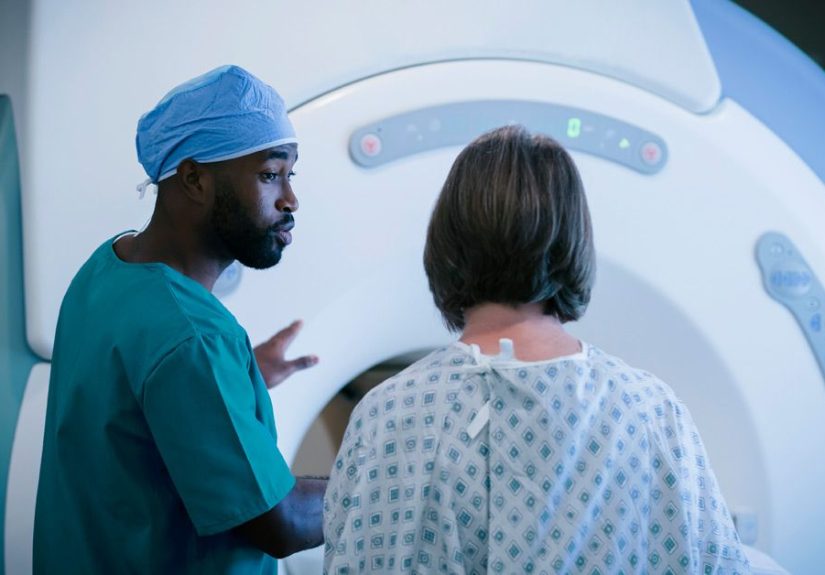
- Brain imaging: MRI (or CT in emergencies), tailored to suspected cause (e.g., pituitary region if bitemporal defect)
Depending on the pattern, clinicians may refer you to a neuro-ophthalmologista specialist who lives at the intersection of eyes and brain
(and who has probably explained optic pathways more times than you’ve refreshed your email).
Treatment: two goals, one plan
Treating hemianopsia usually means pursuing two goals at the same time:
- Address the underlying cause (stroke care, tumor treatment, etc.).
- Rehabilitate function so you can move, read, and live more safely and confidently.
1) Treat the underlying cause
Underlying treatment depends on what’s causing the field loss:
- Ischemic stroke/TIA: restoring blood flow (time-sensitive medications or procedures), then preventing another stroke (blood pressure, cholesterol, diabetes, smoking cessation, antiplatelet/anticoagulation when appropriate).
- Hemorrhagic stroke/brain bleed: careful monitoring, blood pressure control, and sometimes neurosurgery to relieve pressure or repair vessels.
- Pituitary adenoma or compressive mass: surgery, medication, and/or radiation depending on tumor type and size.
- Inflammation/infection: targeted treatment (for example, steroids or antimicrobials) guided by specialists.
- Migraine-related symptoms: migraine managementafter dangerous causes are ruled out.
2) Visual rehabilitation and adaptation strategies
Let’s be honest: most people don’t want a “coping strategy.”
They want their full visual field backyesterday.
Recovery varies, and some spontaneous improvement can happen, especially in the early months after injury.
But rehab focuses on what you can control: better scanning, safer movement, and smarter tools.
Compensatory scanning training
Many rehab programs teach structured scanning:
turning the head and eyes toward the missing side in an organized way.
This can improve safety for walking, navigating crowds, and noticing hazards.
Occupational therapy and low-vision rehab often include these techniques.
Reading strategies
Hemianopsia can wreck reading speed and comprehension, especially if the missing side affects where your eyes land next.
Helpful tactics may include:
- Using a line guide or ruler
- Increasing font size and spacing
- Switching to e-readers that allow reflow and larger text
- Practicing “return sweeps” to find the next line
- Trying text-to-speech for fatigue-heavy days
Prism glasses (field awareness, not a magic eraser)
Prism devices can shift images from the blind side into the seeing side, acting like an early-warning system.
Some people benefit from specialized peripheral prism designs (often discussed as “Peli prisms”).
They don’t truly restore the missing field, but they may improve awareness and detection in certain situations.
Adaptation takes training, and not everyone loves themsome people feel disoriented at first.
Mobility, home safety, and “environmental hacks”
- Keep walkways clear; reduce clutter on the affected side.
- Use consistent placement for essentials (keys, phone, medications).
- Improve lighting and contrast (especially on stairs).
- In unfamiliar environments, pause and scan before moving.
Driving: proceed with caution (and the law)
Driving with hemianopsia is complicated because rules vary by state, and safety depends on more than one test score.
Some states have strict visual field requirements; others may allow driving with restrictions or after specialist evaluation.
Many clinicians recommend:
- Do not drive until you have medical clearance.
- Ask about referral to a certified driving rehabilitation specialist (often occupational therapists with specific training).
- Check your state’s DMV vision requirements and follow them exactly.
Even if you’re legally allowed to drive, the practical question remains: can you detect hazards reliablyespecially from the blind side?
Honest assessment beats optimistic guessing every time.
Outlook: can hemianopsia get better?
Sometimes, yesespecially early on.
The brain can partially recover function or “re-route” efficiency after injury, and swelling around a lesion can resolve.
However, recovery is highly variable and depends on cause, location, severity, and overall health.
Rehab doesn’t always “restore” the missing field, but it can significantly improve daily function, confidence, and safety.
Hemianopsia vs. visual neglect (not the same thing)
A key distinction:
hemianopsia is a sensory field lossvisual information isn’t making it through the pathway.
Visual neglect (often after right-sided brain injury) is more about attention: the eyes can receive information, but the brain doesn’t attend to it consistently.
Some stroke survivors have both, which can make symptoms more severeand rehab plans more specific.
When to see a doctor (and which one)
If you suspect visual field loss, don’t just “wait and see” (your vision already did that, and it’s not thrilled).
Start with urgent care or emergency evaluation for sudden symptoms, then follow up with:
- Eye care (optometrist/ophthalmologist) for visual field testing and eye health assessment
- Neurology for brain-related causes and management
- Neuro-ophthalmology when available for complex cases
- Rehab specialists (occupational therapy, low-vision rehab, mobility training)
FAQ
Is hemianopsia the same as blindness?
It’s a type of partial vision loss: half of the visual field is missing.
People may still have excellent sharpness (visual acuity) straight ahead and still struggle with safety and navigation because peripheral field is crucial for real-world life.
Can glasses fix hemianopsia?
Regular glasses correct focus (like nearsightedness). Hemianopsia is a pathway problem.
Specialized prisms may help with awareness, but they don’t “cure” the deficit.
How do I know if it’s one eye or both?
Many people assume it’s one eye because the missing side feels like it belongs to one eye.
But in homonymous hemianopsia, it’s the same side of the visual world missing in both eyes.
Formal field testing clarifies this.
What’s the most common cause?
Stroke is a leading cause of homonymous hemianopsia in adults, but other neurologic conditions can also do it.
The timeline (sudden vs. gradual) helps narrow the list quickly.
Conclusion
Hemianopsia is one of those conditions that sounds like a spelling-bee trap and feels like a daily life ambush.
But the pattern of vision loss provides valuable clues, and modern care focuses on two essentials:
treat the underlying cause and train the brain-body team to adapt.
With the right diagnosis, rehab strategies, and safety planning, many people regain independenceeven if the coffee table still tries to win the rivalry.
Experiences: what living with hemianopsia can really feel like (and what helps)
The facts matter, but so does the lived experience. Here are realistic, composite examples (names and details are generalized) that reflect what many patients and caregivers commonly report.
If any of these sound familiar, it’s not a character flawyour brain is dealing with missing visual information, and you’re learning new rules for an old world.
Experience 1: “I kept losing my place… and my patience.”
A 58-year-old teacher noticed she could still see clearly, yet reading felt like it suddenly required Olympic-level concentration.
She’d start a line, thenpoofwords vanished. She reread sentences three times and blamed fatigue, stress, or “getting older.”
When she finally had a visual field test, it showed a right homonymous hemianopsia after a small stroke.
The surprise wasn’t the diagnosis; it was how normal her eyesight seemed at first glance.
What helped most wasn’t a miracle treatmentit was a routine:
larger text, more spacing, using a line guide, and practicing intentional eye movements toward the missing side.
She also learned to read in short bursts, then switch to audio for longer documents.
Her biggest win: realizing she wasn’t “bad at reading” now; she just needed different tools.
Experience 2: “I thought the grocery store rearranged itself.”
A man in his early 60s started bumping his cart into displays on the left.
He swore the store was “packed tighter than usual.”
At home, he clipped doorframes and spilled coffee when reaching for the mug he could have sworn was right there.
His family noticed he didn’t look left unless reminded.
After evaluation, he was found to have left homonymous hemianopsiaagain tied to a stroke.
Rehab turned into “scanning reps” in real life:
pause at intersections, scan left-right-left,
and use verbal cues at first (“Left check. Right check.”) until it became automatic.
He moved clutter away from walkways and placed important items on his seeing side temporarilythen gradually reintroduced normal layouts as his scanning improved.
The goal wasn’t to shrink life; it was to make life safer while skills caught up.
Experience 3: “The side vision problem was the cluenot the whole story.”
A 42-year-old woman developed headaches and noticed difficulty seeing cars coming from the sidesespecially in parking lots.
Over time, it felt like her peripheral vision was “closing in from both sides.”
A visual field test showed bitemporal hemianopsia.
Imaging identified a pituitary mass compressing the optic chiasm.
Her experience highlights something important: gradual hemianopsia can point to a compressive cause.
Treatment focused on the underlying issue first (specialist care for the pituitary tumor), while safety strategies were used meanwhile:
avoiding night driving, choosing well-lit routes, and standing still to scan before stepping forward in busy environments.
The diagnosis didn’t just explain her visionit explained why things had felt subtly “off” for months.
Experience 4: “Prisms helped… after I stopped expecting them to feel normal on day one.”
Another patient tried prism glasses and hated them immediately.
“Everything feels shifted,” he said. “Like my world is wearing someone else’s shoes.”
That reaction is common: prisms can be useful, but the brain needs time and training to interpret the shifted cues.
With supervised practicestarting in quiet hallways before busy streetshe learned how the prisms worked as an alert system rather than a full fix.
His best advice to others was blunt (and helpful): “Don’t judge them in 10 minutes.”
Under the right guidance, the prisms became one tool among manypaired with scanning skills, safer habits, and realistic expectations.
Experience 5: The emotional side nobody puts on the visual field chart
Many people describe a mix of frustration and grief:
confidence dips, anxiety rises in crowded places, and independence (especially driving) can feel threatened.
A common turning point is shifting the mindset from “I should be able to do this like before” to
“I can do this differentlyand safely.”
Support groups, rehab teams, and family education often help as much as any device.
Because when your brain is already doing extra work, shame is just an unnecessary background app draining the battery.