Table of Contents >> Show >> Hide
- What Is a Himalayan Salt Lamp, Exactly?
- Why People Think Salt Lamps Work
- Do Himalayan Salt Lamps Purify the Air?
- Can Salt Lamps Help Allergies or Asthma?
- Do Himalayan Salt Lamps Improve Sleep or Mood?
- What Salt Lamps Can Realistically Do
- What Salt Lamps Do Not Realistically Do
- Are Himalayan Salt Lamps Safe?
- How to Buy One Without Buying the Hype
- The Bottom Line: Do Himalayan Salt Lamps Really Work?
- Real-World Experiences With Himalayan Salt Lamps
If you have ever seen a Himalayan salt lamp glowing in the corner of a bedroom, yoga studio, or coworker’s desk, you already know the vibe. It says, “I drink tea, I light candles, and I probably own at least one blanket that costs more than it should.” These pink-orange chunks of rock salt have become wellness darlings, and with that fame comes a long list of claims: they clean the air, release negative ions, improve mood, help you sleep, ease allergies, and basically turn your home into a spa that also does miracles.
That sounds lovely. It also sounds suspiciously like the kind of thing the internet would turn into a legend after three aesthetically pleasing Instagram posts.
So, do Himalayan salt lamps really work? The short answer is: not in the way many marketing claims suggest. There is very little solid evidence that these lamps purify indoor air, meaningfully improve breathing, or create measurable sleep or mood benefits on their own. What they can do is create a warm, cozy atmosphere that some people find calming. In other words, they may work wonderfully as décor and mood-setting pieces, but not as miniature glowing health devices.
What Is a Himalayan Salt Lamp, Exactly?
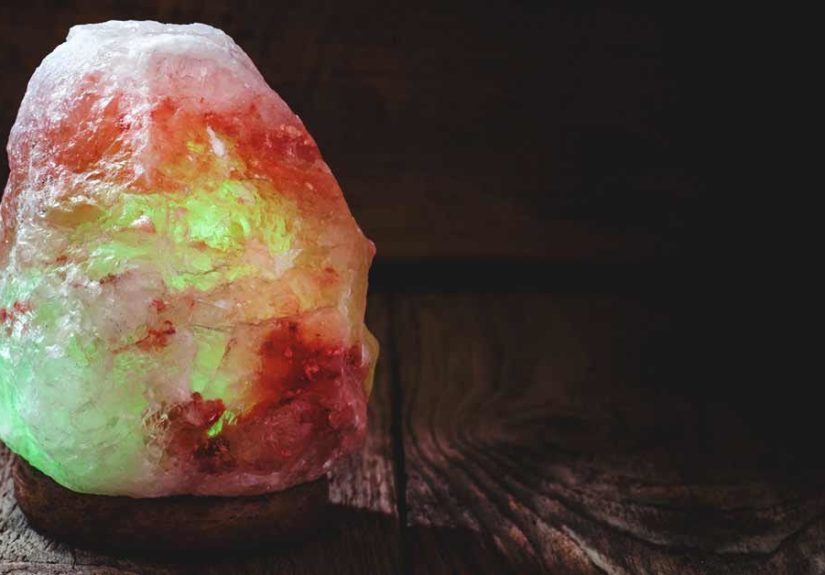
A Himalayan salt lamp is typically a carved block of pink rock salt with a small bulb or heating element inside. Most are marketed as being made from salt sourced from the Punjab region of Pakistan near the Himalayan foothills. Once plugged in, the lamp gives off a soft amber-pink glow that can make even a messy room feel like it has its life together.
The appeal is easy to understand. They look warm, natural, and a little mystical. The problem starts when decorative lighting gets promoted like it belongs in a medical journal.
Why People Think Salt Lamps Work
Supporters usually point to three main ideas.
1. They supposedly release negative ions
This is the biggest claim. Negative ions are real, and under certain conditions, high-density ionization has been studied for possible effects on airborne particles and even depression symptoms. But that does not mean a small bedside salt lamp produces enough negative ions to do anything noticeable in a room. That is the giant leap from “interesting scientific concept” to “my lamp cured my Tuesday.”
2. They are said to pull pollutants from the air
This theory is usually tied to hygroscopy, the idea that salt attracts water molecules from the air and may trap particles along with them. It sounds plausible until you remember the lamp is just sitting there being mildly warm, not conducting a full-scale air filtration operation. There is no convincing evidence that a standard salt lamp removes dust, allergens, mold, VOCs, or other indoor pollutants in any meaningful amount.
3. They may help with relaxation
This is where things get more reasonable. Not because the lamp has secret powers, but because lighting affects atmosphere. A soft amber glow can feel less harsh than bright overhead bulbs, and many people naturally find warm, dim environments more relaxing in the evening. That benefit is less “magic salt crystal” and more “humans enjoy not being flashbanged by ceiling lights at 10 p.m.”
Do Himalayan Salt Lamps Purify the Air?
This is the claim that gets the most attention, and it is also the one least supported by evidence. If you are hoping a salt lamp will clean the air in your bedroom, home office, or nursery, you may want to lower your expectations to somewhere between “pretty lamp” and “conversation starter.”
Actual air cleaning is a measurable thing. Real air purifiers are rated for particle removal, room size, airflow, and filtration performance. They use mechanisms such as HEPA filters and activated carbon, not decorative optimism. If your goal is to reduce smoke, dust, pet dander, pollen, or fine particles, a proven air cleaner is the smarter tool.
Even ionizers, which genuinely do affect particles in the air, are a mixed bag because they may generate ozone and are not the same thing as a salt lamp. And importantly, a lamp carved from salt is not equivalent to a commercial ionization device. That is like comparing a tricycle to a pickup truck because both technically have wheels.
Can Salt Lamps Help Allergies or Asthma?
There is no reliable evidence that a Himalayan salt lamp can treat allergies, asthma, sinus issues, or chronic respiratory symptoms. Some confusion comes from the broader topic of halotherapy, sometimes called salt therapy, where people sit in salt rooms or inhale aerosolized salt particles. Even there, experts say the evidence is not strong enough to support formal treatment guidelines.
That distinction matters. A salt cave or halotherapy chamber is still not the same thing as a small lamp on your nightstand. Even if salt therapy eventually proves useful for certain symptoms in specific settings, that would not automatically mean a glowing chunk of pink rock in your guest room is doing the same job.
If you have asthma or allergies, the better path is the boring but effective one: identify triggers, improve ventilation, reduce dust and mold, and use a proven HEPA air purifier if your clinician recommends it. Boring wins a surprising number of fights.
Do Himalayan Salt Lamps Improve Sleep or Mood?
This is where the answer gets nuanced. Do salt lamps directly improve sleep or mood in a clinically proven way? No strong evidence says they do. But can the environment they create support a calmer bedtime routine? Possibly.
Warm, dim lighting is generally more sleep-friendly than bright, blue-heavy light late at night. If a salt lamp replaces a bright lamp, overhead LEDs, or one more round of doomscrolling under your phone screen, it may indirectly help you wind down. That is not because the salt is performing wizardry. It is because your evening routine got less stimulating.
The same goes for mood. A cozy room can feel calming. Rituals can feel grounding. A soft light while reading, journaling, stretching, or sipping tea may be genuinely relaxing. But that is an atmosphere effect, not a proven medical treatment for anxiety, depression, or insomnia.
What Salt Lamps Can Realistically Do
Let’s be fair to the lamp. It may not be a wellness miracle, but it is not useless.
- Create ambiance: The warm glow is soothing and visually pleasing.
- Encourage a calmer routine: Many people use them during evening wind-down time.
- Act as gentle accent lighting: They can work well in bedrooms, meditation corners, and reading nooks.
- Add character to a room: They bring texture, color, and a natural look to décor.
That may sound modest, but there is nothing wrong with liking something because it makes your space feel better. Not every object in your house needs to moonlight as a respiratory therapist.
What Salt Lamps Do Not Realistically Do
Here is the less dreamy list.
- They do not replace an air purifier.
- They do not detox your lungs.
- They do not reliably remove indoor pollutants.
- They do not produce enough evidence-backed negative ion exposure to promise health benefits.
- They are not a proven treatment for asthma, allergies, depression, or insomnia.
If someone is selling a salt lamp like it belongs in a doctor’s office, that is your cue to step away from the marketing copy and back slowly toward reality.
Are Himalayan Salt Lamps Safe?
Usually, yes, if you use a quality product correctly. But “natural” does not automatically mean risk-free.
Electrical and fire risk
Some salt lamps were recalled in the United States after reports that switches or plugs could overheat and ignite. That does not mean every lamp is dangerous, but it does mean quality matters. Cheap wiring and low-quality components are never a charming wellness feature.
Moisture and surface damage
Salt attracts moisture, especially in humid environments. Some lamps “sweat,” leaving dampness or a salty residue on furniture. A coaster or tray under the lamp is a smart idea unless you enjoy surprise circles on your dresser.
Pet safety
Salt lamps can be dangerous for pets, especially cats, which may lick them. Too much salt can lead to sodium poisoning. If you have curious pets, place the lamp well out of reach or skip it entirely.
How to Buy One Without Buying the Hype
If you want a Himalayan salt lamp for its look, great. Just shop like a practical adult who enjoys pretty things.
- Choose a lamp with sturdy wiring and a stable base.
- Check for product safety details and reviews that mention durability.
- Keep it away from moisture-prone areas unless you are prepared for sweating.
- Use it as accent lighting, not as a substitute for proven health equipment.
- Keep it away from children and pets who may knock it over or lick it.
The Bottom Line: Do Himalayan Salt Lamps Really Work?
Yes, as décor. No, as a miracle health device.
Himalayan salt lamps can absolutely “work” if your goal is to make a room feel warmer, calmer, and a little more inviting. They may help create the kind of evening atmosphere that supports relaxation. But when it comes to cleaning the air, easing allergies, improving asthma, or delivering major mood and sleep benefits through negative ions, the evidence simply is not there.
So if you love the glow, enjoy it guilt-free. Just do not expect it to replace a HEPA purifier, a doctor, or basic science. A salt lamp can be a nice home accessory. It just should not be asked to carry the emotional burden of an entire wellness industry.
Real-World Experiences With Himalayan Salt Lamps
One reason Himalayan salt lamps remain popular is that personal experience often feels more convincing than a stack of dry studies. Plenty of people will tell you they sleep better, feel calmer, or simply enjoy their room more after bringing one home. And to be fair, those experiences are not necessarily fake. They are just not proof that the lamp is performing a measurable medical function.
A common experience is that people love the glow. They place the lamp on a nightstand, use it instead of an overhead light, and notice that their bedroom suddenly feels less clinical and more peaceful. That can matter. A room that feels softer and quieter may encourage reading, stretching, or getting off screens sooner. If someone says, “My salt lamp helps me wind down,” what they may really mean is, “This warm light helps me switch into bedtime mode.” That is a real experience, even if the salt itself is not doing the heavy lifting.
Others report no dramatic difference at all. They buy one expecting cleaner air, a happier mood, and lungs that feel like they just returned from a mountaintop retreat, only to discover that the lamp mostly sits there looking beautiful and glowing politely. For some buyers, that is enough. For others, it feels like paying for a wellness promise and receiving a stylish rock with a bulb.
There are also practical experiences people do not always expect. In humid homes, owners sometimes notice that the lamp starts to sweat or leave moisture rings on wood furniture. Some find salt dust or residue near the base. Others discover that curious cats are way too interested in licking it, which turns a calming décor item into a pet-safety concern. None of that is glamorous, but it is very real.
Then there is the placebo question, which people often misunderstand. If someone feels calmer with a salt lamp on, that feeling still matters. The brain responds to ritual, environment, lighting, and expectation. A lamp that becomes part of a nightly routine can genuinely make a person feel more settled. The key is honesty about what is causing the effect. If the benefit comes from ambiance, habit, and reduced harsh lighting, that is still useful. It just is not evidence that the lamp purified the room or supercharged the air with mystical particles.
In the end, the most honest real-world reviews tend to sound like this: “It did not cure anything, but I love having it.” And that is probably the best way to think about Himalayan salt lamps. They can be pleasant. They can be cozy. They can even become part of a ritual that makes evenings feel calmer. But if your sinuses, allergies, or sleep problems are waiting for a miracle, they may want a more qualified employee.