Table of Contents >> Show >> Hide
- What airport wheelchair assistance usually includes
- Simple steps to request a wheelchair at the airport
- How early should you arrive?
- What to say when requesting wheelchair assistance
- What happens at security?
- Can you bring your own wheelchair or scooter?
- What about boarding and connections?
- Common mistakes to avoid
- What if assistance is delayed or something goes wrong?
- Best practical tips for a smoother trip
- The short answer
- Real-life experiences: what travelers often say about using wheelchair assistance
- Conclusion
Note: Body-only HTML, ready for web publishing.
If you have ever looked at a giant airport terminal and thought, “This place is basically a marathon with moving sidewalks,” you are not alone. Airport wheelchair assistance exists for a reason: traveling can be physically demanding, confusing, and exhausting, especially when long lines, tight connections, and sprawling terminals get involved. The good news is that requesting a wheelchair at the airport is usually much simpler than people expect.
In most cases, you can request wheelchair assistance while booking your flight, after booking through the airline’s website or app, by calling the airline directly, or by asking at the airport on the day of travel. The smartest move is to request it as early as possible, even though basic assistance is often available without a huge amount of advance planning. Early notice helps the airline prepare and helps you avoid that last-minute “Where do I go and who do I ask?” airport drama nobody asked for.
This guide walks you through exactly how to request wheelchair service, what to expect at the airport, how connections usually work, what to do if you bring your own mobility device, and how to handle common issues without losing your cool or your snack bag.
What airport wheelchair assistance usually includes
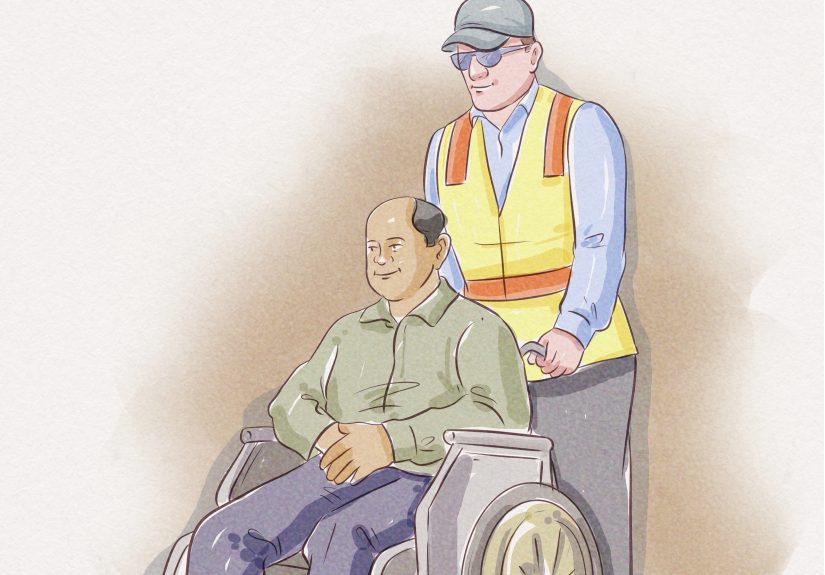
Before you request help, it helps to know what you are asking for. Airport wheelchair assistance generally means an airline or airport service worker helps you move through the airport in a wheelchair or provides guided assistance if that fits your needs better. Depending on your situation, that may include:
- Help from the terminal entrance or check-in area to your gate
- Assistance through the security checkpoint
- Help boarding the plane
- Assistance between gates during a connection
- Help getting off the aircraft and reaching baggage claim
If you need more specific help, such as assistance getting to an onboard aisle chair, extra time to board, or support with a personal wheelchair or scooter, you should mention that when you make the request. “Wheelchair assistance” is a good start, but “wheelchair assistance from check-in to gate and again from arrival gate to baggage claim” is much clearer.
Simple steps to request a wheelchair at the airport
1. Request it when you book your flight
This is usually the easiest option. Many airlines let you select special assistance during the booking process. Look for phrases like accessibility assistance, special assistance, mobility assistance, or wheelchair service. You may see a checkbox, a drop-down menu, or a separate support section before checkout.
If you know in advance that you will need help walking long distances, standing for extended periods, or navigating a large airport, request the service right away. It costs you very little time now and can save you a ton of stress later.
2. Add the request after booking if you forgot
Did you book first and remember later? Very normal. Most major airlines allow you to add wheelchair assistance after purchase through the “Manage Trip” or “My Trips” section of the website or app. This is one of the fastest ways to update your reservation without waiting on hold while listening to music that sounds like it was recorded inside an elevator in 1998.
Open your reservation, look for service options, then add the assistance you need. Review the updated itinerary afterward so you have a record that the request is attached to your booking.
3. Call the airline if your needs are more specific
Online tools are convenient, but sometimes a phone call is better. Call the airline directly if:
- You use a powered wheelchair or scooter
- You are traveling with a personal mobility device
- You need help during a connection
- You need boarding and deplaning support
- You want to explain a medical or mobility situation in more detail
Be ready to share your confirmation number, the airports you are flying through, and the kind of help you need. If you are bringing your own wheelchair, have the dimensions, weight, battery type, and model information available. This makes the conversation faster and reduces the chance of confusion later.
4. Confirm the request before travel
A smart habit is to double-check your reservation a day or two before departure. That does not mean the airline is out to sabotage your plans; it just means travel goes smoother when details are confirmed. Review your booking online or call to make sure wheelchair assistance is still noted for every segment, especially if you have a layover.
If your itinerary changes, recheck the request. A rebooked or updated flight can sometimes cause service notes to disappear or need to be reattached.
5. Tell the check-in agent when you arrive
Even if you requested wheelchair assistance in advance, speak up at the airport. Tell the airline counter agent or curbside staff that you have a wheelchair request on the reservation. This is important because assistance is often triggered in real time when staff know you have arrived and are ready to move through the airport.
If you did not request it in advance, you can still ask at check-in or the ticket counter on the day of travel. Same-day requests are common. They may take a little longer depending on staffing and how busy the airport is, but they are absolutely worth asking for.
How early should you arrive?
Give yourself extra time. That is the golden rule. Airports are not famous for being calm, tiny, or predictable. If you need wheelchair assistance, arrive earlier than the standard recommendation for your flight. For many travelers, that means at least two hours before a domestic trip and three hours before an international one, with extra cushion if the airport is large, the travel day is busy, or you are checking a personal mobility device.
More time means less rushing, more clarity, and a better chance that every handoff goes smoothly from check-in to security to the gate. Nobody enjoys being stressed at Gate B47 while trying to eat a granola bar like it is a life event.
What to say when requesting wheelchair assistance
You do not need a complicated script. Clear and simple works best. Here are examples:
- “I need wheelchair assistance from check-in to the gate.”
- “Please add wheelchair service to my reservation for all flights, including my connection.”
- “I am bringing my own powered wheelchair and need help with handling instructions.”
- “I will need preboarding and assistance from the arrival gate to baggage claim.”
The more specific you are, the easier it is for staff to set up the right support. If walking short distances is okay but long distances are not, say that. If you can transfer independently but need help getting through the terminal, say that too. Clear details help avoid mismatched service.
What happens at security?
Security is often the part people worry about most, and honestly, fair enough. It can feel like a maze run by bins. In most cases, the wheelchair assistant will take you to the screening area, and TSA officers will guide you through the process from there. If you use a wheelchair, mobility aid, or medical device, you may receive modified screening based on your situation.
If you want additional checkpoint support, TSA Cares may be useful. That service is different from airline wheelchair assistance. TSA Cares is meant to help travelers with disabilities, medical conditions, or other special circumstances understand and navigate the security process more smoothly. Think of it as checkpoint support, not gate-to-gate airline transport.
Can you bring your own wheelchair or scooter?
Yes, in many cases you can. Airlines generally transport personal wheelchairs and mobility devices, but the process works best when you provide details ahead of time. Manual chairs are usually straightforward. Powered wheelchairs and scooters may require additional information about size, weight, and battery type.
If your device is battery-powered, contact the airline well before your trip. Battery rules, cargo fit, and handling procedures matter. Some devices can be checked at the ticket counter, and some travelers prefer to use their own chair until the gate and then gate-check it before boarding. That option can make travel easier if you are most comfortable in your own device for as long as possible.
It is also wise to label your chair, take photos before travel, and carry written handling instructions if your device has special parts or break-down steps. Think of it as giving your wheelchair a travel profile so nobody handles it like a folding lawn chair. Because it is not.
What about boarding and connections?
Preboarding
If you need more time to board, ask for preboarding at the gate. This can make a huge difference. You will have more time to get settled, store needed items, and board without feeling like you are in the world’s least relaxing obstacle course.
Connecting flights
If you have a layover, make sure wheelchair assistance is attached to each segment of your trip. The best time to mention this is when booking, when confirming your reservation, and again when checking in. If the connection is tight, tell staff. They may coordinate assistance so you can get from one gate to the next more efficiently.
When you land, stay seated or follow crew instructions if assistance is being arranged. Sometimes the wheelchair attendant meets passengers right at the aircraft door. In other cases, there may be a brief wait. Knowing that possibility ahead of time can help you plan your timing and expectations.
Common mistakes to avoid
- Waiting until the last minute: Same-day requests can work, but earlier requests usually work better.
- Not mentioning connections: You may need help between gates, not just at the first airport.
- Assuming the airport and airline are the same thing: Often, wheelchair assistance is coordinated through the airline.
- Skipping details about a personal mobility device: Size, weight, and battery information matter.
- Forgetting to confirm after schedule changes: Rebooked flights can require service notes to be checked again.
What if assistance is delayed or something goes wrong?
Start by talking with airline staff right away. Be direct, calm, and specific about what you need. If the issue involves disability-related service and is not being resolved, ask for the airline’s Complaint Resolution Official, often called a CRO. That person is trained to address disability-related travel problems and can step in when regular frontline support is not enough.
Document what happened, especially if there was a long delay, a missed connection, poor communication, or a problem involving a personal wheelchair or scooter. Save photos, names, times, and boarding details. If needed, you can follow up with the airline and with the appropriate transportation authority after the trip.
Best practical tips for a smoother trip
- Request wheelchair assistance as early as possible
- Check that the request appears on every flight segment
- Arrive earlier than usual
- Keep medication, paperwork, and essentials in your carry-on
- Carry mobility-device details if you bring your own chair
- Ask for preboarding if you need extra time
- Speak up at check-in and at the gate so staff know you are there
The short answer
If you are still wondering, “How do you request a wheelchair at the airport?” here is the simplest version: ask the airline when you book, add it later through your reservation if needed, confirm it before travel, and remind staff when you arrive. That is the system in a nutshell. Not glamorous, not mysterious, and thankfully not buried in some ancient airport scroll.
Wheelchair assistance can make air travel easier, safer, and far less exhausting. The key is being specific, allowing extra time, and knowing your rights if something goes off track. With the right setup, you can spend less energy worrying about the terminal and more energy focusing on your actual trip.
Real-life experiences: what travelers often say about using wheelchair assistance
One of the most common experiences travelers describe is simple relief. Many people put off requesting a wheelchair because they think they are “not disabled enough,” or they worry they will seem dramatic. Then they finally request it and realize the service exists for exactly this reason. Airports are huge, connections can be brutal, and conserving energy matters. Travelers with arthritis, recent surgeries, balance issues, chronic pain, heart conditions, and temporary injuries often say the biggest surprise is not that they needed help, but that they waited so long to ask.
Another common experience is that the trip feels smoother when the request is made early. A traveler who adds wheelchair service during booking usually feels more prepared because there is a plan in place from the start. They know to arrive early, tell the airline they have arrived, and expect help through the terminal. By contrast, travelers who wait until the last minute often say the process still worked, but it felt more stressful because they were trying to arrange help while already dealing with crowds, bags, and departure anxiety.
People also frequently mention that communication makes a huge difference. A traveler might have no issue at all at the first airport, then find the connection airport more confusing. The fix is often as basic as telling the gate agent, the flight crew, or the arrival staff exactly what is needed. Passengers who say, “I need assistance to the next gate and then to baggage claim,” tend to have a better experience than passengers who assume every handoff will happen automatically without reminders.
Travelers bringing their own wheelchairs or scooters often talk about preparation as the thing that saves the day. Photos of the device, labels, measurements, battery details, and written handling instructions can make conversations with airline staff much easier. People who prepare those details ahead of time usually feel more confident and more in control. People who do not prepare them often say they wished they had.
Then there is the emotional side. A lot of travelers say accepting assistance can feel awkward at first. Nobody dreams of becoming deeply familiar with airport logistics. But many end up saying the wheelchair request gave them dignity, independence, and enough energy to actually enjoy the trip. Instead of arriving at the gate already exhausted, they arrived ready. Instead of treating the airport like an endurance sport, they treated it like transportation, which is exactly what it is supposed to be.
That may be the biggest takeaway from real experiences: requesting a wheelchair at the airport is not “making a fuss.” It is using a service designed to make travel accessible. And when it is done well, it turns a stressful airport day into something much more manageable, which is a pretty great upgrade for a place where the coffee is expensive and the walking distances are frankly rude.
Conclusion
Requesting a wheelchair at the airport is usually straightforward: ask when booking, add it later if needed, confirm before travel, and speak with staff when you arrive. The earlier you communicate your needs, the easier the process tends to be. Whether you need help for a long terminal walk, a connection, boarding, or a personal mobility device, a little planning goes a long way. The goal is not just getting through the airport. It is getting through it with less stress, more comfort, and a lot more confidence.