Table of Contents >> Show >> Hide
- The 30-Second Leftover Safety Cheat Sheet
- How Long Do Leftovers Last? The Safety Chart
- Why “It Smells Fine” Isn’t a Food Safety Strategy
- The Right Way to Store Leftovers (So They Actually Last)
- Reheating Leftovers Safely (Without Turning Them Into Rubber)
- When to Toss Leftovers Immediately
- Leftovers From Takeout and Restaurants
- Freezer Wisdom: How to Freeze Leftovers Like a Pro
- Quick FAQ: The Questions Everyone Asks at Least Once
- Real-World Leftover Experiences (The Part Where We All Nod Seriously)
- Conclusion: Safe Leftovers Are Simple (and Taste Better)
Leftovers are the unsung heroes of busy weeks: one pan of lasagna today, three “I’m basically a meal-prep influencer”
lunches tomorrow. But leftovers also come with a tiny, invisible deadlinebecause bacteria don’t care that you wrapped
the casserole “really tightly” in foil.
Here’s the good news: food safety doesn’t have to feel like a pop quiz. With a few reliable rules and a simple
leftovers safety chart, you can confidently answer the eternal question: “Is this still okay to eat?”
(Spoiler: “It smells fine” is not the gold standard we wish it were.)
The 30-Second Leftover Safety Cheat Sheet
If you remember nothing else, remember these four numbersthey’re the “big four” of leftover food safety:
- 2 hours: Refrigerate perishable foods within 2 hours of cooking or serving.
- 1 hour: If it’s hot out (around 90°F or above), your window shrinks to 1 hour.
- 3–4 days: Most cooked leftovers are safest when eaten within 3–4 days in the fridge.
- 165°F: Reheat leftovers to 165°F (use a food thermometer), and bring soups/sauces/gravies to a boil.
Why these numbers? Because the “temperature danger zone” (roughly 40°F to 140°F) is where many bacteria multiply
quickly. Cooling food promptly and reheating it thoroughly is the one-two punch that keeps leftovers from turning
into a regrettable life choice.
How Long Do Leftovers Last? The Safety Chart
This chart focuses on two things: refrigerator safety (how long it’s generally safe) and
freezer quality (how long it keeps its best taste/texture). Freezing can keep foods safe much longer,
but quality gradually declinesthink “still edible” vs. “still delicious.”
Leftovers Storage Chart (Fridge vs. Freezer)
| Food | Refrigerator (≤ 40°F) | Freezer (0°F) | Notes (Because Life Is Complicated) |
|---|---|---|---|
| Cooked meat or poultry (leftovers) | 3–4 days | 2–6 months | When in doubt after day 4, freeze or tossdon’t negotiate with microbes. |
| Soups & stews (with meat or veggies) | 3–4 days | 2–3 months | Cool quickly in shallow containers for faster chilling. |
| Pizza | 3–4 days | 1–2 months | Yes, even if it’s “basically bread.” Toppings count. |
| Egg/chicken/tuna/macaroni salads | 3–4 days | Does not freeze well | These are mayo-adjacent danger magnetstreat them with respect. |
| Luncheon meat (opened or deli-sliced) | 3–5 days | 1–2 months | High-risk folks should follow stricter caution with ready-to-eat meats. |
| Hot dogs (opened package) | 1 week | 1–2 months | Still refrigerate promptly after servingno countertop “hot dog naps.” |
| Hard-cooked eggs | 1 week | Do not freeze | Freezing turns them rubbery. Not a vibe. |
| Cooked ham (slices/spiral cut) | 3–5 days | 1–2 months | Label datesham math gets confusing fast. |
| Cooked fish (leftovers) | 1–3 days | 2–3 months | Seafood is less forgivingplan to eat it sooner. |
| Cooked shellfish (varies) | About 2–4 days (many types) | Often 2–4 months (varies) | If you’re unsure what it is, it’s probably not a “save for later” food. |
| Leftover gravy or meat broth | 1–2 days | 2–3 months | Gravy is rich and cozy… and bacteria agree. Chill quickly. |
| Casseroles with eggs (after baking) | 3–4 days | 2–3 months | Slice and freeze portions for easy reheats. |
Important: These timeframes assume your fridge stays at or below 40°F and your freezer is at 0°F.
If your fridge runs warm (or you store leftovers in the door like it’s a VIP lounge), cut the time short.
Why “It Smells Fine” Isn’t a Food Safety Strategy
Many foodborne bacteria don’t change how food looks, smells, or tastesso relying on the “sniff test” can be
misleading. In other words: your nose is talented, but it’s not a laboratory instrument.
That’s why time-and-temperature rules matter. If a leftover has been in the fridge for more than 3–4 days, the safer
move is to toss itor freeze it earlier next time. If you’re feeling unsure, “when in doubt, throw it out” is not
dramatic. It’s practical.
The Right Way to Store Leftovers (So They Actually Last)
Step 1: Cool quickly
The goal is to move food out of the danger zone fast. Big pots of soup and giant pans of rice cool slowly,
especially if you leave them on the stove to “finish cooling” while you scroll for 45 minutes. Instead:
- Divide large batches into shallow containers (more surface area = faster cooling).
- Leave lids slightly ajar until steam dies down, then seal and refrigerate.
- For soups/stews, set the pot in an ice bath (a sink of ice water) and stir to speed cooling.
Step 2: Package like you mean it
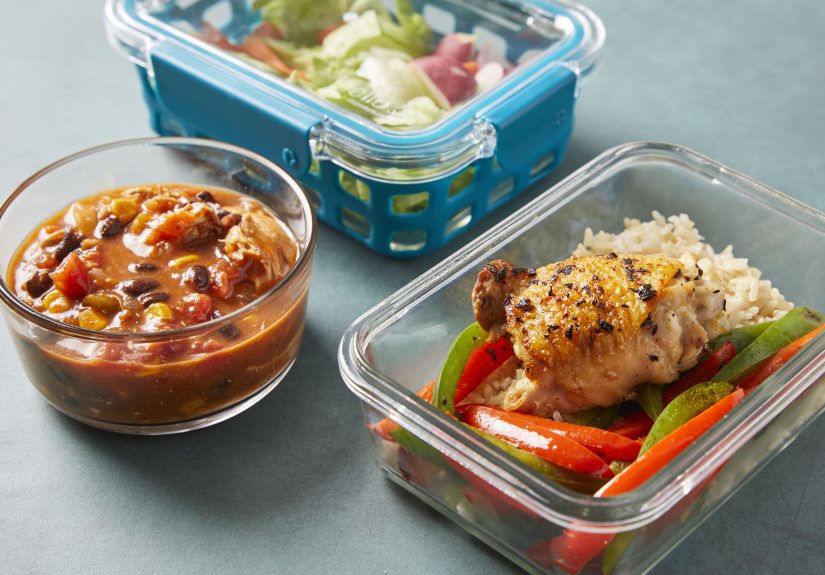
Airtight containers help prevent cross-contamination, keep odors from mingling (nobody wants “fridge cologne”),
and reduce drying out. Bonus points for containers that are microwave-safe, because fewer transfers = fewer chances
to spill chili on your socks.
Step 3: Label and date
A piece of tape and a marker turn your fridge from “mystery museum” into a system. Write the food and the date it
went into the fridge. If it’s day 4 and you’re not going to eat it, freeze it.
Reheating Leftovers Safely (Without Turning Them Into Rubber)
Safe reheating isn’t about “hot-ish.” It’s about reaching a temperature that reduces risk. Aim for
165°F throughout the food, measured with a food thermometer. Soups, sauces, and gravies should be
reheated to a full boil.
Microwave tips that actually work
- Cover the dish to trap steam and heat evenly.
- Stir/rotate halfway through (microwaves love creating cold spots).
- Let it rest briefly, then check temperature in multiple spots.
Oven or stovetop tips for better texture
- Use the oven for pizza, roasted veggies, and anything you want crispnot sad and steamy.
- Use the stovetop for soups, stir-fries, and sauces; it heats more evenly than “microwave roulette.”
- Avoid reheating in a slow cooker; it can hold food in the danger zone too long.
When to Toss Leftovers Immediately
Some situations don’t call for “maybe.” They call for “goodbye, leftovers.” Toss food if:
- It sat out longer than 2 hours (or 1 hour in very warm conditions).
- You don’t know how long it’s been in the fridge (mystery containers are not a food group).
- It’s past 3–4 days in the fridge and you’re not sure it was handled properly.
- It has visible mold, an unusual texture (like slime), or an off odor (even though odor isn’t a perfect test).
Special caution: People at higher risk (pregnant people, young kids, older adults, and anyone with a
weakened immune system) should be extra careful with ready-to-eat refrigerated foods and leftovers. If you’re cooking
for someone in a higher-risk group, err on the stricter side of the chart.
Leftovers From Takeout and Restaurants
Restaurant leftovers can be just as safe as home leftoversif you handle them quickly. The biggest mistake is letting
takeout linger: in the car, on the counter, on the table, “while we watch one episode.” (One episode becomes three.)
- Refrigerate takeout leftovers as soon as you’re done eatingsame 2-hour rule.
- Store sauces separately when possible; they can make foods soggy and harder to reheat evenly.
- Reheat to 165°F, especially for meat, poultry, and mixed dishes.
Freezer Wisdom: How to Freeze Leftovers Like a Pro
Freezing is the ultimate “pause button” for leftovers. It won’t improve quality, but it can keep food safe longer and
help reduce waste. For best results:
- Cool food first, then freeze in meal-sized portions.
- Use freezer-safe containers or bags, squeeze out air, and label with the date.
- Freeze flat (like soups in bags) to save space and speed thawing.
- Thaw safely in the fridge, in cold water (cook immediately), or in the microwave (cook immediately).
Quick FAQ: The Questions Everyone Asks at Least Once
Can leftovers be safe after 5 days?
The common guidance for many cooked leftovers is 3–4 days in the refrigerator. Beyond that, risk increaseseven if
the food seems normal. If you want leftovers later in the week, freeze them earlier.
Can I refreeze leftovers after thawing?
If you thawed food in the refrigerator and it stayed cold, it’s generally safer to refreeze (though quality may drop).
If it thawed on the counter, skip the refreeze and toss it.
What about rice, potatoes, or spinach leftovers?
These foods can be perfectly fine as leftovers, but they benefit from careful handling: cool them promptly, store
cold, and reheat thoroughly. The biggest issue is time and temperaturedon’t leave them sitting out.
Does boiling or reheating make old leftovers safe again?
Reheating reduces risk, but it’s not a magic eraser for food that’s been stored too long or handled unsafely. If the
storage time is out of bounds or the food sat out too long, reheating is not a reliable rescue plan.
Real-World Leftover Experiences (The Part Where We All Nod Seriously)
Leftover safety rules sound simpleuntil real life shows up carrying a pizza box and a calendar. Here are common
“been there” experiences and how the chart saves the day.
The Pizza Box Myth: Lots of people slide an entire pizza box into the fridge and call it a system.
The next day, you grab a slice, and it tastes like… refrigerator. Not dangerous by default, but boxes don’t seal
well, which means the pizza can dry out and pick up odors from everything nearby. The better move? Transfer slices
to an airtight container or wrap them tightly. And if it’s day four, freeze the remaining slices instead of turning
them into a science fair project. Future-you will appreciate it at 10 p.m. on a random Tuesday.
The Soup Pot Sit-Down: Big pots of soup are cozy. Big pots of soup also cool slowly. A common
experience is cooking a large batch, eating a bowl, and leaving the rest on the stove “to cool.” Two hours later,
you remember it exists. This is exactly why shallow containers matter. Dividing soup into smaller containers helps
it chill faster and keeps it out of the danger zone. Bonus: you also get perfectly sized portions for quick lunches.
If you love meal prep, this is your moment.
The “One More Episode” Trap: Takeout arrives, the table turns into a buffet, and then everyone
drifts awayplates on the coffee table, containers open, sauces everywhere. Two hours later, someone wanders back,
pokes at the noodles, and asks, “Should we put this away?” That’s your cue to treat leftovers like milk: they need
to go back to the fridge promptly. If the room is warm (or it’s summer), you’ve got even less time. The chart doesn’t
care how good the night wasit cares how long the food sat out.
The Office Fridge Mystery Container: We’ve all seen it: a container with a lid that has clearly
lived through a few eras. Nobody knows whose it is. Nobody wants to ask. The biggest lesson here is labeling.
Dating leftovers avoids awkward communal archaeology and helps you keep track of the 3–4 day window. And if you find
something undated and unidentifiable? The safest choice is to toss it. “But it might be chili” is not a food safety
plan.
The Holiday Leftover Avalanche: Holidays create leftovers like it’s their job. Turkey, stuffing,
gravy, casserolesoften all sitting out while people snack and talk. A practical approach is to set a phone timer
after the meal: when it goes off, it’s time to pack leftovers into shallow containers and refrigerate. For gravies
and broths, be especially mindful because they can spoil faster than you’d expect. Freezing portions early is also
a game-changerbecause by day three, you may be emotionally ready to move on, but the fridge is still full of
“just one more plate.”
The “It’s Fine, I Reheated It” Confidence: People often assume reheating makes everything safe,
even if the leftover is older than it should be. Reheating to 165°F is important, but it’s not permission to ignore
storage time. The best experience-based rule is this: if you wouldn’t confidently serve it to someone you care
about, don’t serve it to yourself. Freeze earlier, label everything, and use the chart like a friendly boundary.
Leftovers should make your life easiernot more suspenseful.
Conclusion: Safe Leftovers Are Simple (and Taste Better)
The safest leftovers routine is surprisingly low-effort: chill promptly, store smart, eat within 3–4 days, and reheat
to 165°F. Use the chart to remove the guesswork, and remember that freezing is your backup plan when life gets busy.
The goal isn’t to fear leftoversit’s to stop treating them like a gamble.