Table of Contents >> Show >> Hide
- 2025 Bamboo Flooring Cost at a Glance
- The Biggest Factors That Change Bamboo Flooring Cost
- What “Installed Price” Usually Includesand What It Often Doesn’t
- Real Budget Examples (So You Can Spot a “Missing Line Item”)
- DIY vs. Pro Installation: Where You Save (and Where You Risk It)
- How to Lower Bamboo Flooring Cost Without Regretting It Later
- Bamboo vs. Hardwood: Is Bamboo Actually Cheaper?
- Final Takeaway
- Real-World Experiences (The Stuff People Only Learn After Buying the Boxes)
Bamboo flooring is the “looks-like-hardwood, grows-like-a-weed” option that somehow manages to be trendy, practical, and just mysterious enough to make your contractor say,
“Well… it depends.” (It does. It really does.)
In this 2025 guide, we’ll break down what bamboo flooring typically costs, what actually drives the price up (or down), and how to budget without accidentally spending your
vacation fund on underlayment and trim. You’ll also get a few real-world cost examples so you can sanity-check quotes like a pro.
2025 Bamboo Flooring Cost at a Glance
Most homeowners end up paying in the high single digits to high teens per square foot installed, with the final number shaped by the bamboo type, product quality,
installation method, and how “surprise!” your subfloor turns out to be.
| Cost Category | Typical Range (Per Sq. Ft.) | What This Usually Includes |
|---|---|---|
| Materials only | $2–$10+ | Planks, finish, core construction (varies by type and brand) |
| Installation labor | $5–$10 | Basic install labor (method + region matter) |
| Total installed | $7–$20 (sometimes higher) | Materials + labor; may exclude prep, demo, trim, and repairs |
If you’re shopping online, you’ll commonly see bamboo product pricing start around the low-to-mid $2s per square foot and climb from there, especially for thicker planks,
premium finishes, and tougher (denser) constructions.
The Biggest Factors That Change Bamboo Flooring Cost
Two bamboo floors can look similar in photos and land in completely different price brackets in real life. Here’s why.
1) The Type of Bamboo: Engineered, Horizontal/Vertical, or Strand-Woven
Bamboo isn’t one productit’s a category. The way the material is made affects durability, water resistance, refinishing potential, and price.
- Engineered bamboo: A plywood-style core with a bamboo veneer on top. Often budget-friendly and stable, but usually limited on refinishing.
- Horizontal/Vertical bamboo: More “traditional” bamboo looks, with price influenced by how much material is used per square foot.
- Strand-woven bamboo: Compressed under high pressuretypically the most durable and often the most expensive.
In plain English: strand-woven tends to cost more up front, but it’s often chosen for busy households (kids, pets, rolling chairs, the occasional “how did that get scratched?”
mystery). Engineered bamboo can be a value pick when stability matters and you’re not expecting to refinish down the road.
2) Quality, Thickness, and Finish
Thicker planks and tougher finishes generally increase cost. You’re not just paying for bambooyou’re paying for the wear layer, the finish system, and the product’s consistency
(straight boards, clean milling, reliable click-lock fit).
Budget lines can be perfectly fine, but they sometimes come with more variation in color and grain, thinner wear layers (for engineered products), or a finish that shows wear sooner.
That may not matter in a guest room. It matters a lot in a hallway that doubles as your dog’s racetrack.
3) Brand, Certifications, and Where You Buy
Brand reputation can raise the pricebut it can also reduce headaches. Better warranties, more consistent milling, and clearer installation instructions often show up in midrange and
premium products.
Retailers also affect pricing. Big-box stores may offer competitive material prices and frequent promos. Specialty flooring sellers may offer broader selection, longer plank lengths,
and higher-end lines that cost more but look more “custom.”
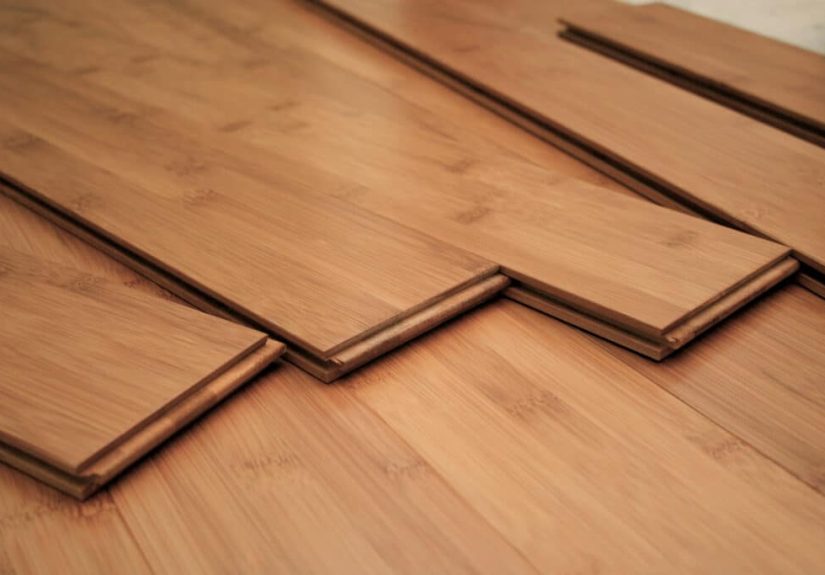
4) Installation Method: Floating vs. Glue-Down vs. Nail/Staple
Installation isn’t one line item. It’s a whole personality.
- Floating (click-lock): Often faster; may reduce labor compared to glue-down; typically paired with underlayment.
- Glue-down: Common over concrete; can increase labor and adhesive costs; requires a very flat subfloor.
- Nail/staple-down: Often used over wood subfloors; can be efficient, but product + subfloor must be compatible.
A quote that looks “too high” might be driven by method (glue-down) and prep (leveling, moisture control). A quote that looks “too low” might be missing those items entirely.
What “Installed Price” Usually Includesand What It Often Doesn’t
Many flooring quotes focus on the install itself, then add “extras” that are… not optional in real life. Here are the add-ons that most commonly change the final total.
Old Flooring Removal and Disposal
If your current floor has to go, removal and disposal can add meaningful costespecially for tile (labor-intensive) or hardwood (heavier demo). Some jobs include basic demo;
others price it separately.
Subfloor Repairs, Leveling, or Replacement
Bamboo prefers a flat, stable base. If installers find soft spots, squeaks, or major dips, you may need repairs or partial replacement. This is one of the most common reasons
a “ballpark estimate” becomes a “real estimate.”
Underlayment and Moisture Protection
Floating installs typically need underlayment, and concrete installations may need moisture barriers depending on conditions and the product requirements. Costs vary by material type
(basic foam vs. premium sound-dampening options).
Trim, Transitions, and Doorway Details
Floors don’t end politely at walls and doorways. You may need baseboards removed and reinstalled, shoe molding/quarter round, and transitions at doorways where floor heights change.
It’s not glamorous, but it’s what makes the finished job look finished.
Real Budget Examples (So You Can Spot a “Missing Line Item”)
Below are sample budgets using common 2025 cost ranges. These are not quotesthink of them as “what a reasonable invoice might look like” once all the usual suspects show up.
Example 1: 200 sq. ft. Bedroom (Straightforward Floating Install)
- Materials: 200 sq. ft. + ~10% waste (220 sq. ft.) × $3.50 = $770
- Install labor: 200 sq. ft. × $6 = $1,200
- Underlayment: 200 sq. ft. × $1 = $200
- Transitions/trim allowance: $150–$400
Estimated total: $2,320–$2,570 (about $11.60–$12.85 per sq. ft.) depending on trim and details.
Example 2: 1,000 sq. ft. Main Level (Mix of Prep + Multiple Rooms)
- Materials: 1,000 sq. ft. + ~10% waste (1,100 sq. ft.) × $4.50 = $4,950
- Install labor: 1,000 sq. ft. × $7 = $7,000
- Removal/disposal: 1,000 sq. ft. × $2 = $2,000
- Underlayment/moisture control: 1,000 sq. ft. × $1.25 = $1,250
- Repairs/leveling contingency: $500–$2,000
- Trim/transitions allowance: $500–$2,000
Estimated total: $16,200–$19,200 (about $16.20–$19.20 per sq. ft.), heavily influenced by prep, demo, and finish carpentry details.
Notice what’s happening: the floor itself might be only part of the total. Prep, removal, and finishing details can quietly take a big slice of the pie.
DIY vs. Pro Installation: Where You Save (and Where You Risk It)
DIY can save moneymainly on labor. If you’re installing a click-lock bamboo floor in a simple, square room with a flat subfloor, DIY is often realistic for experienced homeowners.
But bamboo is not the place to “learn leveling” for the first time. If the subfloor is uneven, if you’re gluing over concrete, or if your home has moisture issues, professional
installation can prevent costly failures (gapping, buckling, hollow spots, adhesive issues).
How to Lower Bamboo Flooring Cost Without Regretting It Later
- Compare apples to apples: Ask for quotes that include demo, prep, underlayment, transitions, and trim work.
- Pick the right bamboo type: Pay for strand-woven where durability matters; use midrange engineered in low-traffic rooms if it fits your needs.
- Shop promotions strategically: Flooring sales are commonespecially around major holidays.
- Keep layouts simple: Diagonal installs, tight closets, and lots of doorways increase labor.
- Buy the right amount: Plan for waste (often ~10%; more for complex layouts) so you don’t overbuyor worse, underbuy and can’t match the batch later.
Bamboo vs. Hardwood: Is Bamboo Actually Cheaper?
Sometimes. Bamboo can be cost-competitive with hardwood, and some homeowners pick it because it offers a hardwood look at a potentially lower material cost. But installed pricing can
overlap with hardwood depending on the product quality and installation complexity.
The better question is: What are you buying for the money? If you want a modern look, good durability (especially with strand-woven), and a floor that’s widely available
in a range of colors, bamboo can be a strong valueparticularly when you choose the right product for your room conditions.
Final Takeaway
In 2025, bamboo flooring commonly lands around $7–$20 per square foot installed, with materials often starting in the low single digits and rising based on
construction, thickness, finish, and brand. The real budget swing factors are usually installation method, subfloor prep, removal/disposal, and the finishing details that make the
job look clean.
If you want the smoothest quote experience, ask every installer the same question: “What’s included, what’s optional, and what’s the most likely surprise in my house?”
(They will have an answer. And it will probably involve the words “subfloor” or “tile.”)
Real-World Experiences (The Stuff People Only Learn After Buying the Boxes)
Let’s talk about the part of bamboo flooring costs that doesn’t show up in neat little charts: the lived experience of shopping, estimating, and actually living with the floor.
Because in real homes, decisions aren’t just about dollars per square footthey’re about “will I hate this in six months?” and “why is there a mysterious extra charge labeled
‘floor prep’?”
First, most people experience the same emotional arc while shopping: excitement, confidence, confusion, then a sudden obsession with plank thickness. You’ll start by thinking,
“Bamboo is bamboo,” and end up comparing strand-woven density, wear layers, and finish systems like you’re choosing a space suit. The funny thing is: that deep dive often saves money,
because it stops you from buying a product that’s wrong for the room. A budget engineered bamboo might be perfect upstairs, but if you put it in a high-traffic entryway and it starts
looking tired quickly, you didn’t saveyou just prepaid for a redo.
Next comes the quote phase, where homeowners learn that “installed cost” is a phrase with layers. The first number you hear might sound great, and then the add-ons arrive:
removal/disposal, leveling, moisture barrier, underlayment, trim, transitions, furniture moving, and the special line item that translates to “your hallway has too many doorways.”
This is why the best real-life strategy is comparing quotes that list the same scope. One installer might bundle demo and basic prep; another might price them separately. The total can be
similaruntil it isn’t.
Then there’s the “boxes and waste” lesson. Homeowners often underestimate how much extra flooring they need. Most projects require waste allowance for cuts, defects, and pattern/board
variation. If your layout has lots of angles, tiny closets, or you’re doing a more complex pattern, you’ll likely need more extra material. And here’s the real-world kicker:
if you run short and your product is back-ordered or discontinued, matching later can be difficult. That’s not a cost anyone wants, but it’s a real risk.
People also get surprised by how much subfloor flatness matters. Bambooespecially in floating installsdoes not enjoy a bumpy ride. If the installer has to level or patch more than
expected, the cost goes up, and the timeline can stretch. Homeowners who’ve been through it often say the same thing afterward: they wish they had budgeted a little more for prep from
day one, because it’s the difference between a floor that feels solid and one that clicks, squeaks, or sounds hollow.
Once the floor is in, experiences diverge mostly based on choosing the right bamboo type for the household. Busy homes tend to love strand-woven because it holds up better to daily
lifechairs scooting, pets sprinting, kids dragging backpacks like they’re hauling treasure. Meanwhile, homeowners who picked bamboo for a quiet bedroom often care more about comfort
underfoot and sound control, which makes underlayment choices feel suddenly important. That “optional” underlayment upgrade can be the difference between peaceful and “why does it sound
like I’m walking on a drum?”
Finally, maintenance habits shape satisfaction. People who go in expecting bamboo to behave like waterproof vinyl sometimes get disappointedbamboo is durable, but it’s not invincible.
Wipe spills quickly, use felt pads, keep grit off the surface, and control humidity if your climate swings. Homeowners who do those basics usually report that bamboo feels like a smart,
stylish upgrade. Those who don’t… tend to become experts in area rugs.