Table of Contents >> Show >> Hide
- Quick Answer: What Most Homeowners Should Budget
- What Winterizing a House Actually Includes
- Winterizing Cost Breakdown by Project
- Sample Winterizing Budgets
- What Makes Winterizing More Expensive?
- What Is Worth Doing Yourself?
- How to Spend Your Winterizing Budget Wisely
- Are Rebates or Tax Credits Still Available?
- Is Winterizing a House Worth the Cost?
- Final Thoughts
- Real-World Experiences and Lessons From Winterizing a House
Winter has a funny way of turning tiny home problems into expensive drama. A little draft becomes a living room that feels like a walk-in freezer. One neglected gutter becomes an ice problem with main-character energy. And one exposed pipe can decide that January is the perfect time to audition for a disaster movie.
So, how much does winterizing a house cost? The honest answer is: it depends on whether you are doing a light seasonal tune-up or giving your home the full “you are not freezing on my watch” treatment. A basic DIY winterizing plan may cost under a few hundred dollars. A professional winterizing package often lands in the few-hundred-to-low-thousand-dollar range. If your house is older, drafty, under-insulated, or overdue for repairs, the budget can climb fast.
The good news is that winterizing usually costs a lot less than fixing the damage caused by frozen pipes, heat loss, roof leaks, or moisture issues. In many cases, it is less about spending wildly and more about spending smartly.
Quick Answer: What Most Homeowners Should Budget
For a typical U.S. home, here is a practical way to think about winterizing costs:
- Basic DIY winterizing: about $100 to $400
- Professional light winterizing: about $250 to $1,500
- More complete winter prep with insulation and efficiency upgrades: about $1,500 to $4,000+
That wide range is not the internet being dramatic for fun. It reflects the fact that “winterizing” can mean very different things. For one homeowner, it means weatherstripping doors, sealing a few gaps, and covering outdoor faucets. For another, it means attic insulation, pipe insulation, furnace service, gutter cleaning, and an energy audit because the house loses heat like it is being paid by the draft.
What Winterizing a House Actually Includes
When people hear “winterize the house,” they often picture one handyman with a ladder and a determined expression. In reality, winterizing usually includes several different systems:
- Air sealing: caulk, weatherstripping, sealing door and window gaps
- Insulation: especially attic insulation and sometimes crawl spaces or rim joists
- Plumbing protection: insulating exposed pipes and protecting hose bibs
- Heating system prep: furnace inspection or tune-up, filter changes, thermostat checks
- Exterior maintenance: gutter cleaning, roof checks, branch trimming, foundation gap sealing
- Energy diagnostics: a home energy audit to find where heat is escaping
Not every home needs all of that every year. But most homes need at least some of it, especially before hard freezes arrive.
Winterizing Cost Breakdown by Project
1. Weatherstripping and Air Sealing
This is usually the cheapest place to start, and often the highest-value move. If your doors and windows leak air, your heating system works harder, your rooms feel uneven, and your energy bill gets a little too comfortable with bad behavior.
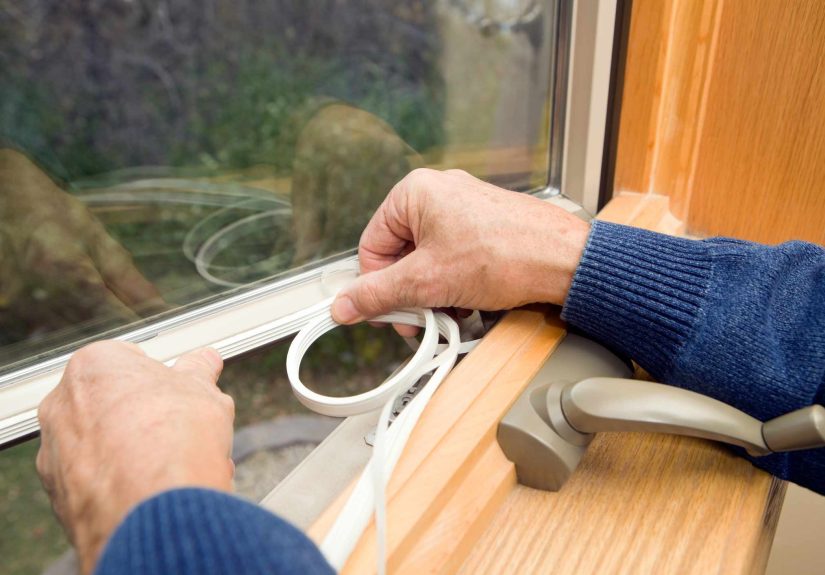
Professionally weatherstripping a door commonly costs around $132 to $439 per door, though simple DIY kits can cost much less. If you only need basic door sweeps, adhesive weatherstripping, and a few tubes of caulk, you may spend under $60 to $150 doing it yourself. For multiple doors, larger entries, or threshold repairs, the total rises.
Air sealing beyond the obvious spots can add more to the budget, especially in attics. That said, this is often one of the best-value projects because small leaks add up fast. It is the home-improvement version of discovering your wallet has had a hole in it all winter.
2. Attic Insulation
If weatherstripping is the easy win, attic insulation is often the heavyweight champion. Heat rises, and if your attic is under-insulated, your house may be sending expensive warm air straight upward like a donation program for the neighborhood squirrels.
Professional attic insulation commonly runs about $1,700 to $2,500, with many homes falling near $2,100. Costs vary based on attic size, accessibility, insulation type, climate zone, and whether old insulation needs to be removed first.
This is not the cheapest winterizing step, but it is often one of the most meaningful. In colder areas, improving attic insulation can make the house feel more comfortable almost immediately. It can also help reduce heating and cooling costs over time.
3. Pipe Insulation and Plumbing Protection
Frozen pipes are one of winter’s least charming traditions. If you have exposed plumbing in a crawl space, basement, garage, exterior wall, or unfinished utility area, pipe insulation deserves a spot high on your list.
Professional pipe insulation often costs around $360 to $850, with an average near $600. Smaller DIY jobs can cost far less if you are insulating short accessible runs with foam sleeves. But if your home has a larger plumbing layout, hard-to-reach spaces, or older piping, professional help is often worth it.
Do not forget low-cost plumbing basics: disconnect garden hoses, shut off and drain exterior faucets if your setup allows, and install faucet covers where appropriate. Those small tasks are not glamorous, but neither is calling a plumber while wrapped in three blankets and regret.
4. Furnace Inspection or Tune-Up
Your heating system does not need a pep talk before winter. It needs maintenance. A furnace inspection typically costs around $80 to $100, while a fuller tune-up often lands between $125 and $200. If you have a broader HVAC maintenance visit, the total may be higher.
This is a smart spend because a neglected furnace can become inefficient, unreliable, or unsafe. A tune-up may include inspecting burners, checking the heat exchanger, cleaning components, adjusting the blower, and making sure the system is operating correctly before it has to work its hardest.
If your system is older and already struggling, winterizing may uncover a larger issue. That is not fun, but it is still better to learn in October than on the coldest night of the year.
5. Gutter Cleaning and Roof Drainage Prep
Gutters matter more in winter than many homeowners realize. Clogged gutters can contribute to poor drainage, water backup, and ice-related roof issues. Professional gutter cleaning often costs about $119 to $234, with a national average near $168.
If your home is one story and you are comfortable on a ladder, this may be a DIY project. But for taller homes, steeper roofs, or heavily clogged systems, paying a pro can be money well spent.
Winterizing is not just about keeping heat in. It is also about keeping water out.
6. Home Energy Audit
If your house feels drafty even after basic fixes, or your heating bills seem personally offended by your budget, a home energy audit can help. A professional home energy assessment commonly costs about $212 to $698, with an average near $437.
An audit can identify where air leaks are happening, how insulation is performing, and which upgrades deserve priority. For homeowners with older homes, oddly cold rooms, or rising bills, this can be the smartest first step because it helps prevent random spending on fixes that may not solve the real problem.
Sample Winterizing Budgets
Budget Scenario 1: Light DIY Prep for a Fairly Efficient Home
If your home is already in decent shape, you may only need basic seasonal work:
- Weatherstripping materials and caulk: $40 to $120
- Faucet covers and pipe sleeves for exposed areas: $20 to $80
- HVAC filter replacement: $15 to $50
- Miscellaneous draft blockers and supplies: $25 to $100
Estimated total: $100 to $350
Budget Scenario 2: Typical Professional Winterizing Plan
This is the kind of budget many homeowners should expect if they want meaningful prevention without major renovation:
- Door weatherstripping and minor sealing: $200 to $600
- Furnace inspection or tune-up: $80 to $200
- Gutter cleaning: $119 to $234
- Pipe insulation in key exposed areas: $200 to $600
Estimated total: $600 to $1,600
Budget Scenario 3: Older, Drafty Home That Needs Real Upgrades
For an older home with uneven temperatures and obvious heat loss:
- Home energy audit: $212 to $698
- Attic insulation: $1,700 to $2,500
- Air sealing and weatherstripping: $300 to $1,000
- Furnace tune-up: $125 to $200
- Gutter cleaning and small exterior fixes: $150 to $400
Estimated total: $2,500 to $4,800+
That may sound like a lot, but it is still often cheaper than repairing freeze damage, moisture damage, or months of excessive heating bills.
What Makes Winterizing More Expensive?
Several factors push winterizing costs up:
- Home size: more square footage usually means more doors, windows, gutters, attic area, and pipe runs
- Home age: older homes often have weaker insulation and more hidden air leaks
- Climate severity: colder regions usually require higher insulation performance and more aggressive protection
- Accessibility: tight crawl spaces, steep roofs, or awkward attics increase labor costs
- Deferred maintenance: if winterizing reveals damaged gutters, failing windows, roof issues, or plumbing problems, your “simple prep” can become a repair project
This is why two neighbors on the same block can get wildly different winterizing quotes. One home needs a tune-up. The other needs an intervention.
What Is Worth Doing Yourself?
Many winterizing tasks are perfectly reasonable for a capable homeowner:
- Applying caulk to obvious gaps
- Installing basic weatherstripping
- Adding draft stoppers
- Replacing HVAC filters
- Disconnecting hoses and protecting outdoor faucets
- Insulating short, accessible pipe sections
On the other hand, these jobs are usually better left to professionals:
- Furnace inspections and repairs
- Large attic insulation projects
- Complex air sealing in attics or crawl spaces
- Pipe insulation in hard-to-reach areas
- Roof work and high gutter cleaning
- Any repair involving electrical, combustion, or structural issues
DIY is great when it saves money. It is less great when it saves money for exactly three days and then creates a bigger bill.
How to Spend Your Winterizing Budget Wisely
If you do not want to overspend, prioritize in this order:
- Stop air leaks first. Drafts are cheap to fix and expensive to ignore.
- Protect plumbing. Burst pipes can turn a modest maintenance budget into a major repair bill.
- Service the heating system. Reliability matters when temperatures drop.
- Address attic insulation. This often has the biggest comfort impact in cold weather.
- Clean gutters and check drainage. Water problems in winter are sneaky and expensive.
- Get an energy audit if the house is still uncomfortable. Guessing is usually more expensive than diagnosing.
Are Rebates or Tax Credits Still Available?
This is where timing matters. As of March 2026, IRS guidance says the federal Energy Efficient Home Improvement Credit applied to qualifying property placed in service through December 31, 2025. So if you are winterizing now in 2026, you should not assume that a federal credit is still available just because an old headline says so.
That said, state energy offices, utility companies, and local efficiency programs may still offer rebates or incentives for insulation, audits, air sealing, and heating upgrades. It is worth checking what is available in your area before you book larger projects.
Is Winterizing a House Worth the Cost?
In most cases, yes. Winterizing is one of those rare home expenses that helps on multiple fronts at once. It can improve comfort, reduce energy use, lower the chance of freeze-related damage, and make your heating system’s job easier. It is not as exciting as a kitchen remodel, but unlike a kitchen remodel, it may stop your bedroom from feeling like a refrigerated apology.
If your home already performs well, your winterizing bill may stay pleasantly low. If your house is older or has obvious weak spots, the budget can rise, but so does the payoff. Even modest upgrades often make the home feel noticeably warmer and less drafty, which is one of the few forms of adult satisfaction that deserves more hype.
Final Thoughts
So, how much does winterizing a house cost? For light DIY prep, maybe a couple hundred dollars. For a more complete professional job, often several hundred to a few thousand. For older homes that need insulation, diagnostics, and repairs, the total can go beyond that.
The smartest approach is not to treat winterizing like one giant mystery bill. Break it into categories. Start with air leaks, plumbing protection, heating maintenance, and drainage. Then move into insulation and larger efficiency upgrades if the house still feels cold or your bills remain high.
Winter will always show up. The question is whether your house is ready, or whether it is about to learn some expensive lessons the hard way.
Real-World Experiences and Lessons From Winterizing a House
In real life, winterizing usually becomes important the moment a homeowner has one bad cold-weather experience. It is almost a rite of passage. One year everything seems fine, and then suddenly a back bedroom is freezing, the furnace runs nonstop, and the kitchen floor near the exterior wall feels like it belongs to another zip code. That is often when people realize winterizing is not just a seasonal chore list. It is a comfort strategy and a risk-management plan rolled into one.
A common example is the first-time homeowner in an older ranch house. The house may look solid, but once temperatures dip, tiny issues start revealing themselves. Air sneaks in around the front door. The attic hatch leaks heat. One room is cozy while another feels like it has a personal feud with the thermostat. In those cases, homeowners often start with inexpensive fixes like weatherstripping, caulk, and door sweeps. The immediate difference can be surprisingly noticeable. The house may not become a luxury ski lodge overnight, but it often feels less drafty, more even, and much easier to heat.
Another familiar experience is the homeowner who ignores the gutters until the first freeze-thaw cycle turns a small drainage issue into a bigger headache. Leaves clog the system, melting snow has nowhere to go, and the roofline starts looking suspicious. After one season of dealing with water concerns, many people suddenly become very enthusiastic about gutter cleaning. Funny how that works.
Then there is the plumbing lesson. Homeowners with crawl spaces, garages, or unfinished basements often do not think much about exposed pipes until a serious cold snap arrives. After insulating vulnerable lines and covering exterior faucets, many say the project felt boring while they were doing it, but deeply satisfying later when temperatures plunged and nothing burst. Preventive work rarely gets applause, yet it earns plenty of quiet victories.
Older homes often produce the biggest “before and after” stories. A homeowner may spend years assuming the house is just naturally chilly in winter, only to discover through an energy audit that the real problem is poor attic insulation and major air leakage. Once those issues are addressed, the home can feel calmer, steadier, and easier to live in. The thermostat stops bouncing around. The furnace cycles more normally. People stop avoiding certain rooms like they are haunted by cold air.
Perhaps the most useful lesson from real winterizing experiences is this: homeowners rarely regret the preventive work they did, but they often regret the work they postponed. Winterizing is not glamorous, and it will never win a popularity contest against fresh paint or a new backsplash. But when the temperature drops and the house stays warm, dry, and functional, it suddenly feels like one of the smartest home expenses on the list.