Table of Contents >> Show >> Hide
- Short answer: How often can you take CBD oil under your tongue?
- How sublingual CBD works (and why timing matters)
- Key factors that affect how often you can take sublingual CBD
- Common real-world CBD sublingual schedules
- Safety: how much CBD is “too much” in a day?
- Who should be extra cautious or avoid CBD oil altogether?
- How to find your personal CBD sublingual routine
- Practical tips for taking CBD oil under your tongue
- Frequently asked questions
- Real-world experiences: what people notice when adjusting CBD frequency
- Bottom line: How often should you take CBD oil under your tongue?
If you’ve ever stood in front of a shelf of CBD oils, reading the tiny print on the label and wondering,
“Okay, but how often can I actually take this stuff?” you’re not alone.
Sublingual CBD (putting drops under your tongue) is one of the most popular ways to take cannabidiol, but dosing and
frequency can be confusing.
The tricky part? There’s no single, official rule that fits everyone. Research is still evolving, and different
products, body types, and health conditions all play a role in how often you should take CBD oil
under your tongue. Most reputable sources suggest starting with a low dose once or twice a day and slowly adjusting
from there, but that’s only the beginning of the story.
In this guide, we’ll walk through how sublingual CBD works, common dosing schedules, safety considerations, and
practical tips to help you (with your healthcare provider’s input) find a routine that makes sense for your body.
Short answer: How often can you take CBD oil under your tongue?
For most healthy adults using over-the-counter CBD products:
- There is no universally “official” maximum frequency for sublingual CBD.
- Most product labels recommend taking CBD oil 1–2 times per day, often morning and evening.
- Some people, under medical guidance, may divide their daily dose into two or three smaller doses
spread throughout the day. - The safest general strategy is to start low and go slow: begin with a low daily amount and only
increase your dose or frequency gradually if you tolerate it well and aren’t getting enough benefit.
For anything more precise than that especially if you have health conditions or take medications
you really do need personalized guidance from a healthcare professional.
How sublingual CBD works (and why timing matters)
When you put CBD oil under your tongue and hold it there for 30–60 seconds, it’s absorbed through the
sublingual blood vessels. This route:
- Lets some of the CBD bypass your digestive system and liver’s first-pass metabolism.
- Typically leads to effects starting within 30–90 minutes.
- May provide effects that last about 4–8 hours, depending on the dose and your metabolism.
Because the effects aren’t instant and they don’t last all day, many people space doses:
- Once daily for mild or occasional issues.
- Twice daily (morning and evening) for ongoing symptoms like chronic pain or anxiety.
- Sometimes three times daily for more persistent symptoms usually under medical supervision.
The duration of action is one big reason why the answer to
“How often can I take CBD oil under my tongue?” is often:
“As often as needed to maintain benefit within a safe total daily amount.”
Key factors that affect how often you can take sublingual CBD
1. Your total daily dose
Frequency and dose are two sides of the same coin. Taking 10 mg three times a day is not the same as 50 mg three
times a day.
- Many beginner guidelines suggest starting with around 10–20 mg of CBD per day and adjusting
gradually if needed. - Some people notice effects with just a few milligrams daily, while others (especially in clinical settings) have
tolerated doses in the hundreds of milligrams. - Regulators in some countries (like the U.K.) have proposed very conservative limits,
such as 10 mg per day for healthy adults, due to long-term safety questions not because
higher doses immediately cause harm.
In everyday use, many people aim for a modest total daily dose and then decide whether to take it
once, twice, or three times depending on how long the effects seem to last.
2. Your reason for using CBD
Why you’re using CBD often shapes how frequently you take it:
- Sleep or nighttime relaxation: Many people prefer a single evening dose, 1–2 hours before bed.
- Daytime anxiety or stress: It’s common to split the dose into morning and late-afternoon or
evening. - Chronic pain: Some users find best results with two or three evenly spaced doses to smooth out
the ups and downs of discomfort.
3. Your body and metabolism
CBD dosing is famously individualized. Experts repeatedly emphasize that there’s no standard “right dose” for
everyone. Factors that matter include:
- Body weight and composition.
- How quickly your liver processes substances.
- Your endocannabinoid system (which varies from person to person).
- Age and overall health.
- How sensitive you are to cannabinoids in general.
Two people can take the exact same product at the same frequency and have very different experiences one may feel
drowsy at 10 mg, while another barely notices 30 mg.
4. Other medications and health conditions
CBD is not just a harmless wellness buzzword it can affect how your liver processes other medications. Research
and safety reports have noted that CBD can interact with drugs that use certain liver enzymes (like CYP3A4 and
CYP2C19), including:
- Blood thinners (e.g., warfarin).
- Some anti-seizure medications.
- Certain heart or blood pressure medications.
- Some antidepressants and antianxiety drugs.
In these cases, how often you take CBD oil not just how much may need to be carefully managed
with your healthcare provider to avoid side effects or changes in drug levels.
Common real-world CBD sublingual schedules
Once daily: the gentle start
Many beginners start with:
- One small sublingual dose per day (for example, 5–10 mg).
- Usually taken in the evening if the goal is relaxation or sleep support.
This lets you see how you respond without “stacking” multiple doses and then wondering which one did what.
Twice daily: the most common pattern
Once someone knows they tolerate CBD well, a very common pattern is:
- Morning dose (e.g., after breakfast).
- Evening dose (e.g., after dinner or a couple of hours before bed).
This fits the typical 4–8 hour window of perceived effects and helps provide more consistent support for daytime
stress or ongoing discomfort.
Three times daily: only with a plan
Some people do split CBD into three smaller doses per day, such as:
- Morning.
- Midday.
- Evening.
This can make sense for conditions that fluctuate throughout the day, but the key is to:
- Keep the total daily dose within a conservative range unless your doctor says otherwise.
- Watch for side effects like fatigue, diarrhea, appetite changes, or mood changes.
If you feel tempted to keep increasing the dose and frequency because you’re not getting results, that’s a strong
hint to pause and talk with a healthcare professional instead of continuing to escalate on your own.
Safety: how much CBD is “too much” in a day?
There is no universally agreed-upon “safe upper limit” for over-the-counter CBD oil in the United States yet. That
said, several lines of evidence give us a sense of the range:
- Clinical studies have used high doses (hundreds of milligrams per day) for specific seizure
disorders and found CBD generally well tolerated, though side effects and liver enzyme elevations can occur,
especially alongside certain medications. - Some regulators have proposed very conservative public guidance for example, around
10 mg per day out of caution about long-term liver and reproductive effects, not because
higher doses are instantly toxic. - Consumer health resources often note that doses up to 1,500 mg per day have been tolerated in
studies, but that doesn’t mean this is appropriate for everyday use without medical supervision.
For typical wellness use, many people fall in the range of a few milligrams up to a few dozen milligrams per day
and adjust slowly. Frequency (once vs. twice vs. three times daily) usually stays within that total amount.
Who should be extra cautious or avoid CBD oil altogether?
CBD is not right for everyone. You should avoid CBD or get medical clearance first if you:
- Are pregnant or breastfeeding.
- Have known liver disease or abnormal liver tests.
- Take medications that carry “grapefruit warnings” or rely on certain liver enzymes.
- Have a history of serious heart, kidney, or neurological conditions.
- Are under 18, unless a specialist is supervising its use for a specific medical condition.
These situations don’t just affect whether you use CBD; they also directly affect
how often it might be safe to take CBD oil under your tongue.
How to find your personal CBD sublingual routine
Step 1: Know your product
Check the label carefully. Ask yourself:
- How many milligrams of CBD are in the full bottle?
- How many milligrams are in one full dropper (usually 1 mL)?
- Is it CBD isolate, broad-spectrum, or full-spectrum?
Once you know how much CBD you get per dropper, it’s easier to divide your total daily amount into one, two, or
three sublingual doses.
Step 2: Start low, go slow
A common beginner strategy looks like this (assuming your doctor hasn’t given specific instructions):
- Start with a low total daily dose (for example, 10–20 mg per day).
- Take it once daily for a few days to see how you feel.
- If you tolerate it well but want longer coverage, split the same total amount into two doses (e.g., 5–10 mg twice daily).
- Only consider increasing the total daily dose after several days to a week, and only if needed.
Step 3: Track your response
Keep a simple log that includes:
- Time and size of each CBD dose.
- What you ate and drank around the same time.
- How you felt 1–3 hours after each dose.
- Any side effects (fatigue, stomach upset, vivid dreams, etc.).
Over a week or two, patterns usually emerge: you may discover that twice-daily dosing feels smoother than once daily
or that evening-only use is ideal for you.
Practical tips for taking CBD oil under your tongue
- Shake the bottle if the label tells you to CBD can separate in the carrier oil.
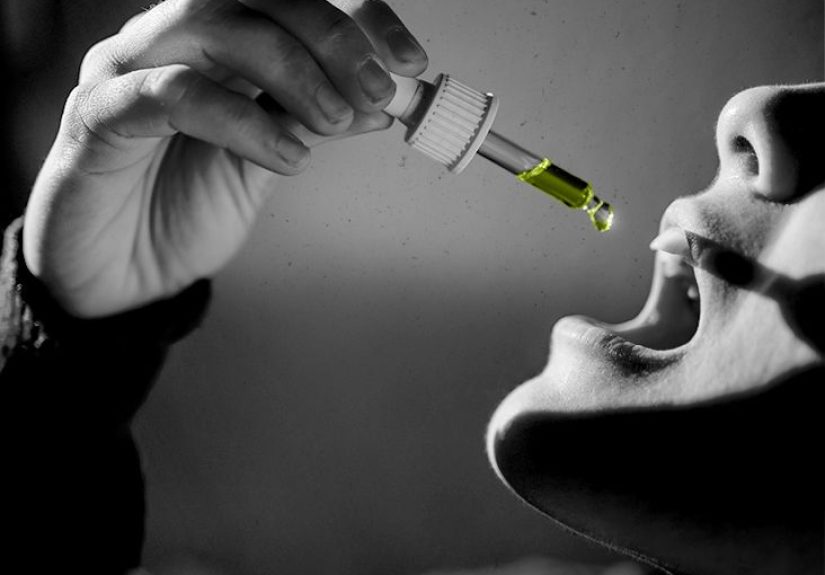
- Use the dropper to place the oil directly under your tongue, not on top of it, for better
absorption. - Try to hold the oil for 30–60 seconds before swallowing; you can gently move your tongue to
spread it around. - Avoid eating or drinking anything very hot or acidic immediately afterward; it may affect absorption or irritate
sensitive tissue. - Store your bottle away from heat and direct sunlight so the CBD stays stable over time.
Frequently asked questions
Can you take CBD oil under your tongue every day?
Many people use CBD daily, and studies so far suggest that CBD is generally well tolerated, even at
higher doses in medical settings. However, “generally well tolerated”
is not the same as “safe at any dose for everyone forever.”
Long-term daily use should be discussed with a healthcare professional, especially if you take other medications or
have chronic health conditions.
Is it okay to take CBD oil more than twice a day?
It can be, as long as:
- Your total daily dose stays within a conservative range.
- You’re not experiencing side effects.
- Your doctor is aware, especially if you’re on other medications.
Instead of simply adding more doses, consider whether adjusting when you take CBD (such as closer
to when symptoms peak) might help.
What if I miss a dose?
Missing a CBD dose is usually not an emergency. You can:
- Skip the missed dose and take your next one at the usual time, or
- Take it when you remember, as long as it doesn’t cause you to “double up” too close together.
If you routinely forget doses, a simpler schedule (like once daily) may make more sense.
Real-world experiences: what people notice when adjusting CBD frequency
Everyone’s experience is unique, but we can look at some common patterns people report when they experiment
carefully and often in partnership with their healthcare provider with how often they take CBD oil sublingually.
The examples below are illustrative scenarios, not medical advice and not real patient stories.
1. The “evening-only” user who slept better
Imagine someone who starts with 10 mg of CBD oil under their tongue about 90 minutes before bed. At first, they’re
tempted to use it throughout the day too, but they decide to see what a single nightly dose does for a full week.
Over several nights, they notice:
- Falling asleep a bit faster.
- Fewer middle-of-the-night awakenings.
- Mild morning grogginess that fades with a slightly earlier dose time.
When they briefly experiment with adding a morning dose, they realize it makes them feel slightly too relaxed at
work. So they return to once-nightly dosing and stick with what works. In their case, less frequent use
turned out to be more effective and more comfortable.
2. The “twice-daily” user with daytime stress
Now imagine someone who initially tries a single dose at night for stress that tends to hit during the workday.
They notice a bit more restful sleep, but their daytime tension doesn’t change much.
After a conversation with their healthcare provider, they shift to:
- A small morning dose (for example, 5–10 mg) after breakfast.
- A second dose of the same size in the evening.
Over a couple of weeks, they track:
- Mildly improved ability to handle stressful meetings.
- Less “edge” by late afternoon.
- No major side effects just a subtle sense of calm.
In this scenario, splitting the total daily dose into two sublingual doses better matches when
symptoms occur, without dramatically increasing how much CBD they take in total.
3. The “sensitive system” user who needs less, not more
Some people are very sensitive to CBD and other supplements. Picture someone who tries 10 mg under the tongue at
night and quickly notices:
- Vivid dreams.
- Mild next-day grogginess.
- A sense that the dose is “too much” even though it’s on the lower end of typical suggestions.
Instead of increasing the frequency, this person might:
- Cut the dose in half (e.g., 5 mg once nightly).
- Take it a bit earlier in the evening.
- Skip nights occasionally to see how their body compares.
Sometimes, the best “frequency adjustment” is actually dialing CBD down using it occasionally or
at microdoses rather than adding more doses per day.
4. The “talk to your doctor” turning point
A crucial shared experience for many people is realizing that DIY dosing has limits. Maybe someone keeps increasing
how often they take CBD oil under their tongue because their pain isn’t improving, and they start to feel fatigued
and notice some digestive upset. At that point, continuing to take more or more often is unlikely to solve the
problem.
This is typically when a conversation with a healthcare professional becomes essential. Together, they might:
- Review all medications and supplements for interactions.
- Check liver function if long-term use or high doses are involved.
- Discuss whether CBD is appropriate at all, or whether a different treatment strategy makes more sense.
The takeaway: personal experience is valuable, but it’s not a substitute for professional guidance especially when
you’re using CBD regularly.
Bottom line: How often should you take CBD oil under your tongue?
There’s no one-size-fits-all answer. For many adults, a reasonable starting point is:
- Begin with a low total daily dose (often 10–20 mg).
- Take it once daily at first (often in the evening).
- If tolerated, consider splitting that daily amount into two doses (morning and evening) for smoother coverage.
- Make any further changes in dose or frequency slowly and ideally with your doctor’s input.
CBD may be widely available, but it’s still a bioactive compound with real effects and potential interactions. Treat
it with the same respect you’d give any other supplement or medication: thoughtful dosing, clear goals, and open
communication with a healthcare professional.