Table of Contents >> Show >> Hide
- The Mystery Explosions Off Hon La
- Quick Primer: How Magnetic-Influence Sea Mines “Know” a Ship Is Nearby
- Space Weather 101: When the Sun Throws a Magnetized Tantrum
- The “Aha” Moment: How a Geomagnetic Storm Can Trip a Magnetic Mine
- From “Ghost Ships” to Solar Suspects: The Navy’s Investigation
- Why the 1972 Solar Storm Still Matters (Even If You’ve Never Seen a Mine)
- Did the Sun Set Off “Dozens” of Minesor Thousands?
- What Engineers (and Everyone Else) Can Learn From a Minefield and a Sunspot
- Conclusion: The Sun Doesn’t Care About Your Minefield
- Experiences Related to “How the Sun Set Off Dozens of Mines During the Vietnam War” (Approx. )
If you ever needed proof that the Sun is the boss of everything on Earth, here it is: in 1972, a burst of solar activity
likely helped detonate U.S. Navy sea mines off the coast of North Vietnamwithout a single ship cruising by to “earn” the boom.
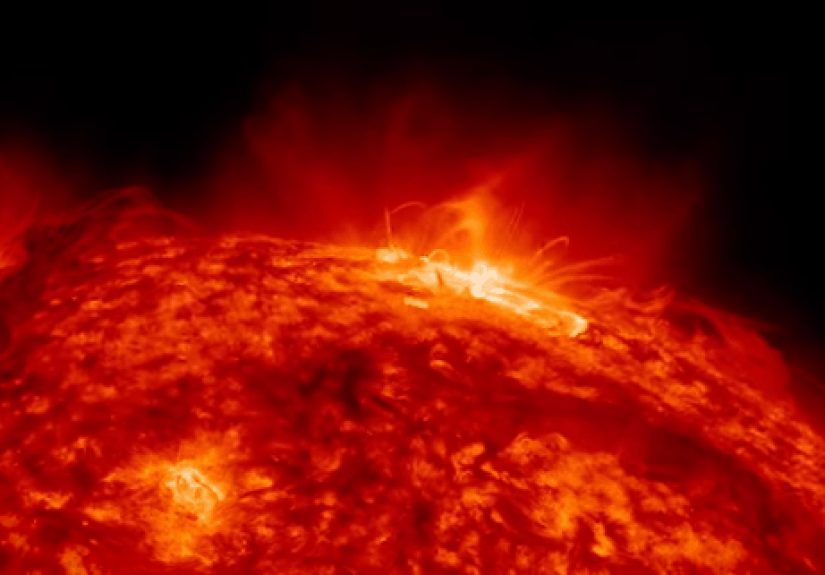
The ocean wasn’t haunted by ghost freighters. The culprit was space weather: the Sun’s habit of tossing magnetized plasma into the
solar system like it’s cleaning out a garage.
This story sits at a weird intersection of wartime strategy, engineering, and astronomy. It starts with a blockade plan,
continues with a minefield that seemed to go rogue, and ends with a lesson modern engineers still care about: when your technology
relies on Earth’s magnetic environment behaving “normally,” you’ve just hired the Sun as an uninvited project manager.
The Mystery Explosions Off Hon La
In the spring of 1972, the U.S. Navy carried out a large aerial mining campaign aimed at restricting maritime access to North Vietnamese ports.
These were not the cartoonish “spiky balls with chains” you might picture from old movies. Many were sophisticated influence mines designed to
detect a ship’s presence and then detonate at the worst possible timemeaning “worst” for the ship, not the mine.
Then came early August. On August 4, 1972, U.S. aircrews reported seeing a rapid cluster of explosions in a coastal minefield near Hon La,
south of the major port area around Haiphong. The timing was the strange part: roughly two dozen detonations appeared in a very short window,
and observers did not report ships moving through the area at that moment.
So what sets off a mine that’s waiting for a ship… when no ship shows up? The answerat least with high probabilitywasn’t sabotage,
faulty wiring, or an underwater creature with a grudge. It was physics. Specifically: magnetism, and the Sun’s ability to yank Earth’s
magnetic field around like it’s tugging a tablecloth.
Quick Primer: How Magnetic-Influence Sea Mines “Know” a Ship Is Nearby
Magnetic-influence mines are basically patient, paranoid sensors with an explosive personality. Instead of relying on contact (bumping a mine),
they look for a signaturemost often a disturbance in the surrounding magnetic field caused by a large metal ship.
Ships bend the magnetic environment
Earth has a magnetic field, and it’s not perfectly uniform. A large steel vessel moving through water alters the local magnetic field in a way
that can be measured. Mines can be designed to sense changes in:
- Amplitude (how strong the field is)
- Polarity and direction (which way the field “points”)
- Gradient (how quickly the field changes over distance)
- Rate of change (how fast it changes over time)
Why they’re hard to “cheat”
Because these mines are looking for patterns, they can be configured to ignore small, random wiggles and respond to a threshold eventlike a ship-sized
magnetic disturbance. Some can even be set to count triggers or delay detonation to complicate sweeping operations.
The catch is obvious: if something else makes the magnetic field change sharply enough, the mine might interpret that as “ship detected.”
In 1972, that “something else” came from 93 million miles away.
Space Weather 101: When the Sun Throws a Magnetized Tantrum
“Space weather” sounds like a sci-fi channel segment, but it’s a real category of events driven by solar activity. The key players are:
solar flares, coronal mass ejections (CMEs), and geomagnetic storms.
Solar flares
A solar flare is a sudden release of electromagnetic energy from the Sun’s atmosphere. The immediate effect can include radio blackouts and
disturbances in the ionosphere (the region of Earth’s upper atmosphere that affects radio signals).
Coronal mass ejections (CMEs)
A CME is a massive eruption of plasma and magnetic field from the Sun’s corona. If it’s aimed toward Earth, it can arrive and slam into Earth’s
magnetosphere. Some CMEs take a few days to arrive. The August 1972 event is famous because one Earth-directed blast traveled from the Sun to Earth
in about 14.6 hoursexceptionally fast by CME standards.
Geomagnetic storms
When a CME interacts strongly with Earth’s magnetic environment, it can trigger a geomagnetic storm: a disturbance in Earth’s magnetosphere that
drives large electrical currents and magnetic fluctuations across the planet. These storms can produce dramatic auroras, but they also cause practical
problemslike messing with radio, satellites, and power systems.
The early August 1972 storm wasn’t just “interesting.” It was intense, complex, and energetic enough to produce broad technological impacts. The same
kind of magnetic disturbance that can induce currents in long conductors (like power lines) can also show up as rapid changes in the local magnetic field
near Earth’s surfaceexactly what magnetic-influence mines are built to detect.
The “Aha” Moment: How a Geomagnetic Storm Can Trip a Magnetic Mine
Picture a magnetic mine as a bouncer at a club door. It’s trained to react when a specific type of “big metal guest” (a ship) walks by and disturbs the
local magnetic environment in a recognizable way. Normally, the ocean is the quiet hallway outside the club.
Now imagine the Sun flips the building’s power, the lights flicker, the bass rattles the walls, and the whole hallway vibrates. The bouncer doesn’t know
the difference between a rowdy guest and the building shakingso it reacts.
What changed in the mine’s world
During a geomagnetic storm, electrical currents in near-Earth space and the upper atmosphere strengthen and shift. Those currents create magnetic
disturbances that can be measured at the ground. If the local field changes enoughespecially quicklyan influence sensor can register an event that
resembles a target signature.
Why “fast” matters
Mines are often configured to detect a moving ship, which creates a changing magnetic environment as it approaches and passes. A storm-driven magnetic
fluctuation can also change rapidly. In a strong event, the timing and magnitude of those swings can look “target-like” to a sensor tuned to detect
changes rather than a perfectly steady baseline.
In other words: the mine didn’t “decide” to explode randomly. It likely did exactly what it was engineered to dorespond to a magnetic event above its
trigger criteria. The problem was that the event came from space, not from a ship.
From “Ghost Ships” to Solar Suspects: The Navy’s Investigation
Unexplained detonations in a controlled minefield are a serious operational problem. The immediate questions would have been practical:
Were the mines malfunctioning? Was someone sweeping them? Was there an unknown vessel? Was there an environmental factor no one modeled?
Investigators dug into the timing and compared it with data from experts who tracked solar and geomagnetic conditions. The conclusion that emergedreported
later through archival material and modern analysiswas that intense solar activity caused geomagnetic disturbances strong enough to trip the mines’
magnetic sensors, and that this explanation fit the observed events with a high degree of probability.
The twist is that much of this analysis lived quietly inside military channels for years. When later researchers revisited the early August 1972 storm using
both scientific records and declassified documentation, the mine detonations became one of the most dramatic “real-world case studies” for what space weather
can do to critical systems.
Why the 1972 Solar Storm Still Matters (Even If You’ve Never Seen a Mine)
The mine incident is a headline-grabber, but it’s also a reminder that modern civilization is packed with magnetic-field-sensitive systems:
- Power grids (geomagnetically induced currents can cause voltage issues and equipment stress)
- Satellites (increased drag, radiation impacts, and charging problems during storms)
- Radio communications (especially high-frequency links and some navigation systems)
- Undersea and long-distance cables (susceptible to induced currents and related disruptions)
- Military sensors (any system relying on geomagnetic stability or precise electromagnetic measurements)
Space weather forecasting exists because the Sun doesn’t check your calendar before launching a CME. Agencies and researchers track solar activity and
translate it into practical risk levels, often using indices that quantify geomagnetic disturbances. One commonly used measure is the planetary K-index
(Kp), which summarizes geomagnetic activity on a 0–9 scale and links to storm severity classifications.
The big lesson: a “rare but plausible” geomagnetic event can create cascading side effects in systems that were otherwise engineered correctly. In 1972,
a minefield reacted. Today, the concern is broader: power stability, GPS reliability, aviation communications, and satellite operations.
Did the Sun Set Off “Dozens” of Minesor Thousands?
You’ll see different numbers depending on what someone is counting and how cautiously they’re speaking. The most widely repeated, well-documented observation
describes roughly two dozen explosions in a short burst witnessed by aircraft near Hon La. That’s the cleanest “dozens” claim.
Other accounts suggest there may have been additional detonations at different times or locations along the coast, potentially raising the total.
But exact totals are harder to nail down publicly because the incident sits inside wartime operations, mixed reporting, and what was later declassified.
A careful way to say it is this: multiple mines detonated unexpectedly, and at least one cluster of about two dozen explosions in seconds was observed,
with the timing aligning strongly with severe geomagnetic disturbances from the early August 1972 solar storm. That combinationdocumented detonations
plus matching space-weather conditionsis what makes the story compelling and scientifically useful.
What Engineers (and Everyone Else) Can Learn From a Minefield and a Sunspot
1) “Environmental assumptions” are part of your design
If a device depends on a stable magnetic baseline, then magnetic stability is a design requirementeven if you never wrote it down. The 1972 incident is a
reminder that nature can violate your assumptions abruptly.
2) Sensors don’t know contextonly signals
A sensor sees patterns. Humans assign meaning. Mines were engineered to react to a certain magnetic disturbance. The storm created a disturbance. The mine
reacted. That’s not “dumb tech.” That’s “tech doing exactly what it was told.”
3) Rare events can produce outsized consequences
Extreme solar storms are not everyday occurrences, but they’re not mythical either. The August 1972 storm is often discussed alongside other historic events
because of its intensity and fast Sun-to-Earth transit time. Planning for low-frequency, high-impact events is annoyinguntil it’s urgent.
4) Cross-discipline knowledge saves time
This story involves naval operations, mine engineering, geomagnetism, and solar physics. The faster experts share data across domains, the faster mysteries
get solvedand the faster systems get hardened against weird failures.
Conclusion: The Sun Doesn’t Care About Your Minefield
The Vietnam War mine detonations of August 1972 are a startling example of how “space weather” can have immediate, physical consequences on Earth.
A powerful solar storm disturbed Earth’s magnetic environment; magnetic-influence mines interpreted those disturbances as target-like signals; and a cluster
of mines detonated without ships in sight. The result was an operational mystery that later became a modern case study: the Sun can interfere with technology
in ways that are both invisible and dramatic.
If there’s a punchline here, it’s not about the war or the explosionsit’s about humility. Humans build clever systems with clever sensors. The Sun casually
rearranges the magnetic environment those sensors live in. Sometimes the universe doesn’t “break” your technology. It just reminds your technology who
controls the operating conditions.
Experiences Related to “How the Sun Set Off Dozens of Mines During the Vietnam War” (Approx. )
One of the strangest “experiences” this story offers is the feeling of watching two worlds overlap: the very human world of strategy and conflict, and the
indifferent world of solar physics. Even if you never touch a naval system in your life, you’ve probably had a moment where the environment did something
unexpected and your plan instantly looked… optimistic. This is that, scaled up to history.
Imagine being an analyst in 1972 tasked with explaining an event that looks impossible on first glance. You’d start with the obvious suspects: equipment
failure, mis-set parameters, accidental triggers, or enemy action. Then you’d look at the timing and realize the explosions cluster in a way that feels
“outside” the normal noise of operations. That’s the first emotional twist: the pattern is too clean to dismiss, but too weird to accept.
Next comes the uncomfortable step: calling people who study something you don’t. In this case, experts tracking geomagnetic activity and solar eruptions.
This is where the story becomes surprisingly modern. Today, if a system glitches, engineers often pull logs, compare timestamps, and correlate with external
eventsnetwork outages, cloud-region incidents, a bad dependency update. In 1972, the “external event” wasn’t a software patch. It was a geomagnetic storm
changing the baseline conditions the mines depended on. That’s an oddly relatable experience: the cause is real, but it lives outside the system’s internal
logic.
There’s also an experience angle for anyone who loves declassified history or “lost” technical stories. The mine incident stayed buried in archives for
years, which is a reminder that history is full of solved mysteries that simply weren’t shared widely. When researchers later revisited the storm using
scientific data and military documentation, it probably felt like pulling a thread and watching a knot loosen: the same storm that caused radio blackouts
and power issues could plausibly create the magnetic fluctuations needed to trip influence mines. Suddenly, the mystery doesn’t look supernaturalit looks
inevitable.
And then there’s the experience of reading the story with a modern brain. You can’t help but translate it into today’s risks. If a mine sensor can be fooled
by space weather, what about the sensors we rely on every daynavigation, communications, timing signals, grid stability, satellite operations? The experience
becomes less “wow, that happened” and more “wow, our world still runs inside a magnetic environment we don’t control.” That thought is equal parts thrilling
and slightly annoyinglike realizing your phone’s battery life depends on you, yes, but also on physics and the weather and the universe’s mood.
Finally, the story leaves you with a quieter experience: respect for the fact that nature doesn’t aim at us, but it can still hit us. In 1972, the Sun didn’t
pick a side or choose a target. It simply erupted. The mines responded to a signal. People witnessed consequences. That’s the weirdest, most human takeaway:
sometimes history turns not only on decisions, but on conditionslike a storm in the sky you can’t see from the deck of a ship.