Table of Contents >> Show >> Hide
- What Does a Car Fuse Actually Do?
- Signs You May Have a Blown Fuse
- Before You Start: A Few Safety Rules
- How to Change Fuses in a Car: 6 Easy Replacement Steps
- Common Fuse Replacement Mistakes to Avoid
- When You Should Call a Professional
- Quick FAQ
- Real-World Experiences and Lessons From the Driveway
- Final Thoughts
A dead radio is annoying. A power outlet that suddenly quits is mildly rude. But when your headlights, wipers, or blower motor stop working, your car is no longer being “quirky” it is sending a tiny, plastic distress signal. In many cases, that signal is a blown fuse.
The good news? Replacing a car fuse is usually one of the easiest DIY fixes you can do. It is quick, cheap, and far less intimidating than the words “electrical system” make it sound. You do not need a full garage, a dramatic soundtrack, or a wrench the size of a baseball bat. You just need the right fuse, a little patience, and the wisdom to avoid turning a 10-amp problem into a “why does my dashboard smell toasted?” problem.
In this guide, you will learn exactly how to change fuses in a car in six easy replacement steps, how to tell whether a fuse is actually blown, which mistakes to avoid, and when it is smarter to let a professional take over. We will also cover real-world experiences drivers run into, because the world of car fuses is filled with surprisingly humbling moments.
What Does a Car Fuse Actually Do?
A fuse is a small safety device built to protect a vehicle’s electrical circuit. Think of it as the sacrificial hero of the system. When too much current flows through a circuit, the fuse blows first so the wiring, switch, module, or motor does not get damaged.
That is why fuses matter so much. They are cheap on purpose. A one-dollar fuse is much nicer than a several-hundred-dollar wiring repair, a failed control module, or a dashboard full of warning lights that make you question your life choices.
Modern cars may have more than one fuse box. Common locations include:
- Under the dashboard, often near the driver’s knee area
- Under the hood, near the battery or engine bay
- In the trunk or cargo area on some vehicles
Many vehicles also include spare fuses and a small plastic fuse puller inside the fuse box cover. That tiny tool may not look like much, but it can save you from fumbling around with pliers like you are trying to remove a splinter from a robot.
Signs You May Have a Blown Fuse
Before you start popping open fuse-box covers, make sure the symptom points to a fuse in the first place. A blown fuse often causes one specific electrical accessory or system to stop working. Common examples include:
- Power windows stop responding
- Interior lights go dark
- Radio or infotainment screen will not power on
- 12-volt outlet or cigarette lighter stops working
- Turn signals, horn, wipers, or blower motor suddenly quit
Sometimes the fuse itself shows visible damage. The metal strip inside may be broken, blackened, or burnt-looking. But not every bad fuse looks dramatically destroyed. Some can fail in a less obvious way, which is why matching symptoms to the correct fuse location matters.
Before You Start: A Few Safety Rules
Fuse replacement is simple, but simple does not mean sloppy. Follow these basic rules:
Turn the vehicle off
Shut off the engine and the affected accessory before touching the fuse box. That lowers the risk of sparks, accidental shorts, and instant fuse re-blow drama.
Use the exact same fuse type and amperage
This is the golden rule. Replace the old fuse with one that matches the same size, style, and amp rating. Never “upgrade” to a higher-amp fuse just because that is what you have in the glove box. Bigger is not better here. Bigger can mean damaged wiring and much bigger repair bills.
Do not improvise
No foil. No random wire. No “temporary solution” invented by your cousin who once fixed a lawn mower with a paper clip. Use an actual automotive fuse designed for the circuit.
Know when to stop
If the new fuse blows immediately, that usually means there is an underlying electrical fault. Replacing fuse after fuse is not troubleshooting. It is just feeding the problem snacks.
How to Change Fuses in a Car: 6 Easy Replacement Steps
Step 1: Turn Off the Car and Find the Correct Fuse Box
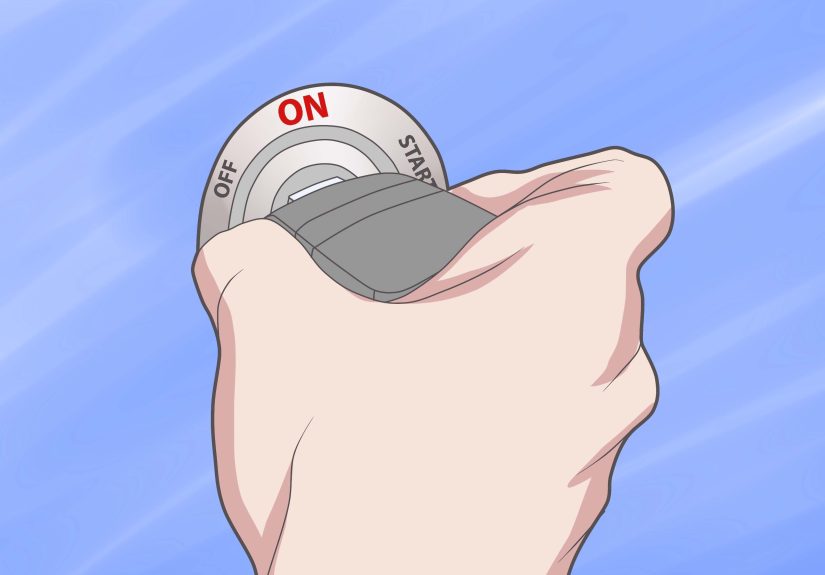
Start by parking safely, turning the ignition off, and removing the key or shutting the vehicle down completely. Then check your owner’s manual to locate the correct fuse box. Your car may have multiple panels, and the one you need depends on which system has stopped working.
For example, a dead power outlet may be tied to the interior fuse panel, while cooling fans or headlights may be protected by the engine-bay fuse box. The owner’s manual and the fuse-box cover diagram are your roadmap here. Do not guess unless you enjoy treasure hunts with worse lighting.
Step 2: Identify the Blown Fuse
Once you open the fuse box, find the diagram on the inside of the cover or in the owner’s manual. Look for the label that matches the non-working item, such as RADIO, WIPER, HORN, P/OUTLET, ACC, or similar shorthand.
Check the fuse visually. Most blade fuses are translucent enough to show the metal strip inside. If the strip is broken or the inside looks dark or burnt, the fuse is likely blown.
Pay close attention to the number printed on top. That number is the amperage rating. It must match the replacement. The fuse color often helps too, but the printed number is the detail that matters most.
Step 3: Remove the Fuse Carefully
Use the fuse puller if your car includes one. It is usually clipped inside the fuse box. Grip the fuse gently and pull it straight out. If you do not have a fuse puller, needle-nose pliers can work, but use a light touch. You do not want to crack the plastic body or damage surrounding fuses.
If the fuse is stubborn, resist the urge to yank it like you are starting a lawn mower. Wiggle gently and pull straight. Patience wins. Rage rarely improves electrical work.
Step 4: Match the Replacement Fuse Exactly
Before installing anything, compare the old fuse with the new one. They should match in:
- Amperage rating
- Physical size
- Fuse type
Common automotive fuses include standard blade, mini blade, and micro blade designs. Some vehicles also use larger high-amperage fuses under the hood. If the fuse shape or rating is different, stop and get the correct part.
This is where many DIY mistakes happen. A lower-rated fuse may blow too soon. A higher-rated fuse may allow too much current through the circuit before it fails, which defeats the whole purpose of the fuse. Translation: the cheap part stops being a hero and your wiring becomes the victim.
Step 5: Install the New Fuse
Push the replacement fuse into the same slot until it is seated firmly. It should fit snugly without forcing it. If it feels loose, crooked, or wrong, double-check the size and location.
For most everyday cabin and accessory fuses, installation is that simple. However, some high-amperage fuses in the engine bay are bolted in place rather than just pressed into a socket. Those require extra caution, and on hybrids or electric vehicles, certain high-voltage components should be left to trained technicians.
Step 6: Test the Circuit and Watch for Repeat Failure
Once the new fuse is installed, close the panel, turn the vehicle on, and test the affected system. If the radio powers up, the outlet works, or the wipers come back to life, congratulations you just won a tiny but satisfying battle against automotive inconvenience.
But do not stop at “it works.” Pay attention over the next few uses. If the fuse blows again, there is probably a deeper issue, such as a short circuit, damaged wiring, moisture intrusion, or a failing component drawing too much current.
A fuse that fails once may be a fluke. A fuse that fails twice is asking for an investigation.
Common Fuse Replacement Mistakes to Avoid
Using the Wrong Amperage
This is the biggest mistake and the most dangerous one. Always match the exact amp rating of the original fuse.
Replacing a Fuse Without Finding the Cause
If the same fuse keeps blowing, do not keep replacing it and hoping the car changes its mind. Something is overloading that circuit.
Assuming Every Electrical Problem Is a Fuse
Sometimes the issue is a bad relay, dead switch, failed motor, weak battery, or damaged wiring. The fuse is only one possible culprit.
Forgetting There May Be More Than One Fuse Box
Many drivers check the panel under the dash and assume there is nothing wrong, only to discover the relevant fuse is under the hood.
Handling Bigger Engine-Bay or Hybrid Fuses Casually
Large bolted fuses and high-voltage systems are a different category from a simple radio fuse. Treat them with caution and call a pro when needed.
When You Should Call a Professional
DIY fuse replacement is great for simple blown fuses. It is not the right move in every situation. Get professional help if:
- The replacement fuse blows immediately
- You smell burning plastic or see melted fuse-box components
- Several electrical systems fail at once
- You suspect water damage, wiring damage, or rodent-chewed wires
- The fuse is large, bolted in, or part of a hybrid or EV high-voltage system
- You are unsure which fuse controls the problem
A mechanic can trace the actual electrical fault instead of just replacing the symptom. That matters because fuses usually blow for a reason. They are not moody. They are protective.
Quick FAQ
How much does it cost to replace a car fuse?
If you do it yourself, many common fuses cost only a few dollars or less per piece. That makes fuse replacement one of the most budget-friendly car fixes around.
Can I drive with a blown fuse?
That depends on what the fuse controls. A blown fuse for a power seat is inconvenient. A blown fuse for lights, wipers, horn, or cooling components can be a safety issue.
Can I use a fuse with a slightly higher amp rating?
No. Use the exact rating specified by the vehicle. “Slightly higher” is how small electrical problems become expensive stories.
What if the fuse looks fine but the accessory still does not work?
The problem may be elsewhere in the circuit. At that point, the issue could involve a relay, switch, wiring fault, module, or the accessory itself.
Real-World Experiences and Lessons From the Driveway
One of the most common real-world fuse experiences starts with a phone charger. A driver plugs in an old accessory, the 12-volt outlet stops working, and suddenly the car owner is convinced the whole electrical system has collapsed. In reality, it is often just the outlet fuse doing its job. This happens so often because power outlets are easy to overload with cheap adapters, worn plugs, or devices that do not play nicely with the car’s circuit.
Another familiar experience happens at night, in the rain, or in a parking lot where the lighting is somehow always terrible. A driver loses one small electrical function, opens the fuse panel, and realizes every fuse is approximately the same size, same shape, and somehow invisible to the human eye after sunset. This is where people learn an unforgettable lesson: keep a flashlight in the car. A spare fuse without light is just a tiny colorful mystery.
Many drivers also discover that the owner’s manual suddenly becomes the most important book they own for about seven minutes. Nobody reads it for fun, but when a fuse goes out, that manual becomes a map, translator, and emotional support document all at once. It tells you which fuse matters, where it lives, and what amp rating it needs. Without it, you can end up pulling five healthy fuses just to find the guilty one.
There is also the classic beginner mistake: replacing a blown fuse, seeing the problem fixed, and celebrating a little too early. Then the fuse blows again the next day. That second failure teaches a more advanced lesson a fuse is often a warning, not the root cause. Maybe a wire is pinched in a door jamb. Maybe moisture got into a connector. Maybe an accessory motor is failing and drawing too much current. The repeat blowout is the car’s way of saying, “Nice try, but we are not done here.”
Some experiences are even more humbling. A driver checks one fuse box, finds nothing wrong, and assumes the diagnosis is impossible. Later, they discover the car has another fuse panel under the hood or in the trunk. Suddenly the electrical mystery becomes a lesson in not underestimating modern vehicles. Cars love hidden compartments. Apparently, they also love backup fuse locations.
Then there is the moment almost every DIY driver remembers: comparing two fuses that look almost identical but are not. Same family, different amperage. Same size, different color. Same confidence, very different result. That experience teaches careful attention better than any lecture can. A fuse swap is simple, but it still rewards accuracy.
Over time, drivers who have dealt with blown fuses usually become better prepared. They keep a few spare fuses in the glove box. They save a photo of the fuse diagram on their phone. They stop buying sketchy charging accessories. And they learn that not every electrical issue needs a tow truck, but some absolutely do need a professional diagnosis. That balance is the real experience advantage: knowing when a fuse replacement is a quick win and when it is the first clue in a bigger electrical story.
Final Thoughts
Learning how to change fuses in a car is one of those small skills that pays off immediately. It can save you time, money, and the frustration of booking a service visit for a problem that takes five minutes to fix. The process is straightforward: find the correct fuse, remove it carefully, replace it with the exact same type and amperage, and test the circuit.
Just remember the golden rule: the right fuse protects the car, while the wrong fuse can create bigger trouble. If the same fuse keeps blowing or you are dealing with larger under-hood or hybrid-system fuses, do not treat it like a guessing game. That is when smart DIY turns into smart restraint.
In other words, replacing a car fuse is easy. Replacing a fried wiring harness is not. Choose your adventure wisely.