Table of Contents >> Show >> Hide
- Why Bed Bug Checks Matter When You Travel
- What Bed Bugs Look Like
- What to Do the Moment You Enter the Room
- The Fastest Bed Bug Hotel Inspection Routine
- Where Bed Bugs Hide Most Often While Traveling
- How to Protect Your Bags and Clothes During the Trip
- What to Do If You Find Bed Bugs in Your Room
- What Not to Do
- How to Check Your Luggage Before Going Home
- Are Bed Bugs Dangerous?
- A Realistic Example of a Smart Traveler Check
- How to Stay Calm Without Becoming Paranoid
- Traveler Experiences and Lessons Learned
- Final Thoughts
- SEO Tags
Travel is supposed to bring home photos, snacks, and maybe one slightly overpriced airport hoodie. It is not supposed to bring home bed bugs. Unfortunately, these tiny hitchhikers are very good at turning a perfectly normal trip into a deeply personal grudge match with your suitcase.
The good news is that learning how to check for bed bugs while traveling is not complicated. You do not need a hazmat suit, a degree in entomology, or the instincts of a bloodhound. You just need a smart routine, a few minutes of patience, and the willingness to inspect a hotel room before you cannonball onto the mattress.
In this guide, you will learn how to spot bed bug warning signs, where to look first, what to do if you find evidence, how to protect your luggage, and how to avoid carrying unwanted guests back home. Whether you stay in luxury hotels, budget motels, vacation rentals, dorms, or guesthouses, the same rule applies: trust the photos online, but verify the bed in person.
Why Bed Bug Checks Matter When You Travel
Bed bugs are excellent travelers. They do not care whether your room has five stars, two stars, or a decorative towel folded into a swan. They hide in cracks, seams, furniture joints, luggage racks, and upholstered surfaces, then hitch a ride in bags, clothes, or personal items.
One of the biggest misconceptions is that bed bugs only show up in dirty places. Not true. Cleanliness is not the deciding factor. Traffic is. A room with frequent turnover can give bed bugs plenty of opportunities to move from one guest’s luggage to another. That is why even very nice hotels can occasionally have a problem.
Another important point: you cannot confirm bed bugs based on bites alone. Some people react strongly, some barely react at all, and skin irritation can come from many causes. A proper check means looking for physical evidence in the room, not just blaming every mysterious itch on the mattress.
What Bed Bugs Look Like
If you want to win this battle, you need to know your opponent. Adult bed bugs are small, flat, reddish-brown insects, often compared to apple seeds in size and color. Younger bed bugs, called nymphs, are smaller and paler, which makes them harder to spot. Eggs are tiny, whitish, and easy to miss unless you are looking closely.
In real-world travel situations, most people do not find one perfectly posed bug waiting under a spotlight. Instead, they find signs of bed bug activity. These signs are often easier to detect than the bugs themselves.
Common signs of bed bugs in a hotel or rental room
- Small dark or black spots that look like ink dots or pepper-like smears
- Rust-colored or reddish stains on sheets or mattresses
- Shed skins or translucent shells
- Tiny white eggs or eggshells in seams and crevices
- Live bed bugs tucked into mattress piping, headboards, or furniture joints
Think of bed bug inspection like detective work. You are not waiting for a dramatic reveal. You are scanning for clues.
What to Do the Moment You Enter the Room
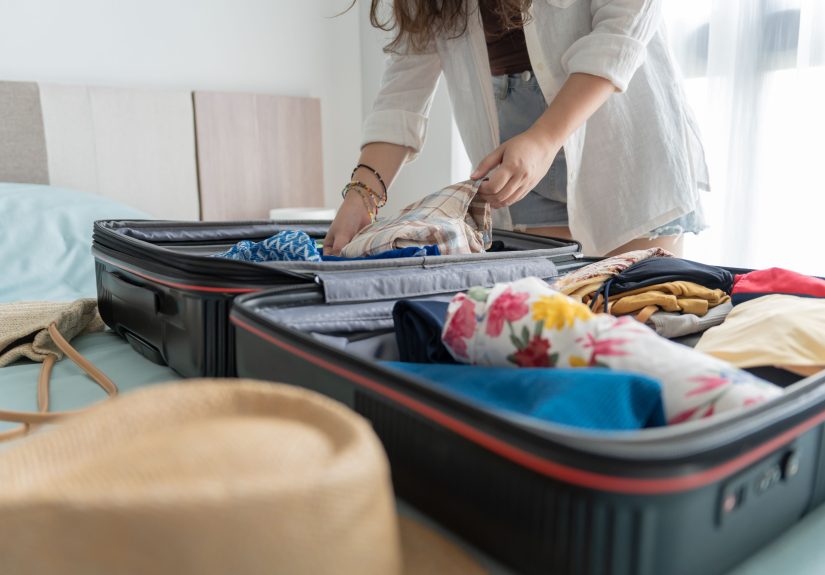
The first five minutes matter. Do not toss your backpack on the bed. Do not unzip your suitcase on the luggage bench like you are starring in a carefree travel commercial. Pause. Inspect first.
Step 1: Park your luggage somewhere safer
Before you inspect anything, place your luggage in a lower-risk spot. Many travelers use the bathroom floor or bathtub because bed bugs are less likely to be hanging out there than on soft furniture, bedding, or carpet. A hard table away from the bed can also work. Keep your bags zipped while you inspect.
Step 2: Grab a flashlight
Your phone flashlight is usually enough. You are checking tight seams, shadowy corners, and the kind of little hiding places that bed bugs consider prime real estate.
Step 3: Start with the bed
Pull back the sheets and inspect the mattress seams, piping, and corners. Pay extra attention to the head of the bed, where bed bugs often gather because that area is close to where people sleep. Lift the edges slightly and look for dark spotting, shed skins, or live insects.
Step 4: Check the headboard and bed frame
If the headboard is attached to the wall, look behind it as much as you reasonably can. Bed bugs love narrow cracks. Also inspect the bed frame, especially screw holes, joints, and any gaps in wood or metal.
Step 5: Inspect nearby furniture
Do not stop at the mattress. Check the nightstand, especially drawer seams, joints, and underside edges. Then inspect upholstered chairs, couches, benches, and the luggage rack. If the room has a fabric-covered headboard or padded bench, give it extra attention.
Step 6: Look at the extras people forget
Bed bugs can also hide around baseboards, behind wall art, inside closet corners, and in the cracks around lamps or outlets near the bed. You do not need to dismantle the room like a crime scene investigator, but a careful scan around the sleeping area is smart.
The Fastest Bed Bug Hotel Inspection Routine
If you want a practical system, use this quick checklist every time you check in:
- Leave luggage zipped in the bathroom or on a hard surface.
- Pull back bedding and inspect mattress seams and corners.
- Check the headboard and bed frame.
- Inspect the luggage rack before using it.
- Examine the nightstand and nearby upholstered furniture.
- Scan for dark spots, blood stains, shed skins, eggs, or live bugs.
- Only unpack after the room passes inspection.
This routine can take less than ten minutes. That is a tiny investment compared with the headache of bringing bed bugs home and spending the next month treating luggage like radioactive material.
Where Bed Bugs Hide Most Often While Traveling
If you are wondering where to focus your attention, start with the places closest to where people rest and where fabric meets cracks or seams. Bed bugs want shelter during the day and access to a sleeping host at night.
Highest-risk hiding spots
- Mattress seams, piping, and labels
- Box spring edges and corners
- Headboards, especially wall-mounted ones
- Bed frames and joints
- Nightstands, drawers, and screw holes
- Upholstered chairs, couches, and benches
- Luggage racks with fabric straps
- Cracks behind wall art and near baseboards
One helpful mindset shift: bed bugs are called bed bugs, but they are not loyal to beds. They are equal-opportunity squatters.
How to Protect Your Bags and Clothes During the Trip
Even if your room looks clear, it is smart to travel with a few low-effort habits that reduce risk. Bed bug prevention is not about fear. It is about being mildly suspicious in a highly organized way.
Smart luggage habits
- Keep bags off beds, couches, and carpet whenever possible.
- Use a metal or hard luggage rack only after inspecting it.
- Keep suitcases zipped when not actively using them.
- Avoid unpacking clothes into hotel drawers unless necessary.
- Use sealed packing cubes or plastic bags for clothing and laundry.
Some frequent travelers go one step further and use large sealable bags or suitcase liners. It may not look glamorous, but neither does spending your weekend vacuuming suitcase seams with the intensity of a space engineer.
What to Do If You Find Bed Bugs in Your Room
First, do not panic. Second, do not convince yourself that one suspicious dot is “probably just decorative mattress seasoning.” If you find clear evidence, act right away.
Your next moves
- Take photos of the evidence.
- Notify the front desk or host immediately.
- Request a different room that is not next door and not directly above or below the original room if possible.
- Inspect the new room before moving your belongings in.
- Keep your items contained and zipped during the transfer.
Do not accept a room switch blindly. Bed bugs can spread to nearby rooms, so distance matters. And no, changing only the sheets is not a real solution. That is like fixing a leaky roof by complimenting the ceiling.
What Not to Do
Travelers often make a few understandable mistakes when they are tired, rushed, or grossed out. Avoid these common missteps:
- Do not put your suitcase on the bed while you inspect.
- Do not assume no bites means no bed bugs.
- Do not assume bites automatically mean bed bugs.
- Do not use hotel drawers without thinking about the risk.
- Do not spray random pesticides on your own belongings indoors.
- Do not use bug bombs or over-the-counter foggers in an attempt to “be safe.”
Improper insecticide use can be ineffective and unsafe. When there is a real infestation, professional treatment is the correct path. Your job as a traveler is inspection, containment, and avoidance.
How to Check Your Luggage Before Going Home
Before you leave the hotel, do one last inspection. Open your suitcase and look along the seams, zipper tracks, pockets, and folds. Shake out clothing bags if needed. Check shoes, toiletry bags, and anything that spent time near the bed or furniture.
At home, do not drag everything straight into the bedroom and call it a day. Handle post-trip unpacking with a little strategy.
Best post-travel routine
- Unpack in a garage, laundry room, entryway, or other non-bedroom area if possible.
- Place clothes directly into the washer or dryer.
- Use the hottest wash and dry settings the fabric can safely handle.
- For many items, a hot dryer cycle of at least 30 minutes is a strong precautionary step.
- Vacuum the inside and outside of the suitcase, especially seams and pockets.
- Store luggage away from sleeping areas.
Heat is one of the most useful tools for dealing with possible hitchhikers in clothing and soft items. Just make sure you follow fabric care labels so your favorite travel shirt does not become a crop top by accident.
Are Bed Bugs Dangerous?
Bed bugs are not known to spread disease, but that does not make them harmless in practical terms. They can cause itchy bites, lost sleep, stress, and a whole lot of mental static. For some travelers, the anxiety is worse than the bites themselves.
Reactions vary. Some people develop itchy clusters or lines of bumps. Others notice nothing at all for days, and some may take up to two weeks to show a skin reaction. That delay is one reason physical inspection is more reliable than using your skin as a trip report.
A Realistic Example of a Smart Traveler Check
Imagine you arrive at a hotel after a long flight. You are tired, your phone battery is hanging on emotionally, and the bed looks dangerously inviting. Instead of flopping onto it, you wheel your suitcase into the bathroom and keep it zipped. You turn on your flashlight, peel back the sheets, and inspect the mattress corners. No dark spotting. Good start.
Next, you check the headboard and the luggage rack straps. On the underside of the rack, you notice tiny black smears and what looks like a shed skin. That is enough to stop the process. You photograph it, call the front desk, and request a room away from the original one. In the new room, you repeat the inspection and find nothing suspicious. Crisis avoided, travel dignity preserved.
This is the value of a routine. You do not need perfect certainty. You need enough awareness to avoid obvious risk.
How to Stay Calm Without Becoming Paranoid
There is a fine line between being careful and turning every hotel stay into a full tactical operation. The goal is not paranoia. The goal is consistency.
Do a quick inspection every time. Keep luggage off the bed. Use sealed bags for laundry. Check your suitcase before coming home. That simple system catches a lot of problems without draining the fun out of travel.
Think of bed bug prevention like wearing a seat belt. You are not expecting disaster. You are just being smart enough to avoid regret.
Traveler Experiences and Lessons Learned
Travelers who have dealt with bed bugs often say the same thing afterward: they wish they had checked the room before unpacking. It is easy to understand why people skip that step. You get in late, your back hurts, the air conditioning is humming, and your entire personality becomes “person seeking pillow.” But bed bugs love that exact moment of low vigilance.
One common experience goes like this: a traveler drops a suitcase on the bed, showers, sleeps, and wakes up with a few itchy bumps. They assume it is mosquitoes, stress, or bad hotel detergent. Only later, back at home, they notice tiny black dots along the suitcase zipper or a bug tucked into a packing cube seam. Suddenly the trip souvenir is not a fridge magnet. It is a logistical nightmare.
Other travelers catch the problem early because they know where to look. They leave their bags in the bathroom, inspect the mattress piping, and find suspicious spotting behind the headboard within minutes. In those cases, the inspection feels slightly annoying in the moment but wildly satisfying later. Nothing boosts travel confidence like spotting a problem before it gets invited into your house.
Families often learn that organization matters just as much as inspection. Parents who separate clean clothes, dirty clothes, shoes, and toiletries into individual sealed bags tend to have an easier time if they need to switch rooms or unpack cautiously at home. Instead of sorting through one chaotic suitcase blob, they can isolate categories fast. That turns a stressful situation into a manageable one.
Business travelers, meanwhile, often discover that frequent short trips require a repeatable system. People who travel weekly for work cannot spend an hour investigating every lamp base like they are auditioning for a detective series. What works better is a two-minute luggage placement rule, a five-minute bed-and-furniture scan, and a home routine that includes direct-to-dryer clothing treatment and suitcase vacuuming. Boring? Yes. Effective? Also yes.
Some travelers say the worst part is not the bugs themselves but the uncertainty afterward. Did anything get into the luggage? Is that speck lint or trouble? Should everything be washed again? A strong inspection routine reduces that uncertainty. The more methodical you are on arrival and departure, the less likely you are to spend the next week staring suspiciously at your socks.
The best lesson from real travel experiences is simple: bed bug checks work best when they are normal, not dramatic. You do not need fear. You need habits. Treat every room the same way, even the fancy one. Keep your bag off soft surfaces. Look before you unpack. Heat-treat clothing when you get home. With those steps, you dramatically reduce the odds that your vacation follows you home in the worst possible way.
Final Thoughts
Learning how to check for bed bugs while traveling is one of those life skills that seems unnecessary until the day it becomes very, very necessary. A few careful minutes at check-in can save you weeks of frustration later.
The smartest approach is simple: inspect before unpacking, focus on the bed and nearby furniture, keep luggage contained, and handle clothes and bags carefully when you get home. That is it. No panic. No guesswork. Just a practical routine that helps you travel more confidently.
Because the only thing you should be bringing back from your trip is a good story, not a tiny six-legged roommate.