Table of Contents >> Show >> Hide
- Why Washing Machines Start Smelling (Even When You Use Detergent)
- Before You Start: Safety + “Don’t Create a Chemistry Problem”
- What You’ll Need
- How to Clean a Front-Load Washer (Step-by-Step)
- Step 1: Empty the washer (yes, check the drum for strays)
- Step 2: Clean the detergent drawer (the sticky truth zone)
- Step 3: Scrub the rubber door gasket (the odor headquarters)
- Step 4: Clean the pump filter / coin trap (if your washer has one)
- Step 5: Run a “Clean Washer” cycle (or the hottest, longest empty cycle)
- Step 6: Wipe down the drum and door
- Step 7: Leave the door open
- How to Clean a Top-Load Washer (Step-by-Step)
- DIY vs. Store-Bought Washer Cleaners: What Actually Makes Sense?
- A Simple Maintenance Routine for Fresh-Smelling Laundry
- Troubleshooting: If Your Washer Still Smells
- FAQ: Quick Answers People Actually Want
- Conclusion: A Clean Washer = Laundry That Smells Like “Clean,” Not “Complicated”
- Real-World Experiences: What People Learn After They Finally Clean Their Washer (Extra)
Your washing machine works hard. It also quietly collects a thrilling buffet of detergent residue, fabric softener film,
lint confetti, and “mystery moisture” that loves to hang out in dark corners. Then one day your “fresh linen” cycle starts
smelling like a gym bag that took up fishing. Good news: you don’t need a hazmat suitjust a smart, regular cleaning routine.
Why Washing Machines Start Smelling (Even When You Use Detergent)
Washing machines don’t magically self-clean. In fact, modern high-efficiency (HE) washers use less water, which is great for
billsbut it also means there’s less rinsing power to carry away leftover suds and grime. Over time, that residue can form
a slimy biofilm (gross but real) that holds onto odors. Add in moisture trapped in rubber seals, detergent drawers, and filters,
and you’ve created the world’s smallest swampconveniently located next to your laundry baskets.
Common odor triggers
- Too much detergent (more soap ≠ cleaneroften it’s the opposite).
- Fabric softener buildup that leaves a waxy coating behind.
- Wet laundry left sitting in the drum long enough to start a mildew party.
- Front-load gasket moisture trapped in folds you never think to wipe.
- Clogged filters/coin traps holding lint, hair, and small objects (yes, even that missing sock buddy).
- Hard water minerals that mix with detergent and form stubborn deposits.
Before You Start: Safety + “Don’t Create a Chemistry Problem”
- Never mix bleach and vinegar (or bleach and anything acidic). It can release dangerous fumes.
- If you’re using bleach, ventilate the room and measure carefully.
- Check your owner’s manual for “Clean Washer,” “Tub Clean,” “Self Clean,” or “Pure Cycle.” Use that cycle if you have it.
- If your washer has a pump filter/coin trap, expect a little water when you open ithave towels ready.
What You’ll Need
- Microfiber cloths (or old rags you don’t mind sacrificing to the cause)
- An old toothbrush or small soft brush
- Small bucket or shallow pan (for filter cleanout)
- Hot water
- Option A: Washing machine cleaner tablet/liquid (commercial cleaner)
- Option B: Chlorine bleach (for a sanitizing clean, when appropriate)
- Optional: Baking soda (for deodorizing and gentle scrubbing)
- Optional: Mild dish soap (for exterior + dispensers)
How to Clean a Front-Load Washer (Step-by-Step)
Front-load washers are amazing at cleaning clothesand also amazing at hiding moisture in the door gasket.
This routine tackles the places odor loves most.
Step 1: Empty the washer (yes, check the drum for strays)
No laundry, no detergent pods, no “I’ll just toss this towel in too.” You want an empty drum for a true deep clean.
Step 2: Clean the detergent drawer (the sticky truth zone)
- Remove the detergent dispenser drawer (most have a release tab).
- Rinse it under warm water and scrub corners with a toothbrush.
- Wipe the drawer cavity inside the machinethis area often grows gunk where liquid detergent drips and dries.
- Dry the drawer and slide it back in (or leave it ajar after future loads to air out).
Step 3: Scrub the rubber door gasket (the odor headquarters)
Pull back the rubber folds and wipe inside. You’re looking for lint, hair, coins, and the occasional “how did that get there?”
item. If you see mildew spots, scrub gently with a damp cloth and a little baking soda paste or a cleaner recommended for your washer.
- Pro habit: After each laundry day, wipe the gasket dry. It takes 10 seconds and saves you 10 minutes later.
Step 4: Clean the pump filter / coin trap (if your washer has one)
Many front-load machines have a small access panel on the lower front. Behind it is the pump filterbasically the washer’s lint-and-coin catcher.
When it clogs, water can stagnate and smell funky, and your washer may drain poorly.
- Turn off the washer and place towels on the floor.
- Open the access door.
- Place a shallow pan under the filter area.
- Open slowly and let any water drain out.
- Remove debris from the filter, rinse it, then reinstall it securely.
If you’re not sure where the filter is, search your model name + “pump filter” in the manual. Some washers don’t have a user-accessible filter.
Step 5: Run a “Clean Washer” cycle (or the hottest, longest empty cycle)
This is the main event. Pick one approach and stick to it for the cycledon’t mix methods.
Option A: Use a commercial washing machine cleaner
- Place the cleaner tablet (or pour cleaner liquid) into the drum as directed.
- Select Clean Washer / Tub Clean / Self Clean. If you don’t have one, use the hottest water and longest cycle available.
- Let the cycle complete fully (including any rinse/spin phases).
Option B: Use chlorine bleach (for sanitizing)
Bleach can be effective for a periodic sanitizing clean, especially if you’ve already got mildew odors. Use the amount recommended by your washer brand
or the cleaning guidance from reliable home-care resources. Then run the hottest/longest cycle and let it fully rinse.
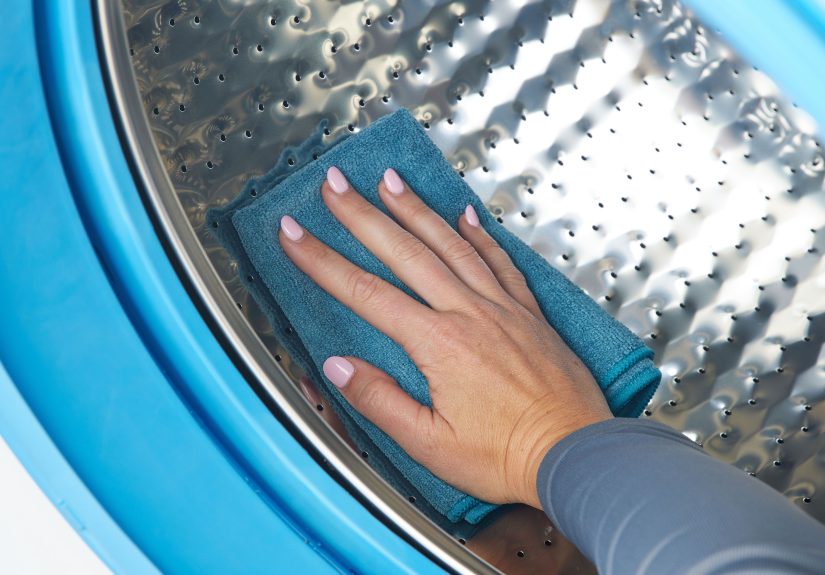
Step 6: Wipe down the drum and door
When the cycle finishes, wipe the inside drum, door glass, and gasket. Any remaining moisture is basically an open invitation for mildew to return.
Step 7: Leave the door open
Airflow is the simplest “fresh smell” hack. Leave the washer door cracked open (and the detergent drawer slightly open) so the interior can dry.
How to Clean a Top-Load Washer (Step-by-Step)
Top-load washers usually have fewer gasket issues, but they can still grow residue under the rim, around the agitator, and in dispensers.
The goal is the same: hot water + cleaning action + wipe the sneaky spots.
Step 1: Run a tub-clean cycle (or hottest, largest-load setting)
- Start with an empty washer.
- Select Clean Washer / Tub Clean if available. If not, set the washer to the hottest water and largest load.
- Add a washing machine cleaner (or bleach if appropriate for your washer and you’re following brand guidance).
- Let the cycle finish. If your washer allows soaking, letting it sit can help loosen buildup.
Step 2: Clean dispensers and removable parts
If your top-loader has removable dispensers (fabric softener cup, bleach dispenser, detergent tray), take them out, wash with warm soapy water,
scrub crevices, and reinstall.
Step 3: Wipe under the rim and around the agitator
The underside of the lid and the tub rim can collect splashes of detergent and softener over time. Wipe these areas with a damp cloth.
If your agitator is removable, check your manual for how to lift it out and rinse away buildup.
Step 4: Run a rinse-and-spin (if recommended)
Some manufacturers recommend an extra rinse-and-spin after a cleaning cycle to clear any leftover cleaner. It’s a small step that can prevent residue.
DIY vs. Store-Bought Washer Cleaners: What Actually Makes Sense?
The internet loves a DIY hack. Your washing machine loves not being slowly dissolved by repeated acidic baths.
Here’s a practical way to think about it:
Commercial washer cleaners
Cleaner tablets and liquids are designed to break down residue and deodorize areas you can’t reach. Many brands recommend them monthly, and they’re simple:
drop in, run cycle, wipe, done.
Bleach (occasional sanitizing)
Bleach can help kill odor-causing microbes, but it’s not something to freestyle. Use it carefully, measure, and avoid frequent use if your manufacturer
discourages it.
Vinegar + baking soda (use caution)
Some home-care guides recommend vinegar and baking soda for deodorizing and loosening deposits, but multiple cleaning authorities also warn that frequent
vinegar use can stress rubber components (like hoses and gaskets) over timeespecially in HE machines. If you choose to use vinegar, treat it as an
occasional tool, not a weekly personality trait, and always follow your washer brand’s care guidance.
A Simple Maintenance Routine for Fresh-Smelling Laundry
After every wash day (1 minute)
- Remove laundry promptly (don’t let wet clothes sit).
- Wipe the front-load gasket dry (especially the bottom fold).
- Leave the door open a few inches for airflow.
- Leave the detergent drawer slightly open to dry.
Weekly (2–3 minutes)
- Wipe the door, rim, and exterior controls with a damp cloth.
- Check the gasket for lint buildup.
Monthly (15–30 minutes, mostly hands-off)
- Run a Clean Washer / Tub Clean / Self Clean cycle (or hottest, longest empty cycle).
- Clean dispenser drawer and cavity.
- Clean the pump filter/coin trap (front-loaders that have one).
Troubleshooting: If Your Washer Still Smells
Try this checklist before you panic-buy a new machine
- Run a second cleaning cycle (sometimes buildup takes two rounds to fully break up).
- Cut detergent downespecially if you’re using liquid detergent in an HE washer.
- Skip fabric softener for a while (it can contribute to residue).
- Check the drain: a slow-draining washer can hold stagnant water.
- Clean the filter (againbecause it’s often the villain).
- Inspect the gasket folds for hidden mildew patches you missed.
FAQ: Quick Answers People Actually Want
How often should I clean my washing machine?
A good rule: run a washer-cleaning cycle about once a month (or about every 30–40 loads). If you wash lots of sweaty gym clothes,
pet bedding, or towelsor you notice any musty smellclean it more often.
Why do my towels smell clean in the dryer but musty when they get wet?
That’s often lingering biofilm and residue either in the towels or the machine. Clean the washer, reduce detergent, and wash towels
occasionally in hot water with proper drying. Also: don’t overload the washertowels need room to move so they can rinse properly.
Is it okay to leave the washer door open all the time?
Yesespecially for front-loaders. Even leaving it cracked open helps moisture evaporate, which is the easiest way to prevent mildew.
Conclusion: A Clean Washer = Laundry That Smells Like “Clean,” Not “Complicated”
If your laundry smells off, your washer is usually asking for attentionnot judgment. Clean the places grime hides (gasket, dispenser, filter),
run the right hot cleaning cycle monthly, and let the machine dry out between loads. That routine keeps odors from moving in permanently,
extends the life of your washer, and makes every load smell the way you hoped it would: fresh, neutral, and not like it has a backstory.
Real-World Experiences: What People Learn After They Finally Clean Their Washer (Extra)
Most people don’t clean a washing machine until they have a “laundry crisis.” It usually starts with towels that smell fine when dry, then turn
swampy the second they get damp. Or workout shirts that come out of the wash smelling like they did a second workoutinside the drum. After that,
the questions begin: “Is it my detergent?” “Is my washer broken?” “Is my laundry room haunted?”
Here are a few common, very real scenariosand what tends to fix them:
1) The “I use extra detergent because my clothes are extra dirty” phase
People often assume more detergent = more cleaning power. In reality, excess detergent can leave a film that traps body oils and odor molecules.
That film builds up inside the machine too, especially in HE washers that use less water. The experience usually goes like this: someone cuts their
detergent in half (sometimes even more), runs a proper Clean Washer cycle, and suddenly the “mystery smell” stops returning every week. The best part?
Clothes often come out softer because they’re actually rinsing clean.
2) The front-load gasket surprise (a.k.a. “Wait, it folds?!”)
Front-loaders are efficient, but the gasket is basically a moisture trap with a good PR team. People wipe the visible part, feel accomplished,
and never pull back the foldswhere lint and water love to hide. The first time someone really cleans that gasket, they usually find a mix of lint,
hair, and leftover detergent goo. Once they start wiping it dry after laundry day, odors drop dramatically. It’s one of those tiny habits that feels
too easy to matterand then it totally matters.
3) Hard water homes: the residue that keeps coming back
In hard water areas, minerals can combine with detergent and create stubborn buildup that clings to the drum and internal surfaces. People in these homes
often report that smells return faster, and whites can look a little dull over time. What helps in practice: monthly cleaning cycles, carefully measured
detergent, and occasionally choosing a washer cleaner designed to tackle mineral deposits. Some households also find that switching detergents (or using
a water-softening approach recommended for laundry) reduces residue and improves “freshness” without needing constant deep cleans.
4) Pet bedding and sweaty gear: the odor “multiplier” loads
Certain loads seem to “seed” the washer with funkpet blankets, athletic wear, and towels used for sports or cleaning. People notice the washer smells
worse after these loads, even if everything looked normal before. A practical fix is to run a hot cleaning cycle soon after a particularly nasty load,
and to avoid letting those items sit damp in the drum. Another helpful lesson: don’t overload. When bulky items crowd the drum, they don’t rinse well,
and leftover detergent and grime stay behind in both the fabric and the machine.
5) The filter/coin trap revelation
This one is classic: someone cleans the drum, wipes the gasket, runs a tub-clean cycle, and the washer still smells… until they discover the pump filter.
After draining a little water and pulling out the filter, they find lint sludge, hair, and sometimes small items. Once that debris is removed, the odor
often improves quickly because stagnant water and trapped gunk aren’t sitting there between washes. People usually describe this as both “disgusting” and
“weirdly satisfying,” which is basically the unofficial motto of home maintenance.
The big takeaway from these experiences is simple: washer odor is usually a maintenance issue, not a “your machine is doomed” situation. When you clean
the gasket, dispenser, and filter, run the right hot cleaning cycle, and keep the interior dry between loads, most washers go back to doing what they’re
supposed to domaking laundry smell clean, not complicated.