Table of Contents >> Show >> Hide
- What Makes Leg of Lamb Special (and Why It’s Perfect for a Feast)
- Choose Your Lamb Like a Pro
- Set Yourself Up for Success: Tools and Prep
- Flavor: Classic Garlic-Rosemary… and Better-than-Classic Options
- The Main Event: Best Ways to Cook a Leg of Lamb
- Temperature Guide: Don’t Cook Lamb by Guesswork
- Resting: The Step That Separates “Wow” from “Why Is It Dry?”
- Carving a Leg of Lamb Without Panic
- Make It a Feast: Sauces, Sides, and Smart Pairings
- Troubleshooting: Fix Common Leg of Lamb Problems
- Make-Ahead and Leftovers (AKA: Your Second Feast)
- of Real-World Experience (So Your Feast Actually Feels Easy)
- Conclusion
A leg of lamb is the kind of centerpiece that makes people sit up straighter at the tablelike they just heard someone say,
“We’re opening the good wine.” It’s elegant, yes. But it’s also surprisingly forgiving if you know the few rules that matter:
season boldly, cook to temperature (not vibes), and let it rest like it just finished a marathon.
This guide walks you through choosing the right cut, dialing in flavor, picking a roasting method, and carving like a calm,
capable adult (even if you’re not one before coffee). By the end, you’ll have juicy slices, a bronzed crust, and the quiet confidence
of someone who can pull off a feast on purpose.
What Makes Leg of Lamb Special (and Why It’s Perfect for a Feast)
Leg of lamb is leaner than shoulder but still rich, with enough fat to baste itself while it roasts. It’s big enough to feed a crowd,
dramatic enough to earn compliments, and flexible enough to go classic (garlic-rosemary) or global (harissa, cumin-mint, mustard-herb).
Think of it as the “black blazer” of holiday mains: always appropriate, never boring.
Choose Your Lamb Like a Pro
Bone-in vs. boneless: the real differences
- Bone-in leg of lamb: more traditional, great presentation, and the bone can add flavor. It can cook a bit less evenly because
the shape is irregular and the bone affects heat flow. - Boneless leg of lamb: easier to cook evenly, easier to carve, and perfect for stuffing/rolling. You’ll usually tie it with twine so it roasts like a neat little meat cylinder (a compliment, in this context).
American vs. imported lamb (quick flavor guide)
If you want a milder taste, many cooks prefer American lamb. If you like a more pronounced lamb flavor, New Zealand or Australian lamb is often bolder.
Either can be fantasticjust choose based on your crowd (and whether anyone at the table still thinks ketchup is “spicy”).
How much lamb per person?
- Bone-in: plan on about 3/4 to 1 pound per person (bone weight included).
- Boneless: plan on about 1/2 pound per person.
If you want leftovers (and you do), round up. Cold lamb sandwiches are basically a gift you mail to your future self.
Set Yourself Up for Success: Tools and Prep
Must-have tools
- Instant-read thermometer (or a leave-in probe thermometer)
- Roasting pan + rack (helpful, not mandatory)
- Kitchen twine (for boneless roasts)
- Sharp carving knife
Trim, dry, and season (the holy trinity)
Pat the lamb dry with paper towels so it browns properly. Trim only excess fatleave a thin layer for flavor and moisture.
For boneless roasts, check the inside for thick pockets of fat and trim them down; that helps the flavor stay clean and the texture more pleasant.
Flavor: Classic Garlic-Rosemary… and Better-than-Classic Options
The “crowd-pleaser” seasoning base
If you want a sure thing, start here:
- Kosher salt
- Black pepper
- Garlic (lots, but not “we should warn the neighbors” lots)
- Fresh rosemary (or thyme)
- Lemon zest (optional, but brightens everything)
- Olive oil (just enough to help it spread)
Three flavor directions that feel fancy without being fussy
- Mediterranean: garlic + rosemary + lemon + oregano; serve with yogurt sauce or salsa verde.
- North African: harissa + cumin + coriander; finish with mint and a squeeze of lemon.
- Mustard-herb: Dijon + garlic + rosemary + a splash of wine or lemon; great on the grill, too.
Marinade vs. dry rub: which should you choose?
A dry brine (salt the lamb and chill uncovered) gives you better browning and deeper seasoning. A marinade adds aromatic flavor,
especially for grilling. You can also combine approaches: salt early, then add your herb/garlic paste later.
The Main Event: Best Ways to Cook a Leg of Lamb
There’s more than one “right” method. Pick based on your schedule and your desired vibe: crisp crust, ultra-even doneness, or low-stress timing.
Method 1: Classic oven roast (high heat, then moderate)
- Bring the lamb out of the fridge 45–60 minutes before roasting (it cooks more evenly).
- Preheat oven to 450°F.
- Roast at 450°F for 15–20 minutes to jump-start browning.
- Reduce oven to 325–350°F and continue roasting until target temperature.
- Rest, carve, and accept compliments like you’re used to them.
Timing note: Oven times vary wildly based on shape and starting temperature. Use time as a rough map, but let the thermometer be the GPS.
Method 2: Reverse-sear roast (ultra-even pink, then a final blast)
Want that beautiful, evenly rosy interior from edge to center? Reverse-sear is your best friend.
- Roast at 250–275°F until the lamb is about 10–15°F below your final target temperature.
- Rest the lamb while you heat the oven to 500°F.
- Blast for 10–15 minutes to brown and crisp the exterior.
This method is especially great for boneless, tied leg of lamb because the shape is uniform and cooks predictably.
Method 3: High-heat roast with a crust (fast, bold, and very “feast”)
If you love a crisp exterior, consider building a crustthink breadcrumbs, herbs, garlic, and olive oilthen roasting at a steady, higher heat.
Bonus: crust = built-in “wow” factor.
Method 4: Grilling (because your backyard deserves nice things)
Boneless leg of lamb is excellent on the grill, especially with mustard-herb or lemon-garlic marinades.
Sear first, then finish over indirect heat with the lid down until it hits your target temperature.
Temperature Guide: Don’t Cook Lamb by Guesswork
Use a thermometer and insert it into the thickest part of the meat (avoid touching bone). Pull the lamb a little early because it will keep rising as it rests.
| Doneness | Pull From Oven/Grill | Final After Rest | Color & Texture |
|---|---|---|---|
| Rare | 120–125°F | 125–130°F | Deep pink/red, very juicy |
| Medium-rare | 125–130°F | 130–135°F | Rosy, juicy, tender |
| Medium | 135–140°F | 140–145°F | Pink center, firmer bite |
| Medium-well | 145°F | 150°F+ | Mostly tan, less juicy |
Food safety note: Many official guidelines list 145°F with a rest as a safe minimum for whole cuts of lamb,
but lots of cooks prefer medium-rare for tenderness. If you’re serving guests who prefer well-done or are cautious, aim higheror offer end slices (more done) and center slices (more pink).
Resting: The Step That Separates “Wow” from “Why Is It Dry?”
Resting is not optional. It allows juices to redistribute so your cutting board doesn’t look like a crime scene.
- Boneless leg: rest 15–25 minutes.
- Bone-in leg: rest 20–30 minutes.
Tent loosely with foil. Don’t wrap tightlyyou’ll steam the crust you worked so hard to earn.
Carving a Leg of Lamb Without Panic
Boneless (tied) leg of lamb
- Remove the twine.
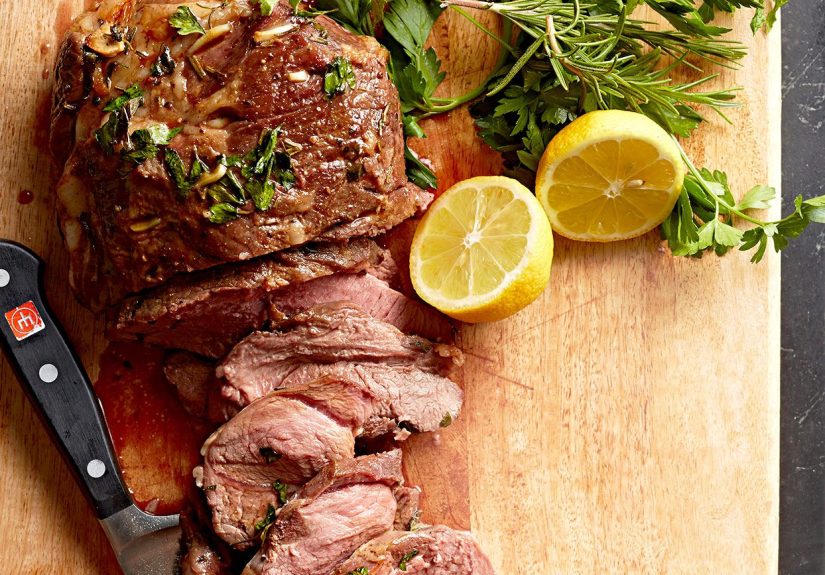
- Slice crosswise into 1/4- to 1/2-inch slices.
- Look for the grain and slice against it for tenderness.
Bone-in leg of lamb
- Find the bone and slice along it to remove large sections of meat.
- Slice those sections against the grain into serving slices.
- Save any smaller bits for sandwiches, salads, or “chef’s snacks” (highly technical term).
Make It a Feast: Sauces, Sides, and Smart Pairings
Easy sauces that love lamb
- Red wine pan sauce: deglaze the roasting pan with wine and broth, simmer, and whisk in a bit of butter.
- Mint sauce: mint + vinegar + sugar + salt (bright and classic).
- Yogurt sauce: Greek yogurt + lemon + garlic + cucumber or herbs (cooling and modern).
- Salsa verde: parsley + capers + lemon + olive oil (salty, herby, addictive).
Sides that make lamb feel like a holiday
- Roasted potatoes (especially if they soak up lamb drippings)
- Asparagus, green beans, or roasted carrots
- Springy salads with lemony dressing
- Warm bread to chase the last drops of sauce (a noble mission)
Troubleshooting: Fix Common Leg of Lamb Problems
“My lamb tastes too ‘lamb-y.’ Help.”
A strong flavor can come from the type of lamb, thicker fat, or interior fat pockets in boneless roasts.
Trim excess fat, use bright flavors (lemon, vinegar, mint), and don’t be shy with garlic and herbs.
“The outside is done but the inside isn’t.”
Your heat was too high for too long, or the roast shape was uneven. Lower the oven temp and finish gently.
Next time, tie boneless lamb into a uniform shape and use a probe thermometer.
“It’s dry.”
Overcooking is the usual suspect. Pull earlier, rest properly, and consider reverse-searing for more even doneness.
Also: don’t skip salt. Salt helps meat hold onto moisture.
Make-Ahead and Leftovers (AKA: Your Second Feast)
- Season ahead: Salt the lamb up to 24 hours early for deeper flavor and better browning.
- Sauce ahead: Make salsa verde or yogurt sauce the day before; they often taste better after chilling.
- Leftovers: Slice thin for sandwiches, toss into salads, fold into pita with yogurt, or crisp in a skillet for tacos.
of Real-World Experience (So Your Feast Actually Feels Easy)
Here’s the part nobody tells you until you’ve hosted a holiday dinner once: cooking the lamb is only half the battle.
The other half is managing your kitchen energy so you’re not sweating through your nice shirt while guests sip drinks like they’re at a spa.
The best “experience-based” trick is to pick a method that gives you breathing room. Reverse-sear roasting is fantastic for this,
because the low-temp phase is slow and predictable. You can set the table, roast vegetables, and pretend you’re effortlessly in control.
Then you finish with a high-heat blast right before serving and everyone thinks you’re a culinary wizard. Let them. You’ve earned it.
Another common first-timer moment: the lamb comes out of the oven, you slice immediately, and suddenly you’ve created a juice lake.
It’s not that you “ruined” the lambit’s that you skipped resting. Resting feels like doing nothing, which is emotionally difficult in a kitchen,
but it’s secretly the most productive step. Use that time to warm plates, toss a salad, and do the quick counter wipe that makes your kitchen look like a magazine spread.
(We both know you cooked hard. Let the lighting do some of the work now.)
Seasoning is where experience really shows. People under-season big roasts because they’re afraid of being “too salty.”
A leg of lamb is thick. It needs confident seasoning on the outside, and if it’s boneless, it needs seasoning inside the roll too.
If you’re nervous, do this: salt it well, then add a bright element like lemon zest or a vinegar-based sauce at the table.
Brightness makes flavors pop and gives you that “restaurant” feel without doing anything complicated.
And let’s talk about the thermometer drama. Many home cooks poke the roast ten times, panic, and then “just give it another 20 minutes”
(which is how medium-rare quietly becomes “Why is it chewy?”). The experienced move is to place your probe once, in the thickest part,
and trust it. Also, remember carryover cooking: the temperature keeps rising after you pull it. If you want medium-rare,
don’t wait until it’s already medium in the oven. That’s like leaving for the airport when your flight is boarding.
Finally, carving. The first cut always feels like a big commitmentlike signing a lease. Here’s the calm truth:
lamb forgives you. If it’s boneless, remove the twine and slice confidently. If it’s bone-in, slice along the bone to release big sections,
then slice those into clean pieces. Put the best slices on the platter first, drizzle with sauce, add herbs, and suddenly everything looks intentional.
Your guests won’t remember whether the slices were 1/4-inch or 3/8-inch. They’ll remember that the lamb was juicy, the table was happy,
and someone (you) made a feast happen.
Conclusion
Cooking a leg of lamb isn’t about complicated stepsit’s about smart ones. Choose the cut that fits your comfort level,
season boldly, roast with a thermometer, and rest before carving. Add a bright sauce and a couple of hearty sides,
and you’ve got a mouthwatering feast that feels celebratory without feeling stressful.