Table of Contents >> Show >> Hide
- Why Spinach Gets Weird (And How to Stop It)
- Pick the Right Spinach for the Job
- Prep Spinach Like a Pro (It’s Mostly About Grit)
- The 5 Best Ways to Cook Spinach (With Exact Cues)
- How to Keep Spinach from Being Watery
- How to Avoid Slimy Spinach
- Seasoning Spinach So It Tastes Like a Side Dish, Not a Chore
- Frozen Spinach: How to Make It Taste Like You Tried
- Storage and Food-Safety Tips (So Your Spinach Doesn’t Turn on You)
- Quick Examples: Spinach That Actually Gets Eaten
- of Real-World Spinach Experience (The Stuff Recipes Don’t Tell You)
- Conclusion
Spinach is the ultimate kitchen magician: it enters the pan looking like you’re feeding a soccer team,
and exits as a polite little side dish for two. That “vanishing act” is exactly why spinach can feel
trickycook it wrong and you’ll end up with watery, slippery greens that taste like disappointment
wearing a cape.
The good news? Delicious spinach is not a mystery. It’s a repeatable system: pick the right spinach,
prep it smart, cook it fast (usually), and season it like you mean it. Here’s how to cook spinach so
you get bright, savory greens every timewhether you’re sautéing for a weeknight dinner, blanching for
meal prep, or turning frozen spinach into a dip that disappears faster than the spinach did.
Why Spinach Gets Weird (And How to Stop It)
Spinach has a lot of water inside its leaves. When heat hits, those leaves collapse and release
moisture. If the pan is crowded or not hot enough, that moisture turns your “sauté” into “accidental
steaming bath.” That’s where the dreaded limp, watery texture comes from.
The fix is simple: control moisture and time. Use high heat when sautéing, a wide pan when cooking
fresh spinach, and a quick-cook mindset (spinach is not a pot roast; it does not need “low and slow”
emotional support).
Pick the Right Spinach for the Job
Baby spinach
Baby spinach is tender and mild, which makes it great for salads and quick wilts. But it can turn
slippery if you overcook it or stir it endlessly. If you’ve ever added baby spinach to soup and
watched it dissolve into green ribbons of regret, you’re not alone.
Mature spinach (flat-leaf or savoy)
Mature spinach has sturdier leaves and often holds up better for sautéing, braising, and recipes that
need body. It’s also a better candidate for blanching and squeezing (more on that soon).
Frozen spinach
Frozen spinach is your best friend for dips, casseroles, stuffed shells, and anything where you want
spinach flavor without the fresh-leaf drama. It’s picked and frozen quickly, which makes it reliably
“in season” and convenient. The main rule: squeeze out the water like you’re wringing out a tiny,
leafy sponge.
Prep Spinach Like a Pro (It’s Mostly About Grit)
How to wash fresh spinach (especially bunch spinach)
Spinach can hide sand and grit in its curves. The best method is the “swish and lift” technique:
- Fill a big bowl (or clean sink basin) with cold water.
- Separate leaves, then swish them gently in the water.
- Let grit sink to the bottom for a minute.
- Lift spinach out (don’t pour everything outgrit follows gravity).
- Repeat with fresh water until the bottom of the bowl stays clean.
Dry the leaves well if you plan to sauté. A salad spinner is ideal, but clean towels and patience
also work. Dry leaves brown and taste savory; wet leaves steam and taste… earnest.
Do you need to wash bagged spinach?
If the package says “ready to eat,” “triple washed,” or “no washing necessary,” you generally don’t
need to wash it. If you choose to rinse anyway, keep it away from unclean sinks, counters, or
utensils to avoid cross-contamination. In other words: don’t take clean spinach and introduce it to
the shady side of your kitchen.
Skip soaps and produce washes
Use clean running waterno detergent, bleach solutions, or “miracle produce wash.” Those products
aren’t necessary for spinach and can leave residues or affect taste. (Spinach is dramatic enough
without you adding chemicals to the cast list.)
The 5 Best Ways to Cook Spinach (With Exact Cues)
1) Sautéed spinach (the weeknight hero)
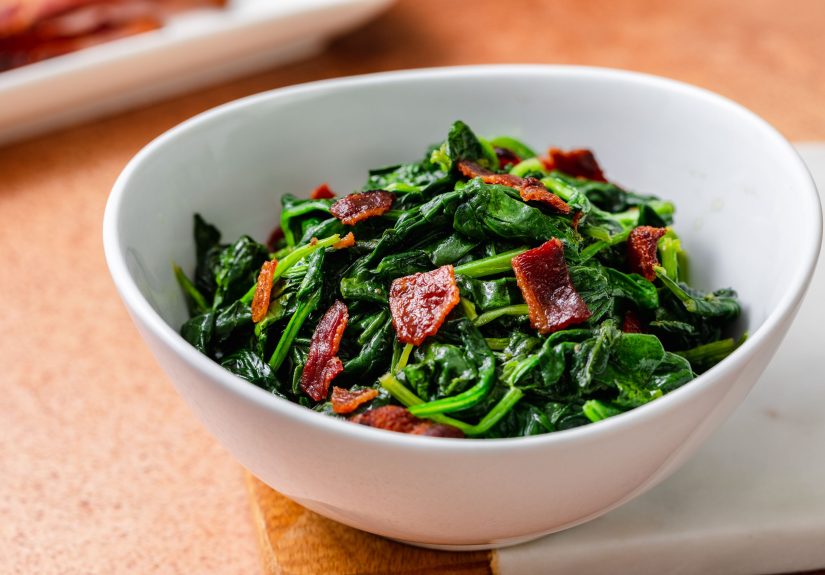
This is the fastest way to go from “bag of leaves” to “actually delicious.” The keys are a hot pan,
enough surface area, and short cooking time.
- Preheat a wide skillet over medium-high heat.
- Add fat + aromatics: olive oil or butter, plus sliced garlic or minced shallot.
Cook just until fragrant (about 30 seconds to 2 minutes depending on your heat and aromatics). - Add spinach in big handfuls. It will look like too much. It is not too much. Cover for 30–60
seconds to help it collapse, then toss. - Cook until just wilted, usually 1–3 minutes total. If you keep going, spinach
won’t “get better,” it’ll just get wetter. - Season at the end with salt, pepper, and a squeeze of lemon.
Example flavor combos:
- Garlic + lemon + red pepper flakes (classic, bright, fast)
- Butter + shallot + nutmeg (steakhouse vibes)
- Olive oil + garlic + Parmesan (simple and rich)
- Sesame oil + soy sauce + toasted sesame seeds (quick stir-fry energy)
2) Steamed spinach (clean, bright, hard to mess up)
Steaming is great when you want spinach that tastes like spinach (in a good way) and you don’t want
extra oil. It’s also an easy method for larger batches.
- Put a steamer basket in a pot with a small amount of water underneath.
- Bring water to a simmer, add spinach, and cover.
- Steam 1–2 minutes until just wilted, then season.
Finish with a little olive oil or butter plus salt. If you want punch, add lemon juice or a splash
of vinegar.
3) Microwave-steamed spinach (the underrated shortcut)
If your microwave has ever only been used for reheating coffee and melting chocolate chips directly
into your mouth, welcome to its glow-up era.
- Place spinach in a microwave-safe bowl.
- Add a spoonful of water (optional if spinach is already slightly damp).
- Cover (a plate works) and microwave on high for 1–2 minutes, stopping early to check.
- Drain any liquid, then season with salt, pepper, and butter or olive oil.
This method shines for small batches and quick sides. It’s also handy when your stovetop is crowded
and you’re one more pan away from starting a kitchen union.
4) Blanch and shock (best for meal prep, freezing, and “not slimy” texture)
Blanching cooks spinach quickly in hot water, then an ice bath stops the cooking. This helps preserve
a brighter green color and gives you spinach you can squeeze dryperfect for dips, fillings, and
make-ahead greens.
- Bring a pot of water to a boil. Salt it lightly if you like.
- Prepare a bowl of ice water.
- Drop in spinach and blanch 30–60 seconds (just until wilted).
- Transfer immediately to the ice bath for 1–2 minutes.
- Drain and squeeze out excess water thoroughly.
Why this matters: squeezing concentrates flavor and prevents watery dishes (and it
can also reduce some soluble compounds like oxalates when you cook and discard the cooking water).
5) Braised spinach (for heartier leaves and deeper flavor)
Braising is a gentle option for mature spinach when you want tenderness without a soggy collapse.
Think: olive oil, garlic, maybe a splash of broth, and a lid for a few minutes.
- Sauté garlic/shallot in oil.
- Add spinach plus a splash of broth or water.
- Cover and cook 3–5 minutes, stirring once or twice.
- Uncover and let excess liquid evaporate, then season.
How to Keep Spinach from Being Watery
- Use a wide pan: more surface area = faster evaporation.
- Get the pan hot first: spinach should sizzle, not sigh.
- Dry leaves for sautéing: wet spinach steams.
- Don’t over-stir: toss a few times; don’t mash it into soup.
- Finish uncovered: if liquid collects, cook 30–60 seconds uncovered to evaporate.
How to Avoid Slimy Spinach
Sliminess often comes from overcooking tender leaves (hello, baby spinach) or cooking spinach too long
in liquid-heavy dishes. Here’s how to dodge it:
- Choose mature spinach for cooked recipes, or use frozen spinach.
- Cook quickly: wilt and stop. Spinach is a “short meeting” vegetable.
- Add spinach at the end of soups and pasta sauceslet residual heat do the work.
- Blanch + squeeze for recipes that require structure (lasagna, dips, fillings).
Seasoning Spinach So It Tastes Like a Side Dish, Not a Chore
Spinach is mild, which is code for “it needs friends.” Give it at least one of each:
fat, salt, and acid.
Flavor boosters that work every time
- Fat: olive oil, butter, ghee, or a little cream
- Aromatics: garlic, shallot, scallions, ginger
- Acid: lemon juice, red wine vinegar, balsamic
- Heat: red pepper flakes, black pepper, chili crisp
- Umami: Parmesan, soy sauce, miso, toasted nuts
A quick “restaurant” finish
Toss cooked spinach with lemon zest + a small pat of butter right before serving. Add a pinch of flaky
salt if you’re feeling fancy (and if your salt container isn’t the size of a birdbath).
Frozen Spinach: How to Make It Taste Like You Tried
Frozen spinach is convenient, but it’s also basically a water-storage facility. The secret is
removing as much liquid as possible before using it.
How to drain frozen spinach
- Thaw it (fridge overnight, microwave, or warm in a pan).
- Place in a clean towel, cheesecloth, or a fine mesh strainer.
- Squeeze firmly until it stops dripping.
Pro move: Use a potato ricer if you have oneit squeezes spinach efficiently and
keeps your hands from becoming spinach-scented for the next three business days.
Best uses for frozen spinach
- Spinach dip
- Lasagna, baked pasta, stuffed shells
- Quiche and egg bakes
- Curries and creamy sauces
- Anything where spinach is “supporting actor,” not the lead
Storage and Food-Safety Tips (So Your Spinach Doesn’t Turn on You)
Keep fresh spinach dry and cold
Moisture speeds spoilage. If you wash spinach ahead, dry it thoroughly and store it with a paper towel
in a container to absorb extra moisture. If it came in a clamshell, that container often works well
with a paper towel layer.
Know the “ready-to-eat” label
For pre-washed, ready-to-eat spinach, keep it refrigerated and handle it with clean hands and clean
utensils. For cut leafy greens, temperature control matterskeep them properly chilled and don’t
leave them sitting out while you “just finish scrolling.”
Cooked spinach storage
Refrigerate cooked spinach in an airtight container and use within a few days. Reheat gently and drain
any pooled liquid before serving.
Quick Examples: Spinach That Actually Gets Eaten
10-minute garlic-lemon sautéed spinach
- Sauté sliced garlic in olive oil.
- Add spinach, cover 30 seconds, toss, cook until wilted.
- Season with salt, pepper, lemon juice, and optional Parmesan.
“Hide it in plain sight” scrambled eggs
- Wilt a handful of spinach in a pan for 30–60 seconds.
- Add beaten eggs, salt, pepper, and cook gently.
- Finish with cheddar or feta for extra flavor.
Soup add-in without slime
- Turn off the heat.
- Stir in spinach and cover for 1 minute.
- Serve immediatelybright color, tender bite.
of Real-World Spinach Experience (The Stuff Recipes Don’t Tell You)
Here’s the most honest spinach lesson home cooks learn: the first time you cook it, you will buy
spinach like you’re catering a wedding. You’ll open the bag, see a mountain of leaves, and think,
“Wow, I’m basically a wellness influencer.” Then you’ll toss it in the pan, it’ll shrink into a
neat little pile, and you’ll realize you made enough greens to garnish a single crouton.
So yesplan on spinach shrinking. If spinach is the main vegetable side, you often need more than you
think. That’s not you failing math; that’s spinach being spinach.
Another very real experience: grit. Spinach grit is sneaky because it doesn’t show up until the first
bitethen suddenly it’s like you’re chewing on the beach. The “swish and lift” wash method is a
lifesaver, and the habit that separates “I cook spinach sometimes” from “I cook spinach without
hearing crunching sounds that do not belong in vegetables.”
Then there’s the moisture paradox: spinach needs to be clean, but water is also spinach’s arch-nemesis
in the pan. If you sauté spinach that’s dripping wet, you’re not sautéingyou’re steaming. The result
tastes flatter and feels softer. Dry leaves + hot pan gives you that savory edge and a cleaner spinach
flavor. When people say, “I don’t like cooked spinach,” what they often mean is, “I’ve only had watery
spinach.” Those are different life experiences.
A third experience: the baby spinach trap. Baby spinach is great raw, but it can turn slippery when
cooked for too long. The fix isn’t complicatedjust treat it like a last-minute ingredient. Add it
near the end, let it wilt, and stop. If you want cooked spinach that holds its shape in a dish (like
lasagna or a creamy skillet sauce), mature spinach or frozen spinach is usually a better choice. And
frozen spinach becomes a hero the moment you learn the squeeze. Squeezing feels annoying exactly once;
after that, you get the magic of spinach flavor without turning your casserole into spinach soup.
Finally, seasoning is the moment spinach becomes “dinner” instead of “a responsible decision.” Spinach
loves garlic, lemon, pepper flakes, and anything salty and savory. If your spinach tastes bland, don’t
blame spinachgive it a supporting cast. A little fat, a little acid, and proper salt can turn a pile
of greens into the side dish everyone mysteriously keeps “taste testing” straight from the pan.
In short: spinach isn’t hard. It’s just honest. It shrinks, it releases water, and it demands decent
seasoning. Once you respect those three facts, you’ll cook spinach confidentlyand you’ll stop acting
surprised when your “huge” bag becomes a “cute” portion.
Conclusion
Cooking spinach for delicious greens every time comes down to a few repeatable moves: choose the right
spinach (mature or frozen for cooked dishes), wash grit out properly, keep sautéing hot and fast, and
finish with salt, fat, and acid. Whether you’re steaming, microwaving, blanching, or sautéing with
garlic and lemon, you can make spinach taste bold, bright, and worth eatingno swampy texture required.