Table of Contents >> Show >> Hide
- Before Anything Else: Should You Breed at All?
- Preparation: The 4–8 Week Pre-Breeding Checklist
- Understand the Heat Cycle (Because “Day 11” Is a Myth)
- Timing: How to Identify the Fertile Window
- Set the Stage: How to Help Dogs Mate Naturally (Without Making It Weird)
- The Tie: What It Is, What’s Normal, and What NOT to Do
- When Natural Mating Doesn’t Happen: Troubleshooting Like a Pro
- After Mating: What to Do Next
- Quick Example Timeline: A Realistic Natural Breeding Plan
- Conclusion: Natural Mating Works Best When You Respect Biology (and Boundaries)
- Real-World Experiences & Lessons (500+ Words of “This Is What Usually Happens”)
If dogs could read calendars, breeding would be easy. Unfortunately, they’re more of a “sniff first, ask questions later” species.
Natural mating can absolutely work wellbut it works best when you do two things humans love and dogs tolerate:
prepare and time it correctly.
This guide walks you through ethical prep, the heat cycle (without turning it into a biology lecture you didn’t sign up for),
and the real-world setup that helps two dogs do what nature intendedcalmly, safely, and without anyone panicking during “the tie.”
(Yes, we’re going to talk about that. No, you should not try to “unstick” them.)
Friendly note: This is educational content, not veterinary advice. Always work with a veterinarianespecially for health testing, fertility timing, and pregnancy care.
Before Anything Else: Should You Breed at All?
Natural dog breeding isn’t just “let them hang out and see what happens.” Ethical breeding is a full project:
health screening, temperament evaluation, financial readiness, and a plan for every puppy (including the ones that won’t match your dream Pinterest aesthetic).
Ask yourself these reality-check questions
- Health & genetics: Are both dogs screened for breed-relevant issues and infectious disease?
- Temperament: Are both dogs stable, social, and not fearful or aggressive under pressure?
- Logistics: Do you have a safe space, time off, and funds for vet careincluding emergency C-section if needed?
- Puppy plan: Do you have homes lined up, contracts, and a plan for returns?
If any of that felt like a lotgood. That’s the correct emotion. Done responsibly, breeding is careful by design.
If your primary goal is “my dog is cute,” consider supporting rescue or working with reputable breeders instead.
Preparation: The 4–8 Week Pre-Breeding Checklist
If timing is the “when,” preparation is the “please don’t let this become a vet bill shaped like a small boat.”
Here’s what responsible breeders typically handle before they ever schedule a mating.
1) Vet exam & baseline health
- Full physical exam for both dogs (heart, lungs, joints, skin, teethyes, teeth).
- Parasite prevention and fecal testing if recommended.
- Vaccination status reviewed (avoid vaccinating right before or during pregnancy unless your vet directs it).
- Body condition check: aim for fit, not fluffy. Obesity can reduce fertility and complicate pregnancy.
2) Breed-specific health testing (genetics & structure)
“They look healthy” is not a screening program. Many inherited conditions are invisible until they aren’t.
Follow breed club recommendations and programs like CHIC/OFA where applicable.
- Orthopedic evaluations (hips, elbows, patellasvaries by breed).
- Cardiac screening when relevant.
- Eye exams (often annual for breeding stock).
- DNA tests for known breed conditions (your vet or breed club can guide what matters for your breed).
3) Infectious disease screening (don’t skip this)
One major “must-do” in breeding programs is canine brucellosis testing for both dogs before breeding.
It can cause infertility and pregnancy loss, and it’s also a zoonotic risk (rare, but serious). Many breeding programs also retest active studs periodically.
4) Nutrition & conditioning
Now is not the time for crash diets or “new experimental raw plan from a guy on the internet named Brad.”
Feed a high-quality, complete diet, keep exercise consistent, and reduce stress. The goal is a healthy cycle, healthy mating, and healthy pregnancy.
Understand the Heat Cycle (Because “Day 11” Is a Myth)
Many people hear, “Breed on day 11,” as if all dogs have synchronized ovulation like they’re running the same software update.
In reality, the canine estrous cycle varies by individual and by cycle.
Your job is to identify when she’s fertilenot just when she’s bleeding.
The four stages (quick, readable version)
- Proestrus: Vulvar swelling, bloody discharge, flirting-but-not-ready behavior. Males are very interested; she may not be.
- Estrus: Discharge often lightens, she becomes receptive (“stands” to be bred). This is the main fertile windowbut timing still varies.
- Diestrus: She’s no longer receptive; hormones shift whether she’s pregnant or not.
- Anestrus: The “off season” between cycles.
Key takeaway: outward signs are helpful, but they’re not a stopwatch. For best results (especially if you have travel plans,
a valuable stud, or prior missed breedings), testing matters.
Timing: How to Identify the Fertile Window
If you want to get dogs to mate naturally and actually achieve pregnancy, timing is the main event.
Natural mating works best when you hit the fertile windowwhen viable sperm and mature eggs overlap.
Method A: Behavioral & physical signs (useful, but not exact)
- She “flags” her tail to the side and stands still for mounting.
- Discharge becomes lighter (often pinkish or straw-colored).
- She seeks the male out, is more tolerant, or actively solicits attention.
- Vulva remains swollen but may soften slightly.
These signs can get you close, but “close” may still miss the best daysespecially in dogs with short or unusual cycles.
Method B: Progesterone testing (the gold-standard for timing)
Progesterone rises in a predictable pattern around ovulation in dogs.
Vets commonly use serial progesterone tests to estimate the LH surge and ovulation, then recommend breeding dates based on those results.
A typical approach is to begin testing a few days after the first visible signs of heat, establish a baseline,
then test every 48 hours as levels begin to rise. Once progesterone starts climbing, the fertile window may arrive quickly.
Method C: Vaginal cytology (helpful companion tool)
Vaginal cytology looks at cell changes that correlate with cycle stage. It can help confirm whether she’s early,
in peak estrus, or already leaving the fertile period. Many breeders pair cytology with progesterone for clearer timing.
So when do you actually breed?
Your veterinarian will interpret your dog’s specific results and lab standards, but a common strategy is:
breed during the few days after ovulation when eggs are mature.
For natural dog mating, many programs plan two breedings about 48 hours apart
during the fertile window (rather than daily marathons that stress everyone out).
Translation: you’re aiming for “right days,” not “more days.” Quality timing beats quantity every time.
Set the Stage: How to Help Dogs Mate Naturally (Without Making It Weird)
Dogs are romantics, but they’re also opinionated. Natural mating often fails for totally practical reasons:
the floor is slippery, the room is loud, someone is holding a leash like they’re flying a kite, or the female simply isn’t ready.
Create a calm, safe environment
- Choose a quiet area with secure fencing and minimal distractions (no audience, please).
- Use non-slip footing (rubber matting helps). Slipping can cause injury and kill confidence fast.
- Keep it cooloverheating increases stress and reduces performance.
- Supervise closely but intervene minimally. You’re a lifeguard, not a choreographer.
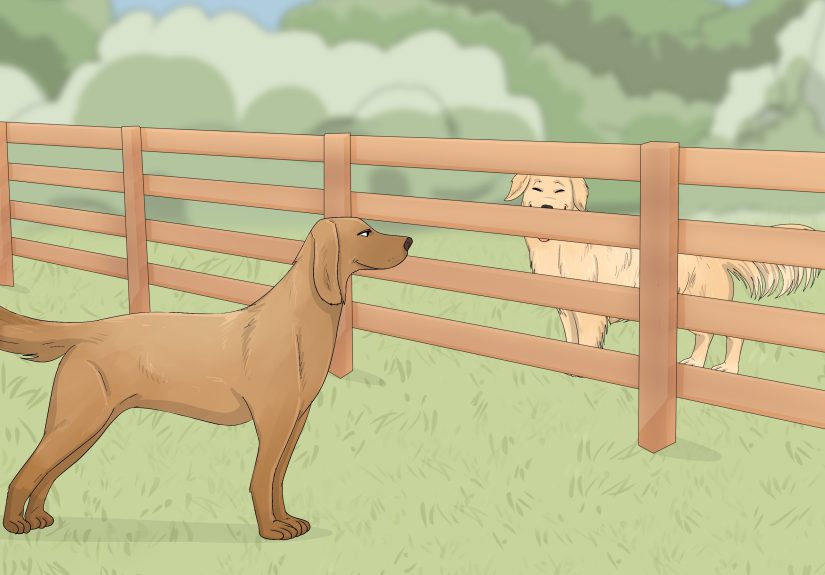
Let the dogs meet properly
Natural dog breeding goes better when dogs are comfortable with each other.
A brief walk together on neutral territory can reduce tension.
When it’s time, many breeders bring the female to the male’s familiar environment to boost his confidence.
Size and safety considerations
If there’s a significant size difference, talk to a vet or an experienced reproductive professional.
Inappropriate pairing can risk injury. Also, never allow aggressive behavior to “work itself out.”
End the session calmly, separate, and reassess.
The Tie: What It Is, What’s Normal, and What NOT to Do
During successful mating, many dogs experience a “tie” (also called a “knot”) where swelling and muscle contractions
temporarily keep them connected. This can last a few minutes or longer. It often looks alarming to humans and completely routine to dogs.
Important rules during the tie
- Do not pull them apart. Forced separation can cause serious injury.
- Keep them calm. Speak softly; reduce noise and movement.
- Support if needed. If the female is nervous or unstable, gentle support under the abdomen can helpwithout lifting or forcing positioning.
- Know that pregnancy can occur without a tie. A tie can be a good sign, but it’s not the only sign.
Think of the tie like a slow elevator: nobody enjoys being rushed, and yanking the doors open is a terrible plan.
When Natural Mating Doesn’t Happen: Troubleshooting Like a Pro
Sometimes the dogs don’t mate naturally even when you did everything right. That doesn’t mean “try harder.”
It usually means “get more information.”
Common causes (and what to do)
-
Timing is off: The #1 issue. If she won’t stand, she may be early or already past estrus.
Solution: progesterone testing and/or cytology. -
Inexperience: Young or inexperienced dogs may not “get it” right away.
Solution: calm retries, a confident environment, and professional guidance if needed. -
Stress/distraction: Too many people, new smells, slippery floors.
Solution: simplify the setting and reduce pressure. -
Pain or orthopedic issues: Hip/back pain can make mounting difficult.
Solution: vet exam before continuing. -
Behavior mismatch: One dog is pushy, the other is fearful.
Solution: stop, reassess pairing, and prioritize welfare over “getting it done.”
What you should never do: restrain the female to “make it happen,” punish either dog, or attempt unsafe DIY techniques.
Ethical breeding protects both dogs’ physical and emotional safety.
After Mating: What to Do Next
Once breeding occurs, you’re not doneyou’re just moving into the “quiet competence” phase.
Keep life normal, avoid intense new stressors, and monitor for anything unusual.
Practical next steps
- Record dates and observations: breeding dates, tie duration (if any), behavior, test results.
- Don’t over-handle: No need for special positioning or hovering like a helicopter parent.
- Plan pregnancy confirmation: Your vet can recommend timing for ultrasound or other confirmation methods.
- Don’t guess the due date from the breeding day alone: Ovulation timing is more accurate for predicting whelping.
Quick Example Timeline: A Realistic Natural Breeding Plan
Every dog differs, but here’s what a well-managed cycle can look like when you’re trying to time natural mating carefully.
(This is an examplenot a prescription.)
- Day 1: First noticeable bleeding/discharge. Begin notes. Keep her secure (males will RSVP uninvited).
- Day 4–6: First progesterone test for baseline if you’re testing; consider cytology.
- Day 6–12: Repeat progesterone every ~48 hours (your vet may adjust frequency).
- When levels rise meaningfully: Increase testing frequency per vet guidance to pinpoint ovulation.
- Fertile window: Plan two natural breedings about 48 hours apart within the recommended days.
- Post-breeding: Keep routine stable; schedule pregnancy check per vet.
Conclusion: Natural Mating Works Best When You Respect Biology (and Boundaries)
Getting dogs to mate naturally is less about “setting the mood” and more about doing the unglamorous basics:
health screening, ethical readiness, smart timing, and a calm environment. When you align preparation with the fertile window,
nature usually does the restwithout drama, injuries, or you frantically Googling “dog tie help” at 2 a.m.
If you take only one thing from this article, let it be this:
Don’t guess. Track the cycle, use veterinary timing tools (especially progesterone testing),
and prioritize the welfare of both dogs above the goal of a litter.
Real-World Experiences & Lessons (500+ Words of “This Is What Usually Happens”)
Below are common, experience-based scenarios breeders and veterinarians describe again and againshared here as practical stories
so you can recognize patterns early. No judgment. Just fewer surprises.
1) The “Day 11” faceplant
A classic: someone breeds on “day 11” because a friend’s cousin’s breeder’s neighbor said that’s the magic day.
The female refuses to stand. The male tries, gets confused, everyone gets frustrated, and the owner concludes:
“They must not like each other.” In reality, the timing was likely offeither early (still in proestrus) or late (already exiting estrus).
The fix is boring but effective: progesterone testing plus a calm retry on the correct days.
Once the window is right, the “dislike” often disappears like it never existed.
2) The awkward first-time stud
Some males are confident; others are… thoughtful. A young stud may sniff, circle, look at you like you’re the manager of this situation,
then wander off to drink water as if hydration is his top priority. That doesn’t necessarily mean infertility.
Often, he needs a quiet setting, non-slip footing, and time without a crowd. Many breeders report that a short break and a second attempt later
the same day (or the next day) works better than pushing him into a long, stressful session.
If he repeatedly can’t achieve a breeding despite good timing, a veterinary semen evaluation can clarify whether the issue is behavioral or medical.
3) The “tie panic” that almost causes injuries
First-time owners sometimes see the tie and panicespecially when the dogs turn back-to-back.
They try to separate them, the dogs pull instinctively, and suddenly you’re a half-step away from an emergency.
Experienced handlers do the opposite: they reduce noise, keep everyone still, and let the tie resolve naturally.
The dogs typically separate on their own once swelling decreases. The best prevention is education before the breeding day:
if you know what the tie is, you’re far less likely to turn it into a crisis.
4) The “too many helpers” problem
Natural mating is one of those events that gets worse with an audience. Too many people talking, moving around, giving advice,
or hovering with phones can stress both dogs. Some females become defensive; some males lose focus.
Breeders commonly recommend limiting the room to one calm handler per dog (or fewer), keeping voices low, and letting the dogs communicate normally.
In many cases, the moment the environment becomes quiet and predictable, mating attempts improve.
5) The female who says “absolutely not”
A female refusing to stand is information, not defiance. It may mean her timing is wrong, she’s uncomfortable, or she’s anxious about the male.
Ethical breeding respects that. Instead of restraining her, responsible handlers step back:
confirm timing with progesterone/cytology, check for pain (hips, back, vulvar irritation), and make sure introductions are low-stress.
Some pairings simply aren’t a good match temperament-wiseand that’s okay. A successful breeding is never worth overriding welfare.
6) The “we got one breedingare we doomed?” question
Not necessarily. Many pregnancies happen from a single well-timed mating, especially when timing is supported by testing.
People often underestimate how much correct timing matters compared with “number of tries.”
If you only get one successful breeding but it’s within the fertile window, your odds may still be perfectly reasonable.
That’s why tracking and testing are such powerful tools: they turn “I hope” into “we’re in the right neighborhood.”
7) The post-breeding obsession spiral
After breeding, it’s normal to watch for signs of pregnancybut it’s also easy to read every nap as “definitely pregnant”
and every skipped meal as “she hates me now.” Early pregnancy signs can be subtle and overlap with normal hormone shifts.
A calmer approach: keep routine steady, log anything truly unusual, and schedule confirmation with your vet at the appropriate time.
The goal is steady care, not constant interrogation of your dog’s mood swings.
If these scenarios sound oddly specific, it’s because they happen constantly. The good news is you can avoid most of them with:
(1) health screening, (2) accurate ovulation timing, and (3) a quiet, safe setup that lets the dogs do their job without human chaos.