Table of Contents >> Show >> Hide
If you’ve just looked at the bottom of your foot and thought,
“Wow, that callus is… oddly organized,” you might not be looking at a callus at all.
Mosaic warts are clusters of plantar warts that bunch together like tiny, stubborn tiles.
They’re harmless in the big-picture sense, but they can be painful, annoying, and
ridiculously persistent.
The good news? You have options. From at-home remedies like salicylic acid and duct tape
to in-office treatments from a dermatologist or podiatrist, there are plenty of ways
to tackle a mosaic wart safely and effectively. This guide walks you through what mosaic warts are,
how to treat them at home, when to see a doctor, and what real-life treatment experiences
often look like.
Quick reminder: This article is for general education only and is not a substitute
for professional medical advice. Always talk with a healthcare provider about what’s right for you,
especially if you have diabetes, poor circulation, or a weakened immune system.
What Is a Mosaic Wart?
A mosaic wart is a type of plantar wart (a wart on the sole of the foot)
that appears as a cluster of smaller warts packed tightly together. Instead of one single bump,
you see a whole “mosaic” of them in an area of thicker skin, often on weight-bearing spots like the heel
or ball of the foot.
Key features of mosaic warts often include:
- Clustered growths on the bottom of the foot that look like a patchwork or mosaic.
- Thickened skin that’s easy to confuse with a callus.
- Black dots (tiny clotted blood vessels) sprinkled in the wart surface.
- Pain or pressure when walking or standing, especially on hard floors.
Mosaic warts, like other plantar warts, are caused by certain strains of the
human papillomavirus (HPV). The virus slips into the skin through tiny cuts or breaks,
then sets up shop in the outer layer of the skin. Because the soles of your feet take a lot of pressure,
the wart often grows inward, which is part of why it can hurt so much.
Do Mosaic Warts Go Away on Their Own?
Technically, yes. Your immune system can eventually recognize the virus and clear mosaic warts on its own.
The catch? That can take months to a few years, and in the meantime:
- Walking may be painful or uncomfortable.
- The wart cluster can spread or grow larger.
- You could pass HPV to others or to different areas of your own skin.
Because mosaic warts can be more stubborn than solitary plantar warts, many people decide not to “wait it out”
and instead try home remedies or see a specialist for treatment.
Home Remedies for Mosaic Warts
Before trying any home treatment for a mosaic wart, it’s wise to get a proper diagnosis from a healthcare provider,
especially if:
- You’re not sure it’s really a wart (and not a callus, corn, or something more serious).
- You have diabetes, neuropathy, or circulation problems.
- Your immune system is weakened.
Once you’ve confirmed it’s a mosaic wart and your provider says home care is reasonable, here are the options
most commonly recommended and supported by dermatology and primary care guidelines.
1. Salicylic Acid: The Drugstore MVP
When it comes to at-home wart treatment, salicylic acid has some of the
best evidence behind it. It’s a keratolytic agent, meaning it slowly dissolves the thick, dead skin
that makes up the wart.
You’ll find it in:
- Medicated pads or patches (often 40% for thick plantar skin).
- Liquids, gels, or ointments (commonly around 17%).
How to use salicylic acid for mosaic warts (general routine):
- Soak your foot in warm water for 10–15 minutes to soften the skin.
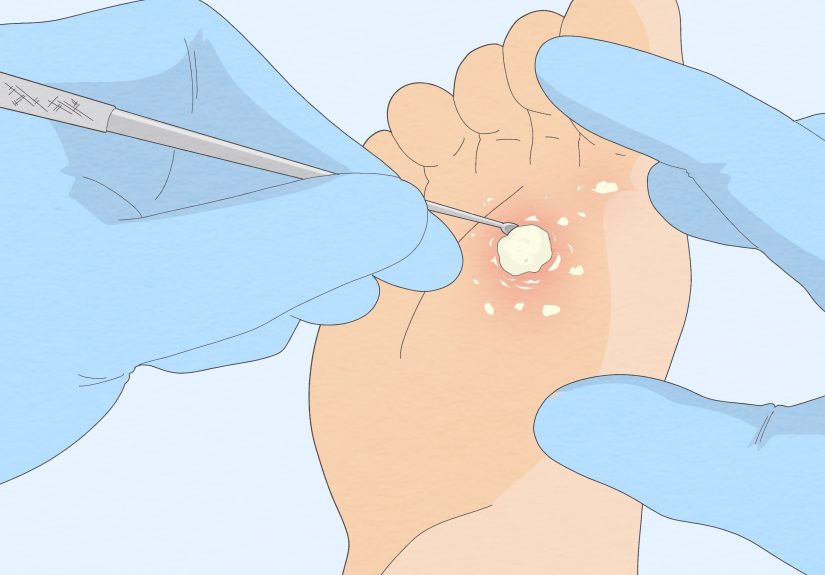
- Gently file the top of the wart with a disposable emery board or pumice stone.
- Dry the area completely.
- Apply the salicylic acid product exactly as directed (only on the wart, not on healthy skin).
- Cover with a bandage or pad if directed by the product instructions.
- Repeat daily or as directed, usually for several weeks.
Over time, the wart may turn white and soft; you can gently file away loosened tissue between treatments.
Don’t go overboard: if the area becomes very sore, raw, or bleeds, stop for a few days and talk with your doctor.
Important safety notes:
- Do not use high-strength salicylic acid on the face, genitals, or broken skin.
-
People with diabetes, poor circulation, or nerve damage in their feet should only use these products under
direct medical supervision. - Keep products away from children and pets.
2. Duct Tape Occlusion Therapy
It sounds like a life hack your handy neighbor made up, but
duct tape therapy has actually been studied for warts.
The research is mixed, but many dermatologists consider it a low-risk option, especially
when used together with salicylic acid.
Basic duct tape method:
- Cut a small piece of duct tape just big enough to cover the wart cluster.
- Apply it firmly over the wart.
- Leave it in place for about 5–6 days (replacing if it falls off).
- On day 5 or 6, remove the tape and soak the foot in warm water.
- Gently file the softened wart surface with a pumice stone or emery board.
- Leave the area uncovered overnight (10–12 hours).
- Reapply duct tape the next day and repeat the cycle for several weeks.
Some clinicians recommend applying a salicylic acid product, letting it dry, and then covering the area with duct tape
to boost effectiveness.
3. Warm Soaks and Gentle Filing
Even if you’re not ready for medicated products, warm water soaks plus gentle filing
can make a mosaic wart more manageable and improve the effectiveness of other treatments.
Try this routine a few times a week:
- Soak feet in warm (not hot) water for 10–15 minutes.
- Use a pumice stone or emery board to gently thin the thick skin over the wart.
- Do not share your pumice or file with anyone else.
- Apply any medicated treatment afterward if prescribed or recommended.
Avoid cutting or shaving the area with sharp tools at homethis increases the risk of bleeding, infection,
and spreading the virus.
4. Over-the-Counter Freezing Kits (With Caution)
Drugstores sell “freeze-off” treatments that use cold sprays (often dimethyl ether) to mimic
in-office cryotherapy. These can help small, simple warts but are generally
less powerful than liquid nitrogen used by professionals and may not work well on large
mosaic clusters.
If you use one:
- Follow the instructions exactlyover-freezing can damage healthy skin.
- Do not use on the face, genitals, or large areas.
- Stop and seek medical advice if the area becomes very painful, blistered, or discolored.
When You Should Skip Home Treatment
Home remedies for mosaic warts are not for everyone. Call a doctor or dermatologist instead if:
- You’re not sure it’s actually a wart.
- The wart is rapidly growing, changing color, or bleeding for no clear reason.
- You have diabetes, poor circulation, or nerve problems in your feet.
- You are immunocompromised or on immune-suppressing medications.
- The wart is extremely painful or makes walking difficult.
- Home remedies haven’t helped after a couple of months.
In these situations, professional treatment is safer and usually more effectiveespecially for large,
recalcitrant mosaic warts.
Medical Treatments for Stubborn Mosaic Warts
If your mosaic wart laughs in the face of duct tape and salicylic acid, it’s time to bring in the pros.
Dermatologists and podiatrists have stronger tools and can tailor treatment to your skin type,
health history, and pain tolerance.
Cryotherapy (Freezing)
Cryotherapy uses liquid nitrogen applied directly to the wart to freeze and destroy
infected tissue. It’s one of the most common in-office treatments for plantar and mosaic warts.
What to expect:
- A quick, intense stinging or burning sensation during treatment.
- Blistering or swelling afterward, which is part of the healing process.
- Peeling or shedding of wart tissue over days to weeks.
- Multiple sessions spaced every 2–3 weeks are often needed.
Cryotherapy may be combined with salicylic acid between visits or with paring (careful trimming of thick skin)
to improve results.
Prescription-Strength Topicals
For mosaic warts that cover a larger area, your clinician may suggest stronger topical treatments, such as:
-
High-strength salicylic acid applied under supervision,
sometimes under occlusion (covered with tape or a dressing). -
Cantharidin-based blends (often combined with podophyllotoxin
and salicylic acid), which cause a controlled blister under the wart so it can be lifted off. -
Other prescription creams that target rapidly dividing cells in the wart or stimulate
a local immune response (used selectively and under close monitoring).
These treatments are not DIY projectsthey’re applied or prescribed by a professional, often with specific
instructions about timing, washing off, and follow-up.
Laser, Electrocautery, and Surgical Removal
When conservative measures fail or the mosaic wart is severely affecting walking and daily life,
more aggressive options may be considered:
- Laser therapy: Targets the wart’s tiny blood vessels, cutting off its blood supply.
-
Electrocautery: Uses heat from an electric current to burn away wart tissue,
often combined with curettage (scraping). -
Surgical excision: Physically cutting out the wart; usually reserved for very stubborn cases
due to the risk of scarring.
These methods can be effective but may involve more downtime, local anesthesia, and a higher risk of scarring,
so they’re typically not first-line treatments.
Immunotherapy and Other Options
For truly recalcitrant mosaic warts, some specialists use treatments that work by nudging your immune system
to fight HPV more aggressively. Examples include:
-
Intralesional injections with agents like certain chemotherapy drugs or
immune-stimulating substances, given directly into the wart. -
Topical immunotherapy that causes a mild allergic or immune reaction, helping the body
recognize and clear wart tissue.
These options are usually reserved for people who have had multiple failed treatments and must be done under
specialist care.
Self-Care & Prevention: Stop the Spread
While you’re treating a mosaic wart, you also want to prevent new oneson your own feet and on other people.
A few simple habits can make a big difference:
- Wear flip-flops or sandals in public showers, locker rooms, and around pools.
- Don’t share shoes, socks, or towels.
- Keep feet clean and dry; change socks daily.
- Cover warts with a bandage or pad during activities to reduce spread.
- Avoid picking, scratching, or “digging” at the wart.
Supporting your overall immune healththrough adequate sleep, balanced nutrition, stress management,
and physical activitymay also help your body clear warts over time, although there’s no instant
“immune hack” for mosaic warts.
A Sample At-Home Plan for a Mosaic Wart
Always follow your provider’s advice first. But if you’ve been cleared for home treatment, a common
approach many clinicians suggest looks something like this:
- Confirm the diagnosis. Get a clinician to verify that it’s a plantar wart cluster, not something else.
- Start with salicylic acid. Use a product designed for plantar warts and apply daily, as directed.
-
Add duct tape occlusion. After applying the medication and letting it dry,
cover with duct tape and keep it on as consistently as possible. -
Soak and file regularly. Once or twice a week, soak your foot, gently file away loosened tissue,
and resume treatment. -
Monitor pain and skin changes. If the area becomes very painful, raw, or looks infected
(increasing redness, warmth, pus, streaking), stop and seek care. -
Give it time. Even with good treatment, mosaic warts can take 6–12 weeks or more
to noticeably improve. -
Know when to escalate. If there’s little or no improvement after a couple of months of consistent care,
schedule a visit with a dermatologist or podiatrist to discuss in-office options.
Real-Life Experiences: What Treating a Mosaic Wart Is Really Like
Reading about salicylic acid and cryotherapy is one thing. Living with a mosaic wart on your heel while you stand
all day at work is another. Everyone’s journey is slightly different, but many people share similar experiences
when dealing with these stubborn clusters.
Emma’s Story: The “Callus” That Wasn’t
Emma, a 32-year-old barista, assumed the thick patch of skin on her heel was just a callus from long shifts.
Over time, it started to hurt whenever she pivoted on that foot. One night she took a closer look and noticed
tiny black dots scattered through the thickened skin.
Her primary care provider confirmed it was a mosaic plantar wart, not a callus.
They suggested an at-home plan with 40% salicylic acid pads and duct tape. Emma:
- Soaked her feet every evening after work.
- Trimmed away softened dead skin with a disposable emery board.
- Applied medicated pads and covered them with duct tape overnight.
The first couple of weeks felt like nothing was happening. By week four, though, she noticed the wart cluster
shrinking and becoming less painful. It took nearly three months of consistent effort, but eventually, the area
smoothed out. Her biggest takeaway: patience and consistency matter more than any “miracle” product.
Carlos’ Story: When Home Remedies Weren’t Enough
Carlos, a recreational runner, developed a cluster of warts on the ball of his footright where his foot pushed off
with every stride. He tried over-the-counter freezing kits, then salicylic acid, then duct tape. After several months,
the wart cluster was smaller but still painful and very much present.
His podiatrist recommended a combination of in-office cryotherapy sessions plus
high-strength salicylic acid between visits. After a few rounds of freezingand some sore days where
he switched to low-impact workoutsthe mosaic wart finally cleared.
For Carlos, the key differences were:
- The stronger freezing power of liquid nitrogen vs. store-bought sprays.
- Guidance on exactly how long to treat before switching strategies.
- Professional trimming of thick skin before treatments.
He now wears flip-flops in the gym showers and keeps an eye on any new suspicious spots so he can treat
them early.
Lena’s Story: Why Medical Supervision Matters
Lena has type 2 diabetes and some nerve changes in her feet. When she noticed a rough patch on her heel,
she assumed it was just dry skin. A family member suggested buying a high-strength wart remover and
“going at it” with a razor.
Thankfully, Lena checked with her doctor first. It turned out to be a mosaic wart, but because of her
diabetes and reduced sensation, using strong acids or sharp tools at home would significantly raise her risk
of infection and slow-healing wounds.
Instead, her care team referred her to a podiatrist who:
- Confirmed the diagnosis and carefully trimmed the area in the office.
- Used controlled, lower-risk treatments tailored to her circulation and sensation.
- Set up regular foot exams to catch any future issues early.
For Lena, the experience underscored an important point:
what’s safe DIY for one person may be risky for someone with diabetes or vascular disease.
What These Stories Have in Common
Although each story is different, a few themes keep showing up:
- Getting the right diagnosis is the first and most important step.
- Consistency beats quick fixes when it comes to mosaic wart removal.
- Professional help can save time, frustration, and painespecially for stubborn or complex cases.
- Foot hygiene and prevention matter just as much as treatment.
If you recognize your own situation in any of these experienceswhether you’re the “I’ll try duct tape forever”
person or the “I’d rather just get it frozen and be done” personknow that you’re not alone. Mosaic warts are common,
treatable, and rarely dangerous, but you don’t have to put up with them indefinitely.
Bottom Line
Mosaic warts are clusters of plantar warts caused by HPV that tend to show up on weight-bearing areas of your feet.
They can be stubborn and uncomfortable, but you have a spectrum of optionsfrom home remedies like salicylic acid
and duct tape to in-office treatments like cryotherapy, prescription topicals, laser therapy, and more advanced
approaches for truly persistent cases.
Start with a proper diagnosis, follow safe home-care steps if appropriate, and don’t hesitate to see a dermatologist
or podiatrist if your wart is painful, spreading, or ignoring your best efforts. With patience, consistency, and
the right strategy, you can finally retire that “mosaic tile” on your heel and walk comfortably again.