Table of Contents >> Show >> Hide
- Why Poison Hemlock Is Such a Big Deal
- How to Identify Poison Hemlock
- Common Look-Alikes That Confuse People
- When Poison Hemlock Shows Up in the Yard
- How to Remove Poison Hemlock Safely
- What Not to Do
- What to Do If Exposure Happens
- Best Long-Term Strategy for Homeowners
- Conclusion
- Real-World Experiences With Poison Hemlock
- SEO Tags
Poison hemlock is the botanical version of a villain who looks weirdly polite. It has delicate white flowers, lacy leaves, and an almost innocent “wildflower by the roadside” vibe. Unfortunately, that charming first impression is a scam. This plant is highly toxic to people, pets, and livestock, and it spreads like it pays no rent. If you have kids, dogs, curious chickens, or a backyard that likes collecting mystery weeds, learning how to spot poison hemlock is one of those life skills you hope to never need but definitely want in your pocket.
This guide breaks down how to identify poison hemlock, where it usually shows up, what people commonly mistake it for, and the safest ways to remove it without turning yard cleanup into an emergency-room side quest. The goal here is simple: help you recognize the plant fast, avoid dangerous mistakes, and deal with it in a way that protects your family, your landscape, and anyone else who might wander by and think, “Oh look, free parsley.”
Important note: Poison hemlock is extremely toxic. If you are unsure whether a plant is poison hemlock, treat it as suspicious and contact your local Cooperative Extension office, noxious weed board, or a licensed vegetation professional before handling it.
Why Poison Hemlock Is Such a Big Deal
Poison hemlock (Conium maculatum) is a non-native, invasive plant in the carrot family. All parts of the plant are poisonous, including the leaves, stems, roots, flowers, and seeds. Ingestion is the biggest danger, but sap exposure can also irritate skin, and smoke from burning the plant can create serious inhalation risks. In plain English: this is not a weed you yank with bare hands while holding an iced coffee and listening to a podcast.
It is a biennial plant, which means it usually completes its life cycle in two years. In the first year, it forms a low rosette of leaves close to the ground. In the second year, it bolts upward into tall flowering stems, often reaching 4 to 8 feet and sometimes taller. By the time it is towering over your fence line like a sinister bouquet, it is much harder to control and much easier to spread.
Poison hemlock often grows in disturbed areas such as roadsides, ditches, streambanks, fencerows, vacant lots, field margins, pastures, and trail edges. It likes moist soil but is adaptable enough to survive in drier conditions too. So yes, it is picky and unbothered at the same time.
How to Identify Poison Hemlock
1. Look for the stem first
The most reliable clue is the stem. Poison hemlock usually has a smooth, hollow, hairless stem with purple blotches or streaks. Those purple markings are the plant’s calling card. If the stem is fuzzy or hairy, you are probably looking at something else.
2. Check the leaves
The leaves are bright green, glossy, deeply divided, and fern-like. Many people describe them as parsley-like, but larger, more dramatic, and much less welcome. First-year plants often stay low to the ground in a leafy rosette, which can fool people into ignoring them until they come roaring back in year two.
3. Notice the flowers
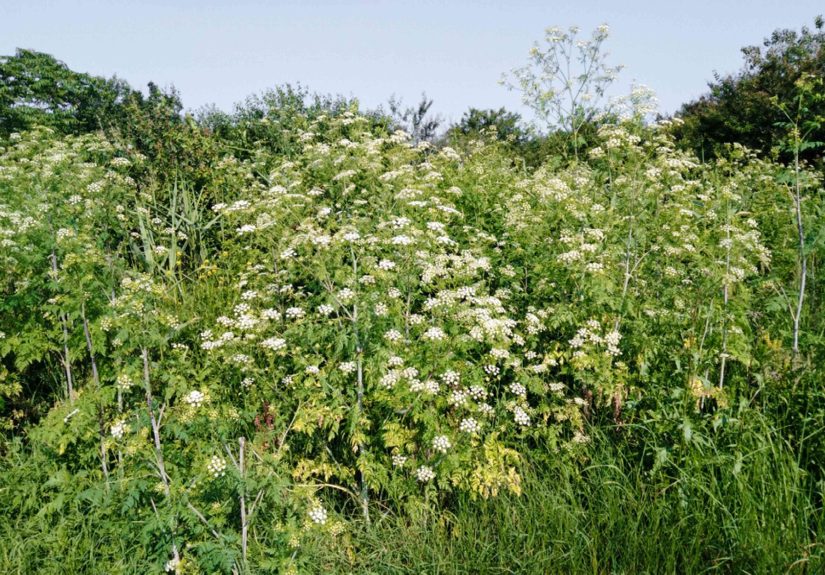
Second-year poison hemlock produces clusters of tiny white flowers arranged in umbrella-shaped groups called umbels. These flower clusters are pretty in the same way a scam email can look professional. Do not let aesthetics win.
4. Pay attention to size and growth habit
Mature poison hemlock is tall, branching, and attention-grabbing. It often forms dense patches, especially where soil has been disturbed. If you see a stand of tall, white-flowering plants with lacy leaves and purple-blotched stems crowding a ditch, creek edge, or pasture, raise your suspicion level immediately.
5. Be careful with odor as a clue
Some guides note a musty or unpleasant smell when the plant is crushed. That can help confirm an identification, but it is not a good reason to handle the plant casually. The safer move is visual identification first, hands off.
Common Look-Alikes That Confuse People
Poison hemlock gets misidentified all the time because the carrot family is full of plants that look like distant cousins at an awkward reunion.
Queen Anne’s lace (wild carrot)
This is the classic mix-up. Both plants have white flower clusters and feathery leaves. The difference is that Queen Anne’s lace has hairy stems and does not have purple blotches. It is also usually much smaller and less imposing than poison hemlock.
Wild parsnip
Wild parsnip is also hazardous, but it has yellow flower clusters instead of white ones. It can burn skin in sunlight, which is a whole different kind of rude.
Water hemlock
This is the part where things stop being fun: water hemlock is also extremely poisonous and is often considered even more dangerous. It tends to grow in wetter habitats and differs in root structure and stem details, but for most homeowners the practical advice is simple: if you are torn between poison hemlock and water hemlock, stop touching things and call in local experts.
When Poison Hemlock Shows Up in the Yard
The plant’s two-year cycle matters because timing affects control. First-year rosettes are much easier to manage than full-grown second-year plants. Seeds can germinate from late summer into fall and again in spring under cool, moist conditions. That means one season of cleanup is rarely enough. If poison hemlock has been present, expect follow-up patrols next spring and probably the spring after that too.
Think of poison hemlock management less like one dramatic movie finale and more like a short streaming series. You do not beat it in one episode.
How to Remove Poison Hemlock Safely
The safest approach depends on how many plants you have, how mature they are, and whether they are mixed in with desirable plants. For a few young plants, mechanical removal may work. For larger infestations, professional help or carefully timed herbicide treatment may be the smarter option.
Before you do anything
Keep children and pets away from the area. Wear long sleeves, long pants, closed shoes or boots, gloves, and eye protection if you are doing any work near the plant. Avoid getting sap on your skin or in your eyes. Do not eat, drink, or touch your face while handling suspicious vegetation.
For small, young infestations
If plants are still small and you are confident in the identification, they can sometimes be removed by digging or pulling them while taking the entire taproot with the plant. If the root stays in place, regrowth is likely. This works best on younger plants before they get large and seed-producing. Bag the plant material promptly so nobody else comes into contact with it later.
For larger plants or patches
Repeated mowing can reduce seed production if it is done before flowering, but one mowing is usually not enough. Mature plants often try again with new shoots. Large infestations usually need a more organized plan, and in many cases a licensed professional is the best choice, especially if the patch is near play areas, livestock, waterways, or desirable landscaping.
For herbicide control
Spot treatment is generally most effective when poison hemlock is in the seedling or rosette stage, or before second-year plants fully mature. In many landscapes, that means late fall, early spring, or another window when the plants are young and actively growing. Mature flowering plants are harder to control chemically, and follow-up treatment is often needed because seeds in the soil can keep germinating over time. Always read and follow the product label exactly and avoid drift onto plants you want to keep.
Disposal matters
Do not burn poison hemlock. Burning can release dangerous toxins into the air. Do not leave uprooted plants where kids, pets, wildlife, or livestock can reach them. In many areas, the safest route is to bag plant material and dispose of it according to local garbage, yard waste, or noxious weed rules. Since disposal guidance can vary by county or state, check local instructions before hauling anything away.
After removal
Wash gloves, tools, and exposed skin thoroughly. Launder work clothes separately. Monitor the site the following season for new rosettes because poison hemlock seeds can linger and restart the problem. A clean-looking patch in July does not mean you won the war forever. It just means the next round has not auditioned yet.
What Not to Do
- Do not burn the plants.
- Do not use a string trimmer casually if it may spray sap or plant fragments back at you.
- Do not handle the plant barehanded.
- Do not assume every white umbel flower is harmless.
- Do not compost the plant unless your local authorities specifically say that is acceptable.
- Do not ignore a patch just because it “flowers nicely for a few weeks.” That is exactly how it recruits more trouble.
What to Do If Exposure Happens
If someone may have eaten poison hemlock or inhaled smoke from burned material, call 911 or Poison Control at 1-800-222-1222 in the United States right away. If sap gets on skin, wash the area thoroughly and remove contaminated clothing. If material gets into the eyes, flush carefully with clean water and seek medical guidance. Fast action matters with any suspected poisonous plant exposure.
Best Long-Term Strategy for Homeowners
If you want the no-drama version, here it is: identify early, act early, and inspect often. The ideal time to spot poison hemlock is when it is still a first-year rosette or a young second-year plant before it flowers and sets seed. Once a patch matures, every delay makes the cleanup bigger, riskier, and more annoying.
A practical long-term plan looks like this: survey your property in late winter and spring, remove or treat young plants promptly, dispose of debris safely, and revisit the same area the next year. If you live near a ditch, creek, pasture, trail edge, or unmanaged lot, keep your expectations realistic. Seeds and reinfestation are common. Persistence beats panic.
Conclusion
Poison hemlock is one of those plants that proves nature can be both elegant and deeply inconvenient. The white flowers may look harmless, but the smooth hollow stem with purple blotches tells the real story. Once you know what to look for, identification gets much easier. Removal is where people get into trouble, so a safety-first approach matters just as much as botanical know-how.
If the infestation is small and young, careful removal may be possible. If the plants are large, widespread, or close to pets, kids, livestock, or water, bringing in your local extension office or a licensed professional is often the wisest move. With poison hemlock, bravery is overrated. Accuracy, protective gear, and good judgment are what actually win.
Real-World Experiences With Poison Hemlock
One of the most common experiences people report with poison hemlock is simple misidentification. A homeowner notices a beautiful white-flowering plant along the fence line and assumes it is Queen Anne’s lace, wild carrot, or some volunteer wildflower that decided to improve the landscaping for free. A few weeks later, that “free landscaping” is 7 feet tall, leaning over the garden bed, and making everyone suddenly interested in weed identification. The lesson shows up again and again: poison hemlock is easiest to deal with when it is small, and easiest to miss when you are not looking for the stem.
Another common pattern happens in spring. People see lush green rosettes near a ditch, creek, or roadside edge and ignore them because they do not seem urgent. Then warm weather arrives, the plants bolt almost overnight, and what looked manageable in March becomes a towering patch in May. Gardeners often describe this moment with the same emotional tone usually reserved for discovering a raccoon in the attic. Poison hemlock grows fast enough to surprise people, and that surprise is part of why it spreads so effectively in residential and semi-rural areas.
Land managers and extension educators also talk about the “mowing mistake.” Someone tries to knock the patch down quickly, assuming that if it looks like a weed, it can be treated like any other weed. But poison hemlock does not always cooperate. A single mowing may delay flowering without fully stopping the plant, and careless cutting can spread seed or increase exposure to sap and plant particles. The people who have the smoothest outcomes are usually the ones who slow down, confirm identification first, and choose a method that matches the plant’s growth stage instead of swinging into action like they are starring in a lawn-care action movie.
There are also plenty of stories from families with pets or livestock who first learned about poison hemlock because an animal showed interest in it. That tends to change the mood very quickly. Even when no exposure happens, the discovery becomes a wake-up call: toxic weeds are not just a “back forty” problem. They can show up near barns, dog runs, drainage swales, school walking routes, and suburban lot lines. Many homeowners say they started checking their property more carefully after finding one suspicious plant, and that extra awareness often turned up more plants nearby.
A final real-world takeaway is that successful control rarely comes from one heroic afternoon. It comes from follow-up. People who actually get ahead of poison hemlock usually describe a rhythm: inspect, remove or treat, dispose safely, clean up, and return next season to catch seedlings before they mature. It is not glamorous, but it works. Poison hemlock management rewards consistency over drama. So if your experience with this plant teaches you anything, let it be this: wear the gloves, trust the purple blotches, and never let a suspicious white flower earn your confidence too quickly.