Table of Contents >> Show >> Hide
- What Is a Diya (and Why Does It Matter)?
- A Quick Safety Note (Especially If You’re a Teen)
- Materials You’ll Need (Pick Your Adventure)
- Fuel Choices: Oil vs. Ghee (and What Actually Works)
- Method 1: Light a Traditional Terracotta Diya (The Classic Diwali Oil Lamp)
- Method 2: Make Your Own Clay Diya (DIY Craft Version)
- Method 3: A Simple “Bowl Diya” Centerpiece (Great for Tables)
- Decorating Your Diwali Oil Lamps (Without Going Overboard)
- Troubleshooting: When Your Diya Has Opinions
- Cleaning and Storing Diyas for Next Year
- FAQ: Quick Answers for Real-Life Diwali Prep
- Experiences People Often Have When Making Diwali Oil Lamps (And What They Learn)
- SEO Tags
Diwali is the Festival of Lightsso it’s only fair that the star of the show is, well, a light. Enter the
diya: a small oil lamp that glows with big meaning. Whether you’re celebrating Diwali at home,
helping a school group learn about the holiday, or just want your entryway to look like it’s auditioning for a
cozy-movie montage, learning how to make Diwali oil lamps is a wonderfully hands-on way to bring
the season to life.
This guide gives you multiple ways to make Diwali oil lamps (including a classic terracotta diya setup and a DIY
clay version), plus decorating ideas, troubleshooting, and common-sense safety tips so your celebration stays bright
for the right reasons.
What Is a Diya (and Why Does It Matter)?
A diya is a small lamptraditionally made of clayfilled with oil or ghee and lit with a cotton wick.
Diyas are closely tied to Diwali traditions, representing the triumph of light over darkness and knowledge over ignorance.
In many homes, diyas line windowsills, balconies, and entryways like a welcoming runway for good vibes.
A Quick Safety Note (Especially If You’re a Teen)
An oil lamp is an open flame. If you’re under 18, do this with an adult nearbyor choose the
flameless LED option and keep it stress-free. Either way:
- Place lamps on a stable, heat-resistant surface (think: tray, plate, or stone tile).
- Keep flames away from curtains, paper décor, and anything that can burn.
- Keep lamps out of reach of kids and pets (curiosity is undefeated).
- Never leave a lit diya unattended; extinguish before sleeping or leaving the room.
- Avoid drafts (fans and open windows can turn “gentle flicker” into “surprise torch”).
Materials You’ll Need (Pick Your Adventure)
For a traditional Diwali oil lamp (the classic)
- Terracotta diya (or a small metal diya/heat-safe dish)
- Cotton wick (pre-made or a small strip of cotton)
- Oil or ghee (see fuel tips below)
- Matches or a lighter (adult use recommended)
- A tray or plate for placing the diya
For a DIY “make-the-diya” project (craft mode)
- Air-dry clay (or modeling clay for décor-only diyas)
- Small bowl (to shape the lamp)
- Rolling pin (or a smooth bottle)
- Plastic knife or craft tool
- Paint, markers, or metallic pens
- Optional: gems, beads, sequins, or glitter glue
- Flameless LED tealight (recommended for air-dry clay diyas)
Fuel Choices: Oil vs. Ghee (and What Actually Works)
Traditionally, diyas may be lit with ghee (clarified butter) or oil. For beginners, the best fuel is the
one that burns steadily in your setup and fits your comfort level.
- Ghee: Often used in traditional settings; it can burn with a steady flame when the wick is properly primed.
- Vegetable oils: Readily available; some burn cleaner than others depending on the oil and wick.
- Sesame or mustard oil: Common in some traditions; aroma and smoke level can vary.
Pro tip: whichever fuel you choose, pre-soak the wick for a few minutes so it lights faster and burns more evenly.
Method 1: Light a Traditional Terracotta Diya (The Classic Diwali Oil Lamp)
This is the “authentic basics” approach: a terracotta diya, cotton wick, and oil or ghee. It’s simple, beautiful, and
surprisingly calminglike a tiny campfire that went to finishing school.
Step 1: Set up a safe base
Place your diya on a tray or plate. If you’re lining multiple diyas, use a large metal tray or a ceramic platter
so everything stays together and stable.
Step 2: Add fuel
Fill the diya with oil or melted gheeenough to cover the wick’s lower portion, but not so full that it sloshes when you move it.
Leaving a little space helps prevent spills.
Step 3: Prepare the cotton wick
If you have pre-made cotton wicks, great. If not, you can twist a small strip of cotton into a thin rope.
Soak the wick in your oil/ghee so it’s fully saturated.
Step 4: Position the wick (tiny detail, huge difference)
Place one end of the wick in the fuel and let the tip rest on the diya’s rim (or a small notch/spout).
Keep only a small tip of wick above the fuelstart short to reduce smoke.
Step 5: Light it carefully
With an adult supervising (or handling the lighting), ignite the wick. Let the flame settle for 30–60 seconds.
If it smokes heavily, extinguish, trim/shorten the exposed wick, and relight.
Step 6: Arrange for that “wow” Diwali look
Line diyas along a doorstep, windowsill, balcony ledge, or dining table centerpiece. For indoor setups, keep them away from
paper décor and never under shelves or hanging fabric.
Method 2: Make Your Own Clay Diya (DIY Craft Version)
Want the full “I made this” satisfaction? Making clay diyas is a fantastic Diwali craft.
Important: most air-dry clays are not designed for direct flame. For a safe, beginner-friendly option,
use your handmade diya with a flameless LED tealight.
Step 1: Roll the clay
Roll out air-dry clay into an even slab. Aim for a thickness that won’t crack easilythin is pretty, but sturdy is smart.
Step 2: Cut a circle
Flip a small bowl upside down and trace around it to cut a clean circle. (A plastic knife works well and keeps things kid-friendly.)
Step 3: Shape the diya
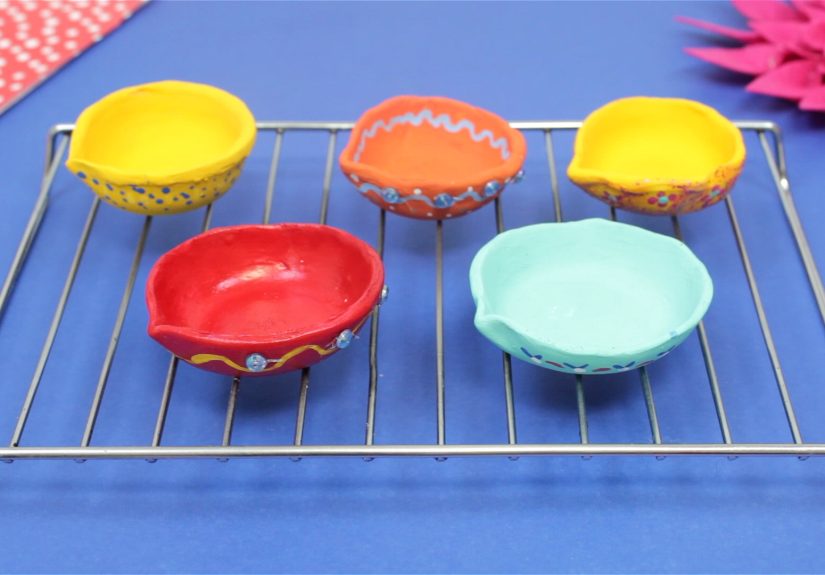
Gently press the circle into a bowl to form a shallow cup shape. Pinch one side into a small “spout” areathis is where
the wick would sit on a traditional diya (and it also looks delightfully authentic).
Step 4: Add texture and decoration (before it dries)
Stamp patterns, press in beads, or carve simple lines. This is the moment where your diya goes from “bowl-ish” to “festival-ready.”
Step 5: Dry completely
Let the diya dry as directed by your clay (often overnight). Flip it partway through drying if recommended so the base dries evenly.
Step 6: Paint and finish
Paint with acrylics or markers once fully dry. Metallic gold, copper, and jewel tones look especially Diwali.
You can seal it for durability, but if you plan to use LED lights, it’s optional.
Step 7: Light it (the safe way)
Place a flameless LED tealight inside. You get the glow without the fire riskand your craft survives to shine another year.
Method 3: A Simple “Bowl Diya” Centerpiece (Great for Tables)
If you want the Diwali look with an easy setup, build a centerpiece using a heat-safe bowl and multiple small diyas.
It’s like a mini light festival you can place right in the middle of dinner.
- Use a large, stable tray or platter.
- Place 3–7 small diyas spaced evenly (odd numbers tend to look balanced).
- Add marigold-like flowers (real or faux), colorful beads, or a small rangoli-inspired border around the base.
- Light one diya at a time, then step back and admire your work like the lighting designer you clearly are.
Decorating Your Diwali Oil Lamps (Without Going Overboard)
Easy style upgrades that look fancy
- Color theme: pick two main colors (like gold + deep red) and repeat them across diyas.
- Metallic accents: add gold paint along the rim for an “expensive” look on a “craft budget.”
- Gem clusters: place 3–5 small gems near the spout area rather than covering the whole surface.
- Tray strategy: arrange diyas on a tray so you can move everything safely at once.
Troubleshooting: When Your Diya Has Opinions
“It won’t stay lit.”
- Make sure the wick is thoroughly soaked in oil/ghee before lighting.
- Shorten the exposed wick tiptoo much wick can burn faster than the fuel can feed it.
- Check for drafts from fans or open windows.
“It’s smoking a lot.”
- Reduce the wick height above the rim (start small, then adjust upward if needed).
- Move the diya away from airflow.
- Try a different oil or a fresh wick if the current one is dirty or fraying.
“The oil spilled on the tray.”
- Fill the diya a bit less next timeespecially if you’re moving it after filling.
- Use a tray with a slight lip so spills don’t travel.
- Place diyas farther from the edge of shelves and ledges.
Cleaning and Storing Diyas for Next Year
Terracotta diyas can absorb oil. After they cool completely:
- Wipe out leftover oil with paper towels.
- Wash gently with warm water and mild soap if needed (don’t soak for long).
- Let dry fully before storing to prevent musty odors.
- Store in a box with padding so they don’t chipfuture you will be grateful.
FAQ: Quick Answers for Real-Life Diwali Prep
Can I use air-dry clay diyas with real oil and flame?
It’s not recommended. Air-dry clay isn’t the same as kiln-fired ceramic and may crack, scorch, or absorb fuel in unpredictable ways.
For handmade diyas, stick to LED tealights unless you have properly fired clay/ceramic made for heat.
What’s the best wick for a diya?
A cotton wick is traditional and easy to find. The key is saturating it with fuel and keeping the exposed tip short
so the flame stays controlled.
How many diyas should I light?
However many fit safely in your space. A few well-placed diyas look more elegant than dozens crammed together like they’re competing for attention.
Experiences People Often Have When Making Diwali Oil Lamps (And What They Learn)
If you’ve ever watched someone make diyas right before Diwali, you know it’s rarely a silent, museum-like craft moment. It’s more like
a warm, lively scene where everyone has an opinion about paint colors, wick length, and whether the “sparkly gems” look classy or
“like a disco ball rolled through a craft store.” That’s part of the charm.
One of the most common experiences is discovering that the wick is the real boss. People often assume the oil or ghee
is the main factor, but the wick decides whether your diya burns calmly or throws a tiny tantrum. Many first-timers learnquicklythat
soaking the wick makes lighting easier and helps the flame stabilize. Another classic lesson: if the wick is too long above the fuel, you may get
smoke, flicker, or a flame that looks like it’s trying to audition for a superhero movie.
Crafting clay diyas tends to bring out everyone’s creativity. Some people go minimalist with smooth shapes and metallic edges, while others
lean into full festival mode: bright colors, dot patterns, and enough gems to make a jewelry aisle jealous. A fun twist is that kids often
create the most joyful designsslightly uneven, wildly colorful, and completely confident about it. Adults sometimes start out trying to make
“perfect” diyas, but by the end they’re laughing and accepting that handmade charm is the point.
There’s also a very real “oops” moment many people share: placing diyas where they look beautiful… and then realizing that spot is near a curtain,
a paper garland, or an area with airflow. Moving diyas onto a tray or a heat-safe surface becomes the practical upgrade that keeps things safe.
People who celebrate Diwali year after year often develop their own routineslike setting up all trays first, filling diyas only after placement,
and keeping a simple extinguisher plan (snuffer, spoon, or careful blow-out) so nothing feels chaotic.
For families and communities, making diyas can feel surprisingly grounding. Even when the rest of Diwali prep is busycleaning, cooking, gifts,
visitorsthere’s something calming about working with clay or lining up lamps one by one. It’s a small act that signals: “The festival is here.”
In diaspora communities, diya-making can also become a teaching moment, where kids learn why diyas matter, how Diwali is celebrated in different
regions, and how traditions evolve while still keeping their heart.
Finally, many people discover that a few thoughtful lamps go a long way. A row of diyas near the entrance, a centerpiece on the dining table,
and a couple on the windowsill can transform a space. The experience often ends the same way: someone turns off the overhead lights, everyone pauses
to admire the warm glow, and the room suddenly feels more peacefullike the light is doing more than just lighting.