Table of Contents >> Show >> Hide
- Why Painting Your Garage Door Matters
- Step 1: Decide If You Should Paint Your Garage Door
- Step 2: Gather the Right Tools and Products
- Step 3: Prep the Garage Door (This Is Where the Magic Happens)
- Step 4: Prime the Door (When and How)
- Step 5: Paint the Garage Door Like a Pro
- Step 6: Let the Door Cure and Reconnect the Opener
- Choosing the Best Color for Your Garage Door
- Common Mistakes to Avoid When Painting a Garage Door
- Frequently Asked Questions About Painting Garage Doors
- Real-World Experiences: What DIYers Learn When Painting a Garage Door
If your garage door looks tired, chalky, or like it’s been through one too many hail seasons, good news: you can give it a “new door” look in a weekend without paying “new door” prices. Painting a garage door is one of those rare DIY projects that’s inexpensive, high impact, and surprisingly funonce you know the right steps, products, and tricks.
This guide walks you through exactly how to paint a garage door like a pro, whether it’s steel, aluminum, wood, or fiberglass. We’ll cover surface prep (the real secret), choosing the best paint and primer, the right order to paint the panels, and color ideas that boost your curb appeal instead of clashing with the neighbors. Grab your rollerwe’re opening the door (sorry) to a smoother paint job.
Why Painting Your Garage Door Matters
Depending on your home’s design, the garage door can take up 20–40% of the front facade. That means people often notice it before they notice your landscaping or front porch. A clean, freshly painted door instantly makes the whole house feel newer, even if you didn’t touch anything else.
Painting your garage door does more than make it pretty, though. A good exterior acrylic or latex paint creates a protective shell that helps shield the door from sun, rain, and road grime. That protection is especially important for metal doors, which can fade and chalk over time, and for wood doors, which are vulnerable to moisture and UV damage.
From a resale perspective, real estate pros consistently rank garage doors and curb-appeal upgrades as some of the smartest, highest-return exterior projects. Replacing the entire door is pricey; repainting is the budget-friendly cousin that still makes buyers (and appraisers) smile.
Step 1: Decide If You Should Paint Your Garage Door
Before you run to the paint aisle, do a quick check to make sure your garage door is a good candidate for painting.
Check the Material and Existing Finish
- Steel or aluminum doors: Almost always paintable as long as you clean and lightly sand them, and use a quality exterior acrylic or specialty metal paint.
- Wood doors: Great candidates for paint, but you’ll want to address any rot, peeling, or mildew first. Bare or weathered wood usually needs a primer coat.
- Fiberglass or composite doors: Generally paintable with the right bonding primer and exterior acrylic paint. Always check the manufacturer’s recommendations.
If the door has a glossy, factory-applied finish that’s still in great shape, you may prefer to clean it and leave it alone. But if it’s faded, peeling, or just doesn’t match your house anymore, paint is your friend.
Check the Weather Forecast
Paint is fussy about weather. For best results:
- Work on a dry day with temperatures typically between about 50°F and 85°F.
- Avoid full blazing sun on the door; paint can dry too fast and show lap marks.
- Skip very windy daysdust and leaves love wet paint.
If your garage faces south or west and bakes in the afternoon, start early and aim to be done before the door heats up too much.
Step 2: Gather the Right Tools and Products
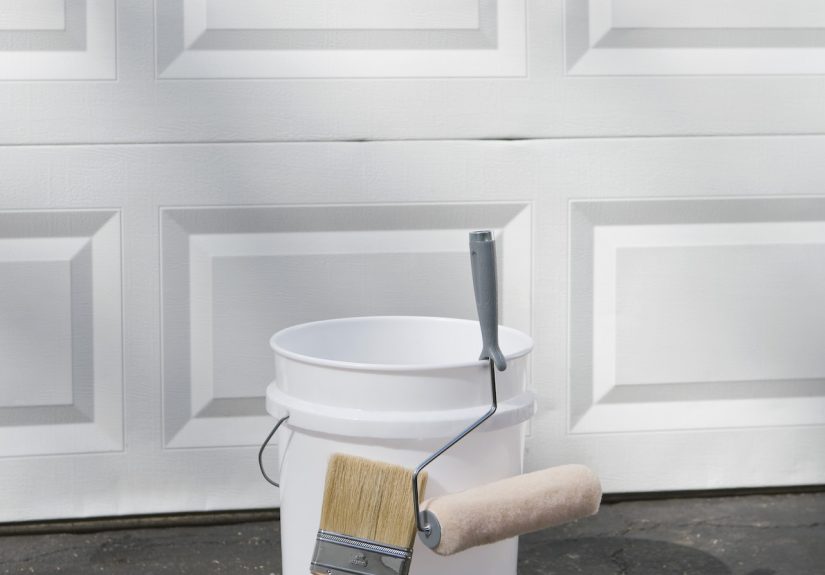
A smooth result starts with the right tools. Here’s a basic shopping list for painting a garage door:
- Exterior all-purpose cleaner or mild detergent
- Bucket, sponge, and/or soft scrub brush
- Garden hose (or pressure washer on low, if you’re careful)
- Scraper and wire brush (for peeling paint or rust)
- 120–150 grit sandpaper and a sanding sponge
- Exterior-grade caulk (for gaps and seams, if needed)
- Painter’s tape and plastic sheeting / drop cloths
- Quality exterior primer (matched to your surface: metal, wood, or multipurpose)
- Quality exterior paint: 100% acrylic latex or direct-to-metal paint for metal doors
- 2–3 inch angled sash brush (for edges, panels, and trim)
- Small roller with a 1/4–3/8 inch nap and tray (for flat sections)
For sheen, pros often recommend satin or semi-gloss on garage doors. These finishes are easier to clean than flat paint and help resist dirt and moisture while still looking polished.
Step 3: Prep the Garage Door (This Is Where the Magic Happens)
Ask any professional painter what matters most and they’ll tell you: prep, prep, and more prep. Sloppy preparation is the number one reason garage door paint jobs peel, bubble, or look streaky.
1. Disconnect and Open the Door
Unplug or switch off the garage door opener and pull the emergency release cord so you can move the door manually. This lets you position the panels at a comfortable working height and prevents the door from unexpectedly opening in the middle of painting.
2. Clean Off Dirt, Chalk, and Grease
Mix a bucket of warm water with a mild detergent or exterior cleaner. Scrub the door from top to bottom, paying attention to the lower panels where road grime and salt build up. Rinse thoroughly with a hose and let the door dry completely.
If you notice a powdery residue (chalking) coming off on your cloth, keep washing until it’s mostly gone. Paint won’t stick to chalky residue.
3. Scrape, Sand, and Repair
Once dry, inspect the door closely:
- Scrape any loose, flaking, or peeling paint with a putty knife.
- Use a wire brush to remove any rust spots on metal doors, then sand those areas smooth.
- Lightly scuff-sand the entire surface with 120–150 grit sandpaper to improve adhesion and dull any glossy finish.
- For wood doors, fill cracks or small holes with exterior wood filler and sand smooth once dry.
Wipe the door with a damp cloth to remove sanding dust, and let it dry again. Yes, this step feels tedious; yes, it’s worth every minute.
4. Tape and Protect Surrounding Areas
Use painter’s tape to mask:
- Weatherstripping around the door (unless you’re painting it to match)
- Handles, locks, windows, and decorative hardware
- Brick, siding, or trim immediately adjacent to the door
Lay drop cloths below the door to catch drips. Your future self will thank you when you’re not scraping paint off the driveway.
Step 4: Prime the Door (When and How)
Not every garage door needs primer, but many do. Plan to prime if:
- You have bare metal or bare wood showing.
- You’ve repaired rust spots.
- You’re making a dramatic color change (e.g., dark brown to white, or vice versa).
- The existing finish is badly weathered or chalky.
Choose a primer made for your door’s materiallook for labels that mention “exterior,” “metal,” “wood,” or “multi-surface.” For metal and fiberglass, a bonding or direct-to-metal primer is often recommended. For wood, a high-quality exterior stain-blocking or all-purpose acrylic primer usually works well.
How to Apply Primer
- Start with the door fully closed.
- Use a brush to “cut in” around edges, trim, and any recessed panel details.
- Use a small roller to coat the larger flat areas, working in smooth, overlapping passes.
- Work on one or two panels at a time to maintain a wet edge and prevent lap marks.
Let the primer dry as directed on the can (often a couple of hours). If you see any bumps, drips, or rough spots, lightly sand and dust them off before painting.
Step 5: Paint the Garage Door Like a Pro
Here’s where things get satisfying. You’ve done the prep; now it’s time for color.
1. Plan Your Painting Order
To avoid lap marks and uneven sheen, follow a consistent order:
- Paint recessed panels first.
- Then paint the horizontal rails between the panels.
- Finish with vertical stiles and outer edges.
This “inside-out” approach helps you avoid brush and roller marks and gives the door a uniform finish.
2. Use the Brush–Roller Combo
Dip your angled brush and paint any creases, corners, and panel edges where a roller can’t reach. Then immediately follow with the roller on the flat surfaces, lightly rolling over the brushed areas to blend them.
A thin, even coat is better than a thick, drippy one. You’re aiming for smooth coverage, not total opacity on the first pass.
3. Let It Dry, Then Add a Second Coat
Allow the first coat to dry according to the manufacturer’s recommendationsusually a few hours, depending on temperature and humidity. Then apply a second coat using the same panel–rail–stile order.
A second coat deepens the color, smooths out roller texture, and improves durability. For very drastic color changes, you may need a third light coat on select areas.
4. Don’t Forget the Edges and Trim
If your garage door has trim or molding that’s meant to match, paint those areas too. For the very top and bottom edges, you may need to open the door partially and carefully paint while it’s in a mid-open position. Just be sure no wet paint touches tracks or other moving parts.
Step 6: Let the Door Cure and Reconnect the Opener
Once the final coat is dry to the touch, resist the urge to slam the door up and down. Most exterior paints need at least 24 hours to start curing and several days to fully harden.
- Wait as long as the manufacturer suggests before normal operation.
- Gently score along any weatherstripping with a utility knife if you suspect it’s sticking to fresh paint.
- Remove painter’s tape carefully at a 45-degree angle for crisp lines.
Reconnect the opener once everything is dry, test the door, and enjoy your upgraded exterior every time you pull into the driveway.
Choosing the Best Color for Your Garage Door
Picking the right color is almost as important as the paint job itself. A color that looks amazing on a Pinterest board can look…less amazing next to your siding and roof in real life. Here are some guidelines to keep you out of color-regret territory.
Match the Style of Your Home
- Traditional homes: Soft whites, warm grays, taupes, and muted browns tend to play nicely with brick, stone, and classic siding.
- Modern or contemporary homes: Deep charcoals, navy, or black can look sleek and intentional, especially paired with light siding.
- Farmhouse or cottage style: Creams, greige, soft greens, and subtle blues complement the relaxed vibe.
Coordinate, Don’t Compete
Generally, your garage door should coordinate with your home’s trim or siding rather than shouting for attention. A popular strategy is to:
- Match the garage door to the body color of the house for a seamless look, or
- Match it to the trim or front door color for a more defined, architectural feel.
Be Smart About Extreme Colors
Very dark colors can look striking but may absorb more heat, which is tough on some materials in hot climates. Super bright whites can show dirt quickly, and bold statement colors like tomato red or neon blue are harder to live with long-term and may not appeal to future buyers. When in doubt, step one or two shades more muted than your first instinct.
Common Mistakes to Avoid When Painting a Garage Door
- Skipping cleaning: Paint over dust and grime and you’re basically gluing dirt to your door. It will peel faster.
- Painting in direct, hot sun: The paint can dry too quickly, causing lap marks and poor adhesion.
- Using interior or cheap paint: Interior paint isn’t designed for UV and weather. Low-quality exterior paint may fade or chalk quickly.
- Ignoring rust or bare spots: These areas need special attentioncleaning, sanding, and primingbefore paint.
- Painting moving parts and weatherstripping: If paint gums up hinges, tracks, or seals, the door may stick or squeak.
- Rushing between coats: If the first coat is still soft, the second can drag and create uneven texture.
Frequently Asked Questions About Painting Garage Doors
Can I paint an aluminum or steel garage door?
Yesmetal doors are among the easiest to freshen up. The key is thorough cleaning, light sanding to remove gloss and rust, and using a primer and paint designed for metal or labeled for exterior doors and trim. Many homeowners have gotten 10+ years out of a good metal-door paint job when they used top-quality exterior acrylic.
Do I have to remove the door to paint it?
No. You’ll paint it right in place. Just disconnect the opener so you can move the door manually and work on different panels comfortably. Use drop cloths and tape to protect surrounding areas instead of removing the door.
How long will a painted garage door last?
In many climates, a properly prepped and painted door using quality exterior paint can look good for 5–10 years or more. Factors like harsh sun, salty coastal air, and extreme temperatures can shorten that timeline, but regular cleaning and quick touch-ups will help your finish last.
Can I use a sprayer?
You can, especially if you’re experienced with paint sprayers and have room to shield nearby surfaces. Most DIYers get excellent results with a brush and roller combo. If you do spray, back-roll the paint with a roller for an even texture.
Real-World Experiences: What DIYers Learn When Painting a Garage Door
It’s one thing to read the instructions and another to actually stand in the driveway with a roller in your hand. Here are some experience-based insights many homeowners share once they’ve tackled a garage door and lived with it for a while.
Prep Always Takes Longer Than You Think (And That’s Okay)
Most people underestimate how long cleaning and sanding will take. You start by thinking, “I’ll just give it a quick scrub,” and an hour later you’re still wiping grime off the bottom panel. That’s normal. Doors catch everythingdust, pollen, road salt, sprinkler overspray. The more time you spend getting down to a sound surface, the smoother your paint will look and the longer it will last. Many DIYers report that the actual painting feels shockingly fast compared to the prep work.
Color Looks Different on a Vertical, Exterior Surface
Paint chips and online previews can only tell you so much. A color that reads like a soft gray indoors can look almost white in noon sun, or slightly blue in shadow. That’s why experienced painters swear by testing a sample on the actual garage door. Paint a two-by-two-foot section, look at it morning, midday, and evening, and see how it plays with your roof, siding, and driveway. It’s a small step that can save you from living for years with a “mystery purple” that was supposed to be greige.
Edges and Weatherstripping Are Sneaky Trouble Spots
Another lesson from the field: the tricky bits aren’t the big panelsthey’re the edges and moving parts. If you paint too heavily where the door meets the weatherstripping, you can end up with a freshly painted door that sticks the first time you close it. Many homeowners now keep a utility knife handy for the first day or two and gently score along any stuck edges if needed. A light, careful brush along the seals works better than a heavy-handed roll.
Quality Paint Really Does Show Over Time
At first, a budget paint can look almost identical to a premium exterior acrylic. The differences show up later: cheap paint tends to chalk, fade, or peel much sooner, especially on sun-exposed doors. Homeowners who splurged a bit on high-end exterior paint or direct-to-metal formulas often report that their doors still look fresh many years later, even with minimal maintenance. When you factor in the time it takes to prep and paint, paying a little more for paint that lasts significantly longer usually feels like a smart trade.
A Garage Door Makeover Makes the Whole House Feel New
One of the most pleasant surprises is how much a newly painted garage door upgrades everything around it. The driveway looks cleaner, the landscaping feels more intentional, and even the siding can seem fresher by comparison. Many people end up catching the “curb appeal bug” and move on to repainting trim, swapping light fixtures, or updating house numbers because the garage door turned out so well.
It’s a Confidence-Boosting Project
Finally, painting a garage door is a great confidence builder for newer DIYers. It’s large enough to feel like a “real” renovation but straightforward enough that you can complete it in a weekend with basic tools. Once you’ve successfully tackled a garage doorwith all its panels, edges, and moving partsprojects like exterior trim or even a front-door repaint suddenly feel a lot less intimidating.
The bottom line: painting a garage door is one of those rare home upgrades that’s affordable, practical, and seriously satisfying. With good prep, the right paint, and a calm pace, you’ll end up with a door that looks like it rolled straight out of a curb-appeal magazine spread every time it opens.