Table of Contents >> Show >> Hide
- Quick Facts (So You Know What You’re Signing Up For)
- Where Spanish Flag Grows Best (And Why Warmth Is the Whole Personality)
- Choose the Right Spot: Support First, Then Soil
- Starting Spanish Flag From Seed (The Part Where Patience Pays)
- Planting Outdoors: Step-by-Step
- Care and Feeding (Or: How Not to Overlove It)
- Growing Spanish Flag in Containers
- Pests and Problems (Mostly Preventable With Smart Habits)
- How to Get More Blooms and More Pollinators
- End-of-Season Tips: Saving Seed and Overwintering Options
- Troubleshooting: The “What Did I Do Wrong?” Checklist
- Grower Experiences: Lessons From Real Gardens (Extra Notes That Save You Time)
- Conclusion
Spanish flag vine (Ipomoea lobata, formerly Mina lobata) is the kind of climber that makes a
fence look like it got invited to a tropical party. One minute it’s a polite little seedling. The next, it’s
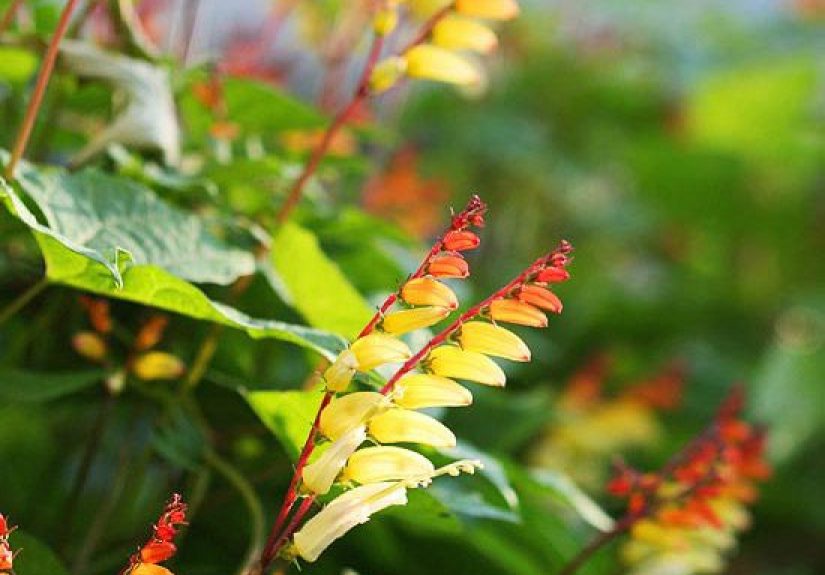
twining up a trellis and shooting out flower spikes that fade from red to orange to yellow to creamy whitelike
a tiny fireworks show that forgot it was supposed to be subtle.
The good news: it’s not complicated. The “trick” is mostly timing (warmth matters), giving it something to climb,
and not overfeeding it into a leafy green bodybuilder with no flowers. Below is a practical, step-by-step guide to
planting, growing, and getting a long season of bloomsplus real-world growing notes from gardeners who’ve learned
a few things the fun way.
Quick Facts (So You Know What You’re Signing Up For)
- Common names: Spanish flag, firecracker vine, exotic love vine
- Botanical name: Ipomoea lobata (syn. Mina lobata)
- Growth: Fast twining vine; typically 10–15+ feet in a season with warmth and support
- Blooms: Mid-summer through frost in many climates
- Life cycle: Often grown as an annual; can behave as a tender perennial only where winters are frost-free
- Best feature: Color-changing flower spikes that attract pollinators (including hummingbirds)
Where Spanish Flag Grows Best (And Why Warmth Is the Whole Personality)
Spanish flag is happiest when it can pretend it lives somewhere warm year-round. In most of the U.S., gardeners grow
it as an annual because it doesn’t tolerate frost and can suffer damage in chilly conditions. If your nights regularly
dip cold in spring, you’ll get better results by starting seeds indoors or waiting until outdoor temperatures are reliably warm.
Sunlight
Give Spanish flag full sun for the best floweringthink at least 6–8 hours of direct light, and more is
usually better. It can tolerate light shade, but you’ll typically see fewer flowers and a less dramatic color show.
Temperature
This vine is not a fan of cold drama. If your spring is the type that says “surprise frost” like it’s a personality trait,
keep plants protected until nights are comfortably warm. Once summer heat arrives, Spanish flag usually takes off and starts
acting like it pays rent on your trellis.
Choose the Right Spot: Support First, Then Soil
Spanish flag is a twining vine, meaning it climbs by wrapping itself around supports. It loves:
- Trellises and arbors
- Chain-link fences
- Wire panels
- Sturdy strings or garden netting
Pro tip: Put the support in place before planting. Trying to “add a trellis later” is how you end up
playing garden Twister while the vine clings to your sleeve like it has separation anxiety.
Soil Requirements
Spanish flag does best in organically rich, well-draining soil that stays consistently moist.
If your soil is heavy clay, improve it with compost to help drainage and root growth. If it’s sandy, compost helps hold moisture.
A slightly acidic to neutral pH is fine (and the plant is fairly adaptable as long as drainage is good).
Starting Spanish Flag From Seed (The Part Where Patience Pays)
Spanish flag is commonly grown from seed, and the seeds have a tough outer coat. That’s why many guides recommend
scarifying (lightly nicking or filing) and soaking before planting. This helps water get
into the seed so germination can actually happen on a human timeline.
Option A: Start Seeds Indoors (Best for Shorter Summers)
- Time it right: Start seeds about 4–6 weeks before your average last frost date.
- Scarify + soak: Lightly nick the seed coat with a nail file (or gently scratch it), then soak seeds in water
for 12–24 hours. - Plant shallow: Sow about 1/4 inch deep in seed-starting mix.
- Keep it warm: Aim for 70–80°F soil temperature (a heat mat helps a lot).
- Be patient: Germination can be slowoften 1–4 weeks, depending on warmth.
- Provide light: Once sprouted, give bright light to prevent leggy seedlings.
- Harden off: Before transplanting outdoors, gradually acclimate seedlings to sun and wind over 7–10 days.
Option B: Direct Sow Outdoors (Great if Your Soil Warms Quickly)
- Wait for warmth: Plant only after all frost danger has passed and nights are consistently warm.
- Prep the seed: Scarify and soak as described above for better germination.
- Sow shallow: Plant seeds about 1/4 inch deep and keep soil evenly moist.
- Thin seedlings: Once established, thin to your preferred spacing so vines don’t choke each other out.
Spacing That Actually Works
Spacing depends on how quickly you want coverage and how large your support is. A practical rule:
- For a trellis or fence: space plants about 12–18 inches apart
- For a dense screen: you can plant a bit closer, then thin the weakest seedlings
- For large arbors: fewer plants often look better (and are easier to manage)
Planting Outdoors: Step-by-Step
- Install support (trellis, fence, wire panel, etc.).
- Amend soil with compost if needed to improve drainage and fertility.
- Transplant gently (if starting indoors), keeping the root ball intact.
- Water in well to settle soil around roots.
- Mulch lightly to conserve moisture (keep mulch off the stem to prevent rot).
- Guide young vines onto the supportonce they start twining, they’ll do the rest.
Care and Feeding (Or: How Not to Overlove It)
Watering
Aim for consistent moisture, especially while plants are establishing and during hot weather. A good baseline is about
1 inch of water per week from rain or irrigation, with more during heat waves or in containers.
The vine can handle short dry spells, but drought stress often means fewer blooms.
Fertilizer
Spanish flag generally doesn’t need heavy feeding. In rich soil, it may not need fertilizer at all. If growth seems weak,
use a light, balanced fertilizer or compost top-dressing. Avoid high-nitrogen productstoo much nitrogen can
encourage lush leaves at the expense of flowers (a classic “all salad, no salsa” situation).
Training and Pruning
- Training: In the first few weeks, gently wrap or clip vines toward the support.
- Pruning: If the vine becomes a tangled mass, trim stray shoots to improve airflow.
- Bloom management: Deadheading isn’t usually required, but removing spent spikes can keep things tidy.
Growing Spanish Flag in Containers
Yes, you can grow Spanish flag in a potjust remember it’s a climber. Choose a large, heavy container
(think 12–18 inches wide or bigger) so it won’t tip when the vine gets ambitious. Use a quality potting mix, keep moisture
steady, and add a sturdy obelisk or trellis. Container plants often need more frequent watering, especially in full sun.
Pests and Problems (Mostly Preventable With Smart Habits)
Spanish flag is generally easygoing, but like many annual vines, it can attract common garden freeloaders:
Common Pests
- Aphids: Look for clusters on tender growth; blast off with water or use insecticidal soap.
- Spider mites: More likely in hot, dry conditions; increase humidity and rinse foliage.
- Whiteflies: Often show up in warm weather; yellow sticky traps can help monitor populations.
Common Issues
- Few or no flowers: Usually too much shade, too much nitrogen, or the plant started too late in a cool summer.
- Slow germination: Seeds need warmth; scarify and soak, then keep soil consistently warm and moist.
- Leaf spot or mildew: Improve airflow, avoid overhead watering late in the day, and thin crowded growth.
How to Get More Blooms and More Pollinators
Spanish flag’s tubular flowers are famous for drawing in hummingbirds and other pollinators. If you want the vine to be a
backyard “nectar bar,” focus on these bloom-boosters:
- Full sun (the #1 factor for bloom quantity)
- Moderate feeding (avoid pushing leafy growth)
- Even moisture (especially in heat)
- Skip broad-spectrum pesticides near the vine so pollinators can safely visit
End-of-Season Tips: Saving Seed and Overwintering Options
Saving Seeds
Toward the end of the season, flowers can form seed capsules. If you want to save seed:
- Let capsules dry on the plant.
- Harvest before heavy rains or hard frost.
- Store in a cool, dry place in a labeled envelope (future you will thank present you).
Can You Overwinter Spanish Flag?
In frost-free climates, the plant can behave more like a perennial. In colder areas, it’s typically treated as an annual.
Some gardeners try overwintering it indoors in containers where temperatures stay warm enough, but it’s not as straightforward
as overwintering a houseplantmost people find seed-starting in spring easier and more reliable.
Troubleshooting: The “What Did I Do Wrong?” Checklist
- Seedlings sprouted but stalled: Not enough heat/light; move to brighter light and warmer conditions.
- Vine is huge but flowers are scarce: Too much nitrogen or not enough sun; ease off fertilizer and maximize light.
- Leaves look tired at the base: Normal late-season aging can happen; tidy up and focus on healthy new growth.
- Plant keeps falling off support: Add more twine/netting and guide stems early before they stiffen.
Grower Experiences: Lessons From Real Gardens (Extra Notes That Save You Time)
Here’s what gardeners commonly notice when they grow Spanish flag for the first timeand what they’d do differently next season.
Consider this the “field guide” version of the instructions above.
1) Warmth is the make-or-break factor. Many growers report that seeds can sit there looking innocent for weeks
if the soil is cool, then suddenly germinate when temperatures finally rise. The most consistent success stories come from
scarifying + soaking seeds and then keeping the seed-starting mix genuinely warm (a heat mat can feel like cheatingin a good way).
If you direct sow into chilly spring soil, you may get late sprouting and a shorter bloom season.
2) “Fast-growing” is true… once it decides it likes you. A common pattern is slow early growth followed by a
sudden mid-summer growth spurt. Gardeners often describe a week where the vine goes from “cute” to “architectural feature.”
That’s why having the support ready matters. If the vine doesn’t find a trellis, it will happily grab whatever is closest
including neighboring plants that did not consent to becoming a ladder.
3) Wind and microclimate change the whole performance. In more exposed yards, gardeners often see shorter vines
and more “polite” growth. In sheltered, warm spots with consistent moisture, Spanish flag can hit its advertised height and
fill an arch quickly. If your plant is smaller than the catalog promised, it’s not necessarily doing “bad”it may just be growing
in conditions that keep it tidier and less wild.
4) Over-fertilizing is the easiest mistake to make. Because it’s a big vine, people assume it wants big feeding.
Lots of gardeners learn (gently, with leafy proof) that heavy nitrogen creates a gorgeous wall of green and a disappointing number
of flower spikes. The better approach is compost-rich soil, modest feeding, and letting sun + warmth do the heavy lifting.
5) Containers workbut the pot has to be serious. Gardeners who succeed in pots tend to use large, stable containers,
keep watering consistent, and choose a sturdy vertical support. The most common container failure is a too-small pot that dries out
constantly (leading to stress and fewer blooms) or a lightweight pot that tips over once the vine starts climbing like it’s training
for the Garden Olympics.
6) Bloom timing feels late… until it doesn’t. Spanish flag often begins flowering in mid-summer, then keeps going hard
into late summer and early fall. Gardeners who start seed early or transplant vigorous seedlings usually get the longest bloom window.
If you plant late, you may still get flowers, but the show can be shorterespecially in regions where fall cools down quickly.
7) It’s a pollinator magnet when you avoid “lawn chemical drift.” Growers who see the most hummingbird and bee activity
often place the vine away from areas treated with broad insecticides or herbicides and keep the plant well-watered so it produces a steady
supply of blooms. If you want a patio-side vine with wildlife activity, Spanish flag is frequently described as a great “front-row seat” plant
because the flower spikes are held out where visitors can actually see them.
8) The vine can look a little scruffy at the base late season. Some gardeners notice lower leaves dropping toward the end of
summer. That’s not unusual for vigorous annual vines, especially if the plant is putting energy into climbing and flowering. A simple fix is to
plant a low, mounding companion at the base (like lantana or other sun-loving annuals) to “hide the ankles” while Spanish flag handles the fireworks
up top.
Bottom line: Spanish flag rewards gardeners who start it warm, give it sun, provide a strong support, and resist the urge to
over-fertilize. Do those four things, and it usually delivers a long, colorful bloom season that makes fences and trellises look like they upgraded
their wardrobe.
Conclusion
If you want a dramatic, pollinator-friendly vine with a color-changing bloom show, Spanish flag is an easy winespecially once summer heat arrives.
Start seeds warm (scarify and soak), plant in full sun, keep soil evenly moist, and give it something sturdy to climb. Skip the heavy nitrogen,
and you’ll get the real prize: glowing flower spikes from mid-summer through frost that turn a plain structure into a living accent wall.