Table of Contents >> Show >> Hide
- What wine actually needs (the short, useful version)
- Before you choose a storage setup, pick your timeline
- The 13 practical ideas
- 1) Choose the calmest spot in your home (cool, dark, stable)
- 2) Aim for cellar-like temperature, but prioritize consistency
- 3) Use the “shoebox test” to block light
- 4) Store cork-finished bottles on their side (most of the time)
- 5) Keep humidity in a “not too dry, not swampy” zone
- 6) Get a $10 thermometer/hygrometer and stop guessing
- 7) Keep wine away from vibration (yes, your subwoofer counts)
- 8) Avoid odor “hot zones” (wine can pick up smells)
- 9) Use a sturdy rack that supports the bottle (and your floors)
- 10) Try the “case box method” for budget-friendly, aging-friendly storage
- 11) Convert under-stairs or a cabinet into a micro-cellar
- 12) Consider a wine fridge when “a cool closet” isn’t cool enough
- 13) Create a two-tier system: “daily drinkers” vs. “do-not-touch-yet” bottles
- How to store opened wine (so it still tastes like wine tomorrow)
- Common storage mistakes (and fast fixes)
- Experiences that make wine storage finally click (about )
- Conclusion
- SEO Tags
Wine is basically a delicious science experiment in a glass bottle. Treat it well and it rewards you. Treat it like a houseplant
you “remember” once a month, and it will quietly punish you with flavors that scream “warm closet next to the water heater.”
The good news: you don’t need a castle cellar or a secret door behind your bookcase (though that would be cool).
You just need to control a few enemies of wine: heat, light, big temperature swings, dryness, vibration, and funky odors.
This guide walks you through the “why” in plain English and then gives you 13 practical, realistic ways to store wine at homewhether
you’ve got three bottles, thirty, or a growing collection that’s starting to look like a hobby you should probably stop calling “casual.”
What wine actually needs (the short, useful version)
If you remember only one thing, make it this: steady conditions beat perfect conditions. Wine hates drama. A consistent
slightly-cool temperature helps it age slowly and predictably. Too much heat can “cook” flavors into something jammy and flat; too cold can
risk expansion and leakage. Light can cause “light-struck” off aromas, and vibration can keep sediment from settling, which is not what you want
if you’re aging wine. Cork-finished bottles also prefer enough humidity to keep corks from drying out over time.
Before you choose a storage setup, pick your timeline
Most bottles are meant to be enjoyed sooner rather than later. So your best storage plan depends on how long you want to keep the wine:
- Tonight to a few weeks: a cool, dark, stable spot is usually enough.
- 1–12 months: you’ll benefit from better temperature stability and darkness (closet + rack + simple monitoring works well).
- Multiple years: consider a wine fridge/cooler or a dedicated conditioned space for consistent temperature and humidity.
The 13 practical ideas
-
1) Choose the calmest spot in your home (cool, dark, stable)
The best “wine cellar” is often a boring interior closetespecially one on a lower floor. Avoid kitchens (heat swings), laundry rooms
(vibration), and anywhere near heating vents. If you’re deciding between two closets, pick the one that feels slightly cooler and more
consistent day-to-day. Bonus points if it’s on an interior wall and not sun-facing. -
2) Aim for cellar-like temperature, but prioritize consistency
Classic cellar temperature is in the mid-50s °F range. Don’t panic if you’re not exactly theresteady matters most. If your home
sits around the low-to-mid 60s and stays stable, that’s still better than a spot that swings from “toasty” to “arctic” every day.
If you routinely hit warmer temperatures, that’s when a wine fridge becomes more than a “nice-to-have.” -
3) Use the “shoebox test” to block light
Light is sneaky. Even if your storage spot isn’t sunlit, bright room lighting can still be a long-term issue. The simplest fix:
keep bottles in their original case box or put them in an opaque bin. If your bottles would be in the dark if you shut the lid like a shoebox,
you’re doing great. -
4) Store cork-finished bottles on their side (most of the time)
For wines sealed with natural cork, storing bottles horizontally helps keep the cork from drying out over long periods. Screw caps and many
modern alternative closures don’t require side storage, but racking them sideways is still space-efficient and totally fine. If you’re unsure,
sideways is the safe “default” for unopened corked wine. -
5) Keep humidity in a “not too dry, not swampy” zone
Extremely dry air can contribute to dried-out corks over time; extremely damp air can encourage label damage and mold on the outside of bottles.
If your storage area feels desert-dry, a small pan of water nearby (not under the bottles) can gently raise humidity. If it’s damp, improve airflow
and consider a small dehumidifierlabels are part of the bottle’s identity (and your future sanity). -
6) Get a $10 thermometer/hygrometer and stop guessing
Home wine storage gets dramatically easier when you measure reality instead of vibes. Put an inexpensive thermometer/hygrometer in the spot where
bottles will live. Check it for a week. You’ll learn quickly if your “cool closet” is actually a “secret sauna,” or if it’s stable enough to trust.
This is the cheapest upgrade with the biggest confidence boost. -
7) Keep wine away from vibration (yes, your subwoofer counts)
Vibration is the annoying roommate of wine storage. It can agitate sediment and potentially interfere with slow aging. So don’t park bottles on top
of the fridge, next to the washer/dryer, near heavy foot traffic, or on the same shelf as a speaker that makes your furniture feel like it’s purring.
A quiet corner beats a cool-but-rumbly one. -
8) Avoid odor “hot zones” (wine can pick up smells)
Wine storage isn’t just about temperatureit’s also about the neighborhood. Garages, paint closets, and areas near gasoline, solvents, or strong
cleaning supplies are risky because odors can infiltrate over time, especially around corks. If the storage space smells like anything other than
“nothing,” pick another spot. -
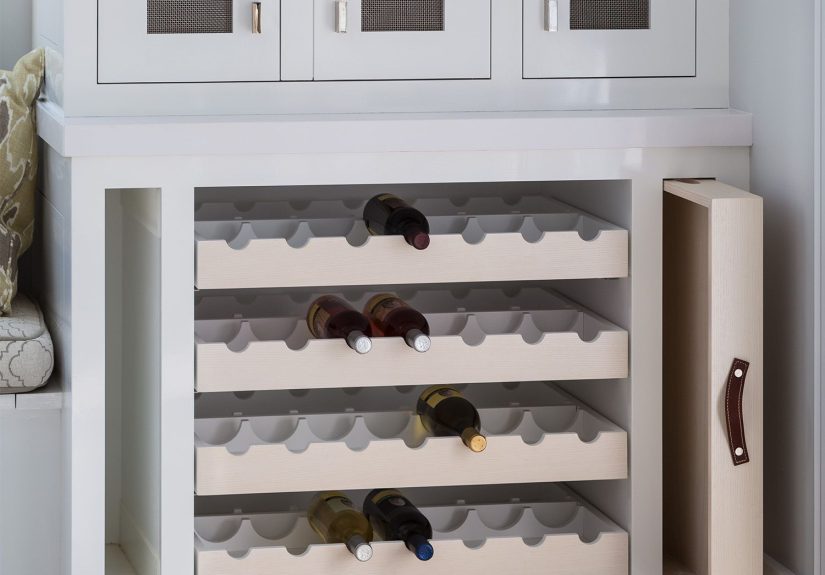
9) Use a sturdy rack that supports the bottle (and your floors)
A wine rack doesn’t need to be fancy; it needs to be stable. Look for racks that hold bottles securely without wobbling, and place them on a level
surface away from direct heat. If you’re renting or short on space, a compact countertop rack can workjust don’t put it above the oven, because
wine shouldn’t experience “preheating” as a lifestyle. -
10) Try the “case box method” for budget-friendly, aging-friendly storage
If you buy wine by the case (or even half-case), you’re already holding a great storage tool: the cardboard box. Case boxes reduce light exposure,
buffer small temperature changes, and keep bottles organized. Label the outside with what’s inside and the “drink by” window. It’s simple,
surprisingly effective, and feels satisfyingly warehouse-chic. -
11) Convert under-stairs or a cabinet into a micro-cellar
Under-stairs spaces are often darker and more temperature-stable than open rooms. Add a compact rack, keep it away from any HVAC vents, and you’ve
got a stealthy wine nook. If you’re using a cabinet, choose one away from appliances and sunlight, and consider adding a door draft seal to reduce
temperature swings. -
12) Consider a wine fridge when “a cool closet” isn’t cool enough
If your home runs warm, you want to age bottles for years, or you’re tired of playing musical chairs with storage spots, a wine fridge (wine cooler)
is the most practical path to stable temperature. Single-zone models work well for long-term storage; dual-zone can help if you keep whites and reds
at different ready-to-drink temps. Place it indoors where the surrounding temperature stays reasonable. -
13) Create a two-tier system: “daily drinkers” vs. “do-not-touch-yet” bottles
This is how collections stay joyful instead of chaotic. Keep weeknight wines in an easy-access rack, and store age-worthy or special bottles in your
darkest, most stable area (or in the wine fridge). Add a simple “first in, first out” rule so nothing gets forgotten behind something you bought
during a “I’m definitely hosting more dinner parties” phase.
How to store opened wine (so it still tastes like wine tomorrow)
Once a bottle is opened, oxygen becomes the main villain. The best move is to reseal promptly and refrigerateyes, even reds
(you can bring them back toward serving temp later). Store opened bottles upright to reduce surface area exposed to oxygen. If you regularly
save leftover wine, consider tools like vacuum stoppers or inert gas systems to slow oxidation.
- Quick habit: Pour, re-cork, fridge.
- Better habit: Use a snug stopper or vacuum pump.
- Best-for-special-bottles habit: Use a system designed to pour without fully exposing the wine to oxygen.
Common storage mistakes (and fast fixes)
- Storing on top of the refrigerator: It’s warm and vibrates. Move bottles to a lower, steadier shelf or closet.
- Keeping bottles in direct sunlight: Light + heat is a double-whammy. Use a box or opaque bin immediately.
- “Room temperature” that’s actually 75–80°F: Great for people, not for wine over time. Shift to a cooler interior spot or use a wine fridge.
- Storing corked bottles upright for years: Rotate to horizontal storage if you’re aging them.
Experiences that make wine storage finally click (about )
Talk to enough wine lovers and you’ll hear the same story arc: it starts with a couple bottles on the counter (innocent!), escalates to “temporary”
storage on top of the fridge (tragic), and ends with someone whispering, “I think I need a wine fridge,” like they’re confessing a secret. The funny
part is that most storage “failures” aren’t dramaticwine usually doesn’t explode or turn neon green. It just becomes a little less itself. The bright
fruit gets muted. The aroma feels tired. The finish shortens. People often assume that means the bottle was bad, when really it lived a hard life next to
a sunny window and a radiator.
One of the most common realizations is that temperature swings matter more than people expect. Someone will store wine in a kitchen cabinet
because it’s dark, but the cabinet is above the dishwasher or near the oven. The space may look calm, yet the temperature changes every time dinner happens.
The fix usually isn’t expensiveit’s moving the bottles to an interior closet or a low shelf in a room that stays steady. When people make that change,
they’re often surprised that even everyday bottles taste a little fresher and more “as intended.”
Another real-world lesson: the “perfect setup” is the one you’ll actually use. A gorgeous wall rack in the dining room might photograph like a dream,
but if it sits in direct afternoon sun, it’s doing the wine no favors. Meanwhile, a plain rack in a hallway closet can quietly outperform it for years.
Many people end up with a two-zone routine: bottles they plan to drink soon live where they’re convenient, and bottles they want to protect live where
conditions are best. That simple separation prevents the classic mistake of aging a special bottle in a bad spot just because it was within arm’s reach.
Open-bottle storage is another “aha” moment. Lots of people learn the hard way that re-corking isn’t optional if you want the wine to taste good tomorrow.
Once they start refrigerating open reds (then letting them warm slightly before serving), leftovers become much more reliable. For frequent sippers,
a vacuum stopper or similar tool can feel like magicnot because it makes wine immortal, but because it buys you extra time and reduces waste.
Finally, experienced collectors tend to get almost comically organizedbecause it works. They label case boxes, track what they own, and rotate bottles so
nothing gets “lost” behind a row of newer purchases. You don’t need a spreadsheet (unless you want one), but a small habitlike writing “drink 2026–2028”
on a box flapcan turn your collection from a pile of mystery bottles into a lineup you’re genuinely excited to open.
Conclusion
Storing wine well is less about having a perfect cellar and more about giving bottles a calm, stable life: cool temperatures, low light, minimal vibration,
reasonable humidity, and protection from strong odors. Start smallpick a better spot, store corked bottles on their side, and measure temperature.
If your home runs warm or your collection is growing, a wine fridge can be the most practical upgrade. Do those things, and your wine will taste like
you meant it toon a random Tuesday or on a big celebration night.