Table of Contents >> Show >> Hide
- First, the shared DNA: What NPH insulin actually is
- Quick comparison: Humulin N vs. Novolin N
- The biggest “difference” is not what you think
- 1) Active ingredient: Same insulin category, slightly different formulation details
- 2) Action profile: Similar class, real-world variability
- 3) Resuspension: Cloudy insulin has rules
- 4) Mixing with other insulins: Similar idea, different “allowed combinations”
- 5) Devices: KwikPen vs. FlexPen (and why this matters)
- 6) Storage and in-use expiration: A surprisingly big practical difference
- 7) Cost and access in the U.S.: Where Novolin N often gets the spotlight
- 8) Safety and side effects: Similar headlines, with NPH-specific watch-outs
- Can you switch between Humulin N and Novolin N?
- Which one is “better”?
- FAQ
- Real-world experiences: What people notice with Humulin N vs. Novolin N (about )
- Conclusion
If you’ve ever stood at a pharmacy counter staring at two nearly identical boxes of “N” insulin,
you’ve probably had the same thought every person with diabetes (or a family member, or a caregiver)
has had at least once:
“Are these basically the same thing… or is one of them going to betray me at 2 a.m.?”
Humulin N and Novolin N are both NPH insulin (also called insulin isophane human),
which is an intermediate-acting insulin. They’re older “human” insulins that many people still use
for basal coverage (half-day/overnight needs) and sometimes in mixed regimens.
But “same category” doesn’t always mean “swap them like identical socks.”
The differences that matter most tend to show up in manufacturer, device options, storage times, cost/access,
and real-world consistency.
Let’s break it down in a way that’s accurate, practical, and only mildly judgmental of the chaos that is U.S. insulin pricing.
(Spoiler: the insulin is not the villain here. The system… well, that’s another article.)
First, the shared DNA: What NPH insulin actually is
NPH stands for Neutral Protamine Hagedornan insulin formulation where insulin is combined with
protamine to slow absorption. That “slower release” is why NPH is considered
intermediate-acting: it doesn’t hit as fast as mealtime insulin, but it doesn’t last as long (or as flat)
as most modern long-acting analogs.
The American Diabetes Association (ADA) describes intermediate-acting NPH as typically reaching the bloodstream
about 2–4 hours after injection, peaking around 4–12 hours, and lasting roughly
12–18 hourswith variability between people and even day to day. That variability is a big part of the story.
Quick comparison: Humulin N vs. Novolin N
| Feature | Humulin N | Novolin N |
|---|---|---|
| Type | NPH (insulin isophane human), intermediate-acting | NPH (insulin isophane human), intermediate-acting |
| Manufacturer | Eli Lilly | Novo Nordisk |
| Concentration | U-100 (100 units/mL) | U-100 (100 units/mL) |
| Appearance | Cloudy suspension (must be mixed/resuspended) | Cloudy suspension (must be mixed/resuspended) |
| Pen options | KwikPen | FlexPen |
| Room-temp in-use time (typical label guidance) | Vial: 31 days; Pen: 14 days | Vial: 42 days (below 77°F); Pen: 28 days (below 86°F) |
| Mixing guidance | May mix with Humulin R or Humalog (per label instructions) | Mix only with regular human insulin (Novolin R), injected immediately after mixing |
| Cost/access highlight | Often prescription; pricing varies by plan/pharmacy | Often available as ReliOn Novolin N behind Walmart pharmacy counter; may be lower cost |
The biggest “difference” is not what you think
Most people assume the key difference is “which one works better.” In practice, the most meaningful differences usually are:
- How you can get it (insurance coverage vs. retail access, including ReliOn at Walmart)
- How you take it (pen vs. vial, and how each product wants to be mixed/resuspended)
- How long it can sit at room temperature once opened (a surprisingly practical, real-life factor)
- How your body responds (small formulation differences + normal NPH variability)
Clinically, both are designed to do the same job: provide intermediate basal insulin coverage. But the “user experience”
can feel different because NPH insulin itself is inherently variable, and each brand has its own label details,
excipients, and device instructions.
1) Active ingredient: Same insulin category, slightly different formulation details
Both products are insulin isophane human (NPH)a cloudy suspension containing insulin plus protamine.
But the full ingredient list (the inactive “extras”) is not perfectly identical.
That can matter if you’re sensitive to preservatives or if you’ve had injection-site reactions.
Humulin N (what’s in the vial/pen)
Humulin N is a white, cloudy suspension. In addition to insulin, it contains ingredients such as
dibasic sodium phosphate, glycerin, preservatives like metacresol and phenol,
plus protamine sulfate and zinc (amounts differ by presentation). The pH is listed around 7.0–7.5.
Novolin N (what’s in the vial/pen)
Novolin N is also a white, cloudy suspension with similar categories of ingredientsinsulin, protamine, zinc, glycerin,
and preservatives (including metacresol and phenol)but with slightly different amounts (for example, phosphate content differs).
Its pH is listed around 7.1–7.5.
Translation: the insulin “type” is the same, but the “supporting cast” isn’t a carbon copy.
Most people will never notice. A small subset willespecially when switching.
2) Action profile: Similar class, real-world variability
Here’s the honest truth about NPH: it’s not famous for being predictable. It’s usable, effective, and still widely used
but it tends to have a more pronounced peak than modern “flat” basal insulins. That peak is where hypoglycemia risk
often lives.
Timing basics (what to expect)
As a class, NPH is generally described as starting in about 2–4 hours, peaking 4–12 hours later,
and lasting about 12–18 hours. That’s why many regimens use it once or twice daily, depending on goals and glucose patterns.
Humulin N label example
Humulin N’s prescribing information includes a pharmacodynamic study showing a median maximum effect around
6.5 hours (with a wide range), and it emphasizes that onset/peak/duration are general guidelines
that vary by injection site, activity, and other factors.
Novolin N label example
Novolin N’s prescribing information describes it as intermediate-acting with glucose-lowering effects beginning
about 1–2 hours after subcutaneous injection and a duration that can be dose-dependent, up to 24 hours.
So which is “faster” or “longer”? In the real world, they’re close enough that the bigger issue is usually
how your body responds and how consistently you dose, mix, inject, and time meals and activity.
3) Resuspension: Cloudy insulin has rules
Both Humulin N and Novolin N are suspensionsmeaning the insulin isn’t evenly dissolved like clear rapid-acting insulin.
If you don’t resuspend properly, you can pull inconsistent doses. That’s not a theoretical problem. That’s a Tuesday.
Humulin N mixing/resuspension basics
Humulin N should appear uniformly cloudy after mixing and should not contain particulate matter.
If you see particles or it doesn’t look right, don’t use it.
Novolin N resuspension is very specific
Novolin N provides concrete steps: roll the vial gently in your hands (horizontally) multiple times until uniformly white and cloudy,
and for the FlexPen, move it up and down to mix until uniform. It also warns against shaking right before drawing a dose
because bubbles or froth can mess with accuracy.
Practical tip: gentle and thorough beats aggressive shaking. Your insulin is not a protein shake.
4) Mixing with other insulins: Similar idea, different “allowed combinations”
Mixing insulin is one of those topics where the details matter, and “close enough” is not a safe strategy.
If you mix insulins, do it only under clinician guidancebecause mixing changes how insulin acts and increases the
chance of dosing errors.
Humulin N mixing guidance
Humulin N’s labeling allows mixing with certain prandial insulins (for example, Humulin R or Humalog) and instructs
drawing the clear insulin into the syringe first, then the cloudy NPH, and injecting immediately after mixing.
Novolin N mixing guidance
Novolin N’s labeling is stricter: it can be mixed with regular human insulin (commonly Novolin R),
with the clear insulin drawn first, and the mixture injected immediately. It advises not to mix with other insulin types.
Bottom line: don’t assume Humulin N mixing rules apply to Novolin N (or vice versa).
Even when the general “clear before cloudy” rule stays the same, the product-specific instructions differ.
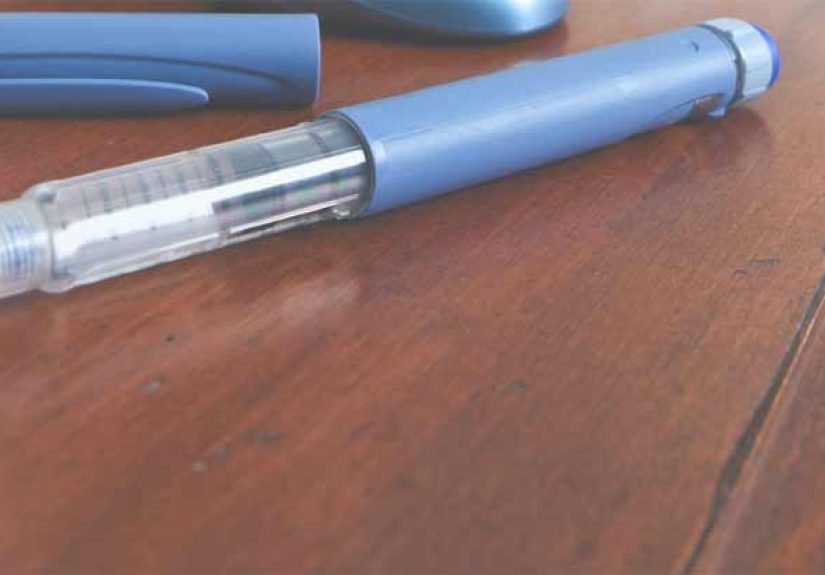
5) Devices: KwikPen vs. FlexPen (and why this matters)
Pens are often easier and more discreet than vials and syringes, but “easy” doesn’t mean “identical.”
The two big differences people notice are:
- How the pen mixes (NPH pens require deliberate mixing before each use)
- How long the pen is good once opened (this can affect waste and cost)
If you’re switching brands, the device instructions can be a sneaky source of user error.
Many “my numbers got weird after switching” stories end up being “I didn’t mix the pen long enough”
or “I didn’t realize this pen expires sooner once opened.”
6) Storage and in-use expiration: A surprisingly big practical difference
Storage rules aren’t just bureaucratic fine print. They’re “will this insulin still be reliable next week” rules.
And here’s one clear point where label guidance diverges in a meaningful way.
Humulin N storage highlights
- Vial: can be used for up to 31 days at room temperature (up to 86°F / 30°C), including unopened + opened time.
- KwikPen: can be used for up to 14 days at room temperature; do not refrigerate once in use.
Novolin N storage highlights
- Vial: in-use at room temperature is listed as up to 42 days (below 77°F / 25°C) in FDA labeling guidance.
- FlexPen: in-use at room temperature is listed as up to 28 days (below 86°F / 30°C); do not refrigerate once in use.
If you use relatively small daily doses, those “14 vs. 28 days” (pens) or “31 vs. 42 days” (vials) differences can
influence how much insulin you end up discarding. That can affect cost even when the sticker price looks similar.
7) Cost and access in the U.S.: Where Novolin N often gets the spotlight
In the U.S., people don’t just choose insulin based on pharmacology. They choose based on
insurance formularies, prior authorizations, deductibles, and what they can actually obtain today.
ReliOn Novolin N at Walmart
One major real-world difference is that Novolin N is widely known for its availability under Walmart’s
ReliOn brand. Walmart’s own information notes ReliOn Novolin N is available behind the pharmacy counter
without a prescription in their program and is positioned as a lower-cost option (with listed “starting at” prices).
Availability rules can vary by state and pharmacy practice, so it’s still smart to call ahead.
Humulin N cost realities
Humulin N can be affordable for some people depending on insurance, copay assistance, or discount programsbut it’s
more often encountered as a standard prescription product routed through a plan’s formulary.
In practice, many switches happen not because one insulin is “better,” but because one is
covered and the other is not.
If cost is your main driver, a pharmacist can help you compare:
cash price, coupon/discount price, insurance copay, and
expected waste based on your dose and the in-use expiration.
8) Safety and side effects: Similar headlines, with NPH-specific watch-outs
Both Humulin N and Novolin N share typical insulin risks: the most important is hypoglycemia.
Because NPH has a noticeable peak, lows can show up hours after dosingoften when people least expect it
(late afternoon, overnight, or after unplanned exercise).
Common issues to plan for
- Low blood sugar (hypoglycemia): risk increases with missed meals, extra activity, alcohol, or dosing mistakes.
- Injection site reactions: redness, itching, lipodystrophy if sites aren’t rotated.
- Weight gain and edema: possible with insulin therapy.
- Low potassium (hypokalemia): a recognized insulin-related risk, especially in higher-risk patients.
Also: never share pens, needles, or syringeseven if someone promises they’re “totally clean.”
That’s not how blood-borne pathogens work.
Can you switch between Humulin N and Novolin N?
This is the part where the internet often goes full chaos gremlin.
Yes, they’re both NPH insulin. No, you shouldn’t switch casually without a plan.
Switching insulins can change how your glucose behaves, especially during the first days.
When switching is common
- Insurance formulary changes (the classic “new year, new headache” scenario)
- Availability issues (shortages, backorders, pharmacy stocking differences)
- Cost-driven decisions (especially when out of pocket)
- Device preference (pen vs. vial convenience)
How switching is typically made safer
- Clinician-guided dose planning (sometimes the unit dose stays similar, but timing may be adjusted)
- More frequent glucose checks for 1–2 weeks (or a temporary CGM focus period)
- Clear hypoglycemia plan (what to treat with, when to recheck, when to call for help)
- Re-learning device instructions (especially mixing/resuspension and expiration rules)
If you’re switching because you have no choice (cost or access emergency),
talk to a pharmacist or clinician the same day. If you’re at risk of running out of insulin,
seek urgent medical helprunning out can become dangerous quickly.
Which one is “better”?
The most accurate answer is: the one you can take consistently, correctly, and affordably, with safe glucose outcomes.
For many people:
- Novolin N (including ReliOn) is appealing for cost/access, especially in cash-pay situations.
- Humulin N may fit better when insurance prefers Lilly products or when a clinician prefers its device workflow.
Clinically, both can work well when dosing and monitoring are dialed inbut both carry the classic NPH challenges:
a peak that can cause lows, and variability that rewards consistent habits (meal timing, mixing technique, injection site rotation).
FAQ
Are Humulin N and Novolin N the same as “NPH insulin”?
Yes. Both are brand versions of NPH (insulin isophane human), an intermediate-acting insulin.
The active insulin category is the same, but label instructions, excipients, device options, and storage times can differ.
Why is one cloudy and my other insulin is clear?
NPH is a suspension, which looks cloudy when mixed. Many rapid-acting and regular insulins are solutions and appear clear.
Cloudy insulin needs resuspension to avoid uneven dosing.
Can I use NPH insulin in a pump?
NPH is generally not used in insulin pumps. Pumps typically use rapid-acting insulin analogs designed for continuous infusion.
Follow your product labeling and your clinician’s instructions.
What’s the biggest “gotcha” when switching brands?
Two big ones: (1) not mixing/resuspending properly, and (2) different in-use expiration timelines (especially pens).
Both can quietly change your day-to-day glucose results.
Real-world experiences: What people notice with Humulin N vs. Novolin N (about )
When people talk about Humulin N vs. Novolin N in real life, the conversation is rarely about molecular structure.
It’s about mornings, commutes, grocery bills, and whether your blood sugar decides to audition for a horror movie overnight.
While individual experiences vary (and diabetes loves being an individual), a few themes show up again and again.
1) “I didn’t realize mixing mattered that much.”
A very common “switch story” goes like this: someone changes from one NPH brand to the other, keeps the same unit dose,
and suddenly sees more highs or more lows. After a week of frustration, the culprit turns out to be technique
especially with pens. NPH pens require deliberate mixing. People who were used to one pen’s routine may not realize
the other pen expects a slightly different mixing motion or intensity. The insulin isn’t “bad”; it’s just not evenly suspended.
The fix is often boring (and therefore powerful): slow down, mix until uniformly cloudy, and don’t rush the process
like you’re late for a flight.
2) “My schedule matters more than the brand name.”
NPH has a peak, and that peak tends to care about your routine. People who eat meals at consistent times and have
predictable activity often report smoother results. People with irregular schedulesshift work, variable meal timing,
or unpredictable exerciseoften describe NPH as “touchier,” regardless of whether it’s Humulin N or Novolin N.
Many learn to respect the peak: they plan a snack, adjust timing with clinician guidance, or monitor more closely
on active days. The brand may change, but the “NPH personality” stays the same.
3) “The pen expiration thing surprised me.”
People using smaller doses often notice the real-life impact of in-use expiration. If a pen has to be discarded sooner,
you may throw away insulin simply because the calendar says so. That can feel painfulespecially when cost is already
a stressor. Some people prefer vials for this reason; others prefer pens for convenience and accept the waste.
The point isn’t that one option is universally betterit’s that your dose size and habits can make expiration rules
financially meaningful. It’s the kind of detail you only appreciate after you’ve tossed a half-full pen and felt
personally attacked by the concept of time.
4) “Switching for cost was worth it… but I needed a plan.”
Many people who switch to lower-cost NPH options describe relief: fewer barriers, less rationing temptation,
and more consistent access. But the success stories usually include a safety net: a clinician or pharmacist who helped
confirm dosing, a short period of tighter monitoring, and a clear plan for treating lows. People who switch abruptly
without guidance are more likely to report roller-coaster glucose, not because the insulin is ineffective, but because
the transition wasn’t managed. In other words: affordability helps, but strategy helps too.
The most grounded takeaway from real-world experience is this:
Humulin N and Novolin N can both work, but NPH rewards consistencyconsistent mixing, consistent timing,
consistent monitoring. If you switch, treat it like a small “re-onboarding” to your own medication.
Your future self (and your overnight glucose) will thank you.
Conclusion
Humulin N and Novolin N are both intermediate-acting NPH insulins that can effectively support glucose control when used
correctly. The differences are less about “which one is stronger” and more about
device workflow, storage timelines, mixing instructions, cost/access, and personal response.
If you’re choosing between themor switchingbring your clinician and pharmacist into the conversation, monitor more closely
during the transition, and remember: with NPH, technique and routine are half the battle.