Table of Contents >> Show >> Hide
- The cadaver as the “first patient” is more than a slogan
- How whole-body donation works (and why the rules matter)
- What it feels like to meet a body donor for the first time
- Professionalism starts here: privacy, language, and behavior
- How medical schools turn anatomy into empathy training
- Dissection in 2026: why the debate isn’t “cadavers vs. computers”
- The uncomfortable questions: unclaimed bodies, equity, and trust
- Practical ways to cope without shutting down (for students and educators)
- Conclusion: the first patient who teaches you how to be a doctor
- : Real-world experiences students commonly describe in the anatomy lab
Medical school loves a good plot twist. You show up expecting heroic saves, crisp white coats, and maybe a dramatic hallway sprint.
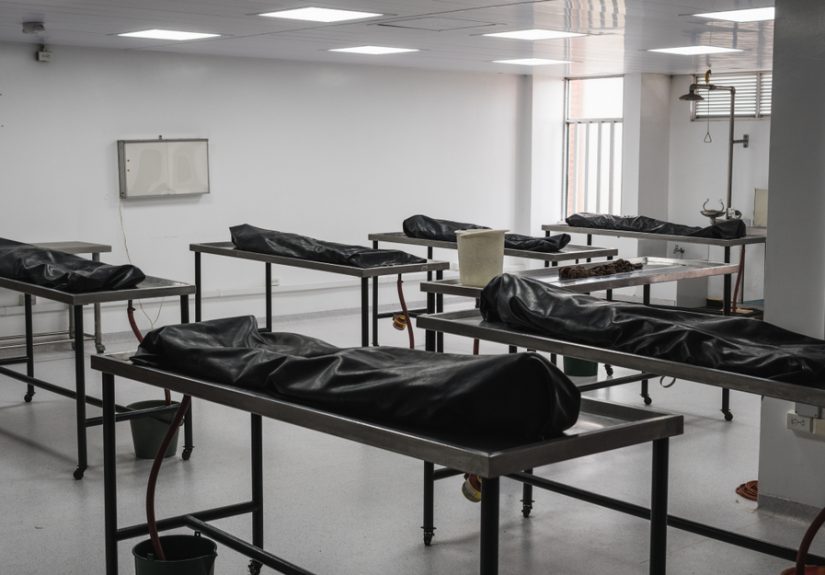
Instead, your first “patient encounter” often happens in a basement anatomy lab with fluorescent lighting and a very quiet teacher:
a donated human body.
The irony is realand so is the lesson. Long before you learn how to calm a nervous kid or explain a diagnosis to a worried adult,
you’re asked to practice something even harder: respect without feedback, professionalism without praise,
and empathy when the person in front of you can’t say a word.
If that sounds heavy, it can be. But it can also be unexpectedly grounding, occasionally awkward, andyessometimes darkly funny in the
“I-can’t-believe-this-is-my-life” way. Let’s talk about why the cadaver is often called the medical student’s first patient, what’s actually
happening in that room (ethically and emotionally), and how students learn to carry the experience forwardwithout losing their humanity.
The cadaver as the “first patient” is more than a slogan
Many U.S. medical schools treat the anatomy donor not as a lab object, but as a person who made a final, intentional gift.
Calling the donor a “first patient” isn’t about pretending a cadaver is alive. It’s about practicing the habits that real patient care demands:
dignity, privacy, gratitude, teamwork, and attention to detail.
Anatomy lab is a rite of passageand a skills boot camp
On paper, gross anatomy is about structures: nerves, vessels, organs, and the elegant (and occasionally chaotic) ways bodies vary.
In practice, it’s also an initiation into clinical thinking. Students learn to:
- Work as a team under time pressure, dividing tasks and double-checking each other’s work.
- Communicate precisely (“That’s not ‘over there’that’s medial to the tendon and deep to the fascia.”).
- Handle uncertainty when real bodies don’t match the tidy textbook diagram.
- Build stamina for long, focused hoursbecause medicine rarely comes in 20-minute blocks.
And tucked inside all of that is a quieter curriculum: how you behave when nobody is watching and the stakes are dignity itself.
How whole-body donation works (and why the rules matter)
Before any student ever meets an anatomy donor, there’s a careful process behind the scenes. In the United States, whole-body donation
is typically handled through university-based donor programs, with clear consent requirements and strict policies for handling remains.
Consent and the legal framework
Body donation intersects with the same ethical backbone that governs organ and tissue donation: consent, clarity, and accountability.
Many programs reference or operate alongside principles laid out in U.S. anatomical gift laws and state regulations, including versions of
the Uniform Anatomical Gift Act (UAGA). The big idea is simple: a person’s body is never “available” for education by accidentauthorization matters.
Eligibility isn’t personal; it’s logistical
Donation programs often have medical and practical criteria (for example, certain infectious risks, severe trauma, or prior surgeries may affect acceptance).
Some programs accept donors even if specific tissues like corneas were donated separately; others have different restrictions.
This can surprise families who assume “donation” is always a guaranteed yes.
Time, disposition, and the promise of dignity
Whole-body donation is usually time-limited. Programs commonly use donors for monthsnot foreverand then the remains are typically cremated
or buried according to program policy and family wishes. The logistics differ by institution, but the consistent theme is stewardship:
medical schools have a responsibility to treat the gift with care and to build systems that prevent mishandling.
What it feels like to meet a body donor for the first time
Most students walk into the anatomy lab carrying a strange mix of excitement (“I’m finally in med school!”) and existential confusion
(“Waitthis is the first day?”). Reactions vary widely, and many are completely normal.
Common emotional responses (yes, including awkward laughter)
Some students feel calm and focused. Others feel lightheaded, nauseated, or emotionally raw. Many report a delayed reaction:
they’re “fine” in the lab and then suddenly emotional later while eating dinner, calling a parent, or trying to sleep.
And sometimes people laughnot because it’s funny, but because humans use humor to release tension. The key is learning the difference between
nervous, private awkwardness and disrespectful behavior. One is a stress response; the other is a professionalism problem.
The “deferred shock” effect
Several medical education reflections describe anatomy lab as a “deferred shock”: the realization hits gradually.
You’re learning medicine through a person who can no longer consent in real time, complain about discomfort, or tell you where it hurts.
That asymmetry is unsettlingand it’s also an early lesson in power, responsibility, and humility.
Professionalism starts here: privacy, language, and behavior
If the cadaver is treated as the first patient, then the anatomy lab becomes the first clinic where professionalism is non-negotiable.
Schools often teach explicit rules, but the deeper lesson is the “why”: medicine depends on trust, and trust begins with respect.
Privacy isn’t optional, even when the patient can’t object
Many institutions prohibit photos, videos, or casual sharing about donors. This includes “harmless” posts that never show a face.
The reasoning is straightforward: patient privacy doesn’t depend on whether the patient can catch you. It depends on whether you’re worthy of it.
Words shape mindset
Lab culture matters. Some instructors encourage students to use “donor” rather than “cadaver,” to avoid objectification.
Others focus less on terminology and more on conduct: cover what should be covered, handle tissues carefully, and don’t treat the body like a prop.
A quick reality check on “gallows humor”
Medicine has a long tradition of dark humor as a coping tool. But in anatomy lab, the guardrails are especially important because the person in front
of you cannot consent to being a punchline. The safest rule is simple:
cope with classmates; honor the donor. If a joke would feel cruel if said in front of the donor’s family, it doesn’t belong.
How medical schools turn anatomy into empathy training
Many U.S. programs deliberately add reflective practices to reduce detachment and cultivate gratitude. The goal isn’t to make students sad;
it’s to make them aware.
Reflection exercises that don’t feel like therapy homework
Some schools use short guided reflections after major lab milestones, peer-led debriefs, or writing prompts that connect anatomy to future patient care:
“What did you learn about teamwork today?” “Where did you notice yourself becoming numb?” “What would respectful care look like in this space?”
Done well, reflection isn’t a diary assignmentit’s a professionalism mirror.
Donor letters and “clinical summaries”
A powerful approach is the donor letter: students write a thank-you note to the donor’s family, describing what the donor taught them and how they
tried to honor the gift. Some curricula also ask students to craft a respectful “clinical summary” of dissection findings, reinforcing the idea that
bodies tell storiesand that physicians must interpret those stories without dehumanizing the person behind them.
Memorial ceremonies: the moment the lab becomes personal
Many anatomy programs hold memorial ceremonies where students share readings, music, artwork, or reflectionssometimes with donor families present.
These ceremonies can be student-led and are often described as a turning point: the donor stops being “our table” and becomes a remembered individual.
Dissection in 2026: why the debate isn’t “cadavers vs. computers”
Anatomy education has changed dramatically. High-quality 3D models, virtual dissection platforms, and imaging-based learning (CT, MRI, ultrasound)
can teach structures efficiently. Some schools use prosections (pre-dissected specimens) to focus on learning rather than cutting.
What technology does well
- Consistency: every student can see the same “ideal” anatomy clearly.
- Access: you can review at midnight without lab hours or safety limitations.
- Integration: imaging tools connect anatomy to what clinicians actually see in practice.
What real human donors still teach uniquely
- Variation: no two bodies match the diagram, and patients won’t either.
- Tactile learning: tissue planes, resistance, fragilitythings you can’t fully “click.”
- Professional identity formation: the emotional and ethical weight of caring for a human gift.
In other words: the strongest anatomy education often blends tools. The donor lab isn’t a museum of outdated teachingit’s one part of training
the whole physician.
The uncomfortable questions: unclaimed bodies, equity, and trust
Not every anatomy donor story is simple. Medical education has wrestled with hard realities, including historical use of unclaimed bodies,
exploitation of marginalized groups, and uneven access to dignified burial. Modern programs increasingly emphasize transparency, consent,
and memorialization in response to that history.
Why students should know the ethics, not just the anatomy
When students understand the donor program’s policieshow consent is documented, how remains are handled, how ceremonies are organizedthey’re better
equipped to treat donors respectfully and to recognize why public trust matters. The privilege to learn from donated bodies depends on society believing
that medical institutions will honor the gift.
Practical ways to cope without shutting down (for students and educators)
The goal isn’t to be “tough.” The goal is to be steadyable to function while remaining human. Here are realistic strategies that show up across
medical education best practices.
For students
- Give yourself a script: A simple internal line like “This is a donor; I’m here to learn respectfully” can reduce panic.
- Use micro-breaks: Step out, breathe, drink water, reset. Ten minutes of oxygen beats two hours of spiraling.
- Debrief with boundaries: Talk about feelings without turning the donor into content for jokes or shock-value stories.
- Watch for delayed stress: If sleep, appetite, or mood gets hit hard, tell a mentor or counselor early.
- Anchor gratitude: A brief moment of thanks at the start of lab can keep you grounded.
For faculty and programs
- Set expectations clearly: Explain professional conduct, privacy rules, and the “why” behind them on day one.
- Normalize reactions: Students do better when they don’t feel ashamed of feeling something.
- Build reflection into the course: Short, structured exercises can prevent emotional bottling.
- Make memorialization real: Ceremonies and donor letters help keep the donor’s humanity in view.
Conclusion: the first patient who teaches you how to be a doctor
It’s undeniably ironic that many medical students meet their “first patient” in silence. But the lesson is loud:
medicine isn’t just knowledgeit’s character. In the anatomy lab, you practice precision and patience, but you also practice the kind of respect
that patients will one day trust with their bodies and their stories.
The donor can’t say “thank you,” can’t complain, can’t correct you, and can’t tell you you’re doing fine. Yet, in a strange way,
the donor gives you your first chance to prove you belong in the profession: by treating a human gift with dignityevery single time.
: Real-world experiences students commonly describe in the anatomy lab
Most students remember the first day in the anatomy lab with cinematic clarityand not the fun kind with a soundtrack. It often starts with a briefing:
rules about privacy, no photos, respectful language, and what to do if you feel faint. Someone tries to look unbothered. Someone else clutches a notebook
like it’s a flotation device. The instructor says something gently practical like, “If you need to step out, step out,” and half the room silently
decides that stepping out would be admitting defeat (which is, of course, exactly why some people should step out).
Then comes the moment students later describe as “the unveiling,” even when no dramatic cloth is involved. The initial reaction is often less horror and
more surprisesurprise at how quickly the brain tries to turn a human being into a task list. “Find this nerve.” “Identify that vessel.”
“Check the attachments.” The mind grasps for structure because structure feels safe. It’s common for students to feel a strange emotional whiplash:
intense focus in the lab, then a random swell of sadness later while washing dishes or riding home.
Team dynamics become its own education. One student naturally organizes tools and labels. Another becomes the quiet “navigator,” checking an atlas and
keeping the group oriented. Another is the steady hand who’s good at careful dissection. And almost every team has a moment where someone says,
“I don’t think this is what we think it is,” and the group learnson day two of medical schoolthat being wrong out loud is healthier than being wrong
in secret. Over time, many students report that their discomfort doesn’t disappear so much as it transforms: the shock fades, and a serious kind of
responsibility takes its place.
A lot of students also talk about the “respect rituals” they build for themselves. Some pause for a few seconds before starting, silently thanking the
donor. Some insist on careful draping, even when nobody is grading it. Some stop classmates mid-sentence when a joke drifts too close to disrespect.
Those moments can feel socially risky (“Don’t be the hall monitor”), but many students later say that learning to defend dignity in small spaces
prepares them to defend patients in bigger ones.
Memorial ceremonies are often where the experience clicks into place. Students might read poems, play music, write letters, or share reflections that
are surprisingly heartfelt for people who recently argued about the brachial plexus like it was a fantasy sports bracket. When donor families attend,
students frequently describe a shift: the donor becomes a full person in their imaginationsomeone with loved ones, humor, history, and reasons for
choosing donation. Even students who felt emotionally distant during dissection often find themselves unexpectedly moved by gratitude at the end,
realizing that their first “patient encounter” taught them the earliest version of bedside manner: show up, be careful, and honor the human being
in front of you.