Table of Contents >> Show >> Hide
- Quick answer (because hydration doesn’t wait)
- What actually happens when water sits out?
- Common scenarios (and the smartest move for each)
- How long is “a while”?
- When you should NOT drink it
- Best practices to keep your water “boring” (in the best way)
- FAQ
- Experiences: of “Yep, I’ve seen this exact water situation”
- Conclusion
You know that glass of water you poured with the best intentions… and then abandoned like a TV show you swore you’d finish? The good news: water doesn’t “spoil” the way milk does. The less-fun news: the longer it sits out, the more chances it has to pick up germs, funky flavors, and “mystery debris” (scientific term: dust).
Let’s break down when it’s totally fine to drink water that’s been sitting out, when it’s smarter to dump and refill, and how your container choice (hello, reusable bottle crevices) can make a bigger difference than the clock.
Quick answer (because hydration doesn’t wait)
Usually, yesit’s generally OK to drink plain water that’s been sitting out for a few hours, especially if it was poured into a clean container and kept covered. Overnight is often fine for healthy adults, too, though taste can change.
The “maybe don’t” scenarios mostly involve contamination and heat:
- You drank from it already (mouth germs + warm room = bacteria party planning committee).
- It was uncovered in a dusty area, near cooking splatter, or in the flight path of fruit flies.
- It sat somewhere hot (car dashboard, sunny windowsill, gym bag sauna).
- Someone high-risk will drink it (infants, older adults, pregnant people, immunocompromised individuals).
If you’re ever unsure, use the simplest rule in food and water safety: when in doubt, dump it out. Water is cheap; stomach misery is not.
What actually happens when water sits out?
1) The water becomes a “community space” for germs you introduce
Clean tap water starts out pretty safe, but the moment the water touches your lips, your hands, or a not-so-clean lid, you’ve added microbes. Most of the time, that won’t make a healthy person sick. But bacteria can build up over timeespecially inside reusable bottles where moisture hangs around and biofilm (that slippery “ew” layer) can form.
Translation: a glass of untouched water on the counter is usually less risky than a bottle you’ve been sipping from all day and “topping off” like it’s a never-ending soup.
2) Uncovered water can pick up stuff from the air
Airborne dust, pollen, and tiny particles can settle into an uncovered container. It’s not automatically dangerous, but it can affect taste and, depending on the environment, introduce contaminants. If the water sat out in a kitchen during cooking, it may also absorb odors (yes, even that garlic-onion masterpiece you’re proud of).
3) The taste changes (it’s not cursed; it’s chemistry)
People often describe day-old water as “stale.” That’s partly temperature (room-temp water tastes different) and partly dissolved gases. As water sits out, it can absorb a little carbon dioxide from the air, causing a tiny pH shift that changes flavor. If your tap water contains chlorine or chloramine disinfectant, the “pool-ish” taste can fade as it dissipatesagain changing flavor.
Important nuance: taste changes don’t automatically mean the water is unsafe. They’re often just… annoying.
4) The container mattersespecially plastic + heat
If the water is in a plastic bottle and it’s exposed to heat, two things can matter:
- Microbial growth (especially if you drank from it and re-capped it).
- Chemical migration can increase with higher temperatures and longer storage times for some plastics.
Modern disposable water bottles are commonly made from PET plastic, which is typically BPA-free. Still, studies have found that certain substances (like antimony in PET) can increase in bottled water with higher temperatures and longer storage. Separate research has also detected large numbers of micro- and nanoplastic particles in bottled water; what those particles mean for long-term human health is still being studied, and evidence is evolving.
Bottom line: don’t make a habit of baking your water in plastic. If your bottle has been sitting in a hot car, “fresh, cool water” is a better plan than “lukewarm plastic tea.”
Common scenarios (and the smartest move for each)
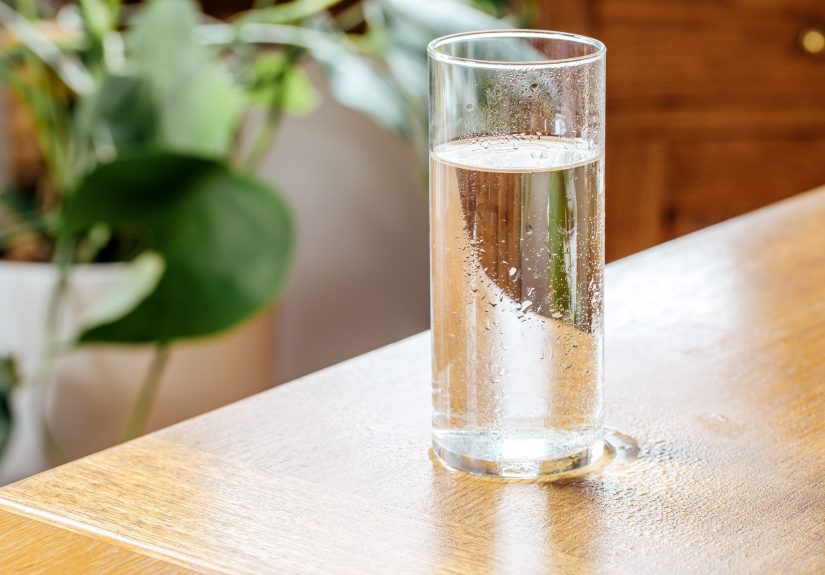
A glass of water on the nightstand
If it was poured into a clean glass and left overnight, it’s usually OK for a healthy adultespecially if it was not shared and the glass wasn’t sitting next to anything that could contaminate it (like an open window during pollen season or a cat with chaotic intentions).
For best taste, cover it and refresh daily. If it tastes off, that’s your cue to rinse the glass and pour a new one.
A reusable bottle you’ve been sipping all day
This is where most “old water” problems live. Each sip can introduce bacteria from your mouth, and bottle lids, straws, gaskets, and threads can trap moisture. That’s why health experts repeatedly emphasize regular cleaningeven if you only drink water.
Practical advice: empty the bottle, rinse, and refill with fresh water daily. Don’t just “top it off” forever. And clean the bottle (and lid parts) frequentlydaily if you can, and at least several times a week if that’s more realistic.
An unopened bottle of water that sat on the counter
Unopened commercially bottled water is generally considered safe for long storage when kept in a cool place, away from direct sunlight and away from chemicals like gasoline, pesticides, or cleaning supplies. Follow the expiration date on the bottle if one is provided.
An opened bottle left in a hot car
If it’s opened and has been sitting in a hot car, it’s a good candidate for the “dump it” category. Heat can speed up bacterial growth once the seal is broken, and hot plastic can make water taste unpleasant even when it’s not dangerous.
A sealed bottle is less risky than one you’ve sipped from, but the safest habit is simple: keep water out of extreme heat, and use insulated stainless steel or glass when possible.
A pitcher of water on the counter
If the pitcher is clean and covered, day-old water is often fine for most healthy adults, though taste may change. If it’s uncovered, the “what fell in?” factor goes up. If you’re serving guests or someone high-risk, refrigerate and refresh daily.
How long is “a while”?
There isn’t one official timer that flips from SAFE to DANGER like a movie countdown clock. Risk depends on cleanliness, temperature, whether it’s been sipped from, and whether it’s covered.
Reasonable, real-life guidelines
- 0–8 hours: Usually fine if poured into a clean container; best if covered.
- Overnight (8–12 hours): Often fine for healthy adults in a clean cup; taste may be “stale.”
- 24 hours: If it was sipped from and sat at room temp, it’s smarter to dump and refill. If it was untouched and covered, it’s commonly still OKbut refreshing daily improves taste and reduces risk.
- Several days: Don’t. Water may not look different, but contamination odds riseespecially in bottles.
If someone in your home is high-risk
For infants, people with weakened immune systems, older adults, or anyone who is currently ill, be more conservative: use fresh water, clean containers, and refrigeration when practical.
When you should NOT drink it
You don’t need a laboratory. Your senses and a little common sense go a long way.
- It smells weird (musty, sour, “why does this remind me of a wet basement?”).
- It looks cloudy, has floating debris, or has any visible film.
- The bottle has visible mold or slimy residueespecially around the lid, straw, or gasket.
- It was shared (germs multiply when passed around like party favors).
- It sat near chemicals or could have absorbed fumes.
If any of these apply, toss the water and wash the container thoroughly.
Best practices to keep your water “boring” (in the best way)
Use a clean, covered container
Covered beats uncovered. A lid reduces airborne debris and slows down the “stale taste” effect.
Keep it cool and out of sun
Heat helps microbes thrive and can worsen plastic taste issues. Store water away from direct sunlight and away from chemicals or fuel. For long-term home storage (emergency supplies), use food-grade containers and rotate as recommended.
Clean reusable bottles like you mean it
If you only do one thing, do this: clean the bottle and lid regularly. The “lid situation” mattersthreads, gaskets, and straws are prime real estate for buildup.
- Disassemble lid parts (straws, seals, gaskets) if possible.
- Scrub with warm, soapy water and a bottle brush.
- Rinse thoroughly.
- Let everything dry completely before reassembling (drying matters).
- If dishwasher-safe, use the dishwasher for a deeper clean.
If you regularly put anything besides water in the bottle (sports drinks, smoothies, coffee), clean it daily. Sugary residues make it easier for microbes to flourish.
Don’t “top off” forever
Topping off mixes fresh water with older water and whatever microbes are already present. It’s not automatically dangerous, but it’s a great way to keep yesterday’s bacteria on payroll.
FAQ
Is boiled water left out overnight safer?
Boiling can kill many microorganisms, but once boiled water cools and sits out, it can be re-contaminated by air, hands, or the container. If you want the benefits of boiling, store it in a clean, covered container and consume it within a reasonable time.
Does tap water “go bad”?
In normal circumstances, municipal tap water is treated to be safe, and it doesn’t “expire” overnight. What changes is exposure: open air, warm temperatures, and contamination from mouths/hands/containers can make water less fresh and potentially less safe over time.
What about water for babies?
Babies and young children can be more sensitive to contamination. Use fresh water, clean bottles/cups, and follow any guidance from your pediatricianespecially if your child is ill or immunocompromised.
Experiences: of “Yep, I’ve seen this exact water situation”
Picture the classic workday: you fill a reusable bottle in the morning, take a heroic sip, set it on your desk, and then get swallowed by emails. At 3:47 p.m., you rediscover itwarm, slightly “office-flavored,” and somehow tasting like it sat through three meetings (which it did). Most people’s first thought is, “Is this still safe?” Their second thought is, “Why does it taste like disappointment?”
In that desk scenario, the bigger issue usually isn’t the water itselfit’s the bottle. You’ve been touching the lid while eating snacks, handling your phone, opening doors, and living life. Then you take another sip, and the mouthpiece becomes a tiny handshake between your hands and your mouth. That’s why people often notice the same pattern: the water tastes fine in the morning, but gets weird later in the day. It’s not because the water “aged” like fine wine. It’s because the bottle is quietly collecting grime like it’s building a résumé.
Gym life brings its own storyline. Someone fills a bottle, hits the treadmill, takes a few sips, tosses it into a gym bag, and forgets it overnight. The next day, they open the cap and are greeted by a smell that can only be described as “humid regret.” That odor is a huge red flag that the bottle needs a deep clean. Many people assume the problem is yesterday’s water, but the real culprit is often biofilm and bacteria around the lid, straw, and gasketplaces that stay wet and are annoying to scrub unless you actually take them apart.
Then there’s the hot car scenario: a bottle rolling around in the cup holder during a summer day. Even if it’s unopened, people commonly report that the water tastes plasticky or flat when it heats up. If the bottle was opened and sipped from, the concern shifts from “ew taste” to “maybe don’t drink this.” Warmth speeds up microbial growth, and once the seal is broken, your mouth bacteria are officially “in the system.”
The most relatable experience might be the bedside glass. You wake up thirsty at 2 a.m., spot the water, and wonder if it’s safe or if it’s been collecting invisible doom particles. In most homes, the risk is lowbut the vibe is questionable. Covering the glass (or using a bottle with a lid) makes it feel fresher, and it also prevents the surprisingly common phenomenon of “tiny speck in water that forces you to question reality.”
Across all these experiences, the takeaway people land on is refreshingly simple: fresh water tastes better, clean containers matter more than the clock, and if your water smells odd, looks cloudy, or your bottle is grossdon’t power through. Dump it, wash it, and give Future You a clean, cold refill to be grateful for.