Table of Contents >> Show >> Hide
- Who Is Gael Towey (and Why Designers Keep Listening)?
- Before Martha: A Designer Raised on Books, Not Buzzwords
- Martha Stewart Living: Designing a Whole Universe (Not Just a Magazine)
- American Made: When “Makers” Became the Main Event
- From Art Direction to Film: Portraits in Creativity
- Gael Towey as a Judge: What She’s Likely to Reward
- Ten Quick Details That Reveal Her Taste (and Her Humor)
- What Creatives Can Steal from Gael Towey (Legally, Ethically, and with a Receipt)
- Conclusion: The Creative Director Who Turned “How-To” into High Art
- Experience Notes (Extra): Career Moments That Shaped Her Eye as a Judge
If you’ve ever looked at a lifestyle magazine spread and thought, “Why does this feel so calm… and why do I suddenly want to alphabetize my spices?”
there’s a decent chance you’re reacting to a kind of design discipline Gael Towey helped define. Towey is the rare creative leader whose résumé lives comfortably
in two worlds: the precise, obsessive craft of print art direction and the narrative, human pulse of documentary video.
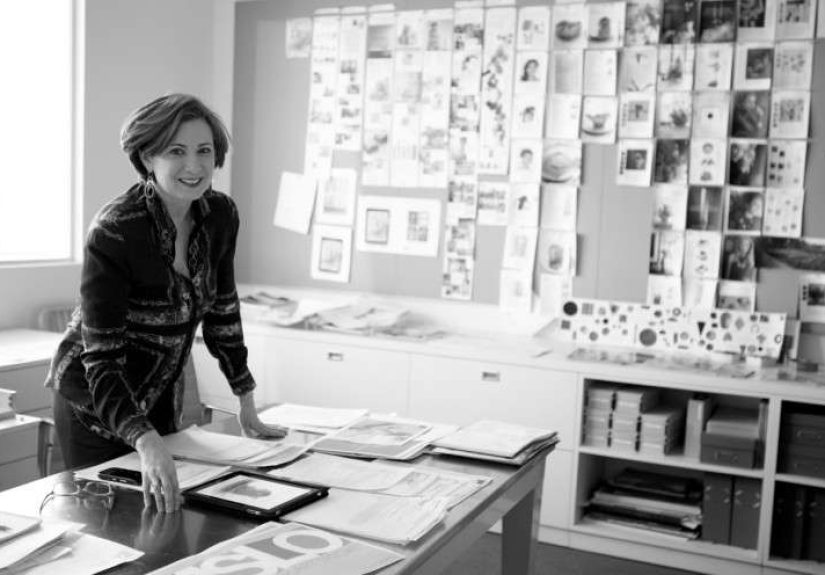
In 2014, Remodelista tapped Towey as a judge for its Best Office Space (Professional) categoryan assignment that makes perfect sense once you know her track record.
She’s built visual systems that don’t just look good; they teach you how to see. And if an office is a “brand” (spoiler: it is), Towey’s entire career has been
about turning brands into lived experiencesthrough typography, photography, product packaging, and, more recently, film.
Who Is Gael Towey (and Why Designers Keep Listening)?
Gael Towey is best known as the founding art director and longtime chief creative leader behind Martha Stewart Living and Martha Stewart Living Omnimedia (MSLO),
where she helped launch a magazine that treated domestic life like a serious art formwithout making it feel intimidating.
Under her creative direction, the look was famously restrained: luminous photography, clean typography, and layouts that gave ideas room to breathe.
(In other words, the opposite of “Let’s cram 47 fonts on one page and call it energy.”)
After more than two decades shaping a media-and-retail empire, Towey stepped into a “next act” that looks less like a corner office and more like a filmmaker’s notebook:
she began producing short-form documentaries about artists and makersprojects that feel like visual essays on curiosity, craft, and the creative process.
Before Martha: A Designer Raised on Books, Not Buzzwords
Towey’s creative instincts were forged in publishingback when making a book or magazine involved physical paste-up, mechanical artists, and the kind of deadline pressure
that could turn a stapler into a personal nemesis. Early in her career, she worked at Viking Press as a mechanical artist during the era when Jacqueline Kennedy Onassis
was a prominent editor there. That period exposed Towey to high standards and heavyweight cultural workan education in taste that doesn’t come from a trend report.
She later became art director at Clarkson Potter, where she worked with Martha Stewart in the 1980s on entertaining-focused bookscollaborations that set the stage for a
much bigger partnership. It’s also the kind of career path that explains her “editor’s eye”: Towey wasn’t just designing pretty pages; she was learning how content
becomes story, how images earn their place, and how clarity beats clutter every day of the week (including the day your printer jams and you reconsider all your life choices).
A publishing-world superpower: editing through design
Many art directors can make something look stylish. Fewer can make it feel inevitablelike it couldn’t have been designed any other way.
Towey’s early book and editorial work trained her to think like a visual editor: what belongs, what distracts, what needs more space, and what needs to be cutkindly, firmly,
and without apology.
Martha Stewart Living: Designing a Whole Universe (Not Just a Magazine)
In 1990, Towey helped launch Martha Stewart Living and designed the inaugural issue, establishing a visual language that would become iconic.
The magazine’s approach was quietly radical: it treated cooking, gardening, entertaining, and homekeeping as creative pursuits worthy of museum-level attention.
Not preciousprecise. Not fussyintentional.
Over the years, Towey’s responsibilities expanded along with MSLO. Her role touched nearly everything the audience could see, hold, or click:
additional magazine titles, branded product lines, packaging systems, and digital experiences. When technology shifted, her work shifted with itwithout losing the “Martha” clarity.
That kind of continuity is harder than it sounds. Plenty of brands “expand.” Fewer remain recognizable while they do it.
Why the MSLO look worked (and still influences DIY culture)
- Restraint as confidence: The layouts didn’t shout. They invited.
- Photography as instruction: Images didn’t decorate the page; they taught the reader what “good” looks like.
- Typography as tone of voice: Clean type choices made the content feel modern and trustworthy.
- Systems thinking: The aesthetic could travelfrom magazine to product packaging to digitalwithout falling apart.
One emblem of that digital evolution: the iPad special issue Boundless Beauty, which became a widely discussed example of how print design could transform for a new platform.
It’s remembered for marrying beauty and technology in a way that felt… oddly soothing for 2010. (The year everyone discovered screens could also be furniture, apparently.)
American Made: When “Makers” Became the Main Event
Before “maker culture” became a hashtag you could buy on a throw pillow, MSLO launched the American Made Awardsa program celebrating creative entrepreneurship
and small businesses. Towey directed and produced videos for the initiative, extending her editorial instincts into motion: still clarity, now with narrative arcs,
voices, hands at work, and the tiny drama of glue drying at the wrong moment.
This matters for understanding her as a judge. American Made wasn’t just about picking winners; it was about
recognizing processthe story behind the object. That sensibility carries directly into how a creative director evaluates spaces, brands, or portfolios:
you’re not judging a snapshot; you’re judging a set of decisions.
From Art Direction to Film: Portraits in Creativity
After leaving MSLO, Towey founded her own studio and leaned into short-form documentary work, producing and directing films that document artists and their inspirations.
The series Portraits in Creativity focuses on the creative act itselfhow makers think, what they notice, what they repeat, what they refine,
and what they stubbornly keep doing even when nobody is watching.
It’s not a huge leap from magazine-making to documentary storytelling when you think about it. Both are about sequencing:
What comes first? What earns the close-up? Where does the viewer’s eye rest? When do you cut away? In Towey’s world, “editing” is practically a love language.
What her filmmaking reveals about her creative philosophy
- Craft is the plot: The “action” is often hands, materials, and repetition.
- Process beats perfection: Beauty comes from doing, adjusting, and doing again.
- Human scale matters: Even large creative ideas are grounded in real spaces, real tools, real constraints.
Gael Towey as a Judge: What She’s Likely to Reward
When Remodelista chose Towey to judge professional office spaces, it signaled a specific kind of evaluation:
not just “Is this stylish?” but “Is this thoughtfully designed, visually coherent, and built to support creative work?”
Because to someone who has art-directed thousands of images and produced stories about makers, a workspace isn’t décorit’s infrastructure for ideas.
A Towey-informed judging lens for office spaces
Based on the patterns that define her careervisual editing, narrative clarity, and respect for crafthere’s what tends to separate a “nice office” from a
“best office space” in the kind of judging context she’s known for:
- Editing over excess: A strong space has fewer, better elements. If everything is special, nothing is.
- Light is a design material: Daylight and thoughtful fixtures are not accessories; they’re part of the work.
- Tools deserve dignity: A creative office should honor the actual workmaterials, storage, surfaces, and workflow.
- Story and authenticity: The best spaces feel lived-in by a team, not staged for a photoshoot with a two-hour return window.
- Texture with restraint: Crafty details (wood, textiles, objects) land better when the overall composition stays calm.
And yesif you’re wonderingshe has publicly named a design pet peeve: wall-to-wall carpeting.
Consider this your friendly warning label.
Ten Quick Details That Reveal Her Taste (and Her Humor)
A good profile isn’t just job titles; it’s the small preferences that explain the big ones. In her Remodelista judge profile, Towey shares details that read like
a map of her sensibility: she splits time between Boston and New York, credits her husband (designer Stephen Doyle) as a major influence, and names favorite shops
and places that lean toward the considered, the handmade, and the quietly excellent.
Her “best design advice” is also disarmingly simple: live with less. It’s the same principle you see in her editorial aesthetic and her films:
make room for what matters, and let the work speak.
What Creatives Can Steal from Gael Towey (Legally, Ethically, and with a Receipt)
1) Build a system, not a mood
Towey’s impact comes from consistency: a recognizable visual language that could travel across magazines, products, and digital formats.
If you’re building a brand or portfolio, don’t chase vibesbuild rules. (You can still break them later. You just need something to break.)
2) Treat “editing” as a creative act
The fastest way to look more professional isn’t adding features; it’s removing distractions. Whether it’s a layout, a video sequence, or an office wall covered in
inspirational quotes that have never inspired anyone, editing is where taste shows up.
3) Let craft be the headline
From American Made to Portraits in Creativity, Towey consistently centers the maker: the hands, the materials, the decisions.
If your work tells the story of how something is made, you automatically earn trustbecause specificity reads as truth.
Conclusion: The Creative Director Who Turned “How-To” into High Art
Gael Towey’s career is a case study in designing the invisible: the standards behind the scenes that make a brand feel inevitable and a story feel effortless.
She helped define the visual identity of Martha Stewart Living and later shifted into filmmaking that honors creative process with the same quiet precision.
As a judgeespecially for professional spacesshe represents a particular kind of authority: one built on editing, clarity, and deep respect for craft.
In a world that sometimes mistakes “more” for “better,” Towey’s work keeps making the same elegant argument: give ideas room, treat details seriously,
and never underestimate the power of a well-placed pauseon a page, in a film, or in the layout of a room where people are trying to do their best thinking.
Experience Notes (Extra): Career Moments That Shaped Her Eye as a Judge
To understand why Gael Towey makes such a compelling judgeespecially for creative environmentsit helps to look at the kinds of experiences that trained her instincts.
Her early years in publishing weren’t just “design jobs.” They were immersion tanks for discipline. Working in book production and editorial settings teaches you that
taste isn’t a mood; it’s a series of decisions made under constraints. Deadlines are real. Budgets are real. Paper stocks are real. So is the uncomfortable truth that
your “brilliant” idea may not survive contact with the printer. Over time, those realities sharpen judgment: you start asking, “What will actually work?” not just
“What looks impressive in a mockup?”
Then came the Martha Stewart eraan environment famously associated with high standards. Launching a magazine from scratch means inventing a visual language and
applying it consistently, issue after issue, season after season, while still making each edition feel fresh. That repetition is a masterclass in measurement:
you learn how tiny spacing changes shift tone; how one overly busy page can make an entire story feel stressful; how a single strong image can carry an idea farther
than a paragraph ever could. Those are the same sensitivities a judge brings to a professional office space. A workspace is also an “issue” that people live inside
every day. If the layout is chaotic, the team feels it. If it’s calm and functional, the team produces better workbecause the room stops fighting them.
Towey’s work across print, products, and digital also matters here. When you oversee not just a magazine spread but packaging systems, merchandising initiatives,
and platform shifts, you become allergic to design that can’t travel. You start valuing durability: materials that age well, layouts that remain readable, and
choices that still make sense after the novelty wears off. That’s exactly the point of judging an office, too. A “cool” space is easy to stage for a photo.
A great space still works when the team is tired, the deadline is tomorrow, and someone just spilled coffee in a way that suggests gravity has a sense of humor.
Her pivot to video and documentary storytelling adds another layer. Filmmaking trains you to think in sequences and behaviors, not just surfaces. In a good short film
about an artist, you don’t only show the finished objectyou show the repetition, the tools, the mess, the pauses, the rituals. That lens naturally translates into
evaluating real workspaces: Does the room support the way people actually move, collaborate, focus, and reset? Is there space for both noise and quiet? Is there
storage for the real materials of the job? Are the “hero” design moments connected to how the space is used, or are they just there to win the internet for a day?
Put all of that togetherpublishing rigor, brand-system thinking, and documentary attention to processand you get a judge who is likely to reward
coherence over spectacle. The office that wins in her universe probably isn’t the one with the loudest feature wall. It’s the one that feels edited,
purposeful, and honest: a space where tools have a home, light is respected, materials feel intentional, and creative work looks not romanticizedbut possible.
In short: the kind of room that doesn’t just photograph well. It functions beautifully, day after day, while real people do real work.