Table of Contents >> Show >> Hide
- What Happened on Live with Kelly and Mark
- Why Kelly Ripa’s Reaction Felt So Genuine
- The Backstory Behind the Sad Family News
- Why So Many Fans Immediately Understood
- Kelly Ripa, Mark Consuelos, and the Strength of Showing Up Anyway
- Why This Was More Than a Celebrity News Clip
- What Happened After the Initial On-Air Breakdown
- Shared Experiences That Make This Story Hit Home
- Conclusion
Some celebrity headlines are easy to scroll past. This was not one of them. When Kelly Ripa became emotional on Live with Kelly and Mark, viewers quickly realized they were not watching a polished entertainment segment or a carefully staged “celebs are just like us” moment. They were watching a woman grieve a real family loss in real time.
The sad family news at the center of that moment was the death of Chewie, the longtime dog Kelly Ripa and Mark Consuelos considered part of their household for nearly two decades. For fans, it was heartbreaking. For pet owners, it was painfully familiar. And for anyone who has ever tried to hold it together at work while life quietly steamrolls your heart, it was the most relatable television moment imaginable.
That is why the story landed with so much force. Yes, Kelly Ripa is a TV star. Yes, her life happens under studio lights. But grief has an amazing way of ignoring camera angles, call times, and commercial breaks. It shows up anyway. Sometimes with tears. Sometimes with jokes. Sometimes with that wobbly voice people use when they are trying very hard not to fall apart in public.
Here is what happened, why the moment struck such a nerve, and why Kelly Ripa’s emotional reaction became much bigger than a standard celebrity news item.
What Happened on Live with Kelly and Mark
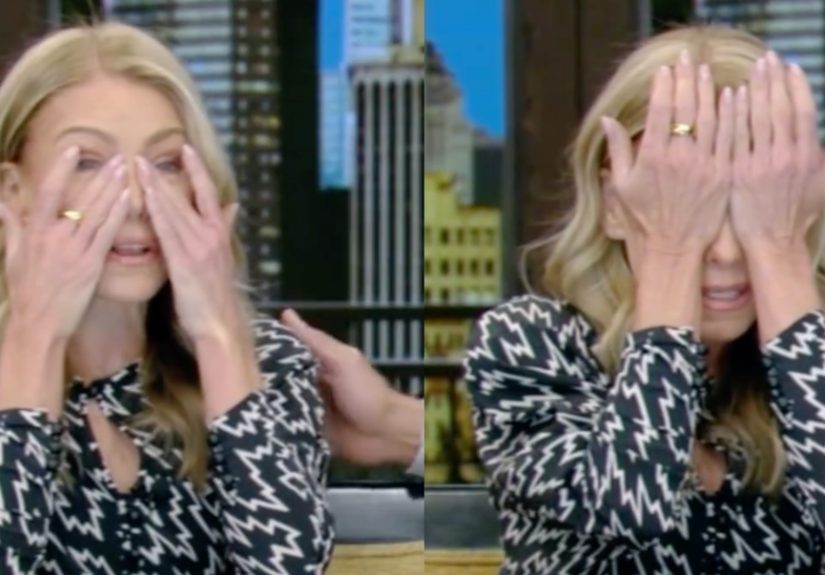
The headline “Kelly Ripa breaks down after sad family news” refers to the emotional on-air moment when Ripa and her husband, Mark Consuelos, shared that their beloved dog Chewie had died after a decline in health. During the episode, Consuelos explained that Chewie had stopped eating, was severely dehydrated, and was experiencing neurological issues. The couple had to make the difficult decision to say goodbye.
That alone would have been enough to make the segment emotional. But what made the moment unforgettable was Ripa’s visible heartbreak. She tried to speak through it, apologized to the audience, and admitted she thought she had already cried it all out. Spoiler alert: grief does not care about your scheduling goals.
As the conversation continued, it became clear that Chewie was not simply a pet mentioned in passing on social media for cute engagement points. She was woven into the family’s daily life and history. Ripa described Chewie as a steady companion through major life transitions, especially after the couple’s three children grew up and moved out. In other words, Chewie was there for the loud years, the busy years, and the quieter empty-nest years too.
Why Kelly Ripa’s Reaction Felt So Genuine
Audiences are pretty good at spotting forced emotion. This did not feel forced. It felt human. Part of the reason the clip spread so widely is that Ripa did not present grief in a tidy, inspirational package. She looked like someone trying to be professional while carrying a very fresh loss. That honesty gave the moment weight.
It also helped that Mark Consuelos did not try to smooth it over with some glossy television trick. He acknowledged how hard the decision had been and described it as one of the toughest things they had faced together as a married couple. That detail mattered. It framed the loss not as celebrity drama, but as a family making a painful end-of-life decision for a pet they deeply loved.
Ripa’s emotion also resonated because she did not pretend the grief was rationally ranked against all the world’s other problems. She seemed aware that some people dismiss pet loss as “just a dog” or “just a cat.” But anyone who has ever loved an animal knows that phrase is nonsense. A family pet is often a witness to everything: school mornings, bad haircuts, breakups, holiday chaos, and those weird evenings when everyone ends up eating takeout on the couch.
Chewie Was Tied to the Family’s Life Story
One of the most moving parts of the story is how often Chewie was described not only as loved, but as linked to the family’s history. Kelly Ripa reportedly brought Chewie home years earlier through the show, and the dog remained part of their lives as their children Michael, Lola, and Joaquin grew up and moved into adulthood.
That is a big reason the loss felt so layered. When an elderly pet dies, people are not only grieving the animal. They are grieving a chapter of family life. The dog who greeted the kids after school. The little routine before bed. The familiar sound of paws on the floor. Even the annoying habits become sacred in retrospect. Yes, even the suspiciously dramatic barking at absolutely nothing.
The Backstory Behind the Sad Family News
Reports leading up to Chewie’s death added more context to Ripa’s emotional collapse on air. In earlier conversations, she and Consuelos had already shared that Chewie was slowing down and showing signs of aging. Ripa had spoken openly about the dog’s health and how deeply she loved her. That made the eventual announcement feel less like a sudden tabloid shock and more like the painful final chapter of a long goodbye.
This detail matters because anticipatory grief is real. Families often begin mourning a senior pet before the pet actually dies. They watch for tiny changes: less energy, less appetite, confusion, accidents in the house, trouble moving, or simply the sense that the animal is no longer fully itself. Each small change feels manageable on its own. Together, they can break your heart in slow motion.
By the time Ripa broke down on television, viewers were not watching the start of her grief. They were watching a moment in the middle of it. That made the emotion even more understandable. The hard decision had already been made. The house had already changed. The absence had already moved in.
Why So Many Fans Immediately Understood
The public response was fast and deeply sympathetic because the story touched a universal nerve. Pet grief is one of those experiences that can feel strangely isolating even though millions of people go through it. The outside world may expect you to bounce back quickly. Inside your home, though, the loss can be thunderous.
That is why Ripa’s tears felt important. She gave visible shape to something a lot of people are told to minimize. Official pet-loss resources in the United States have long recognized that the death of a companion animal can trigger intense grief, guilt, sadness, and disorientation. That reaction is not melodramatic. It is normal.
And honestly, pet grief can have a strange rhythm. You may be fine while handling practical tasks, then suddenly lose it because you see the leash by the door or hear a noise that is no longer there. In Ripa’s case, she later admitted she still was not over Chewie’s death and said even a sentimental dog-related commercial could have pushed her over the edge. That detail made the story even more relatable, because grief loves surprise attacks.
Kelly Ripa, Mark Consuelos, and the Strength of Showing Up Anyway
Another reason this story gained traction is that it played out in a workplace setting. Most people do not have to announce personal heartbreak on national television, but many know the feeling of having to function when emotionally wrecked. There is something deeply recognizable about trying to do your job while your mind is somewhere else entirely.
Ripa and Consuelos did not hide from the audience. They showed up, acknowledged the loss, and moved through the segment together. That partnership became part of the story too. Their dynamic offered a portrait of shared grief in a marriage: one person explaining the facts, the other trying to speak through emotion, both clearly devastated.
In celebrity culture, where everything can start to feel overly managed, that kind of vulnerability stands out. It reminded viewers that even famous couples with camera crews and glam squads still come home to the same kind of silence everyone else dreads after losing a pet.
Why This Was More Than a Celebrity News Clip
At first glance, “Kelly Ripa breaks down after sad family news” sounds like a typical entertainment headline built to bait clicks and invite dramatic guesses. But the reality behind it was more grounded and more affecting. This was not scandal, feud, or PR smoke. It was grief. Very ordinary grief, just happening in an extraordinary setting.
That distinction matters because it shifts the meaning of the story. Instead of treating Ripa’s tears as spectacle, many readers and viewers treated them as testimony. Her reaction quietly validated something people often struggle to explain: losing a pet can feel like losing a family member because, emotionally speaking, that is exactly what it is.
There was also something especially poignant about the way Chewie represented continuity. Family pets often become emotional landmarks. They are there before a child gets a driver’s license, before a kid goes to college, before the family moves, before routines change. When the pet dies, it can feel as if time itself is being pulled out from under the house.
What Happened After the Initial On-Air Breakdown
In the days after the emotional broadcast, Ripa continued to speak candidly about the loss. She acknowledged that she was still not over Chewie’s death and suggested that grief could be re-triggered by seemingly small things. That kind of honesty kept the story from becoming a one-day viral clip. It turned it into an ongoing conversation about mourning, memory, and the odd ways love lingers after a pet is gone.
There were also later reports that Ripa and Consuelos had at least discussed the possibility of someday adopting another dog, in part because they still had their younger dog Lena at home. That detail was important too, not because it “fixes” grief, but because it reflects how many families eventually think about what comes next. Not immediately. Not as a replacement. Just eventually, when the heart is bruised but still open.
And that may be the quiet lesson buried inside the headline. Grief does not erase love. It proves it was there.
Shared Experiences That Make This Story Hit Home
What gives this topic lasting emotional power is not only Kelly Ripa’s celebrity status. It is how closely her experience mirrors what so many families go through when an aging pet reaches the end of life. That final season is often full of contradictions. There can be gratitude and dread in the same day. One hour you are celebrating a tiny sign of improvement, and the next you are wondering whether your pet is in pain.
Many people recognize the exhausting routine that can develop around a senior animal. You become an expert in tiny changes. You monitor appetite like it is a stock market ticker. You celebrate a good walk the way some people celebrate a promotion. You learn which food might tempt them, which blanket they prefer, and how to tell whether a quiet moment means peaceful rest or something more worrying. It is intimate, repetitive, and emotionally draining. It is also an act of love.
Then comes the guilt, which is practically a rude houseguest in pet grief. Did I wait too long? Did I act too soon? Did I miss a sign? Was there one more thing I should have tried? Families ask these questions constantly, even when veterinarians reassure them that they made the compassionate choice. The mind has a habit of replaying the final days like a detective movie no one asked for.
There is also the strange emptiness of routine disruption. The food bowl stays clean. The leash hangs untouched. Nobody is waiting at the door. Nobody needs medicine at 6 p.m. sharp. Even the inconvenient parts of pet care suddenly become part of what you miss. The home feels different not because it is visually transformed, but because one familiar life is no longer moving through it.
Another common experience is how grief arrives sideways. People may hold it together through the hardest practical moments, only to break down days later in a grocery store because they instinctively reach for dog treats. Others cry when they vacuum up fur they once complained about. Some cannot move the bed or toys for weeks. Some move everything immediately and regret it by sunset. There is no universal right way to do this, which is both comforting and wildly inconvenient.
For parents, the loss of a longtime pet can also bring back memories of earlier family seasons. The dog who once sat under a high chair may still be there when the youngest child leaves for college. That animal becomes a bridge across years of change. When the bridge disappears, the grief is not only about the pet. It is about the passage of time, the children growing up, and the strange speed of life itself.
That is why Kelly Ripa’s reaction connected so deeply. Her sadness was specific, but the emotional pattern was universal. Families across the country have had that same conversation in a kitchen, on a vet office floor, in a car ride home, or in a house that suddenly feels too quiet. Her tears were not simply a celebrity moment. They were a reflection of what many people experience when love, caretaking, memory, and loss all collide at once.
And maybe that is the reason stories like this endure. They remind people that grief over a pet is not silly, excessive, or small. It is a real response to a real bond. When someone says, “She was part of the family,” that is not a cute figure of speech. It is the whole story.
Conclusion
Kelly Ripa’s emotional response after the sad family news about Chewie was heartbreaking precisely because it was so recognizable. Beneath the celebrity headline was a familiar human story: a family saying goodbye to a beloved companion, a couple trying to steady each other, and a woman discovering that grief does not care whether the red light on the camera is on.
For fans, the moment was memorable because it was honest. For pet owners, it was validating. And for everyone else, it was a reminder that the deepest family bonds are not always the loudest ones. Sometimes they have four legs, a favorite spot on the couch, and a way of staying in the room long after they are gone.
That is why this story resonated so widely and why the headline kept circulating. Kelly Ripa did not just break down after sad family news. She gave voice to a form of grief millions of people understand immediately, even if they cannot always explain it. In a media landscape full of noise, that kind of sincerity still cuts through.