Table of Contents >> Show >> Hide
- The 30-Second Implant Tour: What Gets Replaced?
- Step One: Choose the Right Kind of Replacement
- Step Two: Understand the Big Implant Design Families
- Step Three: Fixation ChoicesCemented vs. Cementless vs. Hybrid
- Step Four: MaterialsWhat’s the Implant Made Of, and Should You Care?
- Step Five: Buzzwords You’ll Hear (and What They Actually Mean)
- The Factors That Should Drive Your Decision (Not the Billboard)
- How Long Do Knee Implants Last (and What Shortens Their Life)?
- The Appointment Checklist: Questions Worth Asking Your Surgeon
- Common Mistakes When Choosing an Implant
- Real-Life Experiences: What It Feels Like to Choose (and Live With) a Knee Implant
- Experience #1: “I thought I was picking a product. I was actually picking a plan.”
- Experience #2: “I wanted cementless because I’m active… then I learned what ‘bone quality’ means.”
- Experience #3: “My friend’s implant is different. That freaked me outuntil I understood why.”
- Experience #4: The post-op reality: “The implant wasn’t the hard part. Rehab was.”
- Experience #5: Confidence comes from clarity
- Conclusion: The Best Implant Is the One That Fits You
Picking a knee replacement implant can feel like buying a car when you don’t know whether you need
all-wheel drive or just a cup holder that doesn’t betray you. The good news: you don’t have to become
a part-time engineer to make a smart choice. You do, however, need to understand the big categories,
what actually changes outcomes, and what’s mostly marketing glitter.
This guide breaks down implant types in plain English (with a few well-earned jokes), then shows how surgeons
match implants to real peopleage, bone quality, ligaments, anatomy, activity goals, and medical history.
It’s educational, not personal medical advice, so use it to have a better conversation with your orthopaedic surgeon.
The 30-Second Implant Tour: What Gets Replaced?
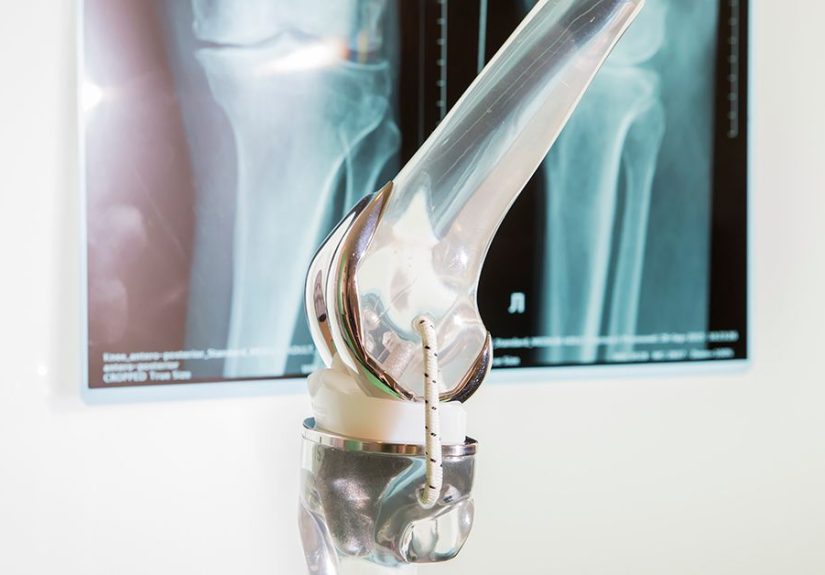
A knee replacement isn’t a single “piece.” It’s a system designed to resurface the worn-out parts of your joint.
In a typical total knee replacement, the implant system includes:
- Femoral component (caps the end of your thigh bone)
- Tibial component (covers the top of your shin bone)
- Polyethylene insert (a durable plastic spacer that helps the joint glide)
- Patellar component (sometimes used to resurface the underside of the kneecap)
Most modern designs pair metal components with a high-grade plastic (polyethylene) bearing surface.
Translation: your new knee is basically “metal + super-tough plastic,” engineered to move smoothly and
tolerate years of daily lifestairs, errands, long walks, and the occasional victory dance.
Step One: Choose the Right Kind of Replacement
Total vs. Partial Knee Replacement
Not everyone needs the full “three-surface resurfacing” package. If arthritis damage is limited to one
compartment of the knee, a surgeon may consider a partial knee replacement (also called
unicompartmental knee replacement). The goal is to replace only the worn section while preserving more
of your natural knee structures.
A partial replacement can mean a smaller incision and a different recovery experience for some patients,
but it also depends on strict eligibility: the damage pattern, ligament stability, alignment, and the
overall condition of the knee. If arthritis is widespread, a total knee replacement is
usually the more predictable choice.
Primary vs. Revision Implants
If this is your first knee replacement, you’re choosing among primary implants.
If you’re replacing a prior implant (or repairing issues like loosening, instability, or wear),
you’ll be in the world of revision implantsoften with additional stems, augments,
or higher-constraint designs. Revision systems are incredibly useful, but they’re built for different problems,
so they aren’t “upgrades” in the way a new phone model is.
Step Two: Understand the Big Implant Design Families
1) Cruciate-Retaining vs. Posterior-Stabilized (Ligament Strategy)
Two major total knee design approaches depend on what happens to your posterior cruciate ligament (PCL),
one of the key stabilizers inside the knee.
-
Cruciate-retaining (CR): the surgeon preserves the PCL if it’s healthy and functional.
The implant is shaped to accommodate that ligament. -
Posterior-stabilized (PS): if the PCL is removed or not reliable, the implant uses a
built-in “post-and-cam” style mechanism to help provide stability during motion.
Which is “better”? That’s the trick question. In many cases, both designs can deliver excellent results.
The right choice often depends on ligament condition, deformity, surgical philosophy, and what your surgeon
sees during the operation.
2) Fixed-Bearing vs. Mobile-Bearing (How the Plastic Insert Moves)
The polyethylene insert is the plastic surface your femoral component glides on. In a
fixed-bearing design, that insert is locked firmly to the tibial baseplate. In a
mobile-bearing (sometimes “rotating platform”) design, the insert can rotate slightly.
Mobile-bearing designs were created to potentially reduce wear and better mimic natural knee motion for some patients.
But they also demand specific alignment and soft-tissue balance. Many surgeons use fixed-bearing designs because they
have a long track record and work well for a wide range of people. The best choice is usually the one your surgeon
can place accurately and balance reliably for your anatomy.
3) Levels of Constraint (How Much the Implant “Holds You Steady”)
Constraint is how much the implant itself provides stability when ligaments are weak, absent, or the knee is severely deformed.
Think of it like the difference between:
- Low constraint: more natural motion, relies more on your ligaments
- Higher constraint: more built-in stability, used for complex knees
Most primary knee replacements use low-to-moderate constraint designs. Higher-constraint implants (like constrained condylar
or hinge-style designs) are typically reserved for severe instability, major deformities, or certain revision situations.
More constraint isn’t automatically “better”it’s a tool for specific problems.
4) The Patella Question (To Resurface or Not?)
Some surgeons resurface the underside of the kneecap with a patellar component; others do not, depending on cartilage condition,
tracking, pain patterns, and surgeon preference. There isn’t a one-size-fits-all rulethis is a great discussion point in your
pre-op visit.
Step Three: Fixation ChoicesCemented vs. Cementless vs. Hybrid
Fixation is how the implant attaches to bone. The major options are:
-
Cemented fixation: a medical bone cement anchors components immediately.
This has a long history and remains very common. -
Cementless fixation: uses porous or coated surfaces that encourage bone to grow onto the implant over time.
This approach can be attractive for certain patients (often with good bone quality). - Hybrid fixation: a mix (for example, cemented tibia with cementless femur) depending on system and surgeon technique.
The “right” fixation depends on your bone quality, age, anatomy, and surgeon experience with a specific system.
If you’re younger and active with strong bone, your surgeon may discuss cementless options. If bone quality is limited
(for example, osteoporosis concerns), cemented fixation may offer more immediate stability. The goal is a stable implant
that stays stable.
A practical example
Imagine two patients:
-
Patient A: 72 years old, lower bone density, wants pain-free walking and stairs.
A cemented approach might be favored for dependable immediate fixation. -
Patient B: 55 years old, strong bone, active lifestyle, wants long-term durability.
A surgeon might discuss cementless fixation if appropriate for their anatomy and implant system.
The point isn’t that one method “wins.” It’s that the best method is the one that matches the patient and the surgical plan.
Step Four: MaterialsWhat’s the Implant Made Of, and Should You Care?
Most knee replacements use combinations of metal alloys and polyethylene. Common metals include
cobalt-chromium alloys and titanium alloys. The bearing surface is usually polyethylene.
Metal sensitivity and allergies
If you’ve had reactions to jewelry (especially nickel) or prior implants, tell your surgeon early.
True metal allergy affecting knee replacement outcomes is complex and not as common as internet threads make it sound,
but it matters enough to discuss. In some cases, surgeons consider alternative materials or coatings.
Polyethylene and wear
The plastic insert is not “cheap plastic.” It’s engineered for durability. That said, wear over many years can contribute
to loosening or inflammation in some cases. Modern manufacturing and material improvements aim to reduce wear, but no implant
is immortalonly houseplants pretend to be.
Step Five: Buzzwords You’ll Hear (and What They Actually Mean)
“Robotic-assisted” and computer navigation
Robotic assistance and navigation systems help surgeons plan bone cuts and component positioning more precisely.
The potential upside is improved alignment and reproducibilityespecially for complex anatomy. But technology is a tool,
not a substitute for skill. A well-done manual knee replacement can be excellent, and a poorly executed robotic case is still…
poorly executed. When evaluating this, focus on your surgeon’s experience and outcomes, not the shininess of the brochure.
Patient-specific instrumentation (PSI) and custom implants
PSI uses imaging (often MRI or CT) to create custom cutting guides. Custom implants go further by tailoring the implant shape to the
patient’s anatomy. These approaches may offer advantages for select cases, but the evidence is mixed, and they can add cost, imaging,
and planning steps. For many patients, standard implant systems in skilled hands work extremely well.
“Gender-specific” implants
You may see marketing around gender-specific designs. The key question is whether the design improves outcomes.
Many orthopaedic experts emphasize that fit and positioning matter most, and that modern systems offer a wide range of sizes and shapes
for many anatomies regardless of gender labels. In other words: your knee cares about geometry, not the pink tax.
The Factors That Should Drive Your Decision (Not the Billboard)
1) Your anatomy and ligament stability
The condition of your ligamentsespecially the PCLand the degree of deformity (bow-legged/knock-kneed alignment, instability, contractures)
influence whether a surgeon prefers CR vs PS, and what constraint level is needed.
2) Bone quality
Bone quality matters for fixation choice. Cemented fixation can provide immediate stability even when bone quality is not ideal.
Cementless fixation relies on bone growth for long-term stability and may be considered when bone quality is strong.
3) Your age, activity goals, and expectations
Knee replacements are designed for daily life and low-impact exercise. Many patients return to walking, cycling, swimming, hiking, and golf.
High-impact running and jumping sports can increase wear and risk over time. If your goal is “I want to sprint marathons,” your surgeon will
help reset expectations (kindly, but firmly).
4) Surgeon experience with a specific system
One of the strongest “predictors” you can control is choosing an experienced surgeon who performs knee replacements regularly and can explain
the rationale for their implant choice. Great outcomes come from correct sizing, accurate positioning, and precise soft-tissue balancing.
A top-tier implant placed poorly is still a problem. A proven implant placed expertly is a gift.
5) Track record and data (registries, follow-up, and “time in the real world”)
New designs can be exciting, but you should ask about evidence: How long has the system been in use? What do joint registries show about revision rates?
Does your surgeon have experience handling complications? Longevity data is usually discussed in probabilities and time frames, not guarantees.
How Long Do Knee Implants Last (and What Shortens Their Life)?
Many modern knee replacements function well for a long time, commonly discussed in 15–20+ year ranges, with a meaningful number lasting longer.
Longevity depends on multiple factors: activity level, body weight, alignment, bone quality, surgical technique, infection risk, and plain old biology.
Common reasons for earlier failure (the “usual suspects”)
- Infection (rare, but serious)
- Loosening (implant loses stable attachment to bone)
- Instability (soft-tissue imbalance, ligament issues)
- Stiffness (scar tissue and limited motion)
- Wear over time (especially with high-impact use)
What you can do to protect your investment
After surgery and rehab, the best “maintenance plan” is surprisingly unglamorous:
keep a healthy weight if possible, build strength around the knee, stay active with low-impact exercise,
follow your surgeon’s advice about returning to activity, and seek prompt care for infections elsewhere in the body.
Your knee replacement is resilientbut it’s not a superhero.
The Appointment Checklist: Questions Worth Asking Your Surgeon
Bring these questions to your consult. If your surgeon answers them clearly and confidently, that’s a very good sign.
- Do I need a total or partial knee replacement, and why?
- Which implant design do you recommend for me (CR, PS, other), and what factors drive that choice?
- What fixation method do you plan to use (cemented, cementless, hybrid), and why is it best for my bone quality?
- Will you resurface my patella? What’s your reasoning?
- What is your experience with this implant system and technique? How many knee replacements do you perform each year?
- What are the main risks in my case (infection, stiffness, blood clots, etc.), and how do we reduce them?
- What activities can I realistically return toand when?
- If problems occur, what does follow-up look like (visits, X-rays, long-term monitoring)?
Bonus question (said with a smile): “If I ask you about the newest implant on a billboard, will you talk me out of itor explain it like a teacher?”
The best surgeons will do the second thing, and sometimes the first.
Common Mistakes When Choosing an Implant
- Choosing by brand name alone. Brands matter less than fit, positioning, and surgeon expertise.
- Assuming “more technology” means “better outcome.” Technology can help, but fundamentals win championships.
- Ignoring lifestyle fit. The best implant is the one that supports your real life, not your fantasy highlight reel.
-
Skipping the conversation about risks. An honest surgeon will discuss complications without scaring you
because preparedness beats surprise every time.
Real-Life Experiences: What It Feels Like to Choose (and Live With) a Knee Implant
The internet loves a dramatic before-and-after story. Real life is usually more nuancedless “miracle montage,” more
“slow, steady wins with physical therapy.” Here are a few common experiences patients describe when navigating implant choices.
These are illustrative, not promises or guarantees.
Experience #1: “I thought I was picking a product. I was actually picking a plan.”
Many people walk into the first appointment wanting “the best implant,” as if there’s a single correct answer hiding behind a curtain.
What often changes their mindset is hearing the surgeon talk in terms of a plan: ligament strategy, alignment correction, fixation,
and rehab goals. One patient described the turning point as the moment their surgeon said, “You’re not buying a knee off a shelfI’m building
a knee that matches your anatomy and your goals.” Suddenly, the question wasn’t “Which brand is hottest?” It was “Which design lets my surgeon
balance my knee so it feels stable and works the way I need it to?”
Experience #2: “I wanted cementless because I’m active… then I learned what ‘bone quality’ means.”
Some patients show up set on cementless fixation because it sounds modern and toughlike a press-fit implant could survive a zombie apocalypse.
Then imaging and lab work enter the chat. A patient in their early 60s who considered themselves “super active” learned they had lower bone density
than expected. Their surgeon explained that cemented fixation could provide immediate stability and an excellent long-term outcome in their case.
The patient later said the best part wasn’t the fixation choiceit was how clearly the surgeon connected the choice to evidence and personal anatomy,
not trendiness. They stopped trying to “win” the implant debate and started trying to “win” the recovery.
Experience #3: “My friend’s implant is different. That freaked me outuntil I understood why.”
Comparison is a powerful anxiety generator. People hear a neighbor got a rotating platform, or a cousin got a posterior-stabilized design,
and suddenly they’re worried they’re being offered the “budget knee.” What helps is learning that implant decisions are often about ligament condition,
deformity, and surgeon technique. One patient with a stable PCL was a strong candidate for a cruciate-retaining approach; their friend had ligament
instability and needed a different strategy. Both outcomes were excellent, and the patients realized the implants weren’t “ranked” like smartphones.
They were matched like shoes: what fits one person can be wrong for another.
Experience #4: The post-op reality: “The implant wasn’t the hard part. Rehab was.”
Patients often say they spent weeks researching implants and about five minutes mentally preparing for physical therapy. Then reality arrives
usually wearing sneakers and carrying resistance bands. The most satisfied patients tend to share a similar story: they treated rehab like training,
not punishment. They celebrated small wins (first full rotation on a stationary bike, first time walking a few blocks without stopping, first night
sleeping comfortably). Many also mentioned that the knee started to feel more “theirs” over timeless mechanical, more naturalespecially as swelling
reduced and strength returned. The implant mattered, but the day-to-day work mattered more.
Experience #5: Confidence comes from clarity
People who feel good about their implant choice rarely say, “I picked the fanciest knee.” They say, “I understood why we chose this.”
The most reassuring consultations are the ones where your surgeon explains tradeoffs in plain language, invites questions, and connects the decision
to your life: your job, your hobbies, your health history, your anatomy. When you leave thinking, “That made sense,” you’ve already reduced a huge
amount of stressand stress reduction is an underrated part of recovery.