Table of Contents >> Show >> Hide
- What Is a Marketing Funnel (and Why KPIs Matter)?
- Stage 1: Awareness (Top-of-Funnel KPIs)
- Stage 2: Consideration (Middle-of-Funnel KPIs)
- Stage 3: Intent & Decision (Bottom-of-Funnel KPIs)
- Stage 4: Retention & Loyalty KPIs
- Building a Practical Funnel KPI Tracking Stack
- How Often Should You Review Funnel KPIs?
- Real-World Lessons from Tracking Funnel KPIs
- Lesson 1: Big Traffic Means Nothing If the Middle of the Funnel Is Broken
- Lesson 2: CAC and LTV Force Hard but Necessary Channel Decisions
- Lesson 3: Alignment with Sales Lives or Dies in the Middle of the Funnel
- Lesson 4: Simpler Dashboards Beat Fancy Ones
- Lesson 5: The Funnel Is a Hypothesis, Not a Law of Nature
- Bringing It All Together
If you’ve ever stared at a marketing dashboard that looks like the cockpit of a 747 and thought, “Okay, but… are we actually making money?” this article is for you. Marketing funnel KPIs are how you turn noisy data into clear answers at every stage of the customer journey from the first impression all the way to loyal, repeat buyers.
In this guide, we’ll break down the key marketing funnel metrics for each stage, show you how to track them in tools like Google Analytics, your CRM, and dashboards, and share some real-world lessons from teams that actually use these numbers to grow not just to decorate slide decks.
What Is a Marketing Funnel (and Why KPIs Matter)?
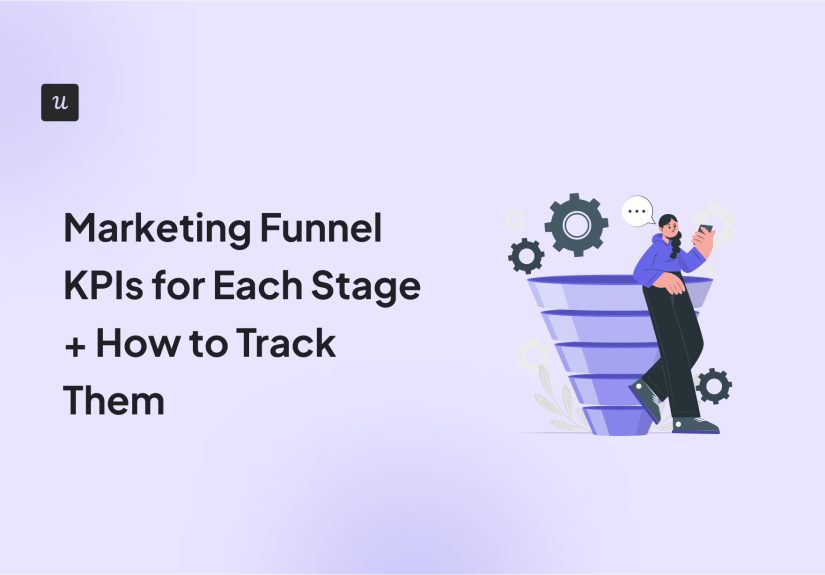
The marketing funnel is a simple way to visualize the path people take from discovering your brand to becoming loyal customers. Different models use slightly different labels, but most modern funnels include these stages:
- Awareness: People discover that you exist.
- Interest / Consideration: They actively research and compare options.
- Intent / Decision / Conversion: They’re ready to buy and actually convert.
- Retention & Loyalty: They stay, renew, and (ideally) tell their friends.
Each stage has its own job and its own set of KPIs. Top-of-funnel metrics tell you whether you’re reaching the right people. Middle-of-funnel KPIs reveal whether those people are warming up. Bottom-of-funnel and post-purchase metrics tell you whether marketing is actually driving revenue and long-term value.
Without stage-specific KPIs, you end up with vague questions like “Is marketing working?” With the right funnel metrics, you can ask much sharper questions like “Where exactly are we losing people?” and “Which channels are creating customers we actually want more of?”
Stage 1: Awareness (Top-of-Funnel KPIs)
At the awareness stage, your goal is simple: get in front of the right people and make them curious enough to take a first step (usually a click or visit). Top-of-funnel KPIs focus on visibility and initial engagement.
Key Awareness KPIs
- Impressions: How many times your ad or content was displayed. Great for understanding reach in paid campaigns and organic search.
- Reach: How many unique people saw your content. Important for brand campaigns and audience growth.
- Click-through rate (CTR): The percentage of people who clicked out of those who saw the ad or link.
Formula: CTR = (Clicks ÷ Impressions) × 100 - Website sessions / new users: How many visits you’re getting and how many are first-timers.
- Cost per thousand impressions (CPM): How much you pay to show your ad 1,000 times. Useful to compare paid channels.
- Branded search volume: How often people search for your brand name, a good proxy for brand awareness over time.
Benchmarks vary by channel, but generally you want a healthy CTR (showing that your messaging resonates) and growing reach among your ideal audience, not just random clicks.
How to Track Awareness KPIs
- Ad platforms: Google Ads, Meta Ads, LinkedIn, and other platforms report impressions, reach, CTR, CPM, and spend by default.
- Google Analytics (GA4): Use Acquisition reports to see sessions, new users, and traffic by channel, campaign, and source/medium.
- Search tools: Google Search Console and SEO platforms help track impressions and CTR for organic search queries.
- UTM tagging: Add UTM parameters to links in ads, email, and social so you can attribute sessions and users to specific campaigns.
At this stage, don’t obsess over revenue yet. Your job is to measure how efficiently you convert cold strangers into interested visitors.
Stage 2: Consideration (Middle-of-Funnel KPIs)
In the consideration stage, visitors start to lean in: they read your content, sign up for a newsletter, download a guide, or request a demo. Now you care less about raw traffic and more about qualified engagement.
Key Consideration KPIs
- Landing page conversion rate: The percentage of visitors who complete a desired action (e.g., download, sign-up, webinar registration).
Formula: Conversion rate = (Conversions ÷ Sessions) × 100 - Leads generated: Number of form fills, trial sign-ups, demo requests, or other hand-raisers.
- Marketing-qualified leads (MQLs): Leads that meet your agreed criteria (fit + engagement) and are ready for sales attention.
- Lead-to-MQL conversion rate: How many raw leads become MQLs. This shows how well your targeting and nurturing are working.
- Content engagement: Time on page, scroll depth, resource downloads, webinar attendance, etc.
- Email engagement: Open rate, click rate, and unsubscribe rate for nurture sequences.
Strong middle-of-funnel performance typically looks like steady MQL volume, rising lead quality, and clear engagement with your educational content and offers.
How to Track Consideration KPIs
- Google Analytics events & conversions: Track form submissions, button clicks, downloads, video plays, and add them as conversion events in GA4.
- Marketing automation tools: Platforms like HubSpot, Marketo, or Mailchimp track email engagement, lead scores, and nurture performance.
- CRM fields & lead status: Define MQL vs SQL criteria with sales and make sure those are clearly reflected in your CRM statuses or lifecycle stages.
- Form and landing page tools: Tools like Typeform, Unbounce, or native form builders often include conversion stats and A/B testing features.
The big pitfall here is tracking “leads” without defining quality. If sales says the leads are junk, it’s time to adjust your MQL criteria and your targeting, not just celebrate a big number on the dashboard.
Stage 3: Intent & Decision (Bottom-of-Funnel KPIs)
By the time prospects reach the decision stage, they’re evaluating pricing, proposals, and alternatives. Bottom-of-funnel metrics connect marketing and sales performance directly to revenue.
Key Decision / Conversion KPIs
- Sales-qualified leads (SQLs): Leads vetted by sales and deemed worth active pursuit.
- MQL-to-SQL conversion rate: The percentage of marketing-qualified leads that sales accepts and qualifies.
- Opportunities created: Number of deals opened in the pipeline (e.g., opportunities or deals in your CRM).
- Opportunity-to-close rate / win rate: Percentage of opportunities that turn into paying customers.
- Customer acquisition cost (CAC): Total sales and marketing spend divided by number of new customers in a period.
- Pipeline velocity: How quickly qualified deals move through the pipeline and convert into revenue.
- Revenue and ROI by channel: How much closed-won revenue each channel and campaign actually produces.
These are the KPIs your CFO cares about most. They tell you which campaigns and channels aren’t just generating interest but also creating real, closed-won revenue at a sustainable cost.
How to Track Decision-Stage KPIs
- CRM pipeline reporting: Use tools like Salesforce, HubSpot, or Pipedrive to track SQL volume, opportunities, stage conversion rates, and win rate.
- Attribution & revenue analytics: Connect your CRM to GA4 or an attribution tool so you can tie deals and revenue back to original marketing touchpoints.
- Finance or billing systems: Use Stripe, Recurly, or your billing platform to validate revenue and customer counts.
- Dashboard tools: BI tools (Looker, Power BI, or even Google Looker Studio) help centralize CAC, LTV, funnel conversion, and channel ROI in one view.
If you’re only tracking form fills and not connecting them to pipeline and revenue, you’re essentially grading your own homework. Decision-stage KPIs keep everyone honest.
Stage 4: Retention & Loyalty KPIs
Many teams stop tracking once the deal closes. Big mistake. For subscription, SaaS, and e-commerce brands alike, the real profit often shows up in repeat purchases, expansions, and renewals.
Key Retention & Loyalty KPIs
- Customer retention rate: Percentage of customers who stay over a given period.
- Customer churn rate: Percentage who cancel or stop buying.
- Customer lifetime value (LTV or CLV): The total revenue you expect from a customer over the entire relationship.
- Net revenue retention (NRR): Measures upgrades, downgrades, and churn across existing customers. Values above 100% mean your existing base is growing.
- Repeat purchase rate: For e-commerce, how many customers place more than one order.
- Product usage & engagement: Logins, feature usage, or active users for digital products.
- Customer satisfaction scores: NPS (Net Promoter Score), CSAT, and reviews.
Retention KPIs help you answer questions like, “Are we bringing in the right customers?” and “Do people stick around long enough for our CAC to make sense?”
How to Track Retention & Loyalty KPIs
- Subscription analytics: Tools like ChartMogul or Baremetrics track MRR, churn, LTV, and retention cohorts.
- Product analytics: Mixpanel, Amplitude, or similar tools monitor adoption and feature usage.
- E-commerce platforms: Shopify and other platforms report repeat purchase rates, order frequency, and revenue per customer.
- Surveys & feedback tools: NPS surveys, review platforms, and support tickets add qualitative context to your retention numbers.
This is where your funnel becomes a loop. Happy customers fuel word-of-mouth and referrals, which boost your top-of-funnel performance without extra ad spend.
Building a Practical Funnel KPI Tracking Stack
You don’t need a giant martech budget to track your marketing funnel KPIs. What you do need is a clean stack that your team actually uses. A simple, effective setup might look like this:
- Google Analytics 4 (GA4): Tracks traffic, behavior, and conversion events across web and app.
- CRM (e.g., HubSpot, Salesforce): Stores leads, accounts, opportunities, and deals; tracks pipeline and win rates.
- Marketing automation: Manages email campaigns, lead scoring, and nurture programs.
- Attribution or integration layer: Connects ad platforms, CRM, and analytics so you can tie revenue back to campaigns.
- BI / dashboard tool: Pulls everything into a visual funnel KPI dashboard for leadership and weekly review.
Start simple: define the core 3–5 metrics for each funnel stage, make sure each one has a clear data source and owner, and only then worry about fancy multi-touch attribution models.
How Often Should You Review Funnel KPIs?
Review frequency depends on your sales cycle and traffic volume, but a common rhythm looks like this:
- Weekly: Top-of-funnel metrics (traffic, CTR, landing page conversions) and active campaign performance.
- Biweekly or monthly: MQLs, SQLs, opportunities, and early pipeline movement.
- Monthly or quarterly: CAC, LTV, win rates, retention, and revenue by channel.
Every review should answer three questions:
- Where are we improving?
- Where are we leaking?
- What are we going to test next?
Without clear actions and experiments, KPI reviews quickly turn into “chart karaoke” lots of graphs, no decisions.
Real-World Lessons from Tracking Funnel KPIs
To make this more concrete, let’s walk through what happens when teams actually live by their marketing funnel KPIs instead of just checking them once a quarter.
Lesson 1: Big Traffic Means Nothing If the Middle of the Funnel Is Broken
A B2B SaaS company I’ll call “CloudFox” was thrilled with their top-of-funnel stats. Paid campaigns drove tens of thousands of clicks per month at a respectable CTR. Leadership loved those graphs. The problem? Revenue was flat.
Once they mapped KPIs by funnel stage, the issue was obvious. Awareness looked great, but the landing page conversion rate hovered under 1%, and barely any of those leads made it to MQL status. Sales was quietly ignoring the incoming leads because they rarely matched the ideal customer profile.
Instead of cranking up ad budget, the team:
- Rewrote their landing pages to speak directly to their best-fit industries.
- Introduced a simple lead qualification question on forms.
- Aligned MQL criteria with sales and updated scoring in the CRM.
Within two months, total leads dropped slightly, but MQL-to-SQL conversion doubled, and the pipeline became healthier. By focusing on middle-of-funnel KPIs, they turned vanity traffic into actual opportunities.
Lesson 2: CAC and LTV Force Hard but Necessary Channel Decisions
Another team, this time in e-commerce, loved social ads. They were fun to create, generated tons of impressions, and produced impressive-looking click numbers. The problem appeared when they finally calculated customer acquisition cost by channel and compared it to customer lifetime value.
Paid social was driving plenty of first-time buyers with one and done behavior. Meanwhile, a smaller but steady stream of customers came from branded search and affiliate content those customers had much higher repeat purchase rates and LTV.
By layering CAC and LTV into their bottom-of-funnel and retention KPIs, they realized they were over-investing in a flashy channel and under-funding the ones that produced reliable, high-value customers. They didn’t turn off social completely, but they shifted budget and creative to focus more on loyalty and subscription products, not just one-off impulse buys.
Lesson 3: Alignment with Sales Lives or Dies in the Middle of the Funnel
One of the most powerful uses of marketing funnel KPIs is creating a shared language between marketing and sales. When both teams see the same MQL, SQL, and opportunity definitions and track stage-to-stage conversion rates misalignment becomes harder to hide.
On one team, marketing and sales sat down and literally mapped their funnel on a whiteboard: what actions qualify a prospect to move from “lead” to “MQL” to “SQL” to “opportunity.” They agreed on specific behaviors (e.g., demo request + company fit + role), documented them in the CRM, and built reports that showed conversion between each stage.
The result wasn’t perfect harmony forever, but it changed the conversation. Instead of “your leads are bad,” sales could say, “We’re seeing a drop in MQL-to-SQL conversion from this specific campaign,” and marketing could respond with concrete experiments. Funnel KPIs turned finger-pointing into problem-solving.
Lesson 4: Simpler Dashboards Beat Fancy Ones
Many teams start with complex dashboards that try to track everything at once. In practice, the most effective marketing funnel reports are surprisingly simple: one view that shows the key KPIs and conversion rates at each stage, broken down by a few important dimensions like channel, campaign, or segment.
One growth team moved from six different dashboards to a single “funnel health” view:
- Top-of-funnel: sessions, CTR, cost per click.
- Middle-of-funnel: landing page conversion, MQLs, MQL-to-SQL conversion.
- Bottom-of-funnel: opportunities, win rate, new MRR.
- Retention: churn rate and NRR for the last three cohorts.
They reviewed that dashboard every Monday. Any metric that looked off triggered a deeper dive. The lesson: you don’t need twenty KPIs; you need the right 10–15 that your team can interpret and act on quickly.
Lesson 5: The Funnel Is a Hypothesis, Not a Law of Nature
Finally, teams that get the most from funnel KPIs treat their funnel model as a living hypothesis. They regularly ask:
- Do we still have the right stages and definitions?
- Are there new touchpoints (like product-led sign-ups or partnerships) that we should reflect in the funnel?
- Should we split out high-value segments and track them separately?
Your “awareness → consideration → decision → loyalty” flow is a useful map, not the territory itself. As your go-to-market strategy evolves, your funnel KPIs and tracking setup should evolve with it.
Bringing It All Together
Marketing funnel KPIs are not just a reporting exercise. They’re a way to break a complex customer journey into manageable stages, assign clear goals to each one, and connect activity to outcomes. When you know which stage is underperforming and why, you can design better experiments, align your team, and invest where it actually moves the needle.
Start by defining your funnel stages, pick 3–5 KPIs for each stage, set up consistent tracking in GA4, your CRM, and your dashboards, and commit to reviewing the numbers regularly. Do that, and your dashboards stop being a source of anxiety and start becoming a cheat code for growth.