Table of Contents >> Show >> Hide
- Quick Snapshot: What Truvada Is (and Why Medicare Coverage Can Look Different)
- The Big Update: Medicare Part B Covers PrEP (Including Truvada) at $0 When You Qualify
- What If You Have Medicare Advantage (Part C)?
- When Truvada Is Used for HIV Treatment: Part D Usually Applies
- So… How Much Does Truvada Cost With Medicare?
- How to Keep Your Costs Low (Without Becoming a Spreadsheet Person)
- Other PrEP Options That Medicare May Cover
- Safety, Testing, and “Yes, Your Doctor Is Going to Order Labs”
- Conclusion: The Real Takeaway
- Real-World Experiences: What People Run Into (and How They Fix It)
Truvada has one of the most dramatic “glow-ups” in modern medicine: it’s a long-standing HIV medication that also became
a powerhouse tool for HIV prevention (PrEP). If you’re on Medicare, the big question usually isn’t “Does it work?”
It’s “What’s it going to cost me… and why does the answer depend on which hat Truvada is wearing today?”
Here’s the good news: Medicare now treats PrEP like the preventive service it ismeaning many people pay
$0 out of pocket for PrEP medication (including oral PrEP like Truvada) and related services when they qualify.
The “fine print” is mostly about making sure the pharmacy bills the right part of Medicare and your provider writes the
prescription the right way. This article breaks it all down in plain English, with real-world examples and cost-saving tips.
Quick Snapshot: What Truvada Is (and Why Medicare Coverage Can Look Different)
Truvada basics
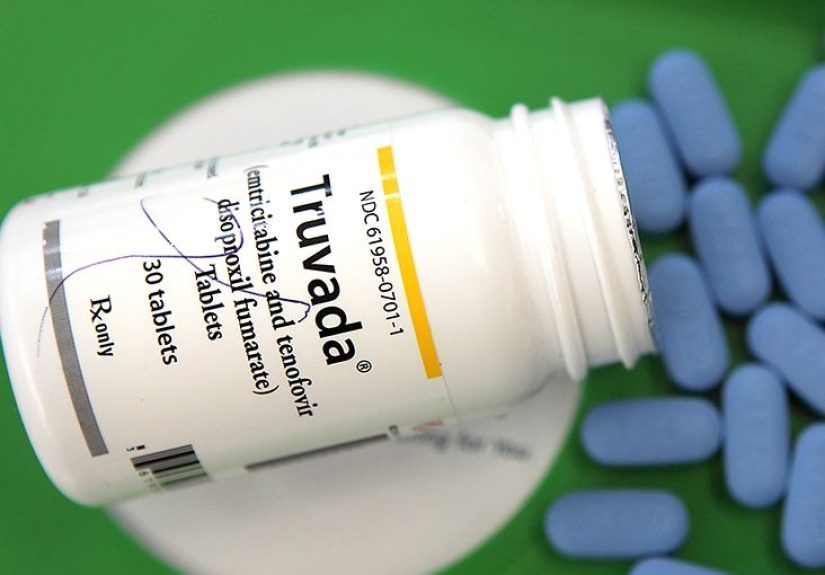
Truvada is a brand-name prescription drug that contains two antiretroviral medicines:
emtricitabine and tenofovir disoproxil fumarate. You’ll also see it written as
FTC/TDF. Generic versions (emtricitabine/tenofovir disoproxil fumarate) are widely available.
Two common uses
- PrEP (Pre-Exposure Prophylaxis): Medication taken to lower the risk of getting HIV. Truvada is approved for
people at risk through sex or injection drug use. - HIV treatment: Truvada may be used as part of a combination regimen for people living with HIV (it’s not
typically used alone for treatment).
Why this matters for Medicare: the coverage pathway is usually different for PrEP prevention versus
HIV treatmentand that difference can mean “$0” versus “depends on your Part D plan.”
The Big Update: Medicare Part B Covers PrEP (Including Truvada) at $0 When You Qualify
Medicare Part B (Medical Insurance) covers PrEP medication and related services for people who qualify, and it’s
treated as a preventive serviceso you generally pay nothing out of pocket when the billing is done correctly.
What Part B covers for PrEP
If you qualify, Part B can cover:
- FDA-approved oral or injectable PrEP medication (oral options include Truvada and its generic).
- Injection administration fees if you’re using an injectable PrEP medication.
- Up to 8 individual counseling sessions every 12 months (risk assessment, risk reduction, adherence support).
- Up to 8 HIV screenings every 12 months.
- A hepatitis B screening (and additional screenings may be possible in certain situations).
Who qualifies?
In plain terms: you don’t have HIV, and your clinician determines you’re at increased risk for HIV.
Medicare doesn’t publish a single “one-size-fits-all” checklist; your provider uses your health history and risk factors.
If you’re wondering whether you qualify, a conversation with your clinician is the first step.
The “$0” promisewhat has to go right
Most coverage frustrations aren’t about whether Medicare covers PrEP. They’re about whether the claim gets billed
the right way. To keep your out-of-pocket cost at $0:
- Use a pharmacy that can bill Medicare Part B for PrEP. Many national chains can, but some smaller pharmacies
may not be set up for Part B PrEP billing. - Ask your provider to include a diagnosis code on the prescription. This helps the pharmacy bill Part B correctly.
- For services (labs/counseling), try to use providers who accept Medicare assignment. Preventive services are
typically $0 when the provider accepts assignment.
If your pharmacy can’t bill Part B for PrEP, you could be told to pay the full cash price (which can be shocking).
The fix is often as simple as switching to a pharmacy that can bill Part B correctly.
What If You Have Medicare Advantage (Part C)?
Medicare Advantage plans must cover at least what Original Medicare covers. In other words, the PrEP benefit still exists.
The difference is usually network rules.
How it works in real life
- If you’re in a Medicare Advantage plan, you’ll generally pay $0 out of pocket for PrEP when you use a
pharmacy in your plan’s network and the claim is billed properly. - If you use out-of-network pharmacies (when your plan doesn’t cover them), you might run into coverage or billing headaches.
Translation: if you have Medicare Advantage, check your plan’s network pharmacy list first. Then make sure the prescription
is written and billed as PrEP under Part B.
When Truvada Is Used for HIV Treatment: Part D Usually Applies
Here’s where costs can re-enter the chat. If Truvada (or its generic) is being used as part of an HIV treatment regimen,
Medicare drug coverage typically runs through Part D (or the drug portion of a Medicare Advantage plan).
What Part D coverage can look like
Part D plans use formularies (covered-drug lists) and may place medications on different “tiers.”
Your costs depend on your plan’s premium, deductible, and whether the drug is preferred, requires prior authorization,
or is treated as a specialty medication.
Important 2025 Part D numbers to know
- Maximum deductible in 2025: No Part D plan can have a deductible higher than a set annual limit.
(Some plans have no deductible.) - Out-of-pocket cap in 2025: Once your out-of-pocket spending on covered Part D drugs reaches the annual
limit, you generally pay $0 for covered Part D drugs for the rest of the year.
These changes can be a major relief for people taking expensive medications, because costs no longer spiral endlessly.
But you still may face meaningful costs early in the year if your plan uses coinsurance.
So… How Much Does Truvada Cost With Medicare?
The honest answer: it depends on why you’re taking it and how it’s billed.
Let’s break it into two clear scenarios.
Scenario A: Truvada (or generic) for PrEP under Part B
If you qualify for PrEP coverage and you use a pharmacy that can bill Part B for PrEP, your out-of-pocket cost for the PrEP
medication is typically $0. The related preventive services (HIV screening, counseling, hepatitis B screening)
are also generally $0 when billed as covered preventive services.
Example: Maria is 59 and has Medicare due to disability. Her clinician prescribes generic Truvada for PrEP,
includes the diagnosis code, and Maria fills it at a pharmacy enrolled to bill Part B for PrEP. Her receipt: $0.
(Her Part B premium still exists, but the medication copay at the counter is $0.)
Scenario B: Truvada as part of HIV treatment under Part D
If Truvada is prescribed for HIV treatment, your Part D plan’s rules kick in. Your costs can include:
a deductible (if your plan has one), then copays/coinsurance until you hit the annual out-of-pocket cap.
Example: James has Original Medicare plus a Part D plan. In January, he meets his plan deductible.
After that, his plan charges coinsurance for brand-name drugs. By mid-year, his total out-of-pocket spending on covered Part D
prescriptions hits the annual capafter that, his covered Part D prescriptions are $0 for the rest of the year.
Brand vs. generic pricing (why your plan may “nudge” you)
Brand-name Truvada has historically been expensive, while the generic (emtricitabine/tenofovir disoproxil fumarate) is often
far cheaper at cash prices. Many plans prefer the generic when medically appropriate.
One “pro tip” that surprises people: sometimes a cash price (using a pharmacy discount program) can look cheaper than your copay.
But if you pay cash, it may not count toward your Part D out-of-pocket total. That can matter if you’re aiming
to reach the annual cap.
How to Keep Your Costs Low (Without Becoming a Spreadsheet Person)
1) Confirm the billing pathway: PrEP under Part B
If you’re using Truvada for PrEP, the single biggest cost-saver is making sure the prescription is billed under
Part B as PrEP and filled at a pharmacy that can bill Part B for PrEP.
2) Ask about generics (when appropriate)
Many people can use generic emtricitabine/tenofovir disoproxil fumarate instead of brand-name Truvada.
If your clinician says it’s appropriate for you, generics often reduce costs and simplify coverage.
3) Consider “Extra Help” for Part D costs
If you have limited income/resources, Medicare’s Extra Help (Low-Income Subsidy) can lower Part D costs like
premiums, deductibles, and copaysand can even protect you from the Part D late enrollment penalty while you qualify.
4) Be cautious with copay coupons
Many manufacturer copay coupons are designed for commercial insurance and generally aren’t allowed for federal programs like
Medicare. If you see a coupon online, it might look like a golden ticket, but it may not be usable with Medicare coverage.
(You can still find legitimate help through foundations or needs-based assistance, depending on eligibility.)
5) Use the Medicare Prescription Payment Plan if Part D costs hit early
Some medications have “front-loaded” costsbig out-of-pocket spending early in the year, then relief later.
The Medicare Prescription Payment Plan can spread your out-of-pocket Part D costs across the remaining months
of the calendar year. It doesn’t reduce total spending, but it can make your monthly budget feel less like a jump scare.
Other PrEP Options That Medicare May Cover
Truvada isn’t the only PrEP option. Depending on your health history, risk factors, and preferences (daily pills vs. injections),
your clinician might discuss alternatives such as:
- Descovy (oral PrEP; not indicated for certain exposure types)
- Apretude (injectable PrEP given on a schedule after initiation)
- Yeztugo (lenacapavir; a long-acting injectable PrEP option approved in 2025)
Medicare’s PrEP preventive benefit is designed to cover FDA-approved oral and injectable PrEP options when you qualify,
including related counseling and screenings. If daily pills are hard to stick with, ask your clinician whether long-acting
injectable PrEP is a fit.
Safety, Testing, and “Yes, Your Doctor Is Going to Order Labs”
For PrEP, safety isn’t just about side effectsit’s also about making sure you don’t start (or continue) PrEP when you already
have HIV, because that can increase the risk of drug-resistant HIV. That’s why HIV testing is routine with PrEP.
Common monitoring themes (PrEP)
- HIV testing: typically before starting PrEP and repeatedly while using it.
- Kidney health: tenofovir-containing PrEP may require kidney monitoring for some people.
- Hepatitis B status: because the medicines in Truvada also affect hepatitis B virus, your clinician may screen you.
- Adherence support: PrEP works best when taken as prescribedthis is why counseling sessions are part of the covered benefit.
Bottom line: Medicare coverage is there to support the whole PrEP “package,” not just the pill bottle.
If you’re worried about labs or visits costing extra, ask your provider’s office how they bill PrEP services under Part B.
Conclusion: The Real Takeaway
If you’re taking Truvada for PrEP, Medicare coverage is often the best-case scenario: Part B can cover PrEP medication
and related services with $0 out-of-pocket when you qualifyassuming the pharmacy can bill Part B and your prescription
is written correctly. If you’re taking Truvada as part of HIV treatment, costs usually run through Part D and vary by plan,
but 2025’s out-of-pocket cap and budgeting tools like the Medicare Prescription Payment Plan can prevent runaway spending.
Your best next move is simple: ask your clinician whether your prescription is for PrEP or treatment, confirm which part of Medicare should
be billed, and make sure your pharmacy is set up to do it. That’s not just paperworkit’s the difference between “$0” and “Why is my copay
the price of a used scooter?”
Real-World Experiences: What People Run Into (and How They Fix It)
If you’re hoping Medicare coverage for Truvada is a smooth “walk into pharmacy, walk out with meds, walk into sunset” momentsometimes it is.
But because PrEP coverage moved into Part B billing, a lot of people’s experiences come down to one thing:
the pharmacy’s billing setup.
One common story: someone’s clinician prescribes generic Truvada for PrEP, they show up at their usual neighborhood pharmacy, and the staff
says, “We can’t run this the way it’s written,” or “Your insurance is rejecting it.” The patient hears the dreaded words:
“Do you want to pay cash?” The person leaves confused, slightly annoyed, and now an unwilling expert in the emotional range of hold music.
The fix is often surprisingly practical. People who get to $0 usually do a quick three-step dance:
(1) they ask the prescriber to include the diagnosis code that supports PrEP billing,
(2) they call the pharmacy and ask, “Can you bill Medicare Part B for PrEP medications?”
and (3) if the answer is no, they switch pharmaciesoften to a national chain or a specialty pharmacy that’s already set up for Part B PrEP claims.
In many cases, once the claim goes through correctly, the price changes instantly from “ouch” to “$0.”
Another real-life wrinkle: Medicare Advantage members can run into network issues. Someone might try a pharmacy that bills Part B just fine,
but it’s out of network for their plan. The result can be a denial, a delay, or a very polite shrug. People who have the smoothest experience
usually check their plan’s preferred pharmacies first, then confirm PrEP Part B billing capabilities second. It’s like choosing a restaurant:
you want the place that serves your favorite dish and accepts your coupon.
For people taking Truvada as part of HIV treatment under Part D, the experience is different: less “billing confusion,” more “why is January so expensive?”
That’s where the 2025 out-of-pocket cap can feel like a financial life raft. People often describe front-loaded costs early in the yeardeductibles and
coinsurance that hit before the cap kicks in. Some beneficiaries say the Medicare Prescription Payment Plan is helpful not because it lowers costs,
but because it makes expenses predictable: instead of one giant pharmacy bill at the start of the year, they get a steadier monthly bill.
For households balancing rent, groceries, and everything else, predictability can be its own kind of savings.
Finally, a note on “internet advice”: plenty of people stumble across coupons or discount cards and assume they can stack them with Medicare.
The experience here is often disappointment. Some folks do pay cash using discounts, but then learn the payment may not count toward Part D out-of-pocket totals.
The most successful “savers” tend to use the Medicare tools that were built for Medicare: Extra Help (if eligible), plan comparison during enrollment,
and pharmacy/provider coordination so PrEP gets billed under Part B correctly.
If there’s one lesson people keep learning: when it comes to Truvada and Medicare, the medication is only half the story.
The other half is knowing which door to walk throughPart B for PrEP, Part D for treatmentand making sure the people on the other side
(provider, pharmacy, plan) are speaking the same billing language.