Table of Contents >> Show >> Hide
- What Happened on “Weekend Update”?
- Why This Political Statement Felt Different
- Michael Che’s Comedy Style Was Built for This
- Why “Weekend Update” Was the Perfect Venue
- The Joke Worked Because It Was Angry
- How the Moment Fit the Broader SNL Night
- What This Says About Political Comedy Right Now
- Why the Moment Will Stick
- Related Experiences: Why Moments Like This Hit Viewers So Hard
Political comedy usually arrives wearing a fake mustache. It grins, shrugs, tosses out a punchline, and sprints away before anyone can ask whether there was a real opinion hiding underneath the joke. Michael Che, however, did something more interesting on Saturday Night Live: he took a genuinely serious political concern and carried it to the Weekend Update desk without sanding off the anger first.
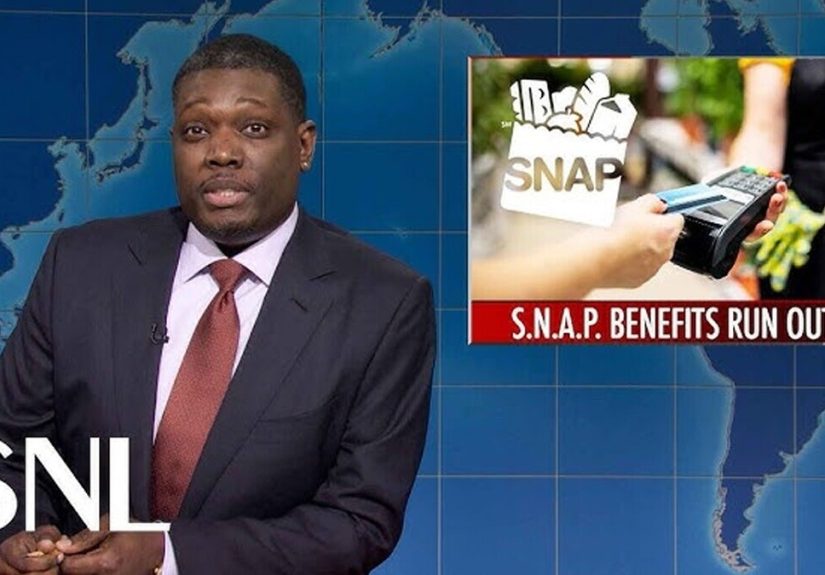
That is what made the moment stand out. Che did not simply roast another headline and move on. He brought a personal, sincere response to the suspension of SNAP food assistance during the government shutdown, then translated that feeling into a joke so sharp it practically left a paper cut on live television. The line was funny, yes, but it was also furious, and that combination is exactly why it landed.
For viewers who tune into Weekend Update expecting a brisk run of news gags, celebrity nonsense, and the occasional “did he really just say that?” groan, this bit hit differently. It felt less like a comedian commenting on politics from a safe distance and more like a comedian yanking politics back into the realm of actual people, actual groceries, and actual consequences. In a media environment where sincerity often gets smuggled in through irony, Che made the irony do heavy lifting for something unmistakably real.
What Happened on “Weekend Update”?
On the November 1, 2025, episode of Saturday Night Live, hosted by Miles Teller, Che appeared at the Weekend Update desk alongside Colin Jost as usual. The segment included the show’s typical mix of topical jokes, including jabs at President Donald Trump and the chaos swirling around the White House. But Che’s most memorable moment came when he pivoted to the shutdown-related SNAP crisis and delivered a line that reframed hunger, government dysfunction, and American politics in one brutal twist.
The joke’s punchline referenced the Second Amendment as a source of “free food,” a grim setup that transformed a policy failure into an indictment of a culture that often seems more comfortable romanticizing firearms than feeding families. It was fast, efficient, and dark in the way Che often is. But unlike a throwaway gag, it had weight behind it.
That weight did not come out of nowhere. Earlier, Che had posted a more personal and unusually earnest message about the freeze in SNAP benefits and the ugly online reaction to struggling families. He criticized the racist glee he was seeing around people losing access to food assistance and made it clear that the conversation was not theoretical to him. By the time he reached the Weekend Update desk, the bit was no longer just clever writing. It was compressed outrage.
Why This Political Statement Felt Different
Che has never been a soft, cuddly comic who wanders through topical material like he is handing out cupcakes. His comedy tends to work by smiling at the edge of discomfort and then stepping one inch closer. Still, the key word in this moment is sincere. Not sentimental. Not preachy. Not “very special episode” sincere. Real sincere.
That distinction matters because sincerity is rare currency in political comedy. Too much earnestness and the joke collapses into a lecture. Too little and the comic sounds like he is merely harvesting outrage for applause. Che found the narrow strip of road between those two cliffs.
His original statement about SNAP had a human core: food insecurity is not a punchline, and the people affected by it are not disposable props in the culture war. When he carried that thought onto Weekend Update, he did not abandon the joke structure. He weaponized it. Instead of delivering a long speech, he trusted one savage line to carry a larger moral argument. That is often how the best political satire works. It does not explain the entire problem. It reveals the problem so clearly that explanation becomes almost unnecessary.
From Headline to Human Stakes
Government shutdown coverage can easily become a swamp of process language. Funding gaps. Congressional standoffs. contingency reserves. partisan blame. It is the kind of vocabulary that makes citizens feel like they are reading the instruction manual for a dishwasher they do not own. Che cut through all of that. His joke pushed the conversation back to the basic question: what happens when people need food and the system fails them?
That shift is one reason the bit resonated. Political comedy is most powerful when it reminds the audience that policy is not abstract. A shutdown is not merely a Beltway chess match for cable-news panelists and overcaffeinated staffers. It can mean parents staring at grocery prices like they are reading ransom notes. It can mean communities leaning harder on food banks. It can mean public cruelty becoming its own form of entertainment online. Che’s material tapped directly into that uglier reality.
Michael Che’s Comedy Style Was Built for This
If you have watched Che for years, the moment makes sense inside the larger architecture of his persona. He has long balanced deadpan delivery with a willingness to provoke, and he often sounds less like a traditional punchline machine than a guy who has already seen enough nonsense for one lifetime. That voice works especially well at the Weekend Update desk because it lets him cut through polished TV niceness. He can make a line feel tossed off, and that casual rhythm often makes the blow land harder.
Che has also been unusually candid, over the years, about how SNL handles politics. He has suggested that comedy should go after whoever is in power and has acknowledged that the show can appear politically lopsided, even while arguing that outrageous public behavior naturally attracts satire. In other words, he is not pretending to be above the political mess. He is admitting that the mess is, unfortunately, excellent joke material.
That context helps explain why the SNAP moment did not feel like a random detour into activism. It felt consistent with a comic who understands that laughter can be both a defense mechanism and a delivery system. When Che wants to make a point, he rarely wraps it in soft language. He tends to throw it like a brick and trust the audience to notice the note attached.
Why “Weekend Update” Was the Perfect Venue
Weekend Update has always occupied a strange and useful space inside Saturday Night Live. It is not a straight news broadcast, obviously, unless your local anchor usually compares cabinet scandals to haunted house attractions. But it is not just another sketch either. The desk creates a formal structure that mimics authority while allowing the comics to puncture authority in real time.
That structure matters. A statement on Instagram can circulate widely, but it still feels like a post. At the Weekend Update desk, the same idea becomes performance, ritual, and public confrontation. The joke has to live in front of an audience. It has to survive timing, reaction, and silence. There is no edit button. No caption doing extra emotional work. No opportunity to explain in the comments.
By taking the issue to Weekend Update, Che effectively said: this belongs in the center of the show, not off to the side. He made food insecurity part of the same conversation as presidential spectacle, celebrity absurdity, and campaign chaos. That is an important move, because it insists that the fallout from government dysfunction deserves the same attention as the political theater causing it.
The Joke Worked Because It Was Angry
Some political comedy aims for a gentle smirk. This was not that. Che’s line had real bite, and the bite was the point. Viewers could feel the irritation under the wording, which gave the joke a charge that cleaner, safer material would never have achieved. It is one thing to mock a politician’s bathroom remodel during a shutdown. It is another thing entirely to mock the country’s warped priorities while people are worried about feeding themselves.
Anger in comedy is tricky. Too much and the audience feels scolded. Too little and the comic looks detached. Che struck a balance by keeping the line short and merciless. He did not ask for permission to care. He simply made the audience confront the logic of a nation that can fail to deliver grocery assistance while maintaining an almost mythic devotion to weaponry. There is a reason the joke provoked strong reactions: it was aimed at a contradiction many Americans already recognize but often struggle to articulate.
And because the setup came from a sincere concern, the joke did not read as cynicism. It read as moral disgust with a punchline attached. That is a different flavor of political humor, and usually a more memorable one.
How the Moment Fit the Broader SNL Night
The episode itself was packed with the usual current-events clutter: Trump jokes, White House absurdity, media scandal, and the kind of topical references that SNL has been turning into Saturday-night fuel for decades. Jost and Che both took shots at the administration, and the segment maintained the show’s familiar high-wire act of trying to be topical, sharp, and broadly accessible all at once.
But Che’s SNAP bit stood above the rest because it had a personal pulse. Plenty of political jokes mock power. Fewer expose the downstream pain of power’s failures. That is why the line lingered after the segment ended. It was not just funny within the context of the show; it was revealing within the context of the country.
There is also something especially effective about a live comedy show interrupting its own rhythm with a moment that feels a little too real. Audiences notice the difference instantly. They may laugh first and process second, but they do process. In a crowded news cycle, that is no small achievement.
What This Says About Political Comedy Right Now
Political satire in America is often accused of being either too toothless or too smug. One side says comics are just preaching to the choir. The other says they are not punching hard enough. Che’s Weekend Update moment offered a useful reminder: political comedy still matters when it can turn abstraction into recognition.
It also demonstrated that a comedian does not need a seven-minute monologue to make a serious point. Sometimes one line can do the job better than a sermon, especially when the audience already senses the absurdity of the situation. The joke becomes a kind of pressure valve. People laugh because the truth is ugly, and the line gives that ugliness a shape.
Che’s statement also highlights a broader truth about successful satire: the best political jokes are not only about politicians. They are about values. About who gets mocked, who gets ignored, who gets help, and who gets told to tough it out. When comedy reaches that level, it stops being just commentary on the news and becomes commentary on the culture that produced the news.
Why the Moment Will Stick
Michael Che taking a sincere political statement to the Weekend Update desk worked because it broke the expected rhythm without breaking character. He did not transform into a pundit. He remained recognizably Michael Che: dry, sharp, slightly dangerous, and unimpressed by hypocrisy. But for one key beat, the joke carried the unmistakable weight of lived concern.
That is the sweet spot political comedy keeps chasing. Not empty outrage. Not polished neutrality. Not a lecture disguised as entertainment. Something harder to fake: conviction with timing.
In the end, the line landed because it made the audience laugh and wince at the same time. That double reaction is often the signature of a joke that actually matters. It means the comedy did more than decorate the news. It exposed the nerve underneath it.
Related Experiences: Why Moments Like This Hit Viewers So Hard
What makes a moment like this travel beyond the show itself is the experience surrounding it. People do not watch Weekend Update in a vacuum. They watch after a week of headlines, bills, grocery runs, doomscrolling, and political arguments that feel less like civic dialogue and more like a group chat that should have been muted in 2019. By Saturday night, many viewers are not just looking for jokes. They are looking for relief, clarity, or at least a way to laugh without feeling completely detached from reality.
That is why Che’s line hit a nerve. For viewers who have lived close to financial stress, jokes about food assistance do not sit in some abstract “policy” drawer. They connect to a specific kind of experience: doing mental math in a supermarket aisle, deciding what can wait until next week, pretending not to be embarrassed by a system that was built to help people but is often discussed as if accepting help were a character flaw. When a comic acknowledges that dynamic without mocking the people inside it, the audience feels the difference immediately.
There is also the experience of watching political comedy when you are tired of being sold the cleaned-up version of public cruelty. A lot of coverage turns suffering into bureaucratic wallpaper. Numbers rise, funds run out, statements are issued, and the language gets flatter with every update. Comedy can cut through that flattening effect. A sharp joke can restore proportion by reminding viewers that something monstrous is being normalized. In that sense, laughter is not trivializing the issue; it is exposing how absurd the status quo has become.
Another layer here is the live-TV experience itself. SNL still has a kind of communal electricity that streaming-era comedy often lacks. When a joke lands live, viewers feel like they are part of a shared reaction. The laugh, the gasp, the pause after a risky punchline all of it tells the audience that this moment is not sliding by unnoticed. Che’s bit benefited from that atmosphere. It was not merely written; it was witnessed.
And then there is the experience of seeing sincerity appear where you least expect it. That may be the biggest reason people kept talking about this moment. Che is funny when he is mischievous, provocative, or dark. But there is added force when a comedian known for cool detachment suddenly reveals genuine moral heat. Viewers can tell when a joke is powered by annoyance and when it is powered by something deeper. The second kind tends to linger.
For many people, that is what great political comedy feels like: not a replacement for action, not a substitute for policy, but a rare cultural moment where truth, anger, humor, and timing all arrive in the same sentence. It gives the audience a laugh, yes, but also a little recognition. And sometimes recognition is what makes people stop scrolling, sit up straighter, and realize the joke was never just a joke.