Table of Contents >> Show >> Hide
- What’s being recalled (and why it’s a big deal)
- The hazard, explained like you’re not an engineer
- Brands commonly included (and how far back sales go)
- How to tell if your above-ground pool is part of the recall
- What to do immediately if you think you have a recalled pool
- Why this recall hits home: drowning risk is real, fast, and often silent
- A practical “layers of protection” plan for above-ground pools
- FAQ: common questions pool owners are asking
- Bottom line
- Real-life experiences: what this recall looks like in everyday backyards
- SEO Tags
If you bought an above-ground pool because you wanted a backyard “staycation,” you probably didn’t picture a federal recall
entering the chat. Yet here we are: millions of 48-inch-and-taller above-ground pools are under recall after safety officials
warned that a common design feature can help small children climb into the watereven when adults think the pool is “secured.”
It’s the kind of headline that stops you mid-scroll… and should probably stop you mid-cannonball, too.
This isn’t a recall about a broken pump or a leaky seam. It’s about accesshow a child can get into the pool without anyone
realizing it. And because drowning can happen quickly and quietly, the recall is a loud reminder that “pool safety” isn’t one
product or one rule. It’s a system.
What’s being recalled (and why it’s a big deal)
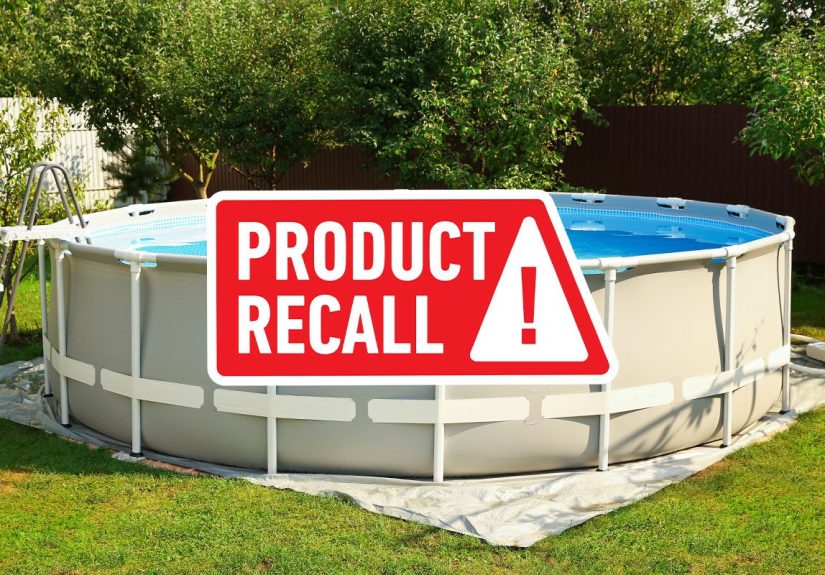
The recall targets certain above-ground pools that are 48 inches tall or higher and use
compression straps wrapped around the outside of the poolspecifically straps that run
over the vertical support legs. In plain terms: there’s a belt-like strap around the pool’s exterior
framework, and it can accidentally act like a step.
Safety regulators and manufacturers say the strap can create a foothold that allows a young child to climb the outside of
the pool and get into the water. The most alarming part: kids may still be able to enter even if the ladder is removed,
because the strap itself becomes the “ladder.”
According to official recall information, multiple child drowning deaths have been associated with children gaining access
this way. That’s why the remedy isn’t “keep an eye on it” (which is always necessary), but a physical fix designed to remove
the climbing advantage.
The hazard, explained like you’re not an engineer
Compression straps exist for a reason: they help some above-ground pools maintain structural stability. Think of them like a
supportive belt around the pool’s frame. The problem is placement. If the strap sits on the outside and crosses over the
support legs, it can become a convenient step for little feet.
Toddlers are basically tiny scientists: they test boundaries, repeat experiments, and do not care about your adult logic.
If there’s a “step,” they’ll try itespecially if a shimmering, irresistible body of water is involved. And because above-ground
pools are elevated, many owners assume that removing the ladder equals “no access.” This recall challenges that assumption.
Brands commonly included (and how far back sales go)
The recall involves pools sold for many years through major retailers and online marketplaces. The affected products span
multiple well-known brand families. Depending on the brand line, sales dates go back more than two decades.
While the official recall list is the only definitive way to confirm your exact model, the brands and product lines most often
referenced in coverage and recall notices include:
- Bestway and some Coleman-branded above-ground pool models sold across multiple years
- Intex frame pool lines sold in earlier years (plus a smaller number of later models sold through specific channels)
- Polygroup and related brand families often sold under names such as Summer Waves, Summer Escapes, and Funsicle
Translation: if your pool is tall (48″+) and has that exterior strap crossing the legs, don’t assume you’re “too late” or
“too early” for the recall window. You might be right in it.
How to tell if your above-ground pool is part of the recall
You don’t need special tools for the first passjust eyes, a measuring tape, and the willingness to get a little muddy around
the pool’s base. Here’s a simple checklist.
1) Confirm the height: is it 48 inches or taller?
This recall focuses on taller above-ground pools. If your pool is shorter, it may not be includedbut you should still keep
reading the safety section, because water risk doesn’t care about product categories.
2) Look for an exterior compression strap that crosses over the support legs
Walk the perimeter. Do you see a strap around the outside of the pool? Does it run across the supports on the outside,
creating a “step” point? If yes, take it seriously.
3) Find the brand and model info on the pool liner
Many above-ground pools print brand names and model numbers on the outside of the liner. If you still have paperwork,
shipping emails, or a retailer receipt, gather those too.
4) Verify using official recall support channels
Contact the manufacturer’s recall hotline or recall support page (Bestway, Intex, and Polygroup each provide recall support).
If you bought the pool secondhand, you can still be affectedrecalls follow products, not owners.
What to do immediately if you think you have a recalled pool
The goal is simple: prevent unsupervised access until the fix is installed. That can feel annoying in peak summer, but
“annoying” is a small price for “safe.”
Step A: Restrict access right now
- Never rely on “I’ll be nearby.” Nearby is not the same as watching.
- Block entry. Remove steps, secure gates, lock doors that lead to the pool area, and keep toys away from the pool.
- Consider draining the pool if you cannot reliably prevent child access until repairs are completed.
Step B: Request the free repair kit from the manufacturer
The remedy described in official recall information is a repair kit that replaces the strap’s function without
leaving a foothold. In many cases, the kit includes a rope system that attaches at ground level and wraps around the pool to
maintain structural integrity.
Step C: Install the repair correctlythen remove the hazardous strap
If your model is confirmed, follow the manufacturer’s instructions exactly. A common theme in recall guidance is:
secure the repair first, and only then cut and remove the original compression strap. Don’t DIY-guess the order.
The pool needs to remain structurally sound while you remove the problematic foothold.
Why this recall hits home: drowning risk is real, fast, and often silent
Water safety experts repeat the same hard truth because it keeps being true: drowning can happen quickly and quietly. That’s
why prevention is built on layersphysical barriers, supervision, and skillsnot a single “perfect” trick.
Public health data consistently shows that drowning is a leading cause of death for young children, and home pools are a major
risk setting. The recall matters because it targets one of the most dangerous scenarios: a child gaining access when adults
assume the pool is “off limits.”
A practical “layers of protection” plan for above-ground pools
Even if your pool isn’t recalled, this section is worth the read. Think of pool safety like a seatbelt plus airbags
plus speed limits. Each layer buys time and reduces risk when another layer fails.
Layer 1: Active, undistracted supervision
Designate a “water watcher” during swim timeone adult whose only job is watching the water (not grilling, not texting,
not “multi-tasking”). For toddlers and young kids, keep supervision close enough to assist immediately.
Layer 2: Control access with barriers
- Fencing: A four-sided isolation fence with a self-closing, self-latching gate is widely recommended for home pools.
- Doors & alarms: If the house opens to the pool area, consider door alarms or chimes as an extra alert layer.
- Remove or secure ladders: For above-ground pools, treat the ladder like car keysput it away when not in use.
Layer 3: Build swim skills early (and keep building)
Swim lessons can reduce risk, but they are not a substitute for supervision. Kids can be strong swimmers and still get into
trouble. The best approach is “skills + supervision + barriers.”
Layer 4: Use the right safety gear
- U.S. Coast Guard–approved life jackets for inexperienced swimmers, especially around open water
- Rescue equipment near the pool (a reaching pole, a flotation device)
- A charged phone nearby for emergencies (not inside the house, not “somewhere around”)
Layer 5: Be ready for emergencies
Consider learning CPR. It’s one of those skills you hope you never usebut you’ll be grateful you have if you ever need it.
FAQ: common questions pool owners are asking
“My pool is tall, but I’m not sure if the strap counts as a ‘compression strap.’”
If the strap wraps around the pool’s exterior and crosses over the vertical support legs, treat it as a red flag and verify
with the manufacturer. When safety is involved, “pretty sure” is not the same as “confirmed.”
“Can’t I just remove the ladder and call it done?”
Removing the ladder is good practice, but the recall hazard is specifically about a foothold that can remain even without the
ladder. That’s why the repair kit focuses on eliminating the climbing advantage.
“What if I bought my pool used?”
You can still be affected. Recalls are tied to the product design, not your purchase history. If you have the model and the
strap configuration matches the hazard description, verify it.
“Will the repair change how the pool performs?”
The intention of the repair is to keep the pool structurally stable while removing the foothold risk. Follow the instructions
exactly to avoid introducing new problems.
Bottom line
If you own a 48-inch-or-taller above-ground pool, take five minutes today to inspect the outside supports. If there’s an
exterior strap that can act like a step, verify your model and request the repair kit. And whether your pool is recalled or
not, upgrade your safety layers: supervision, barriers, and swim skills work better together than any single strategy alone.
Your backyard pool should be a memory makernot a risk multiplier. A small fix, a few habit upgrades, and a healthy dose of
“let’s not assume toddlers respect boundaries” can go a long way.
Extra 500-ish words: experiences related to the topic
Real-life experiences: what this recall looks like in everyday backyards
Because recalls can feel abstract until they land in your own yard, here are a few common “this could be you” experiences
that pool owners describe when a massive safety alert hits. These are composite scenarios based on typical consumer patterns,
not a report about any one specific familybut they’ll sound familiar if you’ve ever owned a seasonal backyard setup.
The “We removed the ladder, so we’re good” moment
One of the most common reactions is confidence: “We always remove the ladder, so there’s no way the kids can get in.”
Then the owner walks outside, sees the strap line around the pool, and realizes it sits exactly where a curious child might
try to climb. The mental shift is immediate. The ladder wasn’t the only access point.
What tends to happen next is a quick household policy upgrade: doors that open toward the backyard stay locked, the yard gate
gets a latch check, and the pool area becomes a “no solo zone.” Families often pick a simple rule like: if a child is outside,
an adult is outsideperiod. It’s not fancy, but it’s effective.
The secondhand pool surprise
Above-ground pools change hands constantly: neighbors sell them, relatives pass them down, online marketplaces move them fast.
That’s why some owners first discover the recall when they realize they don’t have a manual, model number, or even the right
brand name stored anywhere. The pool is just… “the pool.”
In these situations, the best move is slow and methodical: check the liner for printed identifiers, take clear photos of the
strap configuration and support legs, and contact the manufacturer’s recall support team. Many owners also learn a useful habit:
saving a simple “pool folder” on their phone with the model info, purchase details, and safety instructions. It sounds extra
until you need itthen it feels like genius.
The DIY temptation (and the smarter alternative)
Some people immediately want to cut the strap off. It’s understandableif the strap is the problem, remove the strap, right?
But owners who pause and follow instructions tend to avoid turning one safety issue into a structural issue. A recalled design
often has parts doing double duty: the strap may be both a hazard and a support component.
The better experience is usually: request the free repair kit, read the steps twice, install the fix, and only then remove the
risky strap. People who take the “do it in the right order” route often describe feeling relievedlike they’re not guessing,
they’re executing a plan.
The neighborhood ripple effect
Big recalls create conversations. One family checks their pool, then mentions it to a neighbor. The neighbor checks theirs.
Then someone in a local group chat says, “Waitmine has that strap too.” Suddenly, it’s not just a product recall; it’s a
community safety check.
This is where good habits spread: “water watcher” shifts during gatherings, ladders stored out of reach after swim time, toys
removed from the pool edge, and adults learning to treat the pool like an “always on” hazard unless it’s actively supervised.
The most valuable outcome isn’t just a repaired strapit’s a mindset that refuses to assume “it’ll be fine.”
If there’s one shared lesson across these experiences, it’s this: safety isn’t a vibe. It’s a checklist you actually do.
And when millions of pools are recalled for an access-related drowning hazard, that checklist becomes non-negotiable.