Table of Contents >> Show >> Hide
- What Exactly Is OpenAI’s $6B Secondary?
- Why This Counts as the Largest Employee Liquidity Event Ever
- Who Bought, Who Sold, and Who Sat It Out
- How a $500 Billion Valuation Changes the Game
- What It Means for Employees: Life, Taxes, and Optionality
- What Other Startups Can Learn from OpenAI’s Tender Offer
- The Bigger Picture: Secondary Markets and the AI Gold Rush
- Experiences and Lessons from the Front Lines of Employee Liquidity
Imagine working at a startup where the words “liquidity event” usually feel like a distant, mythical creature that only appears when there’s an IPO bell to ring. Now imagine skipping the bell, skipping the Wall Street roadshow, and still creating more employee wealth than most tech IPOs combined. That’s essentially what just happened with OpenAI’s $6 billion+ secondary share sale.
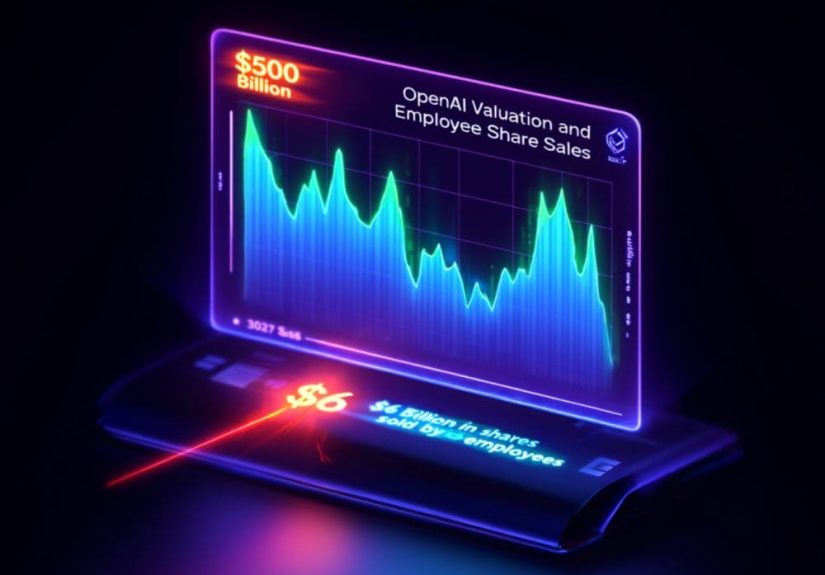
In late 2025, OpenAI completed a massive secondary transaction that allowed current and former employees (and some early backers) to sell billions of dollars’ worth of stock to a who’s-who syndicate of global investors. The deal valued OpenAI at around $500 billion, briefly making it arguably the most valuable startup on the planet and, by many accounts, the largest employee liquidity event in tech history.
For SaaS founders, operators, and employees, this isn’t just AI drama. It’s a case study in how secondary markets, mega-rounds, and employee liquidity now work at the absolute frontier of startup scale. Let’s unpack what happened, why it matters, and what lessons the rest of the ecosystem can steal from OpenAI’s $6B secondary.
What Exactly Is OpenAI’s $6B Secondary?
Primary vs. secondary in one sentence (or two)
A primary round is when a company issues new shares and the money goes onto the company’s balance sheet to fund growth. A secondary sale is when existing shareholdersusually employees, founders, and early investorssell their existing shares to new investors. The company doesn’t get the cash; the humans do.
OpenAI’s 2025 deal was a secondary tender offer: current and former employees, plus early shareholders, were allowed to sell a portion of their equity to a group of late-stage investors at a pre-agreed price that implied a $500 billion valuation.
The headline numbers
- About $6–6.6 billion worth of OpenAI shares changed hands in the transaction.
- The deal implied a $500 billion valuation, up from roughly $300 billion earlier in 2025.
- OpenAI reportedly authorized up to $10 billion in potential secondary salesbut not all of it was used, meaning a sizable portion of employees decided not to sell.
In old-school tech terms, this would have been a blockbuster multibillion-dollar IPO. In 2025 AI terms, it’s a tender offer that doesn’t even change the company’s cash balance.
Why This Counts as the Largest Employee Liquidity Event Ever
Putting $6B+ in context
Tech has seen big liquidity moments before. Employees at companies like Stripe, SpaceX, Airbnb, and Databricks have participated in secondary sales worth hundreds of millions or even a few billion dollars. Those deals helped early hires buy homes, diversify their portfolios, pay off student loans, and finally replace that 2011 MacBook they were “emotionally attached” to.
But OpenAI’s transaction is on another level:
- Dollar scale: Over $6 billion in employee and early-holder shares sold in a single structured process.
- Valuation tier: The sale priced OpenAI at around $500 billion, making it one of the most valuable private companies ever and, for a moment, the top startup above SpaceX and ByteDance.
- Concentration of upside: Unlike an IPO where public investors spread ownership across millions of buyers, this was a highly targeted transfer from insiders to a curated list of late-stage funds and strategic investors.
That’s why commentators and SaaStr-style operators have dubbed it the largest employee liquidity event in tech historynot just because of the headline number, but because of how much of that number flowed directly into employees’ bank accounts rather than the company’s.
Who Bought, Who Sold, and Who Sat It Out
The buying squad: Thrive, SoftBank, and friends
On the buy side, the tender attracted some of the most aggressively AI-bullish investors on the planet. Among the reported participants:
- Thrive Capital – a longtime OpenAI backer and major late-stage investor.
- SoftBank – doubling down on its massive AI bet after already backing OpenAI’s prior primary rounds.
- Dragoneer Investment Group – a growth-equity specialist with a taste for category-defining companies.
- Abu Dhabi’s MGX – representing deep sovereign capital eager to capture AI upside.
- T. Rowe Price – one of the big crossover investors that frequently shows up pre-IPO.
For these investors, the appeal is obvious: there aren’t many chances to buy a material stake in what could be a once-in-a-generation AI platform at scale. When you can’t lead a traditional “Series Z,” you buy from insiders instead.
The sellers: employees and early believers
On the sell side, current and former OpenAI employeesas well as some early shareholderscould cash out a portion of their holdings. This is especially meaningful in a company that has:
- Raised tens of billions in capital across primaries.
- Scaled revenue into the multibillion-dollar range.
- Seen its private valuation climb faster than any realistic IPO timeline.
Many employees had paper wealth that was impressive on a cap table but useless for real-world expenses. A structured secondary turned that into actual, spendable, diversify-able dollars.
The non-sellers: a very loud signal
One of the most intriguing details is that not everyone sold. OpenAI reportedly authorized more than $10 billion in secondary capacity, but only ~$6.6 billion was used. That means roughly a third of the potential supply stayed on the sidelines.
You can read that a few ways:
- Conviction: Many insiders believe the company’s long-term value could be substantially higher than $500B.
- Risk tolerance: Some employees are comfortable keeping much of their net worth concentrated in one company.
- Strategy: People may also be waiting for future liquidity windows or potential public offerings later in the decade.
Whatever the mix, the outcome is clear: the secondary unlocked life-changing money and left plenty of skin in the game.
How a $500 Billion Valuation Changes the Game
From unicorn to “half-trillion-corn”
A $500 billion valuation doesn’t just look good in a pitch deck. It has real knock-on effects across fundraising, hiring, and competitive positioning:
- Fundraising leverage: OpenAI can tap capital on relatively favorable terms if it ever does need another primary round.
- Talent magnet: When prospective hires see employees turning paper equity into billions of real dollars, stock offers suddenly feel very tangible.
- Market signaling: A half-trillion valuation says loudly, “This is one of the central platforms of the AI era,” which influences partners, regulators, and rivals alike.
But the math still has to work
None of this eliminates the basics: at some point, the revenue and profit curve has to justify the valuation. OpenAI has reportedly been scaling annualized revenue into the double-digit billions, with aggressive growth expectations driven by:
- Enterprise subscriptions and platform usage.
- API consumption from thousands of SaaS, consumer, and enterprise apps.
- New product lines around agents, voice, and multimodal AI.
The secondary doesn’t change those fundamentals. What it does is set the bar. At $500B, OpenAI is in the same neighborhood as the largest public software and semiconductor companiesand markets will expect performance to match.
What It Means for Employees: Life, Taxes, and Optionality
From “paper rich” to actually rich
For employees, a secondary like this is the difference between looking at an equity line item on a paystub and actually being able to:
- Make a down payment on a home (or pay off the one you stretched for earlier).
- Eliminate student loan balances and high-interest debt.
- Build a diversified investment portfolio that isn’t 98% tied to one employer.
- Take more career risk because your personal finances have a safety net.
That’s why tender offers have become such a big deal in the modern startup playbook. They make it possible to stay at a company for the long haul without waiting a decade for liquidity.
The not-so-fun part: taxes and timing
There’s always a catch, and here it’s called taxes. Secondary sales often trigger significant capital gains tax events for employees, especially those holding incentive stock options or RSUs that have appreciated rapidly. The exact hit depends on:
- How long the employee has held the shares.
- What jurisdiction they live in.
- Whether their equity is treated as ordinary income or capital gains.
Sophisticated employees pair liquidity events with financial planning: setting aside tax reserves, working with advisors, and deciding how much to sell now versus later. In other words, “I just became worth $8 million on paper” is not the same thing as “I have $8 million in my checking account next week.”
What Other Startups Can Learn from OpenAI’s Tender Offer
Lesson 1: Liquidity is a retention tool, not just a perk
When valuations explode, traditional IPO timelines can’t keep up. A structured secondary lets companies:
- Reduce pressure to go public purely for employee liquidity.
- Reward early hires and keep them focused on long-term impact.
- Sharpen recruiting narratives: “We’ve already created real liquidity here.”
For B2B and SaaS founders, this is a powerful idea: if your company ever gets to multi-decabillion valuations, you don’t have to sprint to an IPO. You can periodically open up controlled tender offers and still stay private.
Lesson 2: Choose your secondary buyers wisely
Not all capital is equal, especially in the secondary market. The investors who step into your cap table this late will:
- Shape expectations around eventual exit timelines.
- Influence how your company is perceived externally.
- Potentially participate in future primary rounds and strategic projects.
OpenAI’s buyer groupglobal growth funds, sovereign capital, crossover investorssignals that this isn’t a quick flip. It’s a long-duration bet on AI infrastructure and platforms.
Lesson 3: Structure matters as much as size
The “$6B+” number grabs headlines, but the underlying mechanics matter:
- How much can each employee sell?
- Is participation opt-in or opt-out?
- Are former employees included, or only current staff?
- How often will tenders happen in the future?
Get those details wrong and you risk resentment, talent churn, or a perception that insiders were favored. Get them right and you create a reputation as one of the best places in tech to build a career.
The Bigger Picture: Secondary Markets and the AI Gold Rush
Secondary markets are no longer a side show
In 2024–2025, secondary liquidity went from being a niche topic to a core part of how late-stage tech works. Companies like OpenAI, Stripe, SpaceX, and Databricks have leaned on tender offers and structured employee programs to:
- Alleviate pressure to go public during choppy IPO markets.
- Let early employees actually realize the value they helped create.
- Bring in long-term investors even when primary rounds aren’t needed.
For the AI sector, this is especially important. The infrastructure requiredGPUs, data centers, research spendis capital intensive and long-dated. Secondary deals let companies fine-tune their cap tables without constantly diluting in new primaries.
What it signals about AI’s staying power
When billions of dollars flow into employee liquidity at a half-trillion valuation, it sends a message: major investors believe that:
- AI isn’t a passing bubble; it’s a long wave of platform change.
- The winners will have enormous pricing power and network effects.
- Owning a piece of those winnerseven at eye-watering valuationscould still be rational.
Whether that proves correct over the next decade is the trillion-dollar question. But the size and structure of OpenAI’s secondary suggest that, for now, capital markets are treating it more like early-days cloud (AWS, Azure) than a fleeting hype cycle.
Experiences and Lessons from the Front Lines of Employee Liquidity
You don’t have to work at OpenAI to feel the ripple effects of a $6B secondary. Across tech, founders and employees are rethinking what “getting paid” looks like in a world where companies can stay private, raise enormous primary rounds, and still offer liquidity through tenders.
The employee perspective: “I sold, and my life changed”
Talk to employees who’ve gone through large secondary events at late-stage startups and you hear a few common themes:
- Relief: That sense of “Okay, if everything went to zero tomorrow, I’d still be okay.” Being able to pay off loans, set aside money for kids’ college, or buy a modest home can dramatically reduce stress.
- Renewed motivation: Counterintuitively, many people report being more motivated after selling some shares. Once life basics are secured, it’s easier to work for the mission instead of staring at the stock price in Slack.
- Perspective: Some employees realize that concentrated equity is both a blessing and a risk. After a tender, they start taking diversification and long-term financial planning seriously for the first time.
In a mega-deal like OpenAI’s, you can multiply those stories by hundreds or thousands. Early engineers who joined before AI became the hottest acronym in boardrooms suddenly have real, generational-scale outcomeswithout needing a bell ringing ceremony in New York.
The founder perspective: control without the public-market circus
Founders and CEOs at late-stage companies often feel trapped between two conflicting pressures:
- Employees want liquidity and understandably don’t want to wait a decade to turn their work into money.
- Leaders want control and don’t necessarily want the quarterly earnings treadmill, short-term stock pressure, or increased regulatory complexity that comes with being public.
Secondary tenders are a way to square that circle. A company can:
- Stay private and long-term oriented.
- Offer employees partial liquidity at milestones (e.g., every 18–24 months).
- Curate who joins the cap table instead of letting public markets decide.
The OpenAI deal is the most extreme demonstration so far: tens of billions already raised for the business, billions more unlocked for employees, and still no IPO. That playbook is now being studied in boardrooms all over the Valley.
The investor perspective: buying into maturity, not just growth
For late-stage investors, secondary deals are a way to access companies that might not need another traditional round. The upside:
- They get exposure to category leaders whose fundamentals (revenue, margins, network effects) are already partially de-risked.
- They can write very large checks into relatively concentrated positions.
- They’re often buying from diversified sellers (employees) rather than from the company, which can ease negotiation dynamics.
Of course, they’re also taking on valuation risk. Buying into a $500B private company requires conviction that the exitwhether future IPO, direct listing, or long-term private cash generationwill justify the entry price. The OpenAI secondary shows that, at least for now, many of the world’s biggest capital allocators are willing to make that bet.
What it means for the rest of us
You don’t need to be OpenAI-scale to learn from this:
- Early-stage founders: Think ahead about how you want employee liquidity to work once your valuation takes off. Waiting until people are “paper rich but cash poor” is a recipe for churn.
- Growth-stage companies: Consider modest, repeatable tender offers rather than waiting for a single “big bang” event. It builds trust and removes pressure.
- Employees: Treat equity like what it isrisky but potentially transformative. When liquidity windows open, have a plan, not a panic.
OpenAI’s $6B+ secondary is more than a jaw-dropping headline. It’s a preview of how late-stage tech, employee ownership, and capital markets will increasingly interact in an era where the biggest winners can raise enormous sums, stay private longer, and still make their teams very, very wealthy along the way.