Table of Contents >> Show >> Hide
- What “End Grain Up” Really Means (and Why It Matters)
- Why Maple Is the MVP Wood for Cutting Boards
- Why an Oval Cutting Board Is Sneakily Brilliant
- What to Look For When Buying an Oval Maple End Grain Cutting Board
- Cleaning and Food Safety: Keep It Simple, Keep It Consistent
- Conditioning: Mineral Oil, Board Cream, and the Myth of “Once and Done”
- Everyday Use Tips That Keep an Oval End Grain Board Looking New
- Is an Oval Maple End Grain Up Cutting Board Worth It?
- Real-World Experiences With an Oval Maple End Grain Up Cutting Board (About )
- Conclusion
Some kitchen tools are quietly heroic. They don’t beep, connect to Wi-Fi, or demand firmware updates.
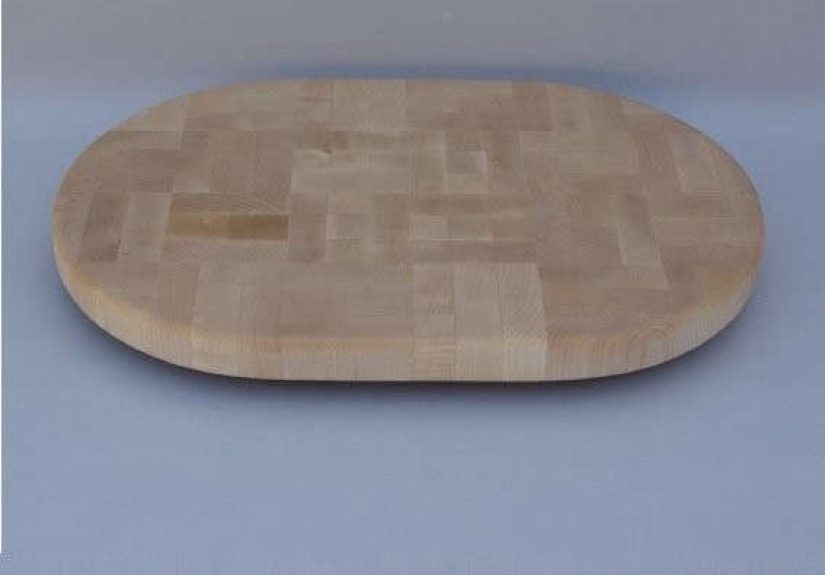
They just show up every day and take the hitsliterally. An oval maple end grain up cutting board
is one of those heroes, the kind of board that makes you feel like you cook more than you actually do.
(No judgment. We all have nights where “chef’s special” is cereal.)
If you’ve ever wondered why some cutting boards cost more than a decent pair of sneakers, the answer is usually
in three words: maple, end grain, and built right.
Add an oval shape and you get a board that’s not just practicalit’s the rare kitchen workhorse
that also looks good enough to leave out on the counter without feeling like clutter.
What “End Grain Up” Really Means (and Why It Matters)
“End grain up” describes how the wood fibers are oriented on the cutting surface. Instead of slicing across long
wood fibers (like you would with edge grain), you’re cutting into the ends of those fibers. A common way people
explain it is the “bundle of straws” idea: cutting into the ends of straws is gentler than cutting across them.
That’s the big reason end grain boards have a reputation for being knife-friendly.
The self-healing effect (yes, wood can be dramatic)
When a knife meets an end grain surface, the blade tends to slip between fibers instead of severing them as harshly.
Over time, those fibers can “close” back up, which helps the board look smoother longer. It doesn’t mean the board
is immortaljust that it stays nicer with regular care.
End grain vs. edge grain: the quick reality check
- End grain: gentler feel under the knife, often thicker and heavier, typically more expensive.
- Edge grain: usually lighter and more budget-friendly, still excellent for everyday prep, may show knife marks sooner.
Translation: if you cook often, end grain is a satisfying upgrade. If you cook occasionally, it’s still a joy
just maybe not the first place to spend your “adulting” budget.
Why Maple Is the MVP Wood for Cutting Boards
In the cutting board world, hard maple (often called “hard rock maple”) is a favorite for good reasons:
it’s durable, tight-grained, and traditionally used for butcher blocks. It’s also light in color, which matters more
than you’d thinkespecially if you like seeing what you’re doing when you’re mincing garlic at top speed.
Durable without being a knife bully
Hard maple sits in a sweet spot: tough enough to resist deep gouges, but not so hard that it punishes your knife edge.
That balance is part of why maple boards are common in both home and professional-style kitchens.
Tight grain, cleaner feel
Maple’s relatively closed grain helps it resist absorbing liquids compared to more open-grained woods.
No wood board is “liquid-proof,” but tight grain is one of the characteristics people look for in a
food-safe wooden cutting board.
Why an Oval Cutting Board Is Sneakily Brilliant
Most cutting boards are rectangles because rectangles stack, store, and ship easily. But an oval cutting board
isn’t just a design flexit changes how the board behaves in your kitchen.
1) Easier movement, fewer sharp corners
Oval boards are comfortable to grab and rotate, especially if you prep in stages. You can spin the board to keep a clean
section for herbs after cutting onions, or to turn the “messy corner” away when guests suddenly appear in the kitchen
like it’s a cooking show.
2) Better as a serving piece
An oval maple end grain board can pull double duty as a charcuterie board, bread-and-cheese board,
or “I definitely host dinner parties” platter. The shape reads more like serveware than a utility slab.
3) A smart fit for smaller kitchens
Oval boards often feel less bulky on the counter. They can tuck into tighter prep zones while still giving you a generous
surfaceespecially if the board is thick enough to stay stable when you chop.
What to Look For When Buying an Oval Maple End Grain Cutting Board
If you’re shopping for one (or upgrading from a board that looks like it survived a medieval battle), focus on practical
details that affect daily use.
Size and thickness
- Everyday prep: big enough for a full onion + a pile of herbs without ingredients escaping.
- Stability: thicker boards tend to move less, especially during firm chopping.
- Storage reality: measure your cabinet slot or vertical storage area before you fall in love.
Feet, grip, and “does it scoot?”
Some boards have rubber feet; others rely on weight. Either can work. If your countertop is slick, a damp towel under the
board is a classic trick. The goal is simple: the board should not audition for figure skating while you’re slicing tomatoes.
Juice groove: helpful or optional?
A juice groove can be great if you carve roasted meats or slice juicy fruit often. But grooves also reduce flat surface area.
If you mostly chop vegetables, a groove might be more decoration than necessity.
Finish and feel
Quality boards usually arrive pre-finished with a food-safe oil or oil-and-wax blend. The surface should feel smooth,
not plasticky, and not fuzzy. End grain boards often showcase beautiful patternssome look like little mosaicsso you get
performance and countertop art in one.
Cleaning and Food Safety: Keep It Simple, Keep It Consistent
Wooden boards can be very safe when cared for properly, but the rules are non-negotiable:
don’t soak and don’t dishwash. Heat + water + long exposure can warp or crack wood,
and cracks are where food residue can hide.
Daily cleaning routine (the “two-minute habit”)
- Scrape off bits (a bench scraper is your best friend here).
- Wash with warm water and mild dish soap using a sponge or soft brush.
- Rinse quickly.
- Dry immediately with a clean towel, then let it air-dry upright if possible.
Sanitizing after raw meat (when you need extra insurance)
For times you want to sanitizeespecially after raw poultry or other high-risk foodsmany food-safety resources recommend
a dilute bleach solution used briefly, followed by thorough rinsing and drying. If you use this method, don’t let the board
sit wet, and don’t make it a “daily spa treatment” that dries the wood out. Think “as needed,” not “as a lifestyle.”
Also: it’s okay to keep more than one board. Plenty of cooks use one board for raw proteins and another for produce or bread.
That’s not paranoia; it’s just efficient hygiene.
Conditioning: Mineral Oil, Board Cream, and the Myth of “Once and Done”
Wood needs moisture balance. Not water (please don’t), but food-safe conditioning that helps prevent drying,
cracking, and stain absorption. The usual go-to is food-grade mineral oil, often paired with a wax-based
board cream (commonly beeswax + mineral oil).
How often should you oil an end grain maple board?
A practical guideline: oil more often at first, then settle into a rhythmmany people land around monthly maintenance,
and more frequently if the board sees heavy use or looks dry.
Your board will tell you: if it looks lighter, feels rough, or absorbs water quickly, it’s time.
What oils to avoid (the “don’t make your board smell like regret” rule)
Avoid most cooking oils (like vegetable, olive, or other pantry oils) because they can oxidize and go rancid over time.
Even if rancidity isn’t usually dangerous, it can create stubborn odors and a sticky feelexactly what you don’t want on a
surface that touches food.
A simple conditioning method
- Make sure the board is clean and fully dry.
- Apply a thin layer of food-grade mineral oil with a soft cloth (top, bottom, and sides).
- Let it absorb for a few hours (or overnight if the board is especially thirsty).
- Wipe off excess oil.
- Optional: finish with a board cream for a smoother, slightly more water-resistant feel.
The payoff is immediate: the grain looks richer, the surface feels silkier, and the board is less likely to develop dry patches.
It’s like moisturizer for your kitchenexcept you don’t have to pretend you remembered sunscreen.
Everyday Use Tips That Keep an Oval End Grain Board Looking New
Use it for the right jobs
- Great for: chopping vegetables, mincing herbs, slicing cooked meats, dicing aromatics, everyday prep.
- Be thoughtful with: very hot pots, prolonged wet items, and anything that encourages soaking.
Rotate and “zone” your board
One underrated advantage of an oval board is how naturally it rotates. Use zones:
one area for onions/garlic, another for herbs, another for clean slicing. It reduces flavor transfer and keeps your prep
feeling organizedeven if your fridge is pure chaos.
Store it like it matters
Let the board dry on its edge so both sides get airflow. Storing a damp board flat is an invitation to warping.
If you keep it on the counter, give it breathing room.
Is an Oval Maple End Grain Up Cutting Board Worth It?
If you love cooking, an end grain maple board is one of those upgrades you feel every day. It’s stable, satisfying,
and kinder to knives than many harder or synthetic surfaces. The oval shape adds comfort and presentation value, so
it’s not just a toolit’s also a serving piece that doesn’t scream “I am kitchen equipment.”
The main trade-offs are weight and maintenance. End grain boards are usually heavier, and they do best with routine
conditioning. But if you’re willing to give the board a little care, you get a surface that can last for years and
makes everyday prep noticeably nicer.
Real-World Experiences With an Oval Maple End Grain Up Cutting Board (About )
People who switch to an oval maple end grain cutting board often describe the first week the same way:
surprise at the weight, followed by a weirdly satisfying sense of stability. The board doesn’t chatter under the knife.
It doesn’t flex. It just sits there like a calm friend while you panic-chop cilantro because the recipe said “finely”
and you took that personally.
Another common experience is the “oh wow” moment after the first oiling. Maple tends to deepen slightly in tone when
conditioned, and the end grain pattern can pop in a way that feels almost decorative. A lot of home cooks end up leaving
the board out on the counternot because they forgot to put it away, but because it looks like it belongs there.
The oval shape helps with that. It reads less like a workshop plank and more like intentional kitchen styling.
In day-to-day cooking, the oval shape changes the flow more than people expect. Folks often rotate the board mid-prep:
one side becomes the “onion zone,” another becomes the “herb zone,” and a clean section becomes the final slicing area.
That rotation is especially handy when you’re moving fast and don’t want to stop and rinse the board between every ingredient.
It also helps when you’re cooking with strong aromaticsgarlic, scallions, gingerbecause you can keep those flavors contained
and then clean the board thoroughly once the meal is underway.
Hosting is where the “cutting board that moonlights as serveware” reputation really kicks in. Many owners describe using the
board as a casual appetizer platter: cheese, crackers, fruit, and something briny in a small ramekin. The oval silhouette feels
more like a serving tray than a standard rectangle, and the maple surface looks clean and bright under kitchen lighting.
It’s the kind of piece that makes guests assume you planned everythingeven if you absolutely did not.
The learning curve usually shows up around maintenance. People often forget once (just once) and leave the board damp or put it
too close to a heat source, and then they notice slight roughness or dryness. That’s typically when they adopt a simple habit:
wipe dry immediately, let it air-dry upright, and oil when it looks thirsty. Once that routine clicks, the board becomes one of
those tools that quietly improves the whole cooking experience. Not because it’s fancy, but because it’s dependableand in a
kitchen, dependable is basically a love language.
Conclusion
An oval maple end grain up cutting board combines classic butcher-block performance with a shape that’s
comfortable to use and attractive enough to serve on. The end grain surface is known for being gentle on knives and
visually striking, while hard maple brings durability and a clean, bright look. Treat it wellhand wash, dry promptly,
condition regularlyand it can stay beautiful through years of daily chopping, slicing, and “I swear I’ll meal prep this week.”