Table of Contents >> Show >> Hide
- Why the Printrbot Tease Turned Heads
- What “Infinite Build Volume” Actually Means
- The Bigger 3D-Printing Context
- Why a Belt Printer Feels So Clever
- But Here Comes Physics, Wearing Steel-Toe Boots
- From Tease to Printrbelt
- Why Printrbot Was a Good Fit for This Idea
- What Later Belt Printers Proved
- Why the Idea Still Matters
- Final Take
- Experience: Living With the Idea of an Infinite Build Volume Printer
Desktop 3D printing loves a good promise. Faster prints. Cleaner prints. Smarter prints. And every so often, a promise so audacious it sounds like it wandered in from science fiction wearing safety glasses. That was the mood when Printrbot teased an “infinite build volume” printer. Suddenly, the humble print bed that stubborn rectangle that usually tells your grand ideas to calm down and fit inside the lines looked like it might be headed for retirement.
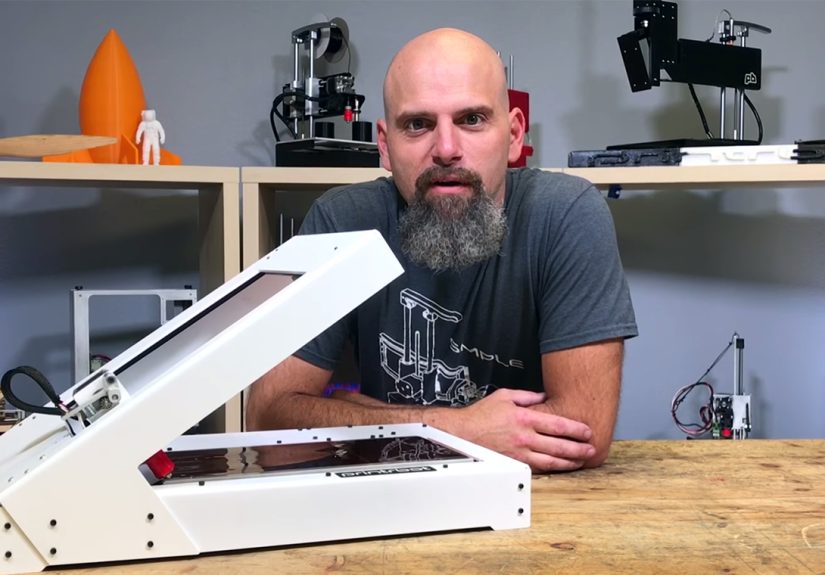
For makers, educators, and small-batch manufacturers, the appeal was obvious. Traditional FDM printers are wonderful until they aren’t. Need a part longer than the bed? You split it, print multiple sections, glue them together, sand the seam, and mutter things your nozzle probably shouldn’t hear. But a conveyor-style printer with an angled printhead changes the geometry of the problem. Instead of building straight up from a static platform, it prints onto a moving belt, allowing parts to continue forward as long as material, time, and physics cooperate. “Infinite” is marketing language, sure nobody’s printing a bridge to the moon on a desktop machine but the concept is genuinely important.
Why the Printrbot Tease Turned Heads
Printrbot was not some random company tossing shiny buzzwords into the ether and hoping the internet would do the rest. By the time this teaser surfaced, Printrbot already had serious maker credibility. Founder Brook Drumm built the brand around affordability, accessibility, and the idea that regular humans should be able to own a 3D printer without selling a kidney or earning a mechanical engineering degree first. That early mission helped Printrbot stand out during the first big consumer 3D-printing boom.
So when Printrbot hinted that it was working on an infinite-build machine, the news hit differently. This was a company associated with practical, hands-on tools, not just vaporware and chest-thumping. People could imagine Printrbot actually shipping something weird and exciting. And in desktop fabrication, that matters. A lot. The industry has never had a shortage of “revolutionary” concepts. It has had a shortage of concepts that survive first contact with calibration.
What “Infinite Build Volume” Actually Means
The phrase sounds like a late-night infomercial invented by a geometry wizard. In practice, it refers to a printer that replaces a fixed print bed with a conveyor belt and positions the printhead at an angle. Instead of a print growing only upward on a static platform, the belt moves the object away from the nozzle as the build continues. The result is a machine that can print extremely long parts in one direction and can also eject finished pieces automatically, making room for the next job.
One Long Part or Many Smaller Parts
That dual-purpose capability is what makes the idea so compelling. First, you can print long objects that would never fit on a normal bed. Think trim pieces, rails, organizers, brackets, sword props for convention season, or any part where “just cut it in half” is technically possible but spiritually offensive. Second, you can queue up multiple parts and let the printer produce them successively. When one item is done, it moves along the belt and drops away, letting the next begin. In theory, it turns a desktop printer into a tiny, nerdy assembly line.
That was the heart of the excitement around the teased Printrbot machine and the later Printrbelt direction. The design suggested not just a bigger printer, but a different kind of workflow. Less babysitting. Less manually clearing the bed. More continuous production. In a maker space, classroom, or small workshop, that is not a gimmick. That is time back in your day.
The Bigger 3D-Printing Context
Printrbot’s tease did not appear out of nowhere. Conveyor-based and continuous-build ideas had already been floating around the maker world for years. MakerBot had shown an Automated Build Platform back in the early days, using a belt to remove finished parts and enable batch-style printing. Industrial players had also started thinking bigger. Stratasys, for example, demonstrated an Infinite-Build concept that effectively turned FDM sideways to create much larger parts for manufacturing environments.
In other words, Printrbot was stepping into a conversation that had been building momentum. The company’s tease felt timely because the market was ready to believe desktop 3D printing could evolve from “cool one-off object machine” into “small-scale production tool.” That shift is a huge deal. It moves the conversation from hobby novelty toward light manufacturing, education labs, and on-demand fabrication.
Why a Belt Printer Feels So Clever
There is something wonderfully sneaky about the design. Instead of brute-forcing a larger build area with a physically larger printer, a belt machine changes the frame of reference. It sidesteps the bed-size limitation by treating motion as part of the print surface itself. That is catnip for makers: elegant, practical, slightly weird, and full of “wait, that’s actually brilliant” energy.
It also opens up new possibilities for part orientation. Because the object is printed at an angle, some geometries can reduce or avoid support structures that would be necessary on a conventional printer. Fewer supports can mean less material waste and less cleanup afterward. Nobody has ever finished removing supports and said, “What a relaxing afternoon.”
But Here Comes Physics, Wearing Steel-Toe Boots
For all the hype, belt printers are not cheat codes. They are more like advanced-level side quests. The idea is elegant, but the execution is fussy. Adhesion has to be just right: the print must stick well enough to survive while it is being built, yet eventually release cleanly when it reaches the end of the belt. Too sticky and parts refuse to eject. Too slippery and the print turns into a plastic tumbleweed halfway through the job.
Then there is slicing. Standard 3D-printing assumptions do not always apply when the build plane is angled and moving. Designers need to think differently about layer orientation, overhangs, and how geometry interacts with the belt. A part that seems simple on a conventional printer can become a weird little philosophy exam on a belt machine. Later consumer belt printers proved this point pretty clearly: the concept works, but it rewards patience, tuning, and a willingness to learn new rules.
Calibration can also be less forgiving. Belt tension, nozzle alignment, surface wear, and belt tracking all affect print quality. A traditional printer already has enough ways to ruin your weekend. Add a moving conveyor surface, and congratulations, you now have a whole new category of “character building.”
From Tease to Printrbelt
The interesting thing about the teaser is that it was more than just internet flirting. Printrbot moved toward a real product direction with the Printrbelt, developed in partnership with Polar3D. Reports at the time described a compact machine with a conveyor belt build platform and a 6-inch by 6-inch working area paired with what the company called “Infinite Z.” That framing captured the real value proposition: continuous length and continuous jobs, not some magical violation of Euclidean space.
Polar3D’s involvement mattered too. Software is half the story in unusual printer architectures, and continuous printing only becomes useful when job management, queuing, and repeatability are handled well. The promise was that one machine could replace a small cluster of printers for certain workflows by printing successive parts from a queue. For educators and labs, that is a strong pitch. For small businesses, it is even stronger.
Why Printrbot Was a Good Fit for This Idea
Printrbot had always been a little more punk-rock practical than glossy-corporate futuristic. Its machines appealed to people who wanted usable tools, not showroom sculptures. That made the company’s flirtation with infinite-build design especially appealing. If a luxury industrial giant shows off a continuous manufacturing concept, it feels impressive. If a scrappy maker-friendly brand does it, it feels personal. You start imagining one in a classroom, on a workbench, or tucked into the corner of a garage that smells faintly of filament and ambition.
There was also an emotional layer. Printrbot’s early success came from making 3D printing feel more reachable. An infinite-build printer extended that same spirit: not just “you can have a printer,” but “you can do more with it than people thought possible.” That is a powerful message in maker culture, where the best tools do not just complete jobs; they widen your imagination.
What Later Belt Printers Proved
Years after Printrbot’s teaser, later consumer belt printers helped prove both sides of the argument. Yes, the concept is real. Yes, it can print long parts and automate small-batch production. But it also brings tradeoffs in usability, maintenance, and print strategy. Machines like the Creality CR-30 showed that belt printing was not fantasy. They also showed that it was not instantly mainstream, either.
That matters because it helps us read the Printrbot tease more clearly. The company was not just chasing attention with a flashy phrase. It was tapping into a legitimate direction for desktop fabrication one that would continue to attract inventors, startups, and tinkerers. At the same time, the later market made it clear that “infinite build volume” is most useful when paired with realistic expectations. You are not escaping complexity; you are trading one set of limitations for another.
Why the Idea Still Matters
Even now, the appeal of an infinite-build desktop printer remains obvious. It speaks to three enduring dreams in 3D printing: longer parts, less babysitting, and more automation. That trio is basically the peanut butter, chocolate, and bad financial decisions of fabrication tech. When those elements come together well, the machine becomes more than a prototyping tool. It becomes a production helper.
For schools, it means students can think beyond the dimensions of a small bed. For makers, it means fewer seams and fewer compromised designs. For small businesses, it hints at low-volume manufacturing without a full print farm. And for the broader industry, it reinforces a truth that keeps coming back: the future of 3D printing is not just better materials or faster motion systems. Sometimes it is a clever change in geometry that makes the whole category feel new again.
Final Take
Printrbot’s infinite build volume tease was exciting because it combined credible maker DNA with an idea that genuinely challenged the standard desktop-printer formula. It promised a world where the bed was no longer a hard stop, where jobs could run in sequence, and where 3D printing edged a little closer to continuous manufacturing. That promise was partly hype, partly engineering, and completely irresistible.
Did it solve every problem in desktop fabrication? Of course not. Nothing in 3D printing does, except maybe a fresh spool of PLA and a suspiciously lucky first layer. But as a concept, it mattered. It pointed toward a more automated, more flexible, and more production-friendly future. And even if the word “infinite” needed a giant asterisk, the ambition behind it was very real.
Experience: Living With the Idea of an Infinite Build Volume Printer
What makes the Printrbot infinite-build idea memorable is not just the engineering it is the feeling it creates the moment you imagine using it. A normal desktop 3D printer trains you to think in boxes. Every design begins with a quiet little negotiation: Will this fit? Can I rotate it? Do I cut it into two or three parts and pretend I wanted seams all along? A belt printer changes that mental habit. Suddenly, you stop thinking like someone packing a suitcase and start thinking like someone laying track.
That shift feels strangely liberating. Long before you even print anything, your design instincts loosen up. You begin sketching pieces that are long, repeating, modular, or meant to come off the machine in sequence. It is the difference between cooking one pancake at a time and realizing you own a diner griddle. The room may be the same, but your attitude changes completely.
There is also a very specific kind of satisfaction in watching a part move away from the nozzle instead of just growing upward in place. Traditional 3D printing can feel like staring at a tiny plastic building under construction. Belt printing feels more dynamic. The object is being made, but it is also traveling, progressing, and preparing to leave the stage. That makes the process seem less like static fabrication and more like a tiny factory line performing in miniature. If regular printers are aquariums, belt printers are train sets.
Of course, the romance lasts right up until reality starts asking for your attention. Belt systems invite experimentation, but they also demand respect. You notice surface texture more. You care about belt tension more. You think about orientation in a deeper way because orientation is no longer just about support; it is about how the part will behave as it rides away from the print zone. The machine nudges you into becoming a better observer. Every successful print feels earned, and every failed print feels educational in the most annoying possible way.
Still, that learning curve is part of the appeal. The experience around an infinite-build printer is more interactive, more strategic, and a little more mischievous than with a standard setup. It rewards the kind of person who enjoys tweaking a process until it sings. And when it does work when a long piece emerges cleanly, or when one finished part slides away and the next begins without intervention it feels like seeing the future sneak into your workshop wearing sneakers.
That is why the Printrbot tease stuck with so many people. It was not merely about a spec sheet. It was about a new relationship with the machine. The printer was no longer just a box that made one thing and waited for applause. It hinted at becoming a collaborator in a continuous process. More autonomous. More productive. A little weirder. A lot more fun.