Table of Contents >> Show >> Hide
- Why Blueberry Bushes Need Covers in the First Place
- Why Use PVC for Blueberry Bush Covers?
- Planning Your PVC Blueberry Bush Covers
- Materials for a Simple PVC Blueberry Bush Cage
- Step-By-Step: Building a Cube-Style PVC Blueberry Bush Cover
- Building a PVC Hoop Tunnel Over Blueberry Rows
- Best Practices for PVC Blueberry Bush Covers
- Real-Life Experiences with PVC Blueberry Bush Covers
If you’ve ever walked out to your blueberry bushes with a bowl in your hand
and hope in your heart, only to find that the birds hosted a brunch buffet
without you, this guide is for you. PVC blueberry bush covers are one of the
easiest, most budget-friendly ways to protect your berries from birds, deer,
squirrels, and whatever other adorable thieves lurk in your yard. Think of
them as tiny berry fortresses lightweight, sturdy, and totally DIY-able.
Inspired by the kind of clever, practical projects you see on Hometalk,
we’ll walk through how PVC blueberry bush covers work, why they’re more
effective than just tossing netting over the shrubs, and how to build your
own simple cage or hoop system. No contractor license required if you can
measure, cut, and zip-tie, you’re overqualified.
Why Blueberry Bushes Need Covers in the First Place
Blueberries are basically nature’s candy, and every creature in your
neighborhood knows it. Birds, especially robins, catbirds, and starlings,
can strip a bush of ripe berries in a day. Deer will casually prune the
foliage and fruits. Even rabbits and chipmunks are happy to help themselves.
Gardening experts and university extension services agree that
physical exclusion with netting is the most reliable way to
protect berries. Scare tactics like shiny tape, inflatable snakes, or noisy
gadgets might work briefly, but birds quickly realize they’re harmless.
Netting is the gold standard the trick is using it well.
Just draping bird netting directly over blueberry bushes tends to create
headaches:
- Birds can still peck berries that touch the netting.
- Clusters get tangled and rip off when you remove the net.
- Wildlife can become caught in larger mesh netting if it snags on twigs.
- Harvesting turns into a wrestling match between you and the net.
A PVC frame or hoop cover solves those problems by lifting
the netting above the plant canopy. You get a neat, reusable structure that
keeps netting off the berries and lets you access your bushes without losing
your sanity.
Why Use PVC for Blueberry Bush Covers?
PVC pipe isn’t just for plumbers anymore. Home gardeners love it because it
hits the magical combo of:
- Lightweight – Easy to move, lift, and store.
- Inexpensive – Standard 1/2″ or 3/4″ pipe is budget-friendly.
- Weather-resistant – It handles sun, rain, and humidity for years.
- Modular – Fittings let you build cubes, arches, tunnels, and more.
- Net-friendly – Netting slides over PVC much more smoothly than wood.
Plus, PVC blueberry bush covers are totally customizable. Whether you have a
single potted shrub on the patio or a long row in the garden, you can scale
the frame to fit. You can build:
- Cube-style cages around individual bushes.
-
Hoop-style tunnels over rows of bushes, using arches of
PVC. -
Hybrid systems with arches, ridge poles, and side rails
for larger plantings.
The idea is simple: PVC provides the skeleton, netting provides the armor,
and you provide the smug smile when you finally outsmart the birds.
Planning Your PVC Blueberry Bush Covers
Before you start cutting pipe, take a few minutes to plan. Future-you will
be very grateful.
1. Measure Your Bushes and Growing Space
Blueberries grow a lot. Even compact varieties can reach 3–4 feet tall and
wide once established. When planning your PVC blueberry bush covers, leave:
- At least 12 inches of clearance above the tallest branches.
- Several inches of space around the sides for airflow and future growth.
-
Enough room for you to reach in and harvest without
crushing branches.
For a typical home bush that’s about 4 feet tall and wide, many gardeners
build a cube that’s roughly 5 ft x 5 ft x 5 ft. For rows, hoops spaced 3–4
feet apart over a bed work well.
2. Choose a Frame Style: Cube vs. Hoop
Cube-style cover (great for individual bushes):
- Looks like a 3D square or rectangle sitting over the bush.
- Built from straight PVC lengths and elbow/T connectors.
-
Easy to lift off as a single unit or anchor with landscape pins around the
base. - Perfect if you grow a few large bushes and want tidy, boxy structures.
Hoop-style tunnel (perfect for rows of bushes):
- Uses bent PVC to form arches over a row.
-
Often anchored into the soil or into “sockets” made from slightly larger
PVC or rebar. -
Connected with a long ridge pole and side rails for stability, then
covered with netting. -
Ideal for gardeners with multiple bushes in a bed or a small backyard
“berry patch.”
Both styles work beautifully. Cubes are more “Hometalk-cute” and
Instagram-ready, while hoops shine when you have a longer row and want fewer
individual structures to move.
3. Pick the Right Netting
The netting you use is just as important as the PVC frame. Look for
bird-safe wildlife netting with these features:
-
Small mesh size – Ideally 1/2″ or smaller to prevent
birds from poking their heads or wings through. -
Durable material – UV-stabilized plastic netting lasts
longer in sun and weather. -
Visible texture – Slightly heavier, more visible netting
helps birds avoid flying into it.
Avoid cheap, very thin “invisible” netting with large openings it tangles
more easily, is hard to work with, and is riskier for wildlife.
Materials for a Simple PVC Blueberry Bush Cage
Here’s a sample supply list for a cube-style cover sized roughly 5 ft tall
and 3 ft wide/deep. Adjust lengths to fit your own bushes.
- 1/2″ PVC pipe (10-ft lengths)
- 1/2″ PVC elbow connectors (for corners)
- 1/2″ PVC T connectors (for optional added bracing)
-
Wildlife or bird netting large enough to drape over the entire cage with
overlap - Zip ties or cable ties
- Landscape pins, tent stakes, or bricks to anchor the base
- PVC cutter or hacksaw
- Measuring tape and marker
If you’re building a hoop tunnel instead, you’ll swap the elbows for base
anchors (rebar stakes or slightly larger PVC “sleeves”), and you’ll use
longer lengths to form arches plus a ridge pole down the center.
Step-By-Step: Building a Cube-Style PVC Blueberry Bush Cover
Step 1: Cut Your PVC Pieces
Let’s say you want a cover that’s 4 feet tall and 3 feet wide and deep.
You’d cut:
- Four pieces at 48 inches (verticals).
- Eight pieces at 36 inches (top and bottom squares).
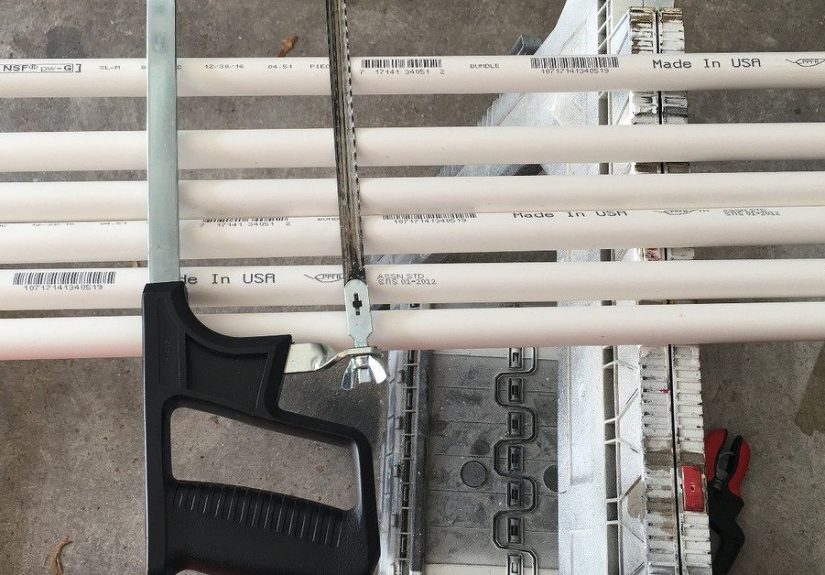
Mark your measurements with a permanent marker and cut with a PVC cutter or
hacksaw. Clean up any rough edges so connectors slide on smoothly.
Step 2: Build the Top and Bottom Squares
Lay four 36-inch pieces on the ground in a square. Use elbow connectors at
each corner to join them. Repeat with the other four pieces. You now have:
- One square for the base.
- One square for the top of the cover.
If your square feels a little wiggly, you can add T connectors in the middle
of two opposite sides and run a brace across for extra rigidity, but for
smaller covers, it’s often not necessary.
Step 3: Attach the Vertical Supports
Insert the four 48-inch vertical pieces into each corner of the bottom
square. Then slide the top square onto the other end of those verticals.
You’ll now have a 3D cube frame that you can lift and place over the bush.
At this point, you can do a test fit over your blueberry plant. Make sure:
- The branches don’t rub against the top.
- You can reach in from at least one side to harvest.
- There’s enough clearance for future growth.
Step 4: Add the Netting
Drape wildlife netting over the top of the frame so it hangs down all sides.
Leave enough extra to overlap edges and close any gaps. Use zip ties to
secure the netting along the top and corners of the PVC frame, trimming
excess as needed.
A few key tips:
-
Overlap netting on one corner or one side and leave it somewhat loose so
you can lift it as a “door” for harvesting. -
Keep the netting relatively taut so it doesn’t sag into the bush during
wind or rain. -
Double-check for sneaky openings along the bottom where birds or critters
might sneak in.
Step 5: Anchor the Cover in Place
Set the finished cage over your blueberry bush and anchor it with landscape
pins, tent stakes, or heavy bricks around the base. In windy areas, extra
anchors on the windward side will keep your berry fortress from flying off
like a minimalist greenhouse kite.
When you’re ready to harvest, lift the cage slightly, remove a pin, or open
your netting “door,” pick your berries, and secure it again. Simple,
repeatable, and much calmer than shooing birds every 10 minutes.
Building a PVC Hoop Tunnel Over Blueberry Rows
If your blueberries are planted in a row, a hoop system can be more
efficient than individual cages.
Basic Hoop Tunnel Concept
-
Drive short pieces of rebar or larger-diameter PVC “sockets” into the soil
along both sides of the row. -
Bend 1/2″ PVC pipe to create arches and slide each end over the rebar or
into the sockets. -
Connect the arches with a long PVC ridge pole along the top, and optional
side rails for extra stability. -
Drape bird netting over the whole structure and secure it to the ground
with stakes, boards, or buried edges.
The result is a walk-through tunnel that you can open on one side to weed,
prune, and harvest. It’s especially helpful if you grow other berries (like
raspberries or currants) in the same bed and want to cover them all at once.
Best Practices for PVC Blueberry Bush Covers
Install Netting Before Peak Ripening
Birds have excellent food radar. Install your covers just as berries begin
to blush and turn blue. If you wait until birds have already discovered your
buffet, they’ll work extra hard to find a way in.
Check for Wildlife Safety
Walk the perimeter and look for:
- Loose netting that might snag wings or feet.
- Gaps at the bottom where animals can get in but then struggle to exit.
- Sharp PVC edges that might abrade netting over time.
Trim frayed netting, tighten sagging sections, and keep mesh small enough
that birds can’t push their heads through.
Allow for Ventilation and Pollination Timing
Blueberries are pollinated mostly by bees, so you don’t want to fully
enclose the bushes before flowering. The most common strategy is:
- Let plants bloom freely without covers.
-
Install PVC blueberry bush covers and netting after fruit has set and
berries begin to color.
During the season, the frame itself provides plenty of airflow so foliage
stays healthy.
Store Covers Properly in the Off-Season
When berry season is over:
-
Remove netting, shake off leaves and debris, and roll or fold it for
storage. -
Stack cube frames beside a shed or hang them on hooks in a garage or
carport. -
For hoop tunnels, you can either leave sockets in the ground and store the
arches separately, or disassemble everything if you need the space.
Stored well, both PVC pipe and quality netting can last for years, turning
this into a very cost-effective project.
Real-Life Experiences with PVC Blueberry Bush Covers
You can find countless examples of PVC blueberry bush covers shared by home
gardeners the kind of projects that get posted, pinned, and passed around
on DIY communities like Hometalk. While everyone tweaks the design to suit
their yard, a few common themes show up again and again.
“We Finally Get to Eat Our Own Berries”
One of the most common pieces of feedback is simply that harvests jump
dramatically once covers go up. Gardeners who used to lose 70–90% of their
berries to birds suddenly find themselves freezing extra quart bags or
baking pies for neighbors. It’s not unusual for people to say they didn’t
realize how productive their bushes truly were until the fruit was fully
protected.
A typical story: after years of draping netting directly on the shrubs and
still losing most of the crop, a gardener finally builds a simple PVC cage.
The next season, birds hover nearby but can’t land on the branches, and
deer move on to easier snacks. The bushes recover, put more energy into
growth and fruiting, and the gardener finally has enough berries for fresh
eating, jam, and baking.
Kids Love the “Blueberry Fort”
Another delightful side effect of PVC blueberry bush covers is how much kids
enjoy them. Many families report that their children treat the covered area
like a mini “berry house,” crawling inside to help harvest. Because the
structures are light and netted, they feel cozy but not claustrophobic
like a garden playhouse with snacks built in.
This can be a great way to get kids involved in gardening. Let them help
snap PVC pieces together, pull netting over the frame, or count how many
berries they harvest inside the “blueberry fort.” It turns protecting your
crop into a shared project instead of another chore on the to-do list.
Trial and Error Is Normal
Most gardeners don’t build the perfect PVC blueberry bush cover on the first
try and that’s okay. Common early lessons include:
-
“I built it too short.” Bushes grow faster than expected,
and the top of the frame needs to be raised the following year. -
“I forgot about door access.” Harvesting through a tiny
flap in the net gets old fast, so people usually redesign with a larger
opening or a hinged panel. -
“I underestimated the wind.” After a windy storm, a few
gardeners upgrade to more anchors, side braces, or heavier netting.
The good news: PVC structures are easy to modify. You can cut longer pieces,
swap in different connectors, or add cross-bracing as needed. It’s like
adult-level building blocks, with blueberry rewards at the end.
Comparing PVC Covers to Other Bird-Control Methods
Gardeners who’ve experimented with multiple tactics often say that PVC
blueberry bush covers hit the sweet spot between effort and results. Here’s
how they tend to stack up against other options:
-
Reflective tape and shiny objects: Easy to set up but
less reliable over time as birds adapt. -
Noise makers: Can be effective but may annoy humans and
neighbors more than birds in the long run. -
Row cover fabric: Great for frost or insect protection
but not ideal for mid-summer blueberries, which need light and airflow. -
Full wooden structures: Extremely sturdy, but more
expensive and time-intensive than PVC frames for most home gardens.
PVC covers end up being the “just right” choice sturdy enough to last
several seasons, flexible enough to redesign, and affordable enough that you
don’t wince when you add a second or third structure as your berry patch
expands.
The “Why Didn’t I Do This Sooner?” Moment
Almost every gardener who invests a weekend in building PVC blueberry bush
covers has the same realization: this simple project dramatically improves
both harvest quantity and gardening sanity. Instead of racing the birds each
morning or re-spreading draped netting after every storm, you set up your
covers once and then simply enjoy the season.
Whether you’re sharing your project photos on Hometalk, pinning ideas for
next year, or just quietly admiring your berry fortress from the kitchen
window, PVC blueberry bush covers are a smart, DIY-friendly upgrade. Your
blueberries stay safe, your garden looks intentional, and you finally get to
eat the harvest you worked for not just the leftovers the birds forgot.