Table of Contents >> Show >> Hide
- The Story Behind the Headline
- Why Death to Smoochy Matters in This Story
- A Movie That Flopped, Then Refused to Die
- What the Pool Story Says About Robin Williams
- Danny DeVito’s Role in the Chaos
- Why Audiences Still Love This Kind of Story
- The Lasting Legacy of a Near-Disaster Laugh
- More Experiences and Perspectives Related to the Story
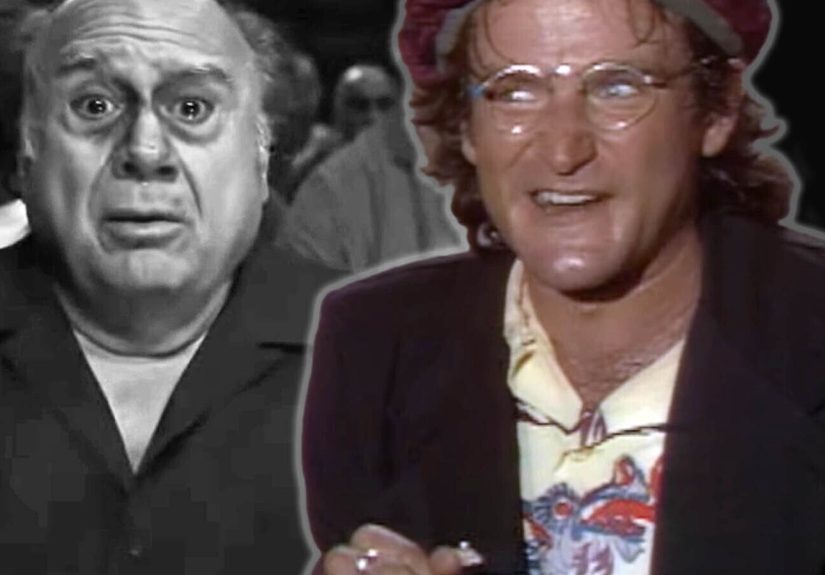
That headline sounds like the setup to a very weird tabloid story. Maybe a jealous feud. Maybe a stunt gone wrong. Maybe a tiny angry penguin from Gotham finally snapped. But the truth is much better, much funnier, and much more Robin Williams: Danny DeVito once said Robin nearly “killed” him by making him laugh so hard in a swimming pool that he accidentally swallowed water and started choking.
That one story captures a lot in a very small splash zone. It tells you something about Williams’ improvisational force, something about DeVito’s affection for him, and something about the strange, dark little movie that brought them together: Death to Smoochy. Released in 2002, the film was a savage satire about children’s television, fake wholesomeness, show business ego, and the kind of smiling corruption that looks extra creepy under bright studio lights. It bombed at the box office, got mauled by plenty of critics, and still somehow managed to become the kind of movie people defend online like they are protecting an abandoned carnival ride with artistic value.
So yes, Robin Williams once almost killed Danny DeVito. But not with fists, explosions, or a method-acting meltdown. He did it the old-fashioned way: by being absurdly, uncontrollably funny. And in Hollywood, that may be the most believable near-death story of them all.
The Story Behind the Headline
Danny DeVito’s version of the story is simple, which somehow makes it even funnier. He explained that he is not a great swimmer, and at one point he was in the deep end of a pool while Robin Williams was doing what Robin Williams did best: talking, riffing, bouncing from thought to thought, turning conversation into performance without warning. DeVito laughed so hard that he inhaled water, choked, and needed help getting out. He later admitted that he did not even remember the exact joke. That is the cruel beauty of elite comedy. You may not remember the line, but your lungs apparently do.
DeVito’s memory of the moment was not bitter or dramatic. It was affectionate. He described Williams as the kind of comic who could “hold court,” the kind of performer who could riff about almost anything and leave everyone around him helpless. That detail matters. This was not a story about a difficult star hijacking the room. It was a story about a human fireworks display doing what came naturally while everyone nearby paid the price in oxygen.
And because the story came from DeVito, it carried a certain warm, gravelly credibility. DeVito has never felt like someone who needs to exaggerate a room to make it sound interesting. He has been in too many interesting rooms already. When he says Robin Williams was that funny in real life, it lands.
Why Death to Smoochy Matters in This Story
The pool anecdote is the hook, but the movie around it is the real frame. Death to Smoochy was directed by Danny DeVito and starred Robin Williams as Rainbow Randolph, a corrupt children’s TV host whose cheerful image falls apart after a bribery scandal. Edward Norton played Sheldon Mopes, the relentlessly sincere performer who becomes Smoochy the Rhino, the network’s new fuzzy purple star. What follows is not a gentle family comedy unless your family enjoys moral rot, organized crime side quests, and enough bitterness to curdle a birthday cake from three zip codes away.
In other words, this was not “Robin Williams in a warm sweater teaches life lessons to a gifted child.” This was Robin Williams weaponizing charm, venom, panic, and manic energy inside a satire that wanted to expose how grotesque manufactured innocence can look when money and ego get involved. If Mrs. Doubtfire was Robin with whipped cream, Death to Smoochy was Robin with a flamethrower and a grudge.
That made DeVito the right director for the material. As a filmmaker, he has often been drawn to stories where niceness is a costume and nastiness is the thing lurking under the stage makeup. His movies tend to like the dark corners. They enjoy the crooked grin, the bad decision, the little bit of acid in the lemonade. Death to Smoochy fits that instinct perfectly. It is a movie about smiling for the kids while plotting revenge in the parking lot.
Robin Williams in Villain Mode
One of the reasons the film still fascinates people is that it arrived during a stretch when Williams was leaning into darker material. Around the same era, he also appeared in movies such as One Hour Photo and Insomnia, both of which showed how effective he could be when he redirected his intensity away from warmth and toward menace. In Death to Smoochy, he did not play a restrained villain. He played a theatrical one, a busted mascot of American innocence who reacts to professional humiliation like a human blender with a microphone.
Some critics hated that performance. Others admired the nerve of it. But even the people who disliked the movie usually understood that Williams was not coasting. He was going full tilt, all elbows and caffeine and cracked showbiz energy. DeVito clearly loved that about him. He spoke about Williams as a performer who kept pushing farther, trying more, escalating a bit, then escalating again just to see whether the ceiling had a sense of humor.
That kind of performer can make a set electric. It can also make a swimming pool dangerous.
A Movie That Flopped, Then Refused to Die
At the time of its release, Death to Smoochy did not exactly receive a victory parade. The box office numbers were rough, especially considering the talent involved. A film directed by Danny DeVito and starring Robin Williams and Edward Norton sounded, on paper, like something that should at least survive opening weekend with dignity. Instead, it stumbled hard. Critics were split between those who found it admirably vicious and those who looked at it like it had coughed on the buffet.
That commercial failure matters because it helps explain why the Robin-DeVito anecdote has survived so well. People love stories that make creative disasters feel secretly worthwhile. If a movie flops but gives the world one fantastic behind-the-scenes memory, that memory starts to act like emotional box office. It becomes a tiny refund for everyone involved.
Over time, Death to Smoochy found a second life as a cult oddball. Some viewers came back to it because the satire of children’s entertainment and corporate image control suddenly felt sharper than it did in 2002. Others were drawn by the cast, or by the thrill of seeing Williams unhinged in a role that let him be abrasive, funny, bitter, and weird all at once. A movie that once looked like a misfire slowly began to resemble a fascinating mess, which in some film circles is just another way of saying “worth revisiting on a Saturday night with takeout and strong opinions.”
What the Pool Story Says About Robin Williams
People often describe Robin Williams using words like “fast,” “generous,” “brilliant,” and “restless.” The DeVito story gives those abstract compliments a body. It shows what “fast” looked like when it was happening in real time. Williams was not merely delivering prepared jokes. He was creating an atmosphere. He could turn casual conversation into an event. He could overwhelm a room. He could knock down the line between hanging out and performing until nobody knew where one ended and the other began.
That is part of why so many colleagues describe him with a mixture of affection and awe. Working with Williams did not just mean sharing scenes. It often meant entering his weather system. On screen, that could be glorious. Off screen, it could mean you missed lunch because he was improvising, or your mascara was ruined from laughing, or, in DeVito’s case, your body briefly reconsidered its relationship with breathing.
There is also something touching in the fact that DeVito remembered the moment fondly. The story was not told as a boast about surviving Robin Williams. It was told as a memory of joy so intense it turned slightly hazardous. That feels strangely fitting for Williams. He was one of those rare performers whose talent could feel bigger than the container holding it. Sometimes the container was a movie. Sometimes it was a talk show couch. Sometimes it was a pool party. In every case, somebody nearby was probably laughing too hard.
Danny DeVito’s Role in the Chaos
Of course, the story only works because Danny DeVito is Danny DeVito. He is one of the few people in Hollywood who can tell a near-drowning anecdote and make it sound like the world’s most charming production note. His directing style has often embraced comic unpredictability, and his acting persona has always had room for filth, tenderness, panic, and mischief in the same package. He was not just a victim of Robin’s hilarity. He was a natural audience for it.
That creative compatibility matters. Death to Smoochy is the work of artists who were not afraid of ugliness in comedy. DeVito did not want the movie neat and polite. Williams did not want his performance safely gift-wrapped. They met in a zone where satire could be nasty, performances could be jagged, and a joke could keep growing until someone had to grab the side of the pool.
It is easy to imagine a different version of the project with a more cautious tone, a softer lead, and less nerve. That version may have made more money. It probably would not have inspired this story. And frankly, it might have been much less interesting.
Why Audiences Still Love This Kind of Story
There is a reason stories like this travel so well. They humanize famous people without reducing them to bland relatability. Nobody wants every celebrity anecdote to end with “and then they were surprisingly normal.” Sometimes the better revelation is that they were exactly as extraordinary as you hoped. Robin Williams was not secretly boring off camera. Danny DeVito was not secretly humorless. The anecdote confirms the myth instead of deflating it.
It also reminds us that comedy has a physical side. We talk about jokes as ideas, but laughter is something the body does. It doubles you over. It steals your breath. It makes your face hurt and your stomach ache and your dignity wander off for a minute. DeVito’s story pushes that truth to a ridiculous edge. The joke was not just funny. It became a full-body emergency.
And maybe that is why the headline works so well. “Robin Williams Once Almost Killed Danny DeVito” sounds absurd, but emotionally it makes perfect sense. If you had to choose one actor most likely to nearly drown a friend with pure improvisational force, Williams would be on the shortlist immediately.
The Lasting Legacy of a Near-Disaster Laugh
In the end, the story is bigger than a pool and smaller than a biography. It is not the defining tale of Robin Williams’ career, and it is not the only thing worth remembering about Death to Smoochy. But it is the kind of memory that sticks because it does several jobs at once. It makes you laugh. It tells you what Williams was like in a room. It tells you what DeVito admired about him. And it gives new life to a movie that never really stopped being weird enough to matter.
For some actors, the best behind-the-scenes story is about discipline, preparation, or dedication to craft. For Robin Williams, one of the best stories is that he talked in a pool, made Danny DeVito laugh so hard he nearly choked, and somehow turned that into a piece of Hollywood folklore. Honestly, if you are going to become a legend, that is not a bad way to do it.
It is funny. It is affectionate. It is slightly alarming. It is deeply on brand. And like the best Robin Williams moments, it leaves you with the feeling that chaos and joy were often only one punchline apart.
More Experiences and Perspectives Related to the Story
What makes this anecdote especially memorable is that it feels familiar even to people who have never been on a movie set. Most of us have known someone whose humor arrives with hurricane energy. They are the person at dinner who turns a simple story about parking into a ten-minute performance. They are the friend who can derail a serious moment with one perfectly timed impression. They are funny in a way that does not simply entertain; it overwhelms. Robin Williams had that quality at a level so extreme that coworkers still talk about it years later, and DeVito’s story gives that larger-than-life force a very human shape.
There is also a professional lesson buried in the laughter. Great comic performers often create their own atmosphere, and everyone around them has to adjust. Directors have to know when to guide them and when to get out of the way. Co-stars have to stay flexible. Crews have to be ready for the take that changes because genius just barged through the door wearing muddy boots. DeVito, being both a performer and a director, was in a rare position to appreciate that balance. He knew that Williams’ chaos was not random noise. It was part of the creative engine.
That helps explain why stories from sets like Death to Smoochy endure. Fans are not only curious about gossip; they want to know what brilliance looked like in motion. They want to know whether a gifted performer was as electric behind the scenes as he was on camera. In Williams’ case, the answer seems to be yes, absolutely yes, and also maybe keep a lifeguard nearby.
There is a bittersweet side to that, too. Robin Williams left behind so many performances that people still debate which version of him was most remarkable: the warm mentor, the lonely misfit, the family-comedy tornado, the dramatic actor, or the dark comic weapon. The DeVito story suggests that all those versions were probably connected to the same unstoppable current. He was not switching his spark on and off like a desk lamp. He seemed to live close to that current all the time.
For Danny DeVito, the memory survived because it was ridiculous and affectionate in equal measure. For audiences, it survives because it sounds true in the most satisfying way. Of course Robin Williams nearly caused a choking incident through comedy. Of course Danny DeVito would retell it with gratitude instead of annoyance. And of course the story would outlive the opening-weekend numbers of a dark satire that many people now like more than they expected to.
That is often how entertainment history really works. Sometimes a movie’s legacy is not built only from reviews or receipts. Sometimes it is built from the stories artists tell about each other afterward: who made the room better, who changed the rhythm on set, who pushed the work into stranger territory, who made everybody laugh so hard they forgot the schedule, the catering, and maybe, briefly, how to breathe. In that sense, the tale of Robin Williams almost killing Danny DeVito is not a side note at all. It is a miniature portrait of creative chemistry at full blast.