Table of Contents >> Show >> Hide
- Why Banquettes Are the MVP of Small-Space Seating
- Choose the Layout That Fits Your Kitchen (Not Just Your Pinterest Board)
- Banquette Dimensions That Actually Feel Good
- Clearances: The Part Everyone Skips (And Then Regrets)
- Storage: Where Banquettes Quietly Become the Smartest Thing in Your Kitchen
- Tables That Pair Perfectly With Banquettes
- Upholstery, Cushions, and Kid-Proofing (Because Life Happens)
- Lighting and Styling: Make It Feel Like a Destination
- Built-In vs. Freestanding: Decide How Permanent You Want to Be
- Common Banquette Mistakes (So You Don’t Learn Them the Hard Way)
- Real-Life Experiences: What People Notice After Living With a Banquette
- Conclusion
A breakfast nook banquette is the design equivalent of finding an extra pocket in your favorite jacket: suddenly you’ve got more room,
more function, and you’re weirdly proud of it. In kitchens where every inch matters, banquettes turn “dead” corners into high-performing
seating zonespart café booth, part family command center, part snack bar that somehow becomes a homework station at 7:12 p.m.
This guide breaks down how space-savvy breakfast nook banquettes work, why they’re so effective in small and medium kitchens,
and how to plan one that’s comfortable (not “cute but cramped”). We’ll cover layouts, dimensions, storage tricks, table pairing,
and the design details that keep your nook looking intentionalrather than like you shoved a bench into a corner and hoped for the best.
Why Banquettes Are the MVP of Small-Space Seating
Chairs are greatuntil you realize they need space to exist, scoot, and escape. A banquette bench sits flush against a wall or into a corner,
which means you can reclaim the “chair clearance zone” and use that square footage for walking, cooking, or opening the dishwasher without
performing interpretive dance.
What you gain with a banquette
- More seating per square foot: A bench can often fit one more person than individual chairs in the same footprint.
- Cleaner traffic flow: With seating anchored on one side, walkways stay more predictable.
- Built-in storage potential: Under-seat compartments can swallow table linens, small appliances, or that collection of candles you swear are “seasonal.”
- A multiuse zone: Morning coffee, kids’ homework, laptop time, and board games all feel more natural at a nook than at a formal dining table.
Choose the Layout That Fits Your Kitchen (Not Just Your Pinterest Board)
The best banquette is the one that matches how you move through your kitchen. Start by identifying the “available envelope”:
corners, bay windows, blank walls, or the end of an island. Then pick a layout that supports circulation and comfort.
1) Straight banquette (bench + table + chairs)
This is the easiest way to get the banquette benefit without fully committing to a built-in booth vibe.
A straight bench against a wall paired with chairs on the opposite side works especially well in narrow kitchens.
It also plays nicely with renters and commitment-phobes (design-wise).
2) L-shaped corner banquette
The classic breakfast nook move: it turns a corner into a defined “room” without building a room.
L-shapes are great for families because everyone can slide in, and you can usually seat more people than you’d expect.
3) U-shaped banquette (booth-style)
If you want maximum coziness and maximum seating, U-shaped is the full hug.
It’s perfect for a bay window nook or a dedicated eat-in areabut it needs careful planning so nobody feels trapped.
(More on “the trapped seat problem” later.)
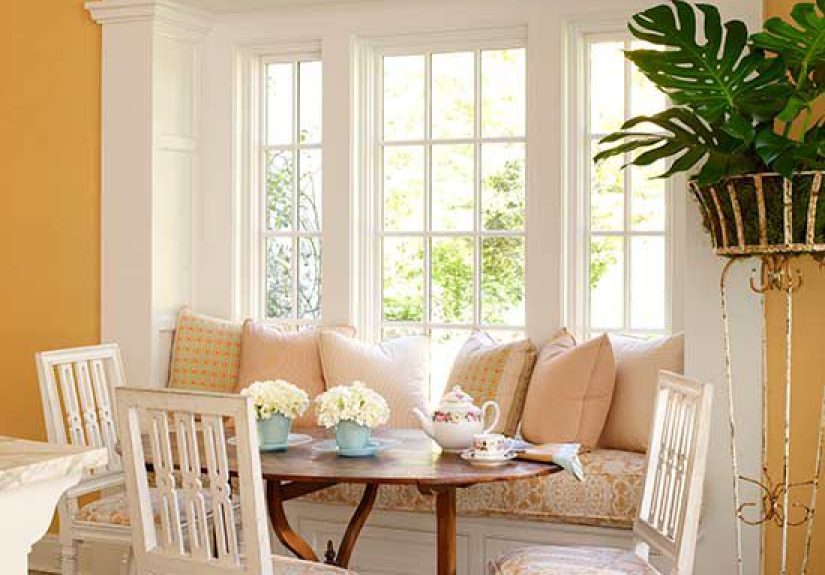
4) Window-seat banquette
A window-seat style bench doubles as a banquette when you add a table and coordinate the seat height.
It’s a smart way to use the brightest square footage in the kitchenand it makes even toast feel vaguely romantic.
5) Island-adjacent banquette
In open layouts, a banquette can “finish” the end of an island and create an eat-in zone without extra furniture.
It reads custom, keeps sightlines airy, and turns the kitchen into a place where people actually hang out (instead of hovering).
Banquette Dimensions That Actually Feel Good
A beautiful nook that’s uncomfortable is just a display case for throw pillows. Use these common planning guidelines to keep the seating ergonomic.
(Think of them as guardrails, not commandmentsyour household height range and table choice matter.)
Comfort-first dimension guidelines
- Seat height: Typically around 16–18 inches to the top of the seat; adjust for cushion thickness so it aligns with standard dining comfort.
- Seat depth: Often 17–20 inches for the sitting surface; deeper seats can be cozy, but too deep becomes “perched like a penguin.”
- Overall bench depth (including back support): Many designs land around 22–24 inches total.
- Table height: Standard dining tables are commonly around 28–30 inches high.
- Table overhang: A modest overhang (roughly a few inches) helps knees and makes sliding in easier.
- Back height: Around 30–36 inches from the floor is a common comfort range for a supportive back.
The secret sauce is the relationship between seat height, cushion thickness, and table height.
If your cushion is plush and tall, your seat effectively gets higherso plan the base height accordingly.
When in doubt, mock it up with boxes and a spare cushion before you build anything permanent.
Your future self (and your lower back) will send a thank-you note.
Clearances: The Part Everyone Skips (And Then Regrets)
Space-savvy doesn’t mean “so tight you have to exhale to pass through.” Before you commit to a banquette footprint,
map your movement: fridge door swing, dishwasher opening, main cooking path, and any high-traffic routes.
You want the nook to feel tucked-in, not like it’s blocking the kitchen’s oxygen supply.
Practical planning tips
- Walkway behind chairs: If you have chairs opposite the banquette, leave enough room to scoot and pass comfortably.
- Table size: Choose the smallest table that fits your household most days (not the once-a-year holiday crowd).
- Entry/exit strategy: For L- and U-shaped nooks, plan how people get in and out without asking three others to stand up.
One clever workaround for tight nooks: use a pedestal table. No corner legs means easier slide-in access,
more flexible seating, and fewer bruised knees. It’s basically the “no drama” option for small spaces.
Storage: Where Banquettes Quietly Become the Smartest Thing in Your Kitchen
Under-seat storage is one of the biggest reasons banquettes feel like a cheat code.
The key is choosing a storage style that matches how you livebecause the “best” storage is the kind you’ll actually use.
Storage options that work hard
- Flip-up lids: Great for bulky items (table linens, small appliances). Add soft-close hinges to avoid finger drama.
- Drawers: Best for everyday access. Perfect for lunchboxes, placemats, or kids’ art supplies.
- Open cubbies/baskets: Easy to grab, easy to make messy. Best if you like “styled clutter.”
- Hidden toe-kick drawers: Sneaky storage for flat items like serving trays or seasonal linens.
Pro move: decide what the storage is for before you build it. A banquette that stores “random stuff”
becomes the kitchen’s junk drawer… but in furniture form.
Tables That Pair Perfectly With Banquettes
The table can make or break your nook. A banquette anchors the space; the table determines how easy it is to use the space.
Think about daily realities: who sits where, who needs elbow room, and whether anyone hates feeling boxed in.
Best table shapes for space-savvy nooks
- Round table: Excellent for tight corners and smoother traffic flow. No sharp corners for hips to discover.
- Oval table: Similar benefits to round, with a bit more surface area.
- Rectangular table: Great for L-shaped banquettes, especially if you need more linear seating.
- Drop-leaf or extendable table: Small footprint most days, expands when you host.
If your banquette is long, consider an approach designers often recommend for easier movement: two smaller tables
instead of one long one. That gap can make it easier for someone on the banquette side to exit without turning the meal into
a cooperative group exercise.
Upholstery, Cushions, and Kid-Proofing (Because Life Happens)
Banquettes are often the most-used “soft seating” in a kitchen, which means they take real wear:
spills, crumbs, sticky fingers, hot coffee near the edge, and the occasional dog who believes the nook was built exclusively for them.
Materials and finishes that survive real mornings
- Performance fabrics: Designed to resist stains and clean up more easilygreat for families and frequent snackers.
- Vinyl or faux leather: Wipeable, durable, and surprisingly stylish when chosen well.
- Leather: Ages beautifully but can be pricier and may show scratches; ideal for a classic booth look.
- Removable cushion covers: Washable covers are the closest thing to kitchen peace.
Comfort tip: if you’re skipping a fully upholstered backrest, add a slight back angle or include supportive pillows.
A perfectly upright bench looks crispbut your body will file a complaint after 20 minutes.
Lighting and Styling: Make It Feel Like a Destination
The difference between “a bench in the kitchen” and “a breakfast nook” is usually lighting and styling.
A pendant or chandelier above the table visually anchors the nook, while art and textiles give it personality.
Design moves that look custom (without acting precious)
- Pendant centered over the table: Creates a focal point and signals “this is a zone.”
- Wall sconces for corners: Great when ceiling wiring is hardor when you want cozy booth energy.
- Bold upholstery or wallpaper: Banquettes can handle pattern and color because they’re grounded and structured.
- Mix materials: Wood + upholstery + a stone or laminate tabletop adds depth without crowding the space.
- Use the wall above: A gallery wall, a mirror to bounce light, or open shelves (if you’re tidy) can elevate the nook fast.
If you want the nook to feel intentional, repeat one element from the kitchenlike cabinet color, hardware finish, or wood tone
and then add one “moment” that belongs only to the nook (a patterned cushion, a playful pendant, or art that makes you smile).
Built-In vs. Freestanding: Decide How Permanent You Want to Be
Built-ins look seamless and can maximize storage, but a freestanding bench can still deliver the space-saving benefits with less construction.
If you rent, move often, or like flexibility, start with a bench-and-table setup. If you know this is your forever corner, built-in may be worth it.
Quick comparison
- Built-in banquette: Best fit, most storage options, most custom look; requires planning and installation.
- Freestanding bench: Faster, movable, easier to change later; may sacrifice some storage and “integrated” appearance.
Either way, the goal is the same: make the nook easy to use daily. The most “space-savvy” choice is the one that works on a Tuesday morning,
not just in a styled photo.
Common Banquette Mistakes (So You Don’t Learn Them the Hard Way)
- Going too deep: Deep seats look luxe, but they can force awkward posture at a dining table.
- Ignoring entry/exit: Booth-style seating is cozy until someone needs to get up mid-meal.
- Choosing a bulky table base: Thick legs and heavy bases steal knee space.
- Skipping cleanability: If the fabric can’t handle a spill, it will become a stress object.
- Underplanning storage access: Flip-up lids are greatunless the table blocks them.
Real-Life Experiences: What People Notice After Living With a Banquette
Once the photos are taken and the cushions are fluffed, real life moves inand that’s where a banquette either shines or nags.
Here are the lived-in lessons homeowners commonly share after months (or years) of daily use.
First: the banquette becomes the default seat. Even in households with plenty of chairs, people gravitate to the bench side.
It feels secure, cozy, and just a little bit like sitting in a restaurant boothwithout paying $18 for avocado toast.
Kids love it because they can tuck in, spread out crayons, and feel like they have a “spot.” Adults love it because it makes casual meals feel calmer.
If you’re designing for family life, this is a win you’ll notice immediately.
Second: crumbs are inevitable. Not “maybe crumbs.” Not “occasional crumbs.” Crumbs. Always.
The nook collects them the way pockets collect lint. The fix isn’t to panicit’s to design for easy cleanup.
Homeowners tend to be happiest with wipeable upholstery, removable cushion covers, or a seat design that doesn’t trap debris in impossible corners.
If you’re doing a built-in, consider leaving a small, intentional gap where a vacuum attachment can actually reach.
Third: entry and exit matter more than you think. In L-shaped and U-shaped setups, someone eventually feels “stuck,”
especially during longer meals or when guests aren’t used to sliding around. People often solve this in small ways:
choosing a pedestal table instead of legs, keeping one side as a chair (so there’s always an “easy out” seat), or using two smaller tables
with a gap for pass-through. The best banquettes feel welcoming, not like a cozy trap with throw pillows as hostages.
Fourth: storage becomes surprisingly emotional. That sounds dramatic, but hear it out:
when your kitchen finally has a place to stash table linens, lunch supplies, small appliances, and board games, the whole room feels less chaotic.
People who add banquette storage often say it changes how the kitchen functions day-to-day. The banquette becomes a “clutter pressure valve.”
The catch is that storage needs a planotherwise it turns into a time capsule of random stuff. The happiest households assign categories
(linens, kids’ items, entertaining supplies) and keep a small “grab zone” that’s easy to access.
Finally: comfort is a collection of small decisions. The difference between “we love this nook” and “we don’t sit there”
is often cushion thickness, back support, and table placement by an inch or two. Homeowners frequently mention that a slightly angled back,
a supportive cushion, or even a slim lumbar pillow changes everything. If you’re unsure, start with a simple bench setup and test the feel
before you commit to a full built-in. It’s easier to adjust early than to live with a nook that looks perfect but feels like a waiting room.
Conclusion
Space-savvy breakfast nook banquettes aren’t just about squeezing in extra seatingthey’re about making your kitchen work better.
With the right layout, comfortable dimensions, and smart table pairing, a banquette can turn an awkward corner into a daily destination.
Add storage, durable upholstery, and good lighting, and you get a nook that’s equal parts practical and charminglike a tiny café that also
knows where you keep the placemats.