Table of Contents >> Show >> Hide
- What Obstructive Sleep Apnea Is (and Why Your Body Cares)
- Meet STOP-BANG: A Fast Screening Tool With a Memorable Name
- Before You Panic-Scroll: STOP-BANG Is Not a Diagnosis
- What To Do Next Based on Your STOP-BANG Score
- How Sleep Apnea Is Diagnosed (What Testing Actually Looks Like)
- Treatment Options: What Actually Helps (and What’s Just Vibes)
- STOP-BANG in Real Life: A Few Quick Examples
- Common Myths That Deserve a Nap
- Experiences With STOP-BANG and Sleep Apnea (What People Commonly Report)
- Bottom Line
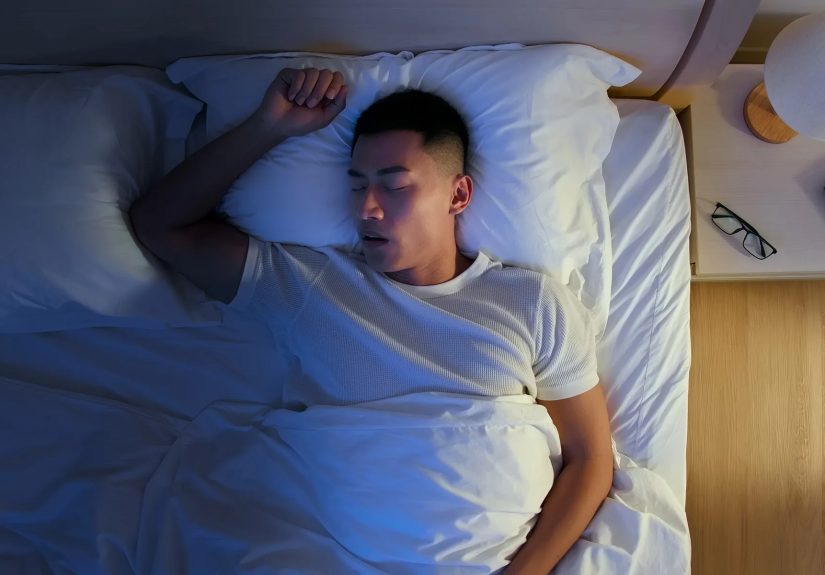
If you’ve ever been told you “snore like a lawnmower with a grudge,” you’re not alone. Snoring is commonand sometimes it’s just snoring.
But sometimes it’s a neon sign pointing to obstructive sleep apnea (OSA), a condition where your airway repeatedly narrows or collapses during sleep.
The tricky part? A lot of the “evidence” happens while you’re unconscious (rude).
That’s where STOP-BANG comes in: a quick, widely used screening questionnaire that helps estimate your risk for OSA.
It doesn’t diagnose you (that requires proper testing), but it can help you decide whether it’s time to talk with a clinician and take the next step.
What Obstructive Sleep Apnea Is (and Why Your Body Cares)
Obstructive sleep apnea is a sleep-related breathing disorder marked by repeated breathing pauses (apneas) or shallow breathing (hypopneas) caused by upper-airway blockage.
When airflow drops, oxygen levels can dip and your brain briefly “nudges” you awakeoften without you remembering it.
The result is fragmented, low-quality sleep, even if you technically spent eight hours in bed.
Over time, untreated OSA is linked with problems like high blood pressure and cardiovascular strain, metabolic issues, mood and concentration problems,
and increased risk of accidents from daytime sleepiness. In other words: it’s not just “annoying snoring.” It can be a real health drain.
Meet STOP-BANG: A Fast Screening Tool With a Memorable Name
STOP-BANG is an acronym for eight yes/no risk factors. Each “Yes” equals one point, for a total score from 0 to 8.
Higher scores mean higher likelihood of OSA (especially moderate-to-severe OSA).
The STOP-BANG Questions (Plain-English Version)
- S Snoring: Do you snore loudly (loud enough to be heard through a door or to earn an elbow from a bed partner)?
- T Tired: Do you often feel tired, fatigued, or sleepy during the day?
- O Observed: Has anyone observed you stop breathing, choke, or gasp during your sleep?
- P Pressure: Do you have high blood pressure (or are you being treated for it)?
- B BMI: Is your body mass index (BMI) over 35 kg/m²?
- A Age: Are you older than 50?
- N Neck: Is your neck circumference over 16 inches (40 cm)?
- G Gender: Are you male?
Quick measurement tips: BMI is calculated from height and weight. Neck circumference is measured around the neck at about Adam’s apple level
(use a flexible tape measure; don’t “suck in” your neckthis isn’t a photo shoot).
How Scoring Works
Add up your “Yes” answers. Your total is your STOP-BANG score (0–8).
Clinicians often use the score to identify who may benefit most from further evaluationespecially a sleep study.
What Your Score Might Mean
While cutoffs can vary by clinic and population, a common interpretation looks like this:
- 0–2: Lower risk for moderate-to-severe OSA
- 3–4: Intermediate risk
- 5–8: Higher risk
Important nuance: Many healthcare settings treat a score of 3 or more as “higher risk” because STOP-BANG is designed to be sensitive
(meaning it’s good at catching many people who may have OSA).
That’s helpful for screeningbut it also means some people flagged as “at risk” won’t end up having clinically significant OSA after testing.
Before You Panic-Scroll: STOP-BANG Is Not a Diagnosis
STOP-BANG is a screening tool, not a final verdict. Think of it like a smoke detector:
it can tell you there might be a problem, but it doesn’t tell you whether it’s burned toast or an actual fire.
A diagnosis requires objective testing (typically a sleep study) interpreted by a qualified clinician.
Also, STOP-BANG was designed primarily for adults. If you’re under 18, pregnant, or have complex medical conditions,
screening and diagnostic decisions should be personalized by a clinician because pediatric and special-population sleep apnea works differently.
What To Do Next Based on Your STOP-BANG Score
If You Score 0–2 (Lower Risk)
If you have few symptoms and a low score, you may not need urgent testingbut don’t ignore persistent red flags.
Consider talking to a clinician if you have:
- daytime sleepiness that interferes with school/work
- morning headaches
- mood changes or trouble concentrating
- witnessed breathing pauses (this one matters even if you score low)
If You Score 3–4 (Intermediate Risk)
This is a good “don’t brush it off” zone. If you also have symptoms (snoring plus daytime sleepiness, for example),
consider scheduling a visit with your primary care clinician or a sleep specialist.
You may be a candidate for a home sleep apnea test or an in-lab study depending on your health history.
If You Score 5–8 (Higher Risk)
A higher score suggests a higher likelihood of OSAespecially moderate-to-severe OSA.
This is where evaluation becomes a priority, because effective treatment can dramatically improve sleep quality and reduce health risks.
Safety note: If you’re experiencing serious daytime sleepiness, be cautious with driving, operating machinery, or doing tasks where dozing off could be dangerous.
This is not about willpowerit’s physiology.
How Sleep Apnea Is Diagnosed (What Testing Actually Looks Like)
Diagnosis typically relies on measuring breathing disruptions during sleep. Two common approaches:
1) In-Lab Sleep Study (Polysomnography)
Done overnight in a sleep lab, this test monitors multiple signalsbreathing, oxygen, heart rate, movement, and sleep stages.
It’s the most comprehensive option and is often recommended when there are other sleep disorders suspected,
significant medical conditions, or when home testing is unlikely to be accurate.
2) Home Sleep Apnea Test (HSAT)
This is a simplified, at-home breathing monitor that typically tracks airflow, breathing effort, and oxygen levels.
It can be a convenient and cost-effective option for many people with suspected uncomplicated OSA,
but it’s not a perfect fit for every situation.
Your clinician will decide which option makes sense based on symptoms, risk factors, and overall health.
Treatment Options: What Actually Helps (and What’s Just Vibes)
The best treatment depends on OSA severity, anatomy, and personal preferences. The goal is simple:
keep the airway open so you can breathe normally through the night.
CPAP (Continuous Positive Airway Pressure)
CPAP is the most established treatment for moderate-to-severe OSA. It delivers gentle air pressure through a mask to prevent airway collapse.
Modern devices are smaller and quieter than the “leaf blower” stereotypes, and comfort options (humidifiers, different masks) can make a big difference.
Oral Appliance Therapy
Custom dental devices can help by repositioning the jaw/tongue to keep the airway more open.
These are often considered for mild-to-moderate OSA or for people who can’t tolerate CPAP.
If you go this route, it should be fitted and followed by clinicians experienced in dental sleep medicine.
Lifestyle Changes That Can Lower OSA Severity
- Weight management: For some people, reducing weight can significantly reduce OSA severity.
- Positional therapy: Avoiding back-sleeping can help in positional OSA.
- Limit alcohol and sedatives: These can relax airway muscles and worsen obstruction.
- Treat nasal congestion: Allergies and chronic congestion can make breathing harder at night.
- Exercise: Supports weight, sleep quality, and overall cardiometabolic health.
Surgical and Device-Based Options (For Select Cases)
When anatomy plays a major role or other treatments fail, surgical options may be considered.
One newer option for certain adults is hypoglossal nerve stimulation (a surgically implanted device that helps keep the airway open by moving the tongue forward during sleep).
Not everyone qualifies, but it can be life-changing for appropriately selected patients.
STOP-BANG in Real Life: A Few Quick Examples
Numbers are easier with faces (fictional ones, for privacy and fun). Here’s how STOP-BANG scoring might play out:
Example 1: “Sam, the Loud Snorer” (Score: 4)
Sam snores loudly (1), feels tired most afternoons (1), has a partner who’s noticed breathing pauses (1), and has high blood pressure (1).
Sam is 38, BMI under 35, neck under 16 inches, and not male? (those are 0s). Total: 4.
That’s intermediate riskespecially meaningful because the “Observed” item is a strong clue. Sam should consider evaluation.
Example 2: “Jordan, the Always-Exhausted Early Bird” (Score: 2)
Jordan feels tired during the day (1) and has high blood pressure (1), but doesn’t snore, no one has observed apneas,
and Jordan is under 50 with BMI under 35 and a smaller neck. Total: 2.
Lower STOP-BANG risk doesn’t rule out other sleep disorders or medical causes of fatigueso symptoms still deserve attention.
Example 3: “Pat, the High-Risk Checklist Champion” (Score: 6)
Pat snores (1), feels tired (1), has witnessed apneas (1), has high blood pressure (1), is over 50 (1),
and has a neck over 16 inches (1). Total: 6.
That’s higher risk, and it’s worth pursuing testing sooner rather than later.
Common Myths That Deserve a Nap
Myth: “Only older, overweight men get sleep apnea.”
Risk is higher with certain factors (some included in STOP-BANG), but OSA can affect people of many body types and genders.
Anatomy, genetics, and airway structure matter too.
Myth: “If I don’t remember waking up, I’m sleeping fine.”
Many sleep disruptions in OSA are brief and not fully remembered. You can be “asleep” and still not getting restorative sleep.
Myth: “CPAP means I failed at sleeping.”
CPAP means you’re treating a medical problem with an effective tool. That’s not failurethat’s competence with a bedtime accessory.
Experiences With STOP-BANG and Sleep Apnea (What People Commonly Report)
People’s experiences with STOP-BANG often start in a surprisingly ordinary place: a routine appointment, a dental visit,
or a pre-surgery checklist. Someone asks a few quick questionssnoring, tiredness, observed breathing pausesand suddenly a pattern clicks.
Many describe a mix of relief (“So I’m not just lazy!”) and annoyance (“Wait, my sleep has been sabotaging me this whole time?”).
Because STOP-BANG is fast and noninvasive, it feels less like a medical interrogation and more like a “let’s connect the dots” moment.
A common story is the “I thought this was normal” realization. Someone might say they’ve needed coffee like oxygen for years,
or they’ve nodded off during quiet moments and blamed it on a busy schedule. When a bed partner reports snoring punctuated by silence,
or occasional gasps, STOP-BANG helps translate that nighttime mystery into something actionable. People often mention that the
Observed question is the turning pointbecause it’s hard to argue with a witness, especially one who has been losing sleep too.
The next phase is often testing. Those who do a home sleep apnea test frequently describe it as “less dramatic than I expected”:
a few sensors, a belt, and a small device that tracks breathing and oxygen overnight. Others do an in-lab study and talk about the weirdness of sleeping
in a new placebut also how reassuring it feels to have thorough monitoring. Many report that finally seeing objective results (like an apnea-hypopnea index)
is validating. It turns a vague fog of fatigue into a concrete explanation with a plan.
Treatment experiences vary, but several themes repeat. People who start CPAP often say the first nights are an adjustmentfiguring out the right mask,
dialing in humidity, and learning that “seal” is not just something you do with envelopes. But after the learning curve, many describe the payoff as dramatic:
fewer morning headaches, more stable energy, and a sense that their brain is “online” again. Others prefer oral appliance therapy and report liking the simplicity,
especially if their OSA is mild or they struggled with CPAP comfort. In both groups, follow-up and fine-tuning are a big deal; the best outcomes often come
from small tweaks rather than heroic suffering.
People also talk about lifestyle changes as supportive wins, not magical cures. Side-sleeping strategies, treating nasal congestion, consistent sleep schedules,
and gradual weight changes can make nights smootherespecially while waiting for testing or getting used to therapy. Many describe an unexpected emotional shift too:
once sleep improves, mood and patience improve. Some even say their relationships get better because the bedroom stops sounding like a woodworking shop at midnight.
The most consistent “takeaway experience” is this: STOP-BANG didn’t diagnose them, but it helped them take fatigue seriouslyand that step mattered.
Bottom Line
STOP-BANG is a simple, evidence-informed way to screen for obstructive sleep apnea risk. If your score is elevatedespecially if you have symptoms like loud snoring,
daytime sleepiness, or witnessed breathing pausestalk with a healthcare professional about whether you need a sleep study.
OSA is common, underdiagnosed, and highly treatable. Better sleep isn’t a luxury; it’s basic maintenance for your brain and body.