Table of Contents >> Show >> Hide
- Why “Unexpected Products” Win (Even When They Look Ridiculous)
- 1) Pet Rock
- 2) Snuggie
- 3) Chia Pet
- 4) Beanie Babies
- 5) Scrub Daddy
- 6) Squatty Potty
- 7) Super Soaker
- 8) Hula Hoop
- 9) Slinky
- 10) Crocs
- Common Patterns Behind Million-Dollar Surprise Products
- How to Spot Your Own “Unexpected Product” Opportunity
- Conclusion: The “Silly” Product Might Be the Smartest One
- Experiences: on What It’s Like to Launch a “Ridiculous” Product That Prints Money
Every entrepreneur has had the same late-night thought at least once: “Surely this is the million-dollar product idea.” Then reality taps you on the shoulder like, “Best I can do is three likes and a coupon code.”
And yet… history is absolutely stuffed with products that sound like jokes on paper and still went on to print money. Not “pretty good revenue” moneymillions (and sometimes billions) in sales that translate into serious profit. The twist is that most of these wins weren’t magic. They were market timing, distribution, and human psychology dressed up in a silly costume.
Below are ten unexpected products that made millions in profit, plus the marketing lessons hiding behind the punchline. If you’re hunting for your own “wait, people actually buy that?” moment, you’ll want to steal from these playbooks (politely, and preferably with a receipt).
Why “Unexpected Products” Win (Even When They Look Ridiculous)
The most profitable “weird” products tend to share a few traits: they’re easy to understand in one sentence, easy to demonstrate in 10 seconds, and easy to giftor impulsively buy while whispering, “This is for my friend.” They also usually ride an emotion: comfort, curiosity, status, nostalgia, or the irresistible desire to be in on a trend.
In SEO terms, these are products that generate strong word-of-mouth, branded search demand, and repeat mentions across social and media. In plain English: people talk about them because they’re memorable.
1) Pet Rock
What it was
A literal rock in a boxcomplete with “ventilation holes” and an instruction bookletsold as a pet that never needs feeding, never runs away, and never judges your life choices.
How it made millions
The Pet Rock became a mid-1970s sensation, reportedly selling around 1.5 million units at roughly $3.95 each. The real genius wasn’t geology; it was packaging and storytelling. It turned a free object into a paid experience and gave buyers a punchline they could gift.
The lesson
Profit doesn’t always come from complexity. Sometimes it comes from framing. If you can make something ordinary feel like an “inside joke” people want to participate in, you’ve created a product category that didn’t exist five minutes ago.
2) Snuggie
What it was
A blanket with sleevesaka “a robe, but make it backwards and add infomercial energy.”
How it made millions
The Snuggie wasn’t the first sleeved blanket, but it became the most famous. Reports have credited it with selling 30+ million units and generating $500+ million in sales. That’s not a product; that’s a cultural moment you could wear at a sports game like a cozy cult member.
The lesson
“Best product” doesn’t always win. Best distribution + best demonstration often does. Snuggie’s direct-response marketing was absurd on purposememorable, meme-friendly, and instantly understandable.
3) Chia Pet
What it was
A terracotta figurine you water so it grows chia “hair.” It’s part plant, part arts-and-crafts, part “Why is this so charming?”
How it made millions
Chia Pets became a pop-culture staple with catchy ads and giftable novelty appeal. The brand has reported tens of millions sold (commonly cited at 25+ million, and higher in some later reports), proving that the right kind of “silly” can become evergreen.
The lesson
Don’t underestimate ritual productsitems people buy around holidays, gifting seasons, and nostalgia cycles. Chia Pets are practically a recurring tradition, not a one-time fad.
4) Beanie Babies
What it was
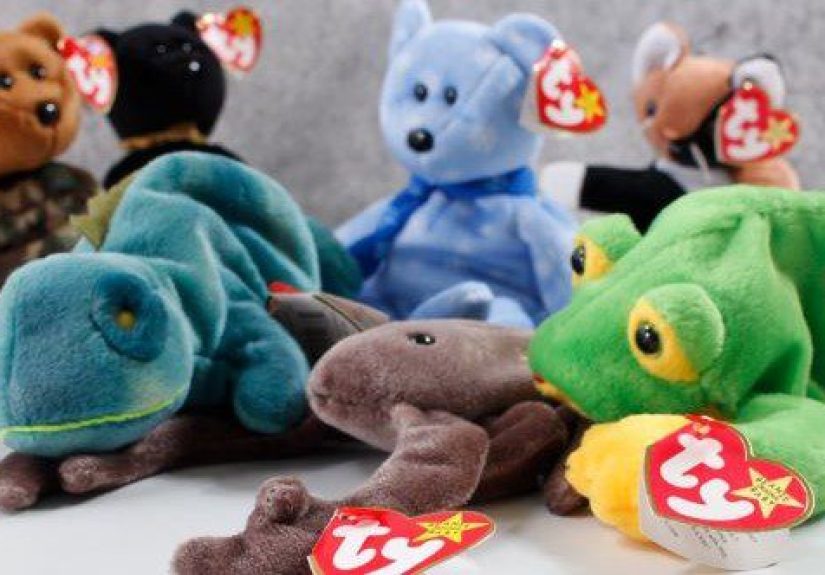
Understuffed plush animals with a heart-shaped tag… and the power to turn rational adults into competitive day traders at mall kiosks.
How it made millions
Beanie Babies helped build a frenzy through controlled availability and “retirements.” At the height of the craze, reporting has described annual sales surpassing $1.4 billion. Even if you ignore resale mania, the core business was a masterclass in scaling low-cost items into high-volume profit.
The lesson
Scarcity is a rocket engineuse it carefully. When you pair collectibility with limited supply, you don’t just sell products; you sell a game people feel compelled to play.
5) Scrub Daddy
What it was
A smiley-faced sponge that changes texture based on water temperaturesoft in warm water, firm in cold. Yes, your sponge has mood swings now. And yes, it works.
How it made millions
After its famous “Shark Tank” moment, Scrub Daddy turned into a cleaning empire. Recent reporting has pegged it at around $220 million in sales in 2023. It’s a reminder that “boring categories” (like dish sponges) can be wildly profitable if you deliver a real performance upgrade.
The lesson
The fastest path to profit is often category disruption: take a commodity product, add one delightful differentiator, then prove it in a demo so obvious it feels like a magic trick.
6) Squatty Potty
What it was
A toilet stool designed to improve “toilet posture.” It’s the kind of product you don’t browse for casuallyuntil you do… and then you start recommending it to strangers like it’s your new personality.
How it made millions
The brand used bold education + humor to turn a taboo topic into a shareable conversation. The company has said it hit $1 million in sales immediately after major TV exposure, and multiple business write-ups have cited sales reaching the tens of millions (for example, around $33 million by the end of 2017 in some summaries).
The lesson
If your product solves a real problem people feel awkward discussing, your marketing advantage is permission. Make the conversation funny and helpful, and customers will spread it for you.
7) Super Soaker
What it was
A high-powered water blaster that upgraded summer from “mildly damp” to “neighborhood battlefield.”
How it made millions
The Super Soaker exploded in popularity in the early 1990s, with reporting describing sales reaching roughly $200 million and the product becoming a top-selling toy. Over time, the brand has been credited with generating $1+ billion in total sales. That’s a lot of profit made from… water.
The lesson
A “toy” becomes a money machine when it creates an experience loop: buy it → use it immediately → friends want one → repeat. The best products have built-in social proof.
8) Hula Hoop
What it was
A plastic hoop that turned living rooms into cardio arenas and made parents everywhere say, “Please stop hitting the lamp.”
How it made millions
Hula hoops became one of the biggest toy fads in U.S. history, with estimates of 25 million sold in the first few months. Depending on the source, early success has been described as generating tens of millions of dollars for the company that popularized it.
The lesson
Some products win because they’re instantly participatory. No learning curve, no setupjust try it, laugh, try again. That’s a conversion rate booster in any era.
9) Slinky
What it was
A metal spring that walks down stairs and refuses to die as a cultural icon. The Slinky is proof that physics can be adorable.
How it made millions
The Slinky was famously discovered by accident and became an enduring bestseller. Museums and history write-ups have cited totals in the hundreds of millions of units sold over the decadesan astonishing run for something that is, at its core, a fancy coil.
The lesson
“Simple” scales. Products with few parts, low breakage, and broad age appeal can quietly produce decades of profitespecially when they become a default gift.
10) Crocs
What it was
Foam clogs that started as a polarizing footwear choice and evolved into a global phenomenon. People used to ask, “Why would anyone wear those?” Now they ask, “Where did you get those charms?”
How it made millions
Crocs is the modern reminder that “ugly” doesn’t matter if a product nails comfort, identity, and community. Company filings and investor reports have shown the business producing billions in annual revenue and hundreds of millions (and more) in profit in recent yearspowered by a core product many people originally mocked.
The lesson
The strongest brands don’t beg to be liked; they become tribal. Crocs leaned into collabs, personalization, and cultural moments until the product turned from “joke” into “statement.”
Common Patterns Behind Million-Dollar Surprise Products
- One-line clarity: If you can’t explain it fast, it won’t spread fast.
- A visible demo: The product shows its value without a lecture.
- Emotional pull: Comfort, humor, status, nostalgia, or belonging.
- Giftability: Many “unexpected products” ride holidays and impulse buys.
- Distribution leverage: Infomercials, TV exposure, retail placement, or viral sharing.
- Repeat demand: Collectibility, replenishment, or social “everyone has one” momentum.
How to Spot Your Own “Unexpected Product” Opportunity
Look for a boring category with a painful annoyance
Scrub Daddy didn’t invent cleaningit made cleaning easier and more satisfying. Commodity categories are packed with customers who’ve accepted “meh” as normal.
Find an idea that photographs well
If your product looks interesting in a thumbnail, you’ve already improved your odds. In today’s discovery economy, your “shelf” is often a feed.
Turn confusion into curiosity
People love buying stories. If the product makes someone say “Wait… what is that?” you’ve earned a precious thing: attention. Your job is to convert attention into trust.
Build a simple offer and a clean funnel
Many million-dollar products weren’t launched with fancy brand decksthey were launched with a clear pitch, a strong guarantee, and a buying path with zero friction.
Conclusion: The “Silly” Product Might Be the Smartest One
The point isn’t to chase goofy ideas for the sake of goofiness. The point is to notice that “unexpected” usually means underestimated. These products made millions because they matched a real human impulsecomfort, humor, identity, convenienceand then scaled through smart marketing.
If you’re building your own product, don’t ask, “Will people take this seriously?” Ask, “Will people buy it, talk about it, and come back for more?” Because profit has never required permission to be cool.
Experiences: on What It’s Like to Launch a “Ridiculous” Product That Prints Money
Entrepreneurs who build unexpected, million-dollar products often describe a very specific emotional roller coaster: disbelief, embarrassment, momentum, and thensuddenlylogistics panic. In the early days, you’re not fighting competitors; you’re fighting the social pressure that says your idea must look “serious” to be valuable. The first sales feel like a prank the internet is playing on you. The tenth sale feels like hope. The thousandth sale feels like you just adopted a tiger and now it lives in your garage.
One common experience is rejection that turns out to be fuel. Many founders get told “no” by retailers, manufacturers, or gatekeepers who don’t want to risk shelf space on something unusual. That rejection can push you toward direct-to-consumer channels, which ironically gives you cleaner feedback and better margins. When customers buy without a middleman, you learn what they actually respond to: the hook, the demo, the promise, the vibe. The brand becomes sharper because the market forces you to explain it clearly.
Another shared experience is discovering that humor is a conversion tool, not just decoration. “Embarrassing” categoriesbathroom products, cleaning items, odd fitness gadgetsoften sell better when the marketing acknowledges the awkwardness. When you make people laugh, you lower their defenses. And when you lower their defenses, they listen long enough to understand the value. A customer might not want to talk about pooping posture at dinner, but they’ll absolutely send a funny video to a group chat and accidentally become your affiliate marketer.
Then comes the phase founders rarely romanticize: operations becomes the main character. Viral demand is fun until you’re out of inventory, customer support is on fire, and a supplier tells you the lead time is “somewhere between next week and the heat death of the universe.” The businesses that keep their momentum are the ones that treat operations like marketingclear timelines, honest updates, quality control, and a product that arrives exactly as promised. It’s hard to build trust with a weird product; it’s even harder to rebuild trust if you disappoint people at scale.
Finally, there’s the most surprising experience of all: customers give your product a life. Once people start posting, gifting, collecting, customizing, or making jokes about what you sell, the brand grows beyond your original idea. That’s when an “unexpected product” turns into a durable business. The founders who win long-term are the ones who listen, iterate, and keep the product simple enough to spreadwhile staying disciplined enough to protect the quality that sparked the whole thing.