Table of Contents >> Show >> Hide
- Why Kitchens Swing Offers (and Emotions)
- The Golden Rule: Minor Beats Major (Most of the Time)
- Kitchen Upgrades Realtors Love (Because Buyers Notice Them Fast)
- 1) Cabinet Refresh: Paint, Reface, or Replace (But Choose Wisely)
- 2) Hardware Swap: The $200 Upgrade That Acts Like It Paid Rent
- 3) Countertops: Spend Where Hands (and Eyes) Land
- 4) Lighting: The Upgrade That Makes Everything Else Look More Expensive
- 5) Sink + Faucet: Small Footprint, Big Daily Impact
- 6) Appliances: Match, Modernize, and Don’t Overdo It
- 7) Ventilation: The Quiet Hero Buyers Don’t Want to Smell
- 8) Storage Upgrades: Make the Kitchen Feel Bigger Without Moving Walls
- 9) Paint + Backsplash: Clean, Neutral, and Photo-Friendly
- Upgrades to Skip (or At Least Think Twice About)
- A Realtor-Style Budgeting Cheat Sheet
- How to Choose the Right Kitchen Upgrades for Your Home
- Conclusion: The “Serious Value” Playbook
- Experiences That Come Up Again and Again (A 500-Word Reality Check)
If your home were a movie, the kitchen is the main character. It gets the close-ups, the dramatic lighting,
and the “Wait… did you see that backsplash?” plot twists. Buyers don’t just look at kitchensthey
judge them like they’re on a reality show panel. And realtors know it: a smart kitchen upgrade can pull
stronger offers, reduce negotiation headaches, and help your listing feel “move-in ready” instead of
“move-in… eventually.”
But here’s the part no one wants to hear when they’re daydreaming about a 48-inch pro range:
the upgrades that add the most resale value aren’t always the flashiest. In many markets, the best
“kitchen remodel ROI” comes from targeted, mid-level improvementsclean, bright, functional,
and broadly appealing. Translation: you’re not building your dream kitchen. You’re building the
buyer’s “I can live here” moment.
Why Kitchens Swing Offers (and Emotions)
Kitchens do a lot of heavy lifting in buyer psychology. They signal how the home has been maintained,
whether the layout works for real life, and how much immediate spending a buyer might face after closing.
A dated kitchen isn’t just “dated”it’s a mental receipt for future projects, contractor schedules, and
the kind of dust that appears in places you didn’t know existed.
Realtors also see kitchens as leverage. A buyer may forgive an older guest room. They will not forgive
a kitchen that feels dark, cramped, or tiredbecause they picture themselves using it every single day.
That everyday visibility is why kitchen improvements consistently land near the top of “worth it” projects.
The Golden Rule: Minor Beats Major (Most of the Time)
If you’re upgrading for resale, think like a strategist, not a contestant on “Kitchen Dreams: Unlimited Budget Edition.”
National cost-vs-value comparisons regularly show a pattern: minor kitchen remodels often outperform
major remodels on percentage return. Why? Because buyers love “new enough,” but they don’t always pay
you back for “brand new everything.”
A minor kitchen remodel typically means keeping your existing layout but upgrading the high-impact surfaces and
finishes: cabinet refresh (paint or refacing), new hardware, better lighting, updated countertops, a modern faucet,
maybe a new appliance or two. A major remodelmoving walls, relocating plumbing, custom everythingcan look amazing,
but the resale math is often less friendly.
The sweet spot is visible improvement without over-improvement. You want buyers to feel the kitchen is
current, clean, and functionalwithout making them pay luxury prices in a neighborhood that doesn’t support it.
Kitchen Upgrades Realtors Love (Because Buyers Notice Them Fast)
Below are the upgrades that tend to show up again and again in realtor recommendations and buyer reactions.
Think of these as “high signal, lower regret” movesthe kind that photograph well, live well, and sell well.
1) Cabinet Refresh: Paint, Reface, or Replace (But Choose Wisely)
Cabinets dominate what your kitchen “feels like,” simply because there are so many of them. When they’re stained,
chipped, overly ornate, or scream 1997, buyers notice instantly. If the cabinet boxes are solid, repainting or
refacing can be a value-forward option compared to full replacement.
- Best value play: paint or reface sturdy cabinets, then add modern pulls.
- Best buyer appeal: simple, timeless door styles (think shaker or clean slab fronts).
- Avoid: ultra-trendy colors on all cabinets unless your market clearly rewards bold design.
Pro tip: If your kitchen is small or dim, lighter cabinet colors can make it feel larger. And “feels larger”
is buyer language for “I’m willing to pay more.”
2) Hardware Swap: The $200 Upgrade That Acts Like It Paid Rent
New cabinet hardware is one of the fastest ways to modernize the whole kitchen without tearing anything apart.
It’s also a gift to listing photos: the kitchen suddenly looks intentional rather than “whatever the builder had
in the truck.”
- Choose a consistent finish that matches your faucet and lighting.
- Pick a classic shapeclean bar pulls or simple knobsso it doesn’t date quickly.
- Make sure everything lines up. Crooked hardware makes buyers wonder what else is “a little off.”
3) Countertops: Spend Where Hands (and Eyes) Land
Countertops are a top-value upgrade because they’re both practical and highly visible. Buyers touch them,
imagine cooking on them, and quietly judge whether they look durable or delicate. In many markets, stone and
stone-look surfaces are consistently associated with “updated kitchen.”
- Quartz is popular because it’s durable, low-maintenance, and looks upscale without acting high-maintenance.
- Natural stone can read premiumjust make sure the look fits the home and neighborhood.
- Butcher block can add warmth and style when used strategically (often best as an accent, not wall-to-wall).
Value advice from realtors often comes down to this: choose a countertop that looks great in photos, doesn’t scare
buyers with maintenance concerns, and pairs well with your cabinets. In other words, don’t install a countertop that
requires a skincare routine.
4) Lighting: The Upgrade That Makes Everything Else Look More Expensive
Lighting is underrateduntil you see the before-and-after photos. A well-lit kitchen feels cleaner, bigger,
and newer, even if you didn’t change the layout. Realtors love lighting because it boosts the experience
during showings and improves listing photos.
Think in layers:
- Ambient: recessed lights or a central fixture for overall brightness.
- Task: under-cabinet lighting so countertops aren’t stuck in shadow.
- Accent: pendants over an island or sink for style and focus.
Bonus points if you use modern LEDs with a warm, inviting tone. “Bright like a hospital” is not the vibe.
“Bright like a home where people bake cookies” is the vibe.
5) Sink + Faucet: Small Footprint, Big Daily Impact
If the kitchen faucet were a handshake, yours should not feel like a weak grip from 2004. A modern pull-down
faucet and a clean, functional sink are upgrades buyers notice because they’re used constantly.
- Consider a deeper single-bowl sink if it fits your space and plumbing setup.
- Choose a faucet finish that matches your hardware and lighting.
- Fix leaks, slow drains, and wobbly handles. Buyers interpret those as “what else is neglected?”
6) Appliances: Match, Modernize, and Don’t Overdo It
New appliances can be a strong value signalespecially if yours are mismatched, visibly worn, or missing key features
buyers expect (like a quiet dishwasher). The resale win usually comes from a coordinated, modern look and improved
energy performancenot necessarily from buying the most expensive model on the planet.
- Strong move: replace the most dated or unreliable appliance first (often the dishwasher or range).
- Buyer-friendly: energy-efficient options that reduce utility anxiety.
- Be careful: ultra-luxury appliances in a mid-range neighborhood can be classic over-improvement.
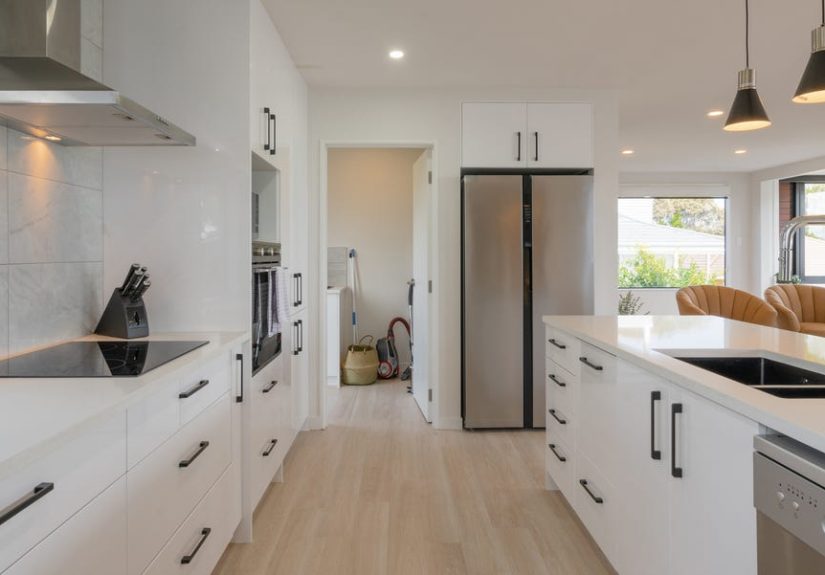
If you want a “wow” feature that still reads practical, consider an induction cooktop in markets where buyers
appreciate efficiency and modern cooking tech. It’s a buzzworthy upgrade without requiring a full kitchen rebuild.
7) Ventilation: The Quiet Hero Buyers Don’t Want to Smell
A proper vent hood (ideally vented outside, when feasible) is one of those upgrades buyers feel more than they
consciously notice. Strong ventilation helps with cooking odors, humidity, and overall comfort. During showings,
it can literally make the house feel fresher.
Realtors often flag poor ventilation as a hidden drawbackespecially in open layouts where cooking smells travel
like they have frequent-flyer status.
8) Storage Upgrades: Make the Kitchen Feel Bigger Without Moving Walls
Storage is buyer gold because it solves real-life problems. If your counters are crowded, the kitchen feels smaller.
Smart storage makes the kitchen feel more functional, which buyers translate into “higher value.”
- Pull-out trash/recycling
- Drawer organizers and deep drawers for pots
- Lazy Susans or corner pull-outs
- Pantry shelving systems
This category doesn’t always scream “luxury,” but it screams “livable.” And livable sells.
9) Paint + Backsplash: Clean, Neutral, and Photo-Friendly
Fresh paint is one of the most reliable pre-list upgrades in any roomincluding kitchens. It makes the space
feel cared for, covers scuffs, and resets the vibe. Pair it with a simple backsplash refresh if yours looks dated.
- Paint: stick to light neutrals that work with your fixed finishes.
- Backsplash: classic tile patterns age better than loud trends.
- Grout: clean or re-grout if neededdirty grout reads as “permanent grime,” even when it’s not.
Upgrades to Skip (or At Least Think Twice About)
Realtors aren’t anti-fun. They’re anti-spending-$40,000-to-scare-off-the-largest-number-of-buyers. If resale value
is the goal, be cautious with upgrades that are too personalized, too maintenance-heavy, or too expensive for
the neighborhood.
- Hyper-trendy choices in fixed finishes: wild backsplashes, niche colors, or ultra-specific themes.
- Over-customization: features that only work for one lifestyle (and one very enthusiastic person).
- Layout changes without strong comps: moving plumbing and walls can burn budget fast.
- Luxury overload: top-tier appliances and custom everything in a market that won’t pay for it.
The best compromise? Put “personality” in things that are easier to swaplighting, hardware, bar stools, decorwhile
keeping big-ticket items timeless.
A Realtor-Style Budgeting Cheat Sheet
If you want your kitchen upgrades to add serious value, your budget should follow strategy, not vibes. Here’s a
simple framework that aligns with what many agents advise in practice:
- Fix what’s broken first: leaks, outlets, stuck drawers, flickering lights, cracked tile.
- Update what dates the kitchen: cabinets/hardware, counters, lighting, faucet.
- Upgrade one “hero” item: a standout countertop, a modern hood, or a sleek appliance package.
- Keep finishes coordinated: mismatched metals and styles read chaotic in photos and in person.
- Stay proportional: avoid making your kitchen the only mansion feature in an otherwise normal house.
Also, plan for the reality that remodeling costs can rise due to labor and materials. If you’re renovating close to
listing time, build in buffer for delays and budget surprises so your “quick upgrade” doesn’t turn into a “season-long saga.”
How to Choose the Right Kitchen Upgrades for Your Home
The best upgrades depend on two things: your local market and your timeline. Here are the questions a good realtor
will want you to answer before you start buying tile at midnight:
Ask these five questions
- When are you selling? (In 3 months, you want speed and simplicity. In 3 years, you can be more ambitious.)
- What do comparable homes nearby have? (Match the neighborhood standard; don’t try to outbuild it.)
- What’s the biggest buyer objection today? (Dark? Dated? No storage? Bad layout?)
- What’s the most visible weakness in listing photos? (That’s usually where your best ROI begins.)
- What will you realistically finish well? (Half-done renos scare buyers more than old cabinets.)
Conclusion: The “Serious Value” Playbook
Realtors tend to agree on a simple truth: the kitchen upgrades that add the most value are the ones that make the
space feel clean, bright, functional, and currentwithout forcing buyers to pay for your personal taste at luxury
pricing. Focus on cabinets, countertops, lighting, and practical fixtures. Keep the look timeless, the palette neutral,
and the quality solid. Do that, and your kitchen doesn’t just look betterit sells your home’s story better.
In the end, you’re not trying to win an interior design award. You’re trying to make buyers think,
“We can move in and live here… and we don’t have to talk to a contractor for at least a year.” That thought is worth
real money.
Experiences That Come Up Again and Again (A 500-Word Reality Check)
If you listen to enough agent anecdotes and scan enough listing feedback, you start noticing a pattern: buyers decide
how they feel about a kitchen in the first 30 seconds, then spend the next five minutes collecting evidence to
justify that feeling. That’s why “small” upgrades can punch above their weightbecause they change the first impression.
One common scenario: the kitchen is technically fine, but it photographs like a cave. The cabinets are dark, the bulbs
are mismatched color temperatures, and the only “accent lighting” is sunlight if the weather cooperates. In that case,
adding under-cabinet lighting and updating the overhead fixtures can transform the space without touching a single wall.
Buyers walk in and suddenly the counters look larger, the backsplash looks cleaner, and the whole room feels newer. Same
kitchen, different mood. And in real estate, mood is basically a currency.
Another repeat offender is the “patchwork kitchen”: a stainless fridge from one decade, a black range from another, and
a dishwasher that sounds like it’s trying to communicate with submarines. Even if everything technically works, the
visual mismatch signals “piecemeal maintenance,” which makes buyers wonder if the rest of the home was managed the same way.
Replacing just one or two key appliancesespecially the loud or visibly worn onescan create a coordinated look that feels
intentional. It’s less about chasing luxury and more about removing doubt.
Then there’s hardwarethe upgrade people love to underestimate. Buyers may not say, “Wow, look at those pulls,” but they
absolutely notice when the cabinet knobs are scuffed, greasy, or inconsistent. New hardware is like giving the kitchen a
clean haircut: nobody compliments the barbering in detail, but everyone agrees you look better. Pair that with a modern
faucet, and the kitchen suddenly reads “updated” even if the cabinets are the same boxes they’ve always been.
A classic experience from listing prep is the “countertop debate.” Homeowners often want to pick something bold and
distinctive, but for resale, the winning move is usually a surface that looks premium and lives easily. Buyers imagine
daily life: coffee spills, homework, dinner prep, and the occasional cooking experiment that produces smoke. The more a
countertop says “low maintenance,” the more buyers relax. Relaxed buyers negotiate less aggressively. That’s the chain
reaction you’re aiming for.
Finally, timing and execution matter as much as the upgrade itself. A half-finished backsplash, unfinished trim, or “we’re
still waiting on the right parts” can spook buyers into thinking the project was complicatedor that other hidden issues
exist. If you’re upgrading close to listing time, choose projects you can complete cleanly, quickly, and professionally.
A smaller, finished upgrade nearly always beats a larger, unfinished one. In other words: don’t start a kitchen marathon
when you only have sprint time.
Put it all together and the “experience lesson” is simple: the kitchen upgrades that add serious value reduce buyer anxiety.
They make the home feel cared for, functional, and ready. And that feelingmore than any single material choiceis what
drives confident offers.