Table of Contents >> Show >> Hide
- How we ranked the “oldest” MCU characters
- Ranking the oldest MCU characters by first comics appearance
- 1) Namor the Sub-Mariner 1939
- 2) Captain America (Steve Rogers) 1941
- 3) Bucky Barnes 1941
- 4) Red Skull 1941
- 5) Groot 1960
- 6) Ant-Man (Hank Pym) 1962
- 7) The Incredible Hulk 1962
- 8) Thor 1962
- 9) Spider-Man 1962
- 10) Loki 1962 (with a 1949 footnote)
- 11) Iron Man (Tony Stark) 1963
- 12) Nick Fury 1963
- 13) Doctor Strange 1963
- 14) The Wasp (Janet Van Dyne) 1963
- 15) Black Widow (Natasha Romanoff) 1964
- 16) Hawkeye (Clint Barton) 1964
- 17) Scarlet Witch & Quicksilver 1964
- 18) Kang the Conqueror 1963/1964
- 19) Black Panther (T’Challa) 1966
- What the dates tell us (and why they matter for the MCU)
- Quick-reference list
- FAQs fans always ask
- Conclusion
- 500-Word Bonus: The Fan Experience of Chasing First Appearances
Who’s the oldest hero (or menace) in the Marvel Cinematic Universe? Not by age in-storyEternals would win that arm-wrestlebut by publication date, measured from each character’s very first appearance in Marvel (or its Timely/Atlas days) comics. Below is a lively, research-driven ranking that cross-checks original issue debuts so you can see which MCU faces have the deepest paper trail. Expect Golden Age icons, Silver Age headliners, and a few curveballs. Excelsior!
How we ranked the “oldest” MCU characters
- Metric: the earliest published comic issue in which the MCU character debuted (cameos count if they’re the accepted first appearance).
- Continuity caveat: The MCU may adapt Ultimate, 616, or blended takes; we’re ranking by print firsts, not in-universe birthdates.
- Edge cases: Where a character appeared in one guise and later as their famous identity (e.g., Rama-Tut before Kang), we note both and rank by the earliest accepted debut.
Ranking the oldest MCU characters by first comics appearance
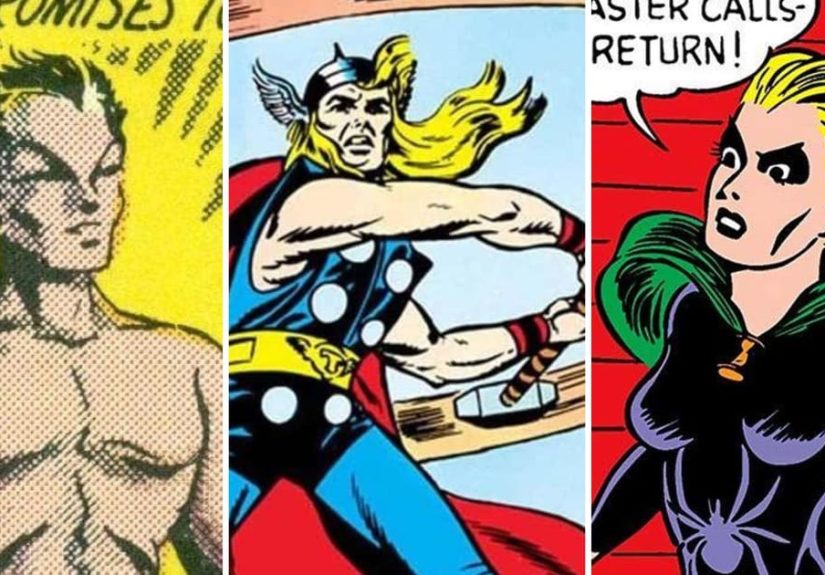
1) Namor the Sub-Mariner 1939
Marvel’s amphibious antihero first splashed onto the page in an unreleased 1939 giveaway, Motion Picture Funnies Weekly #1, then properly reached readers in Marvel Comics #1 later that year. That makes the Black Panther: Wakanda Forever scene-stealer the oldest MCU character by publication date.
2) Captain America (Steve Rogers) 1941
Star-spangled Steve debuted socking Hitler right on the jaw in Captain America Comics #1 (cover-dated March 1941). He’s been Marvel’s moral compassand occasional man out of timeever since.
3) Bucky Barnes 1941
Cap’s young partner arrived the very same day in Captain America Comics #1, decades before the Winter Soldier twist gave the character a second life.
4) Red Skull 1941
Here’s a fun wrinkle: a “Red Skull” (George Maxon) shows up in Captain America Comics #1, but Johann Schmidtthe version the MCU usesmakes his bona fide debut in issue #7. Either way, the Skull’s roots are Golden Age deep.
5) Groot 1960
Before he was the sweetest Guardian in the galaxy, Groot started life as a full-on monster-of-the-month in Tales to Astonish #13 (1960). Decades later, he learned three words and stole all our hearts.
6) Ant-Man (Hank Pym) 1962
Dr. Hank Pym first appears in the short story “The Man in the Ant Hill” in Tales to Astonish #27 (Jan. 1962); he doesn’t don the superhero identity until later that year. The MCU leans on older-mentor Hank and protégé Scott Lang, but the print first belongs to Pym.
7) The Incredible Hulk 1962
The Incredible Hulk #1 (May 1962) gives us Bruce Banner’s rage-powered alter ego, inspired by classic monster tales with a nuclear-age twist. That volatile origin still echoes through his MCU arc.
8) Thor 1962
Jack Kirby, Stan Lee, and Larry Lieber dropped a thunderbolt on readers in Journey into Mystery #83 (1962). Mythology meets the Marvel method: it’s the template the MCU keeps riffing on.
9) Spider-Man 1962
Peter Parker’s life changed forever in Amazing Fantasy #15 (Aug. 1962). Even with Sony-shared custody, the MCU’s take respects that humble, hard-luck origin.
10) Loki 1962 (with a 1949 footnote)
As the trickster we know, Loki debuts in Journey into Mystery #85 (1962). Comics historians also note an earlier, pre-Marvel appearance in Venus #6 (1949), but the widely cited “modern Marvel” first is the 1962 issue.
11) Iron Man (Tony Stark) 1963
Tony armors up for the first time in Tales of Suspense #39 (1963). From bulky gray to red-and-gold chic, that debut suit launched a dynastyon the page and on the screen.
12) Nick Fury 1963
Before S.H.I.E.L.D. and the eye patch, there was Sgt. Fury: Nick’s first bow is the WWII book Sgt. Fury and His Howling Commandos #1 (1963). The spy-master era followed a couple years later.
13) Doctor Strange 1963
The Sorcerer Supreme enters via a five-page dreamlike tale in Strange Tales #110 (1963), planting seeds for the mystical side of Marvel that the MCU now leans on for multiversal mayhem.
14) The Wasp (Janet Van Dyne) 1963
Janet debuts in Tales to Astonish #44 (1963) and becomes a founding Avenger. The MCU’s elder-stateswoman version honors her pioneering roots.
15) Black Widow (Natasha Romanoff) 1964
Natasha first slinks onto the scene as a Cold War spy in Tales of Suspense #52 (1964), years before the black suit and the red ledger. The long game has always been her brand.
16) Hawkeye (Clint Barton) 1964
Clint shows up in Tales of Suspense #57 (1964), initially a misguided foil for Iron Man before graduating to fan-favorite Avenger with a trick arrow for every occasion.
17) Scarlet Witch & Quicksilver 1964
The Maximoff twinskey players in both comics and the MCUmake their entrance together in X-Men #4 (1964), complicated family history included.
18) Kang the Conqueror 1963/1964
Time travel makes everything messy. Nathaniel Richards first appears as the pharaoh Rama-Tut in Fantastic Four #19 (1963), then as Kang proper in Avengers #8 (1964). Either way, he’s a Silver Age heavyweight now central to the MCU’s multiverse saga.
19) Black Panther (T’Challa) 1966
Wakanda’s king premiered in Fantastic Four #52 (1966), years before he headlined a billion-dollar cultural milestone.
What the dates tell us (and why they matter for the MCU)
Golden Age vs. Silver Age DNA: The MCU’s oldest heads skew Silver Age (early ’60s)Thor, Hulk, Spider-Man, Iron Manbecause that era standardized the “flawed hero” template Hollywood adores. Namor and the Captain America cast are the big Golden Age exceptions, and the MCU embraces that by keeping their wartime contexts intact.
Monsters become mascots: Groot’s journey from 1960s sci-fi oddity to team-hug MVP shows how flexible Marvel’s toy box is. The MCU often turns deep-cut premises into crowd-pleasers without betraying first-appearance origins.
Continuity curves: Loki’s 1949 footnote (Venus #6) and Kang’s multiple identities illustrate how “firsts” can be technical. For rankings, the accepted industry practice is to credit the earliest published appearance of the version most consistent with modern continuity (JIM #85 for Loki; FF #19/Avengers #8 for Kang).
Quick-reference list
(Oldest to “younger”): Namor (1939) → Captain America, Bucky, Red Skull (1941) → Groot (1960) → Hank Pym/Ant-Man, Hulk, Thor, Spider-Man, Loki (1962) → Iron Man, Nick Fury, Doctor Strange, Wasp (1963) → Black Widow, Hawkeye, Scarlet Witch & Quicksilver, Kang (1963/1964) → Black Panther (1966).
FAQs fans always ask
“Does an Easter egg count?”
Nope. A mannequin of the original Human Torch in The First Avenger isn’t the same as the character being in the MCU, so he’s not ranked herethough he did debut alongside Namor in Marvel Comics #1.
“Why isn’t every Eternal or Asgardian at the top?”
We’re measuring publication age, not in-story millennia. That’s why Thor (1962) is “younger” than Namor (1939) in this list.
Conclusion
From Namor’s 1939 splash to the Silver Age wave that birthed the Avengers, the MCU’s roster is built on decades of comics invention. Those first appearances are more than trivia; they’re creative blueprints the films remix with modern polish.
SEO wrap-up
sapo: Curious who truly counts as the oldest MCU character? We ranked Marvel Cinematic Universe favorites by their first comic book appearance, verified across classic issues and reputable references. Discover why Namor beats even Thor and Captain America on publication age, how Loki’s “first” is trickier than it looks, and where icons like Iron Man, Spider-Man, Black Widow, and Kang land. A quick, witty, deeply sourced tour of Marvel historybuilt for fans and SEO-friendly for everyone else.
500-Word Bonus: The Fan Experience of Chasing First Appearances
Digging into first appearances is a bit like time travel with a paper passport. You pick up a comicsometimes a brittle reprint, sometimes a pristine facsimileand instantly land in the era that made it. The panel borders are a little wider in the Golden Age; the narration is louder; the heroes more earnest and the villains more cackly. Reading Namor’s earliest story, you can feel the punchy, pulpy swagger of 1939. The lines are bolder, the captions unapologetically declarative. Then you turn the page and realize: this is the DNA of modern Marvel. The MCU’s regal, complicated Namor flows directly from that brash prince of Atlantis who barged into the surface world’s business.
Slide forward to March 1941 and you’ll find a star-spangled introduction that still crackles. The iconic cover with a right hook to tyranny isn’t just a marketing image; it’s a mission statement for a character built to embody wartime resolve. Reading that first Cap tale today, the wartime urgency roars off the page. Then, as you follow later Avengers stories, the “man out of time” poignancy adds deptha trick the MCU cleverly leans on to pivot Cap from propaganda to personhood.
By the early ’60s, the rhythm changes. You can almost hear the clatter of a bullpen turning out world-beaters: Thor’s mythic thunder, Hulk’s atomic angst, Spider-Man’s teen drama, Iron Man’s techno-tension. These aren’t distant, idealized heroes; they’re flawed, funny, frequently overwhelmed people with day jobs and rent. That’s why first appearances from this period feel oddly modern. Read Amazing Fantasy #15 and you’ll find a full story in 11 pages that still nails Peter’s anxiety, humor, and responsibility. Check Tales of Suspense #39 and watch Tony Stark’s origin synthesize sci-fi adventure with uncomfortable geopoliticsproof the character always carried a sharp edge under the charm.
And then there are the surprises. Loki has that delightful continuity quirktechnically popping up in a 1949 romance-and-myth anthology long before his famous 1962 debut. Kang arrives under another name, Rama-Tut, a year before the armor. When you chase firsts, you’ll bump into these rabbit holes constantly. They’re not gotchas; they’re invitations to savor how comics evolve. The MCU’s job is to distill that history into a two-hour cocktail. Your job, as a reader, is to taste the original recipe.
Practically speaking, exploring first appearances is easier than ever. Official digital editions put the original issues a tap away, and annotated guides help sort cameos from full debuts. When you sequence them chronologically, you’ll notice a pattern: Marvel has always been experimenting. Monsters become mascots (hello, Groot), war books become spy epics (Nick Fury), and supporting players bloom into headliners (the Wasp). Seeing those beginnings reframes the MCU not as an adaptation machine, but as a long conversation across decadesone where every new screen moment is answering something the comics asked first.