Table of Contents >> Show >> Hide
- What “The Perfect Peel” Usually Refers To
- How a Chemical Peel Resurfaces Skin (No, It’s Not Sandpaper)
- What’s in The Perfect Derma Peel (and What Each Ingredient Does)
- What Skin Concerns Can It Help?
- What the Appointment Is Like
- The Week After: A Realistic Timeline (a.k.a. “Why Is My Face Shedding?”)
- Aftercare Rules That Actually Matter
- Risks, Side Effects, and “Whoops” Moments
- Who Should Be Extra Careful (or Skip It)
- So… Is It Worth It? A Practical Decision Checklist
- Alternatives That Might Fit Better
- How to Make It Safer (and Get Better Results)
- Final Verdict
- Real Experiences: What It’s Like Living Through “The Peel Week” (About )
If you’ve ever looked in the mirror and thought, “My face feels like it’s buffering,” welcome. You’re not alone.
Between sun exposure, breakouts, stress, and whatever skincare trend your group chat discovered at 1 a.m., skin can
start looking dull, blotchy, or just… tired.
That’s where chemical peels enter the chatespecially the one people often call “The Perfect Peel.” It’s marketed as a
faster, brighter, smoother-skin reset with a predictable week-long peeling phase. But how does it actually work, what’s
in it, and does the glow justify the downtime?
Let’s break it down in plain American English, with a little humor (because your skin is about to shed like a snake,
and you deserve emotional support).
What “The Perfect Peel” Usually Refers To
In most U.S. med-spa and dermatology settings, “The Perfect Peel” is shorthand for The Perfect Derma Peel,
a branded, in-office chemical peel that’s typically described as medium-depth or “medical grade.”
Medium-depth matters because it’s a stronger category than the light, lunchtime peelsyet not as extreme as deep phenol peels
that can come with longer recovery and higher risk.
The big selling point is that it combines a few well-known exfoliating acids in one formula, aiming to improve:
tone, texture, dark spots, fine lines, and sometimes acne and
post-acne marks. Results are often discussed in “one-week” terms because visible peeling typically plays out over several days.
How a Chemical Peel Resurfaces Skin (No, It’s Not Sandpaper)
Chemical peels work by applying a controlled chemical solution that causes the outer layers of skin to loosen and shed.
Think of it like carefully removing a worn-out topcoat so fresh, more even skin can show up underneath.
The simple science
- Exfoliation at a deeper level: Acids break down the “glue” that holds dead skin cells together, so they release more evenly.
- Controlled inflammation: The skin responds to the peel as a mild injury, kicking off a repair process.
- Regeneration and remodeling: As the skin heals, it can look smoother, more uniform, and more radiant. Some medium peels may also
encourage collagen changes over time, which can help with fine lines and texture.
The key phrase here is controlled. A peel should be done at the right depth, with the right prep, by the right professional,
because the line between “glowy” and “ow-y” is thinner than you think.
What’s in The Perfect Derma Peel (and What Each Ingredient Does)
The brand highlights a blend of multiple ingredients. Here’s the “why it’s in there” versionwithout the marketing confetti:
Core exfoliants
- TCA (Trichloroacetic Acid): A classic peel ingredient used to exfoliate and improve discoloration, fine lines, and texture.
- Retinoic Acid: A vitamin A derivative that speeds up cell turnover (great for glow, also great at making you flaky if you overdo it).
- Salicylic Acid: Oil-soluble exfoliant that can help with clogged pores and acne-prone skin.
- Kojic Acid: Often used for brightening and the look of dark spots.
- Phenol: A strong agent that can function as an exfoliant and is sometimes described as having a numbing effect in peel formulas.
Support ingredients
- Glutathione: An antioxidant that’s frequently discussed in brightening contexts.
- Vitamin C: Antioxidant support associated with brightening and collagen support over time.
Translation: It’s a multi-acid “team project.” That can be powerful, but it also means your skin barrier needs respect before and after.
What Skin Concerns Can It Help?
Medium-depth peels (including blends like this) are commonly used in the U.S. for:
1) Sun damage and uneven tone
If your skin has that “freckle map that wasn’t there in college,” peels can improve the look of sun-related discoloration and dullness.
Many people notice the biggest “wow” in brightness and overall tone.
2) Dark spots and post-acne marks (PIH)
Post-inflammatory hyperpigmentation (those stubborn brown marks after a breakout) can respond well to resurfacingespecially when you follow
strict sun protection afterward. This is one of the most common reasons people book a peel in the first place.
3) Texture, enlarged pores, and mild acne
Salicylic acid plus stronger exfoliants can help with congestion. But if acne is moderate-to-severe, a peel is usually a supporting actor,
not the main character.
4) Fine lines and “tired” skin
Peels can soften the look of fine lines by smoothing surface texture and encouraging healthier turnover. Deep wrinkles usually need a different plan
(sometimes lasers, sometimes injectables, sometimes embracing your “expressive forehead era”).
What the Appointment Is Like
Most in-office chemical peels follow a similar arc:
- Consultation: Your provider checks your goals, skin type, medical history, and any “please don’t do this” red flags.
- Prepping the skin: Cleansing and degreasing so the peel applies evenly.
- Application: The solution is painted on. You’ll likely feel stinging, warmth, or a spicy tingle.
- Instructions + aftercare: You leave with a plan (and you should follow it like it’s a treasure map).
The peel itself is usually quick. The real “event” is the week after.
The Week After: A Realistic Timeline (a.k.a. “Why Is My Face Shedding?”)
Healing time depends on peel depth, your skin type, and how closely you follow aftercare. Medium-depth peels often involve several days of visible peeling,
and many reputable dermatology sources describe roughly a 7–14 day healing window for medium peels overall (with swelling and redness often worst in the first 48 hours).
Typical day-by-day vibe (general pattern)
- Day 1: Tightness, mild redness, “sunburn-lite” feeling.
- Days 2–3: More tightness, some dryness, maybe light flaking. You’ll be tempted to exfoliatedon’t.
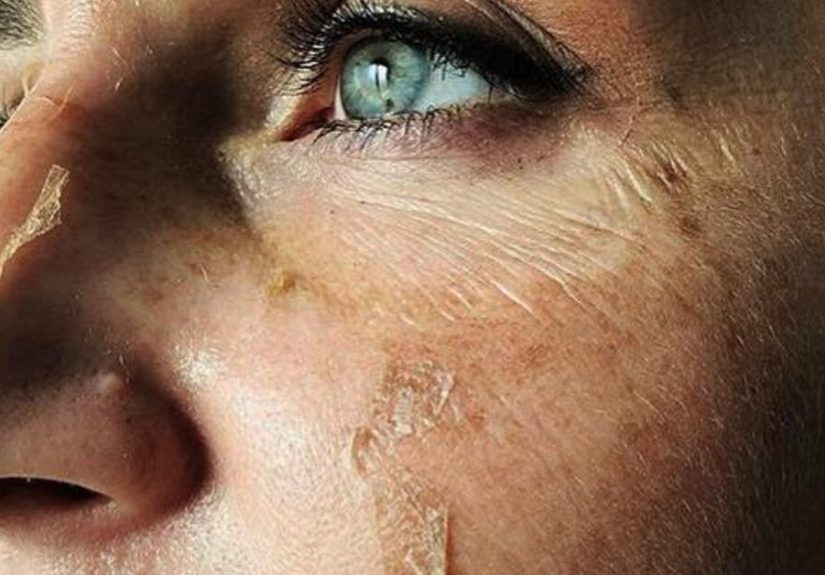
- Days 3–6: The main peel: sheets or flakes around the mouth, nose, and chin, then outward. Makeup application can get… ambitious.
- Days 7+: Peeling winds down. You may still have sensitivity and dryness even after the flakes stop.
Important: “Done peeling” does not automatically mean “fully healed.” Your skin can remain more sensitive and sun-reactive for a while.
Aftercare Rules That Actually Matter
If you want your peel to be worth it, treat aftercare like it’s your second job (but with fewer meetings and more moisturizer).
Do
- Keep it gentle: Mild cleanser, bland moisturizer, and whatever post-peel products your provider recommends.
- Protect from the sun: Daily broad-spectrum sunscreen, plus hats, shade, and avoidance of “I’ll just run one errand at noon.”
- Moisturize often: Hydration helps comfort and can make the peeling look less dramatic.
- Let the skin shed naturally: Picking can increase the risk of irritation, scarring, or discoloration.
Don’t
- Don’t use scrubs or brushes: This is not the week for “polishing.”
- Don’t restart retinoids/acids too early: Your barrier is already busy rebuilding.
- Don’t plan big events mid-peel: Unless your theme is “fashion lizard.”
Risks, Side Effects, and “Whoops” Moments
Even when performed correctly, chemical peels can cause temporary redness, swelling, crusting, and sensitivity. More serious risks existrare, but real
including infection, scarring, and pigment changes (darkening or lightening). Some pigment changes can be persistent, and risk can be higher in deeper peels
or in certain skin tones.
Common side effects
- Redness and tightness
- Dryness and flaking
- Temporary sensitivity and increased sun reactivity
Less common but important risks
- Hyperpigmentation or hypopigmentation: Darker or lighter patches after healing.
- Scarring: Uncommon, but possibleespecially if you pick, get an infection, or peel too deeply.
- Infection: Bacterial infections are rare; viral flares (like cold sores) can happen in people with a history of herpes simplex.
This is also why “DIY medium-depth peel adventures” are a bad idea. The FDA has specifically warned consumers against using certain chemical peel products
without appropriate professional supervision due to serious injury risk.
Who Should Be Extra Careful (or Skip It)
A qualified provider should screen you, but here are common “pause and talk to a dermatologist” situations:
- Pregnancy or breastfeeding: Many providers avoid stronger peels or retinoid-containing treatments.
- History of keloids or poor wound healing: Increased scarring risk may change the plan.
- Very sensitive skin, eczema, rosacea flares: You may need a gentler approach or a different timing strategy.
- Recent isotretinoin use: Some patients need extra caution and medical guidance due to healing concerns.
- Deeper skin tones or melasma-prone skin: Peels can still be an option, but pigment-risk planning is crucial.
- Cold sore history: Ask about antiviral prevention.
So… Is It Worth It? A Practical Decision Checklist
“Worth it” depends on your goals, your schedule, and your tolerance for looking a bit like you’re moulting.
Here’s a realistic way to decide.
It’s more likely worth it if…
- You want noticeable improvement in brightness, tone, and texture in a short window.
- You can commit to strict sun protection and gentle aftercare.
- You have a week where you don’t need to be on-camera daily.
- You’re working with a trained professional who understands your skin type and pigment risk.
It’s less likely worth it if…
- You can’t avoid sun exposure (outdoor work, travel, or “I live at the beach”).
- You’re hoping it will erase deep wrinkles or severe acne on its own.
- You pick at your skin when stressed (no judgmentjust a warning label).
- You’re chasing perfection instead of improvement (skin is a living organ, not a marble countertop).
Cost reality check
Pricing varies by region, provider, and depth. Professional organizations note that costs can range widely, and published averages often reflect broad “skin resurfacing”
categories rather than a single peel type. In other words: expect anything from “a few hundred” to “more serious investment,” and ask for a complete quote
that includes prep products and follow-ups.
Alternatives That Might Fit Better
If you like the idea of resurfacing but not the drama of peeling, consider discussing these options with a dermatologist:
- Series of light peels: More subtle per session, often less downtime, but may require multiple visits.
- Topicals: Prescription retinoids, azelaic acid, hydroquinone (when appropriate), and consistent sunscreen can do a lot over time.
- Microneedling: Helpful for texture and some scarring, often with a different downtime profile.
- Laser treatments: Can be powerful for pigment and texture, but require careful selection for skin tone and goals.
How to Make It Safer (and Get Better Results)
Choose the right provider
Look for a board-certified dermatologist or an experienced, properly supervised medical professional in a reputable practice. The depth and safety of a peel depend heavily
on the person performing it and the protocols they follow.
Be honest in your consult
Tell them about cold sores, medications (including acne meds), recent tanning, and any history of pigment issues. This isn’t the time to be mysterious.
Your skin will snitch anyway.
Commit to sun protection
Sun exposure is one of the biggest reasons post-peel discoloration happens. If you do one thing perfectly: make it sunscreen and shade.
Final Verdict
The Perfect Peel (often The Perfect Derma Peel) can be a solid option if you want a noticeable refresh in tone and texture and you can handle a week of downtime.
Its multi-ingredient formula is designed to exfoliate, brighten, and support clearer-looking skinbut it’s still a medium-strength peel, meaning the benefits come with real
aftercare responsibilities and real risks.
If you’re a good candidate and you do it with a qualified professional, it can absolutely feel “worth it.” If you’re hoping for a miracle with zero peeling,
zero sunscreen, and zero lifestyle adjustment… your skin will decline that request.
Real Experiences: What It’s Like Living Through “The Peel Week” (About )
Most people don’t remember the exact day they got a chemical peelthey remember the moment they tried to smile on Day 3 and felt their face crackle like a crème brûlée top.
“Peel week” has a personality, and it tends to show up uninvited in selfies.
Experience #1: The first-timer chasing glow. A lot of newcomers describe Day 1 as surprisingly uneventful: a little warmth, a little tightness, and a mild
“Did I stand too close to the toaster?” look. Confidence rises. Plans get made. Then Day 3 arrives. The mouth and chin start flaking, and suddenly your foundation looks like it was applied with a broom. The first big lesson hits:
you can’t “out-makeup” active peeling. The second lesson follows quickly: picking is tempting, but it usually backfires. People who leave the flakes alone and keep moisturizing often say the process feels calmerand the final reveal looks more even.
Experience #2: The acne/PIH crowd who wants the spots gone yesterday. If you’re doing a peel for post-acne marks, you might feel impatient because the first days
can look worse before they look better. Some describe a “bronzed” or “darker” cast before the old skin lifts off. Peeling can come in sheets around the nose and jaw, which is both satisfying and alarminglike your skin is trying to return itself to the manufacturer.
The people happiest with their results tend to be the ones who treat sun protection like religion for the next several weeks. They’ll tell you: the peel helped, but the sunscreen sealed the deal.
Experience #3: The “I’m doing this for texture and fine lines” planner. Many in this group schedule peels strategicallyright before a long weekend, remote-work week,
or any stretch where Zoom can stay “camera off.” They often describe the peeling as manageable but socially awkward. Eating a burger? A bold choice. Laughing too hard?
Risky. The upside: once the shedding stops, they commonly notice makeup sits smoother, skin looks brighter, and their face feels softer. The biggest surprise is that the “new skin”
can still feel tender for a bit, so they simplify their routine longer than expectedgentle cleanser, moisturizer, SPF, repeat.
Across all experiences, the consistent themes are: plan your downtime, don’t pick, keep products gentle, and protect your skin from the sun like it’s your full-time job.
And emotionally? It helps to remember that peeling is not a sign something is “wrong.” For many people, it’s simply the process doing what you asked it to dojust loudly,
visibly, and with zero concern for your social calendar.