Table of Contents >> Show >> Hide
- Meet LCLS-II: The Heavyweight Champion of X-Ray Lasers
- Peeking Into the Atomic World in Real Time
- From Protein Movies to Planet Interiors
- A Friendly X-Ray Laser “Arms Race”
- What Comes Next: LCLS-II-HE and Attosecond Dreams
- Why This Matters for Everyday Life
- Real-World Experiences and Lessons from the X-Ray Laser Revolution
- Conclusion: A Superpowered Flashlight for the Atomic World
Picture a camera so fast it can snap a photo of an electron mid-dance and a flashlight so bright it can see inside planets, proteins, and batteries. Now combine them, park the whole setup in California, cool it near absolute zero, and you get the most powerful X-ray laser on Earth: LCLS-II.
This machine isn’t just another shiny toy for physicists. It’s a global-scale upgrade for science, promising breakthroughs in clean energy, quantum tech, medicine, and climate research. And yes, it’s also a bit terrifying in a “how is this even possible?” kind of way.
Meet LCLS-II: The Heavyweight Champion of X-Ray Lasers
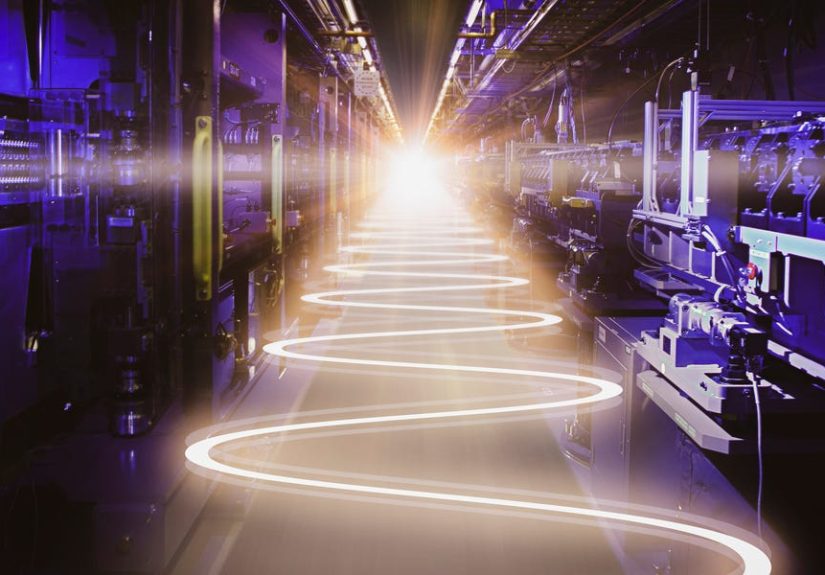
The Linac Coherent Light Source II (LCLS-II) lives at the SLAC National Accelerator Laboratory in California, operated by Stanford University for the U.S. Department of Energy. It’s an X-ray free-electron laser (XFEL), which is a fancy way of saying it uses a high-energy electron beam to generate laser-like X-ray pulses with extreme brightness and ultra-short duration.
The original LCLS was already a big deal when it came online in 2009. It could fire about 120 X-ray pulses per second. Impressive… until LCLS-II showed up, looked at those numbers, and said, “Cute.”
At full power, LCLS-II can unleash around 1 million X-ray pulses every second, about 8,000 times more than its predecessor. Its X-ray beam can be up to 10,000 times brighter, making it the world’s most powerful X-ray laser by a comfortable margin.
Even better, it can produce both “soft” X-rays (great for studying chemistry and biology) and “hard” X-rays (perfect for probing dense materials and extreme conditions), all while running at this blistering repetition rate.
How an X-Ray Free-Electron Laser Works (Without Melting Your Brain)
Traditional lasers usually rely on atoms or molecules inside a crystal, gas, or fiber to generate light. An XFEL skips that and uses a beam of electrons instead:
- Electrons are accelerated to near light speed in a long linear accelerator (linac).
- They’re then sent through a series of powerful magnets called undulators that wiggle the electrons back and forth.
- As they wiggle, the electrons emit X-rays that line up in phase, forming an intense, laser-like X-ray beam.
LCLS-II’s secret sauce is its superconducting accelerator, cooled with liquid helium to just a few degrees above absolute zero. This lets it run in a nearly continuous mode instead of firing short bursts, which is the key to reaching that million-pulse-per-second regime.
What Makes LCLS-II Such a Leap Forward
Compared with earlier X-ray lasers and even top-tier synchrotron facilities, LCLS-II changes the game in three main ways:
- Repetition rate: From 120 pulses per second to around 1,000,000. That means vastly more data in the same amount of time.
- Brightness: Up to 10,000 times brighter than the original LCLS, allowing scientists to look at smaller samples, weaker signals, and faster processes.
- Energy range and flexibility: With both soft and hard X-rays, experiments can be tuned to match the atomic and electronic structure of everything from biological molecules to quantum materials.
On top of that, a new upgrade called LCLS-II-HE (High Energy) has been approved to double the energy of the electron beam and deliver an additional boost in X-ray brightnessespecially for hard X-rays used to probe dense, complex materials at the atomic level.
Peeking Into the Atomic World in Real Time
The real magic of LCLS-II isn’t just that it’s bright; it’s that it’s bright and fast. Most important events in chemistry and physics happen on mind-bending timescales: trillionths (femtoseconds) or even quadrillionths (attoseconds) of a second. XFELs like LCLS-II can send out pulses short enough to freeze those motions into “frames,” like a cosmic high-speed camera.
Watching Chemistry Happen
In traditional chemistry class, you draw arrows and reaction mechanisms on the board and pretend you know exactly how electrons shuffle around. With LCLS-II, you can actually watch some of this happen.
Using ultrafast X-ray pulses in pump–probe experiments, scientists can:
- Kick off a chemical reaction with a laser “pump” pulse.
- Then probe the system with X-rays at different time delays, building a frame-by-frame view of how atoms and electrons move.
Recently, researchers used ultrafast X-ray flashes to directly image how a single valence electron moved during the breakup of an ammonia moleculea milestone that shows how far this technology can go in visualizing the electronic heart of chemistry.
With LCLS-II’s high repetition rate, researchers can repeat experiments many times, capturing more statistics, testing small variations, and reducing noise. That means clearer movies of electrons, bonds, and molecules in motion, not just grainy snapshots.
Designing Quantum Materials and Next-Gen Electronics
Quantum materialssuperconductors, topological insulators, strange magnetsbehave in ways that ordinary materials simply don’t. But to design them on purpose instead of stumbling onto them by luck, scientists need to see how electrons and atoms behave through phase transitions, under electric fields, or in extreme conditions.
LCLS-II can:
- Probe how electrons rearrange when a material switches from insulating to conducting.
- Map subtle changes in crystal structure as temperature or pressure changes.
- Study how ultrafast laser pulses can nudge materials into temporary exotic states that may be harnessed for future electronics or quantum computing devices.
Better Catalysts and Clean Energy Tech
Catalystsmaterials that speed up chemical reactionssit at the center of many climate and energy technologies, from hydrogen production and CO2 conversion to cleaner fuel generation. The catch is that catalysts often do their most interesting work at surfaces and in fleeting intermediate states that are hard to capture.
LCLS-II’s intense X-ray pulses can:
- Reveal how atoms rearrange on catalytic surfaces during real reactions.
- Track oxidation states and electronic changes as molecules bind and react.
- Help design more efficient, cheaper catalysts that waste less energy and use fewer rare elements.
From Protein Movies to Planet Interiors
Life Sciences and Drug Discovery
Biological molecules like proteins and enzymes aren’t rigid blocks; they flex, twist, open, and close like nano-scale machines. Traditional X-ray crystallography at synchrotrons lets us see static structures. XFELs like LCLS-II push that into the time domain, enabling time-resolved protein crystallography and even experiments on tiny or disordered samples.
With LCLS-II, scientists can:
- Watch how drug molecules bind to their targets.
- Capture intermediate states in enzymes that are visible only for femtoseconds.
- Study delicate systems that would be damaged by slower, less intense X-ray techniques.
This can speed up the process of designing more precise medicines and understanding diseases at a molecular level, from viral entry mechanisms to protein misfolding in neurodegenerative conditions.
Extreme Conditions: Inside Planets and Fusion Reactors
Want to know what’s going on in the core of a giant planet or inside a fusion experiment? You can’t exactly stick a thermometer in there. Instead, scientists use high-powered lasers and shock waves to compress materials to extreme pressures and temperatures, then probe them with X-rays.
LCLS-II can:
- Probe matter at pressures millions of times higher than atmospheric pressure.
- Reveal how materials’ structures change when they’re squeezed and heated like they are in planetary cores.
- Help evaluate materials and plasmas relevant to fusion energy and advanced aerospace technologies.
These measurements aren’t just fun science; they feed into models of planetary formation, climate, and energy systems that affect life here on Earth.
A Friendly X-Ray Laser “Arms Race”
X-ray free-electron lasers are expensive, complex, and rare. There’s the European XFEL near Hamburg, facilities in Japan and elsewhere, and now LCLS-II giving the U.S. a strong lead again in what you might call a very nerdy, very friendly “arms race” of photon science.
These machines don’t compete like sports teams so much as complement each other:
- Different XFELs specialize in different energy ranges and pulse structures.
- Scientists often hop from one facility to another, chasing the configuration that best fits their project.
- Techniques pioneered at one facility often spread to others, accelerating global progress.
LCLS-II’s million-pulse-per-second capability, combined with its upgrade path to even higher X-ray energies, means it will likely serve as a flagship lab for many of the most demanding experiments in years to come.
What Comes Next: LCLS-II-HE and Attosecond Dreams
The already-approved LCLS-II-HE upgrade aims to double the energy of the electron beam in the superconducting accelerator and dramatically boost the performance for high-energy (hard) X-rays. This will allow scientists to:
- Study heavier elements and more complex materials with atomic precision.
- Penetrate thicker samples and devices without losing crucial detail.
- Explore new schemes for generating ultra-short, ultra-intense X-ray pulses.
Researchers are also developing advanced FEL techniques that could push pulse durations into the attosecond (10−18 second) range and reach even higher peak powers. That would open the door to tracking electron motion almost in real time and testing some of the deepest ideas in quantum physics.
Why This Matters for Everyday Life
No, you won’t have an X-ray free-electron laser in your garage. And thankfully, LCLS-II will not be used to toast hot dogs or recharge your phone. But the technologies and discoveries it enables will quietly filter into daily life:
- Better batteries and electronics that charge faster, last longer, and waste less energy.
- Smarter drugs that target diseases more precisely and with fewer side effects.
- Cleaner energy systems via improved catalysts, solar materials, and fusion research.
- More accurate climate models informed by better data on materials, aerosols, and planetary processes.
Big science projects like LCLS-II can seem remote, but they function like mega-labs for the whole world, turning incredibly hard measurements into actionable knowledge that industry, medicine, and policymakers can use.
Real-World Experiences and Lessons from the X-Ray Laser Revolution
To really grasp what LCLS-II brings to science, it helps to imagine the experience from the people who actually use it. Picture a young researcher flying into California with a hard drive full of simulations, months of planning, and a suitcase packed with coffee and optimism.
Before they even arrive, their experiment has gone through intense competition and peer review. Beam time at an XFEL is precious, and proposals are scored like scientific Olympic trials. Only the most promising ideasthose that genuinely need LCLS-II’s insane brightness and repetition ratemake the cut.
Once at SLAC, the real adventure begins. The experimental hall looks like a cross between a sci-fi movie set and an industrial warehouse: vacuum chambers, cryostats, detectors the size of cars, and miles of cables. Our researcher joins a small army of engineers, technicians, data scientists, and beamline scientists, all focused on making sure that when the X-ray pulses start flying, every photon counts.
Running an experiment on LCLS-II is both exhilarating and slightly stressful. With up to a million pulses per second, data flows at ridiculous rates. In just a few hours, the instrument can generate more information than some older facilities produced in years. That means the team must monitor data quality in real time, tweaking sample conditions, laser timing, and detector settings on the fly.
There are also practical lessons. Samples may burn, melt, explode, or disappear if the beam is too intense or misaligned. Researchers learn to design clever delivery systemsliquid jets, moving targets, rapidly refreshed crystalsso every pulse hits fresh material. They discover that “alignment” at these scales means positioning things to within micrometers, while working in vacuum and under tight time pressure.
But the payoff can be huge. For a chemist, seeing the structural fingerprint of a short-lived intermediate that existed for only a few femtoseconds is like discovering a missing page in the textbook of how reactions really work. For a biologist, capturing multiple “frames” of a protein in action can reveal where a drug should bind or how a mutation breaks its function. For a materials scientist, watching a new quantum phase appear under laser excitation can suggest entirely new device concepts.
Even the data analysis is a learning experience. Teams routinely handle petabytes of information, using machine learning and advanced algorithms to sift through patterns, remove noise, and reconstruct atomic-scale movies. Students who train at facilities like LCLS-II come away not only with physics and chemistry skills but also with serious experience in big-data workflows and high-performance computing.
Over time, these experiences shape how scientists think about designing experiments. Instead of asking only, “What can I measure?” they start asking, “What dynamic process can I see with a million pulses per second?” They dream up more ambitious ideas: mapping entire reaction pathways, screening materials under realistic operating conditions, or combining X-rays with other probes to build a more complete picture of complex systems.
Perhaps the most striking “experience” is cultural. Facilities like LCLS-II are global melting pots of expertise. In a single control room, you might find a condensed-matter physicist from the U.S., a biochemist from Europe, a materials engineer from Asia, and a data scientist from just about anywhere. They share not just beam time but also ideas, code, and coffee-fueled late-night debugging sessions. The world’s most powerful X-ray laser becomes less a machine and more a hub for collaborative discovery.
Conclusion: A Superpowered Flashlight for the Atomic World
LCLS-II takes the core idea of X-ray scienceusing short-wavelength light to see tiny thingsand pushes it to an extreme. With its million-pulse-per-second repetition rate, enormous brightness, and upgrade path to higher energies, it gives researchers a tool that can finally keep up with the ultrafast, ultra-small world of atoms and electrons.
From protein dynamics and quantum materials to catalysts, clean energy, and planetary interiors, the world’s most powerful X-ray laser is less about building a bigger toy and more about opening a new window into reality. It won’t solve every scientific problem, but it will make it possible to askand answerquestions that were once pure speculation.
In short, LCLS-II isn’t just an X-ray laser. It’s a time machine, a microscope, a movie camera, and a crystal ball for the atomic worldall rolled into one very cold, very clever, and very powerful machine.
SEO Summary
meta_title: World’s Most Powerful X-Ray Laser, Explained
meta_description: Discover how the world’s most powerful X-ray laser, LCLS-II, is transforming sciencefrom quantum materials to clean energy and medical breakthroughs.
sapo: The world’s most powerful X-ray laser, LCLS-II, doesn’t just break recordsit reshapes what science can do. By firing up to a million ultra-bright X-ray pulses per second, this next-generation free-electron laser lets researchers watch electrons move, proteins flex, and materials transform in real time. From cleaner energy and breakthrough drugs to quantum technologies and planetary science, LCLS-II turns once-impossible experiments into everyday reality for scientists. Here’s how this machine works, why it matters, and what its future upgrades could mean for the rest of us.
keywords: world’s most powerful X-ray laser, LCLS-II, X-ray free-electron laser, SLAC X-ray laser, ultrafast X-ray science, XFEL applications