Table of Contents >> Show >> Hide
- What Makes a Great Field Tactician?
- The Top 10 Military Field Tacticians in History
- 1. Hannibal Barca – The Man Who Nearly Broke Rome
- 2. Alexander the Great – Hammer, Anvil, and Never Losing
- 3. Napoleon Bonaparte – Lightning on the Battlefield
- 4. Khalid ibn al-Walid – The Sword of God and the Master of Mobility
- 5. Subutai – The Mongol Genius Who Could Be in Two Places at Once
- 6. Erwin Rommel – The Desert Fox
- 7. Georgy Zhukov – Architect of the Red Army’s Counterblows
- 8. Ulysses S. Grant – Quiet, Relentless, and Very Hard to Beat
- 9. George S. Patton – The Armored Spearhead
- 10. Saladin – The Patient Lion of the Crusades
- Big-Picture Lessons from History’s Field Tacticians
- A Writer’s-Eye View: Imagining the World of Great Field Tacticians
History is full of leaders who loved parades, speeches, and signing things with fancy pens.
This list is not about them. This is about the people who walked onto chaotic, noisy, terrifying
battlefields, looked around, and thought, “Okay, here’s how we win this.”
The top 10 military field tacticians below didn’t just command armies; they reshaped
how battles were fought. From ancient phalanxes and war elephants to armored spearheads and deep
operations, these battlefield geniuses turned terrain, timing, and psychology into weapons just as
deadly as swords and tanks.
What Makes a Great Field Tactician?
A field tactician is a commander who shines in the heat of contact with the enemy. Strategy decides
why you fight; tactics decide how you survive it. The best tacticians:
- Turn disadvantages into traps for the enemy.
- Use terrain, weather, and timing as silent allies.
- Coordinate different types of troopsinfantry, cavalry, armor, artillerylike instruments in an orchestra.
- Keep their own troops motivated while quietly ruining the enemy’s confidence.
With that in mind, here is a Listverse-style rundown of ten of the
greatest military tacticians in history, focusing on what they actually did on the field of battle.
The Top 10 Military Field Tacticians in History
1. Hannibal Barca – The Man Who Nearly Broke Rome
If you’ve ever heard the phrase “Cannae-style defeat,” you’re hearing Hannibal’s shadow. The Carthaginian
general famously led his army (and those equally famous war elephants) over the Alps to fight Rome on its
own turf during the Second Punic War. At the Battle of Cannae in 216 BCE, he faced a Roman army
that vastly outnumbered his own and still turned the battlefield into a Roman disaster.
Hannibal drew the Romans into a bulging center of his line, then used stronger African infantry on the
flanks and superior cavalry to create a double envelopmentsurrounding the Roman force on all sides
and systematically crushing it. Modern military schools still study Cannae as the textbook example of how
to annihilate a larger force with clever positioning instead of raw numbers.
What made Hannibal a top-tier tactician wasn’t just one brilliant battle. He repeatedly outmaneuvered Rome
with flexible formations, careful scouting, and a deep understanding of morale. Rome ultimately won the war,
but not before Hannibal proved that even a superpower can be dragged to the edge of collapse by a commander
who knows exactly where and when to strike.
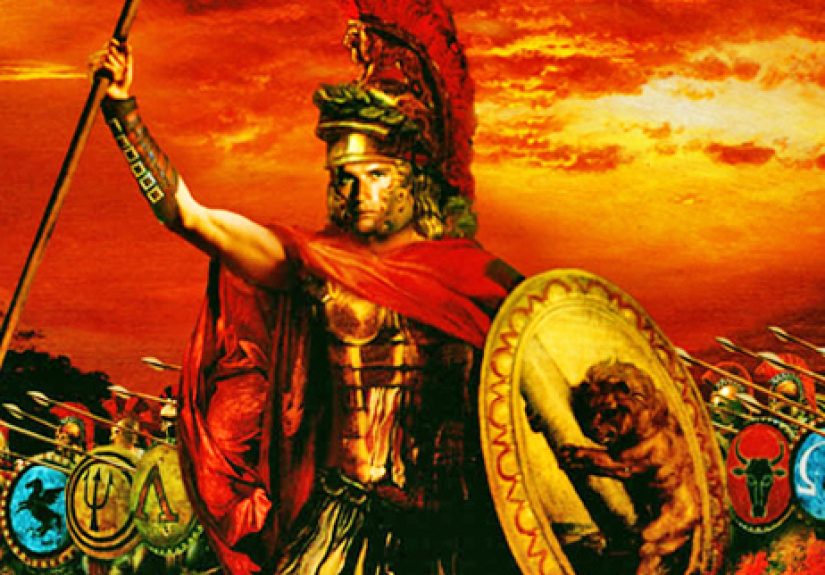
2. Alexander the Great – Hammer, Anvil, and Never Losing
Alexander III of Macedonbetter known as Alexander the Greatnever lost a major battle in his career.
That’s not just a fun fact; it’s a sign of a commander who consistently read battlefields like a chessboard
he’d already solved.
His signature approach was the “hammer and anvil” tactic: a solid phalanx of infantry pinned the enemy in place
(the anvil) while his elite Companion cavalry smashed into a flank (the hammer). In battles like Issus and
Gaugamela, Alexander used this combination of rigid discipline and shocking mobility to break larger Persian
armies that should have outmatched him on paper.
At Gaugamela, facing a Persian force that may have outnumbered his own by two-to-one or more, Alexander
used an echeloned formation and feints to draw parts of the enemy line out of position before driving a
spearhead directly at King Darius III. His ability to improvise around a core tactical conceptcombined arms,
tight coordination, and aggressive decisive blowsset the standard for battlefield leadership for centuries.
3. Napoleon Bonaparte – Lightning on the Battlefield
Napoleon wasn’t just an emperor with a cool hat; he was a field commander who rewrote how European wars
were fought. His genius lay in turning slow, rigid armies into quick, flexible instruments of shock.
Napoleon’s key innovation was the corps system. Rather than dragging one giant army blob around the map,
he organized his forces into semi-independent corps with their own infantry, cavalry, and artillery. These
corps could march separatelyspreading out to live off the landbut concentrate rapidly for battle, allowing
Napoleon to choose when and where to fight on his terms.
At the Battle of Austerlitz in 1805, sometimes called his tactical masterpiece, he deliberately weakened his
right flank to lure the Allies into attacking, then slammed into their exposed center and left. The result
was a devastating victory that crushed the combined Russian-Austrian forces and showcased his ability to turn
deception, timing, and centralized control into a perfectly timed knockout punch.
4. Khalid ibn al-Walid – The Sword of God and the Master of Mobility
In the 7th century, Khalid ibn al-Walid earned a reputation so fearsome that later tradition nicknamed him
“The Sword of God.” He reportedly fought in dozens of battles without suffering a clear defeat, leading the
early Muslim armies in campaigns against both the Byzantine and Sasanian empires.
Khalid’s hallmark was mobility and surprise. He relied heavily on fast-moving cavalry, hitting enemy forces
from unexpected directions, using feigned retreats, flanking attacks, and rapid marches that collapsed the
enemy’s sense of security. In battles such as Yarmouk, he used the terrain, shifting reserves, and coordinated
counterattacks to break larger and better-equipped opponents.
While he didn’t write grand treatises like Sun Tzu, Khalid’s battlefield record speaks for itself. He showed
how speed, flexible formations, and psychological pressure could shatter armies that were, on paper, more
powerful and more experienced.
5. Subutai – The Mongol Genius Who Could Be in Two Places at Once
If you imagine the Mongols as unstoppable horse archers thundering across the steppe, you’re imagining
the world that Subutai helped design. One of Genghis Khan’s (and later Ögedei’s) greatest generals, he was
the mastermind behind campaigns that crushed kingdoms from China to Eastern Europe.
Subutai excelled at long-range coordination and deception. He could direct multiple armies hundreds of miles apart,
luring enemies into traps and then striking from unexpected directions. At battles like Mohi in Hungary, he used
feigned retreats, night crossings, and surprise flank attacks to break heavily armored European forces that assumed
they were safe behind rivers and fortifications.
Beyond raw ferocity, Subutai’s real contribution was showing what happens when precise planning, intelligence
gathering, and disciplined cavalry tactics are fused into a single, terrifying machine. It was operational and
tactical brilliance working in sync on a continental scale.
6. Erwin Rommel – The Desert Fox
Fast forward to the 20th century and the sand-blasted battlefields of North Africa, where German General
Erwin Rommel earned the nickname “The Desert Fox.” Renowned for his daring maneuvers, Rommel led the
Afrika Korps in 1941–1943 and quickly gained fameeven among his enemiesfor his battlefield skill.
Rommel’s strength was his instinctive grasp of maneuver warfare. He combined tanks, infantry, and artillery into
flexible battle groups, probing enemy lines for weak spots, then exploiting them with rapid thrusts that could
send entire formations reeling. In operations like his early advances in Libya and the battles around Gazala,
he repeatedly used surprise, speed, and aggressive counterattacks to outplay numerically superior British forces.
His approach wasn’t flawlesslogistics and air superiority eventually caught up with himbut as a field tactician,
Rommel showed how decentralized initiative and fast decision-making could turn the desert into a playground for
armored warfare.
7. Georgy Zhukov – Architect of the Red Army’s Counterblows
Georgy Zhukov might not have had the personal flair of some other commanders on this list, but he had something
even more important: an iron understanding of large-scale battle. As a top Soviet commander in World War II, he helped
engineer some of the most decisive defeats of Nazi Germany.
Zhukov learned early about encirclement and combined arms at battles like Khalkhin Gol, where he used a pincer
movement with tanks, artillery, and air support to crush a Japanese force on the Mongolian border. Later, he applied
similar concepts on a much larger scale at Stalingrad, Kursk, and during Operation Bagration, where Soviet
offensives shattered German Army Group Center.
His style of “deep operations” emphasized layered attacks, reserves, and relentless pressure across a wide front.
Zhukov wasn’t just a strategist sitting in a headquartershe understood how to coordinate massive artillery barrages,
armor thrusts, and infantry advances so that the frontline always felt like a single, crushing wave.
8. Ulysses S. Grant – Quiet, Relentless, and Very Hard to Beat
In the American Civil War, Ulysses S. Grant didn’t look like the stereotypical military genius. He was calm,
rumpled, and famously unimpressed by theatrics. What he did have was a rare combination of tactical toughness and
operational vision that gradually strangled the Confederacy.
Grant’s campaigns in the Western Theaterespecially Vicksburgshowed his feel for timing, maneuver, and risk. He
marched his army down the western bank of the Mississippi, crossed south of the city, cut loose from his supply line,
and then beat Confederate forces in a series of quick battles before turning back to besiege Vicksburg itself. It was
a bold turning movement that split the Confederacy in two.
Later, in the Overland Campaign, Grant used relentless, grinding offensives and simultaneous pressure on multiple
fronts to pin Robert E. Lee’s army and prevent it from shifting forces. He wasn’t always tactically perfectcasualties
were highbut his ability to learn, adapt, and keep the initiative made him one of America’s most effective battlefield
commanders.
9. George S. Patton – The Armored Spearhead
If Grant was the quiet grinder, George S. Patton was the loud accelerator pedal. Known for his colorful language,
strict discipline, and aggressive style, Patton turned American armored forces into an instrument of rapid exploitation
during World War II.
Patton trained his troops obsessively, insisting on speed, readiness, and initiative. In campaigns across North Africa,
Sicily, and Western Europe, his armored divisions moved faster than many enemies believed possibleoutflanking defensive
lines, capturing key bridges, and rushing to exploit breakthroughs before the enemy could regroup.
His most famous feat came during the Battle of the Bulge, when he pivoted his Third Army north in harsh winter
conditions to relieve the besieged town of Bastogne. The speed and scale of that maneuver showcased his greatest tactical
asset: the ability to turn planning, logistics, and shock action into a single burst of momentum that left the enemy
reeling.
10. Saladin – The Patient Lion of the Crusades
Saladin, the Kurdish sultan of Egypt and Syria, became legendary in both Islamic and Western traditions for his
leadership during the Crusades. He didn’t just win battles; he did so with a combination of tactical patience and
personal chivalry that fascinated even his enemies.
At the Battle of Hattin in 1187, Saladin lured the Crusader army into arid terrain away from reliable water sources,
then harassed and encircled them. Exhausted and overheated, the Crusaders eventually collapsed under sustained attacks.
That victory opened the door for Saladin to recapture Jerusalem later that year, a symbolic and strategic triumph.
Saladin’s battlefield style emphasized careful positioning, control of resources (especially water), and coordinated
cavalry strikes against overextended foes. He proved that sometimes the best tactic is to let the enemy walk themselves
into the trap.
Big-Picture Lessons from History’s Field Tacticians
What do these ten very different commanders have in common? They weren’t just brave or lucky. They:
- Used information betterscouting, intelligence, and reading the enemy’s intentions.
- Maximized flexibilitycorps systems, mobile cavalry, and decentralized leadership.
- Chose the battlefield, or reshaped it through movement and timing.
- Understood moralea shaken army can collapse even if it still has plenty of soldiers left.
Whether you’re looking at Hannibal’s encirclements, Alexander’s hammer-and-anvil strikes, or Zhukov’s deep operations,
the same idea keeps popping up: the best tacticians don’t fight the battle the enemy wants to fight. They force the
enemy into the worst possible situation, and then they strike hard.
A Writer’s-Eye View: Imagining the World of Great Field Tacticians
It’s one thing to look at these commanders on a map, with neat arrows, clean unit symbols, and tidy legends at the bottom.
It’s another thing to imagine standing where they stood, with dust in the air, confused reports coming from all directions,
and thousands of lives riding on a decision that has to be made in minutes.
Picture yourself on the plain near Cannae at dawn. The Romans are packed in so densely that you could almost walk across
their formation on shields and helmets. Hannibal’s line bows outward in a subtle crescent, his best troops held back on
the flanks. From ground level, it doesn’t look like a neat “double envelopment.” It looks like risk. If the center breaks
too quickly, his whole plan collapses. Yet he commits anyway, trusting positioning, discipline, and timing over raw numbers.
Shift to the dust and heat of Gaugamela. You wouldn’t see Alexander as a marble statue; you’d see a commander constantly
riding along the line, adjusting, watching Persian cavalry surging toward his flanks. Somewhere in that chaos, he decides
the crucial moment has come, wheels his Companions, and aims for Darius. The arrows on the map are really the result of
hundreds of tiny observations and snap judgments made in motion.
Now move to the age of steel and oil. Imagine watching Patton’s tanks grind forward along narrow French roads or Rommel’s
panzers weaving through the North African desert. From a distance, their movements look like pure confidence. Up close,
they’re a series of gambles: Will the fuel arrive? Will the weather hold? Will the enemy’s reserves get there first?
Tactical genius doesn’t erase uncertainty; it just manages it better than the other side.
The same applies to commanders like Grant and Zhukov, whose reputations are built not on flashy charges but on long,
grinding campaigns. Standing in their shoes means accepting that some battles will be costly, that mistakes will be made,
and that the art lies in learning faster than the enemy. There’s a particular kind of courage in continuing to attacknot
because you’re reckless, but because you’re convinced that seizing the initiative now will save more lives later.
For modern readers, you don’t need to command legions or armored divisions to take something away from these figures.
The same principles show up in everyday life: understanding your environment, choosing your ground, keeping options open,
and acting decisively when the moment finally appears. The stakes are (thankfully) much lower, but the mental habits are
surprisingly similar.
If there’s a final “field lesson” from the top military tacticians in history, it might be this: success rarely comes
from a single brilliant idea. It comes from preparation, flexibility, and the willingness to commit at the right time
even when the dust hasn’t settled and the outcome isn’t guaranteed. On battlefields past and in the challenges of today,
that combination is still hard to beat.