Table of Contents >> Show >> Hide
- What Does It Mean for TV Shows to Share a Universe?
- Sitcoms Sharing a Street: Comedies That Clearly Coexist
- Darker Timelines: Prestige Dramas in a Shared World
- Political and Crime Universes That Almost Work
- When Fake Brands and Background Details Do the Work
- How to Decide If Two Shows Could Share the Same Universe
- Why Shared TV Universes Are So Addictive
- Watching TV Through the Shared-Universe Lens: A Fan Experience
- Conclusion
Superhero movies get all the attention when it comes to “shared universes,” but quietly, TV has been playing this game for decades.
Between official crossover episodes, recurring fake brands, and little Easter eggs that only the most obsessive fans notice, it’s
surprisingly easy to imagine that a lot of our favorite TV shows are actually happening in the same universe.
We’re not talking about wild multiverse magic or reality-bending dream endings here. We’re talking about TV shows that, based on
timelines, tone, politics, and on-screen evidence, could plausibly coexist in one shared TV universe. Once you
start connecting the dots, it becomes pretty hard to unsee.
What Does It Mean for TV Shows to Share a Universe?
A shared universe is when multiple stories take place in the same fictional world: they follow the same rules,
often reference the same events, and sometimes share characters. In comics and superhero franchises, that idea is standard. On TV,
it’s messier but arguably more fun, because half the “evidence” comes from fan detective work.
Sometimes the connection is official: a character walks from one series into another, or there’s a crossover episode promoted in
the trailers. Other times the link is more subtle a fictional company appears in multiple shows, a news ticker references events
from another series, or a prop quietly nods to a different world. Then there are mega-theories like the famous
Tommy Westphall hypothesis, which tries to connect hundreds of shows through cameos and crossovers, but that’s more of a
brain teaser than a practical viewing guide.
For this list, we’ll focus on combinations of TV shows that could realistically co-exist in one continuity without
completely breaking logic, politics, or basic geography. No “it was all a dream” loopholes required.
Sitcoms Sharing a Street: Comedies That Clearly Coexist
1. Brooklyn Nine-Nine and New Girl – Confirmed Universe Roommates
Let’s start with an easy one: Brooklyn Nine-Nine and New Girl are canonically in the same universe.
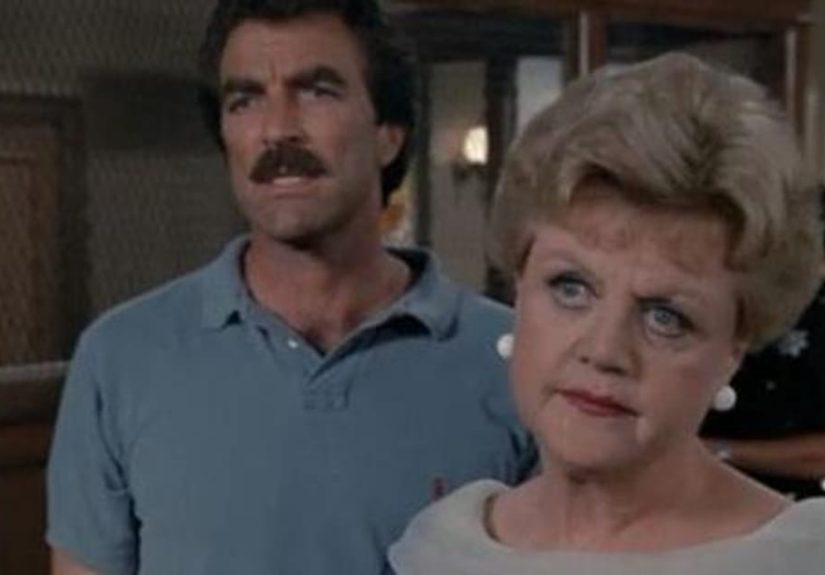
Fox literally did the work for us. In a crossover event, Jess Day and Jake Peralta end up in the same New York City chaos, sharing
a car chase and some delightfully awkward interaction. The episodes line up in both series, clearly establishing that they inhabit
the same world.
The crossover doesn’t just feature a quick background cameo it gives multiple characters from both shows actual plot time together.
That kind of integration is basically the TV equivalent of stamping “same universe” on the packaging. Sure, there are character-actor
quirks that complicate things (the Damon Wayans Jr. factor is notorious), but in terms of story logic, there’s nothing that breaks
the idea that Jess’s loft and the 99th precinct exist a subway ride apart.
From an in-universe perspective, it works: both shows are grounded, contemporary comedies set in recognizable versions of Los Angeles
and New York, with no supernatural twists or alternate political timelines. You can absolutely imagine Schmidt fighting a parking ticket
issued by a cop from the Nine-Nine. In fact, now you probably want that episode.
2. The Office and Parks and Recreation – The Mockumentary Verse
If you’ve ever watched The Office and Parks and Recreation back-to-back and thought, “This feels like the same world,”
you’re not alone. Behind the scenes, Parks and Rec was originally pitched as a spin-off of The Office, and both shows
share creators, a similar visual style, and that beloved mockumentary format.
On-screen, there are also hints that they coexist:
- Both shows acknowledge an in-universe documentary crew filming everyday workplace life.
- They share corporate touchpoints, like the Sabre printer Ben Wyatt uses in Parks and Rec, a company
introduced in The Office. - Their timelines overlap smoothly: Scranton and Pawnee could exist simultaneously without contradicting major historical events.
The only real obstacle is actor overlap (for example, performers appearing in both series as different characters), but that’s a common
TV quirk. From a story standpoint, it’s entirely plausible that Leslie Knope’s local government adventures are happening at the same time
Michael Scott is running badly thought-out team-building exercises in Scranton.
3. The Office, Parks and Rec, and Dexter – The Paper Trail Theory
For fans who really like connecting dots, there’s a wilder theory that links The Office, Parks and Recreation, and
Dexter via shared props and fictional brands. Entertainment writers have pointed out that the same fake paper company branding
and office supplies show up across different series, suggesting that some of these workplaces may be using the same in-universe vendors.
Does that mean Jim Halpert could theoretically read a newspaper about the Miami Metro Bay Harbor Butcher? It’s a stretch, especially
tonally, but technically not impossible. The key point is that, as long as national politics and real-world events line up,
nothing stops a comedy and a crime thriller from sharing a universe it just makes for one extremely weird version of America.
Darker Timelines: Prestige Dramas in a Shared World
4. Breaking Bad and The Walking Dead – Blue Meth and the End of the World
One of the most famous TV shared-universe theories claims that Breaking Bad is a secret prequel to
The Walking Dead. The theory hinges on some very deliberate Easter eggs:
- In The Walking Dead, Daryl finds a bag of drugs that includes <strongbright-blue crystals suspiciously similar
to Walter White’s Blue Sky meth. - Daryl mentions that his brother’s dealer used to call people “bitch,” which sounds a lot like Jesse Pinkman’s signature insult.
- Fans have pointed out that Glenn drives a red Dodge Challenger that looks a lot like the car Walter bought in Breaking Bad.
The wildest version of the theory argues that Walt’s chemistry experiment gone wrong somehow triggers the zombie outbreak. That’s
fun to imagine, but it doesn’t fully line up with the tone and timeline of either series. A more grounded reading is that
The Walking Dead simply has fun nodding to AMC’s other hit show. Still, if you’re looking for plausibility, nothing
in the narrative outright contradicts the idea that these could be the same universe, with the apocalypse arriving sometime
after Heisenberg’s reign in New Mexico.
In other words: it’s probably unofficial, but if you want to binge them in a shared continuity, you won’t break anything major.
5. The “All AMC Shows Are Connected” Meta-Theory
Some pop culture writers have taken the AMC cross-reference game even further, suggesting that every scripted AMC series
belongs to one big shared universe. The argument relies on recurring corporations, style of worldbuilding, and Easter eggs
that pop up across dramas like Breaking Bad, Better Call Saul, Mad Men, The Walking Dead, and more.
Realistically, this works best as a fan exercise, not a formal rule. There are tone and timeline differences that make some
combinations awkward. But the concept still feels surprisingly plausible: these are mostly grounded, America-set dramas with
overlapping decades, shared real-world history, and no major contradictions in national politics. If any network could quietly
house a giant, unspoken shared universe, AMC might be it.
Political and Crime Universes That Almost Work
6. Scandal, House of Cards, Sons of Anarchy, and Breaking Bad
One ambitious theory proposes an interconnected universe for modern crime and political dramas, drawing lines between shows like
Scandal, House of Cards, Breaking Bad, and Sons of Anarchy. The logic is simple: if you have
corrupt politicians, powerful cartels, and ambitious criminals all operating in roughly the same America, why wouldn’t some of their
stories overlap?
The problems start when you look closely at who is President and when. Both Scandal and
House of Cards feature their own fictional presidents and election cycles. Those can’t both be running the United States
at the same time, so their worlds can’t neatly stack on top of each other. That doesn’t fully rule out crossovers with other
crime-focused shows, but it does remind us that politics is usually the detail that breaks these multi-show universes.
Still, narrow the focus to drug cartels, biker gangs, and local corruption, and a smaller shared crime universe absolutely feels
possible. You could imagine Saul Goodman hearing gossip about biker trouble in California, or a Washington fixer quietly cleaning
up a scandal tied to a certain chemistry teacher’s empire.
When Fake Brands and Background Details Do the Work
Not every shared universe needs a dramatic crossover episode. In a lot of TV, the glue is much more subtle:
- Recurring fake brands like generic sodas, chips, or retail chains show up across multiple shows from the same
studio or parent company. - News crawls, website screenshots, or background headlines reference events or places we’ve only seen in another series.
- Fictional cities or counties quietly repeat: a made-up law firm or hospital might show up in more than one show.
For example, some fans have pointed to shared snack brands and TV commercials in comedies like Brooklyn Nine-Nine and
other sitcoms as evidence they’re part of a larger comedic universe. At a production level, this usually happens because it’s
easier (and legally safer) to reuse a fictional brand than to invent a new one every time. But from a fan perspective, it’s
irresistible: if the same fake potato chips exist in two shows, why not assume the people do, too?
This kind of subtle connection works especially well for grounded shows that share a similar tone and time period. It gives you
just enough evidence to imagine a shared universe without forcing the writers to coordinate every storyline.
How to Decide If Two Shows Could Share the Same Universe
If you want to play TV-universe detective yourself, here’s a practical checklist:
-
Check the timeline. Do the shows take place in the same approximate years? If one is set in a clearly defined
future or past while the other is present-day, they may not overlap but they could still belong to the same universe at
different points in history. -
Look at national politics. Different fictional presidents or major historical divergences are a big red flag.
If Show A has a totally different Commander in Chief than Show B at the same time, they probably don’t share a universe. -
Compare the rules of reality. Do both shows operate in a grounded, realistic world? If one includes open
magic or publicly known superpowers and the other never reacts to that, it’s harder to justify them sharing a continuity. -
Search for shared brands and locations. Reused fictional companies, news networks, or cities are some of the
strongest clues that shows were designed to feel like they inhabit a common world. -
Look for explicit crossovers or Easter eggs. Guest appearances, props, or audio references to another show’s
characters or events are often deliberate nods to a shared universe.
When enough of these boxes are checked without creating major contradictions you’ve got a pretty solid case for a shared TV universe.
Why Shared TV Universes Are So Addictive
Part of the fun of TV is the sense that these stories continue when the camera isn’t rolling. Shared universe theories take that
feeling and crank it way up. Instead of watching one series in isolation, you’re suddenly tracking a whole fictional ecosystem,
where a small detail in a sitcom might echo a dramatic twist in a crime show.
It’s also a very modern way of watching TV. Streaming has made it easy to binge entire catalogs from a single network, and fans
naturally start noticing patterns: the same prop company logo, a background actor who keeps reappearing, or a piece of dialogue
that sounds suspiciously like a nod to another show. Online communities then turn these observations into full-blown theories,
complete with timelines, charts, and elaborate “if this, then that” logic.
Whether or not the writers intended any of it almost doesn’t matter. Once an audience starts connecting shows into a larger universe,
the viewing experience changes. You’re no longer just a passive watcher you’re a kind of continuity detective, building your own
map of television reality.
Watching TV Through the Shared-Universe Lens: A Fan Experience
Imagine starting a casual sitcom rewatch and realizing, somewhere between episodes, that you’re no longer just following one group
of characters. You’re tracking a whole web of possible connections: that crossover cop might know the lawyer from a different drama;
that generic cola brand might be quietly sponsoring half of primetime. Suddenly every prop and background shot feels like a clue.
If you lean into this mindset, watching TV becomes a bit like solving a mystery in slow motion. You notice tiny things: the same
fictional tech company in multiple shows, shared news logos, or callbacks to other series’ events. Jokes that once felt like throwaway
gags now read as evidence that different stories are breathing the same air.
This kind of viewing also changes how you experience character arcs. When you accept that some shows coexist, emotional beats hit
differently. The idea that Jess might have walked past characters from another comedy while in New York, or that a side character
in one drama could be quietly handling fallout from another series’ scandal, gives everything a little extra weight. You start to
think of these fictional people as living in a fuller, busier world.
Shared-universe thinking can also make rewatches feel fresh. You may have seen every episode of The Office or
Brooklyn Nine-Nine, but watching them again while mentally stitching them into a bigger universe adds another layer of fun.
It’s like running a commentary track in your own head: “Okay, if this takes place in the same world as that other show, then by this
point that major event has already happened,” or “This joke hits differently if I pretend the characters from another series are
just a city away.”
The social side is part of the joy, too. Online, fans trade screenshots, timelines, and theories like collectibles. One person spots
a background detail, someone else remembers a matching moment from another show, and before long there’s a fully formed explanation
for how three series secretly connect. You don’t have to believe every theory, but joining the conversation turns TV from a solo
activity into a collaborative puzzle.
Of course, there’s a limit. Take it too far and you can bend any set of shows into the same universe, even when politics, history,
or tone make it impossible. The sweet spot is using shared-universe ideas to enhance your viewing, not overrule what’s
actually on the screen. When the pieces really do fit like official crossovers, matching mockumentary styles, or deliberate Easter
eggs it feels less like forcing a theory and more like discovering a hidden layer the creators left behind for curious viewers.
In the end, thinking about TV shows that could actually exist in the same universe is less about proving anything and
more about deepening your own enjoyment. If it makes you more excited to hit “next episode,” or gives you a reason to revisit an old
favorite with fresh eyes, then the universe-building has already done its job.
Conclusion
From the officially connected antics of Brooklyn Nine-Nine and New Girl to the more speculative links between
Breaking Bad and The Walking Dead, there are plenty of TV shows that could realistically share a universe.
Some connections are spelled out with crossovers; others live in the realm of fan theory, supported by Easter eggs, props, and
careful continuity sleuthing.
You don’t need every show to be part of a giant master plan to enjoy this way of thinking. It’s enough to recognize that a lot of
television is built from the same toolbox of fictional brands, settings, and story structures. When shows line up in tone, timeline,
and world rules, imagining them in the same universe can turn ordinary TV nights into something far more engaging a long, winding
saga that stretches across genres, networks, and years of your viewing life.