Table of Contents >> Show >> Hide
- First, a quick reality check (and why “no-clog” is a vibe, not a guarantee)
- The main types of gutter guards (and how they actually work)
- 1) Screen gutter guards
- 2) Mesh gutter guards
- 3) Micro-mesh gutter guards
- 4) Reverse-curve (surface tension) gutter guards
- 5) Foam gutter inserts
- 6) Brush gutter guards
- How to choose the right gutter guard for your home
- Installation tips that prevent 80% of complaints
- Maintenance: what “low maintenance” actually means
- So… which type is “best”?
- Real-World Experiences : What homeowners notice after installing gutter guards
- 1) The “my problem wasn’t leaves” moment
- 2) Leaf “mats” become the new maintenance task
- 3) Reverse-curve systems are “either amazing or annoying” depending on install quality
- 4) Foam and brush inserts feel easy… until they’re due for cleaning
- 5) The unexpected win: fewer pest problems (when maintained)
- 6) The “gutter guards revealed my gutter issues” effect
- Conclusion
Gutters are basically your home’s tiny roof riversuntil they turn into a leaf smoothie and start overflowing like a clogged sink.
That overflow can stain siding, soak fascia boards, and dump water right where you don’t want it: near your foundation.
Gutter guards (also called leaf guards, gutter covers, or gutter screens) are designed to keep debris out so water can keep moving.
The catch? No system is truly “set it and forget it.” The best gutter guard is the one that matches your roof, your trees, and your weatherand still gets checked now and then.
In this guide, we’ll break down the most common types of gutter guards, how each one works, what it’s best for,
what tends to go wrong, and how to choose without getting sold a “space-age” cover that can’t handle your neighbor’s oak tree.
First, a quick reality check (and why “no-clog” is a vibe, not a guarantee)
Gutter guards reduce how often you’ll scoop out wet leaves by hand, but they don’t eliminate maintenance. Debris can pile on top,
tiny particles can slip through, and downspouts can still clog. Think of guards like a strainer in a kitchen sink: helpful, not magical.
What gutter guards are trying to stop
- Large debris: leaves, twigs, seed pods (“helicopters”), pinecones
- Fine debris: pine needles, shingle grit, dirt, pollen, roof granules
- Uninvited guests: mosquitoes, birds, squirrels, and the occasional mystery nest
The main types of gutter guards (and how they actually work)
Most products fall into five major bucketsplus a “mesh vs micro-mesh” split that matters a lot if you have pine trees or gritty shingles.
Here’s the breakdown.
| Type | How it works | Best for | DIY-friendly? | Common downside |
|---|---|---|---|---|
| Screen | Grid-like screen blocks big debris | Big leaves, basic protection | Often yes | Small debris can get through; can shift in wind |
| Mesh | Finer perforations filter more debris | Leaves + smaller debris | Sometimes | Can clog on top; quality varies |
| Micro-mesh | Very fine mesh filters tiny particles | Pine needles, shingle grit, “fine junk” | Sometimes, but tricky | Needs occasional rinsing/cleaning; costs more |
| Reverse-curve (surface-tension) | Solid hood directs water around a curve | Heavy leaf fall, high runoff | Usually no | Installation angle is critical; can spill in heavy rain |
| Foam insert | Porous foam sits inside gutter, lets water through | Quick DIY fix | Yes | Can degrade, trap debris, and hold moisture |
| Brush insert | Brush “catches” debris while water flows through | Large debris, easy install | Yes | Debris tangles in bristles; fine debris sneaks in |
1) Screen gutter guards
What they are
Screen guards look like a wire or plastic grid laid over the gutter. The idea is simple: water goes through the openings; bigger debris stays out.
Many versions slide under the first row of shingles or snap onto the gutter lip.
Where they shine
- Homes dealing mostly with big leaves (maple, oak) rather than pine needles
- Homeowners who want a low-cost starting point
- People who don’t mind doing a seasonal “roofline sweep”
Watch-outs
- Small debris still gets in: grit, needles, seeds, and roofing granules can slip through larger openings.
- Can shift: if not secured well, screens can pop loose in high winds or when branches land on them.
- Roof warranty quirks: some slip-under styles involve lifting shingles; on certain roofs, that can be a warranty concern if done incorrectly.
Best fit example: A suburban home with two big deciduous trees and moderate rainfall often does fine with sturdy screensespecially if you do a quick check after storms.
2) Mesh gutter guards
What they are
Mesh guards are similar to screens, but typically have smaller openings or more uniform perforations. They aim to stop both leaves and medium-size debris
while still letting water drain efficiently.
Where they shine
- Mixed debris (leaves + small twigs)
- Homeowners who want a low-profile look that doesn’t scream “I bought a gutter product at 2 a.m.”
- Areas with wind-driven debris where a sturdier top surface helps
Watch-outs
- Quality varies wildly: “mesh” can mean anything from decent aluminum perforations to flimsy plastic that warps.
- Top buildup: leaves can mat on top, especially when wetso you may still need to brush or blow debris off.
Best fit example: A home with moderate tree cover and occasional storms that drop clusters of leaves and small branchesmesh can be a solid middle-ground upgrade from basic screens.
3) Micro-mesh gutter guards
What they are
Micro-mesh is the “fine sieve” of gutter protection. The holes are much smaller than standard mesh, designed to filter out
pine needles, roof grit, and tiny particles that cause the most annoying clogs (because they turn into sludge).
Many higher-end systems use stainless steel micro-mesh for durability.
Where they shine
- Pine trees, evergreen needles, and seed debris
- Asphalt shingle roofs that shed granules (micro-mesh helps keep that grit out of the trough)
- Homeowners who want fewer cleanouts and are willing to pay for it
- Regions with heavy rainwhen installed correctly and matched to gutter size
Watch-outs
- It can still clogjust differently: ultra-fine debris can coat the mesh. You may need to rinse it with a hose or gently brush it.
- Installation matters: proper slope and tight fit reduce splash-over and improve flow.
- Price: typically higher than screens and basic mesh, especially for pro-installed systems.
Best fit example: A cabin-style home surrounded by tall pinesmicro-mesh is often the first type that truly feels like an upgrade instead of a slightly fancy leaf catcher.
4) Reverse-curve (surface tension) gutter guards
What they are
Reverse-curve guards (sometimes called “helmets” or surface-tension guards) are solid covers with a curved front edge.
Water clings to the surface (surface tension), follows the curve, and drops into the gutterwhile leaves slide off the top.
Where they shine
- Big leaf loads and heavy seasonal drop
- Homes where owners want to keep leaves out entirely (instead of “mostly out”)
- Gutters that regularly overflow due to thick leaf blankets
Watch-outs
- Angle is everything: if the pitch isn’t right, water can overshoot the gutter during heavy rain.
- Often more visible: the hood can be seen from the ground.
- Not ideal for all debris: fine debris (like needles) can still be a problem depending on the design.
- Winter concerns: in snowy/icy climates, the curved surface can contribute to ice buildup if conditions are right.
Best fit example: A two-story home with huge deciduous trees where cleaning gutters is a recurring annual nightmarereverse-curve can be attractive if professionally installed and tested during a downpour.
5) Foam gutter inserts
What they are
Foam inserts sit inside the gutter like a long porous sponge. Water flows through the foam; leaves and larger debris sit on top.
They’re popular because they’re easy to cut, easy to place, and don’t require a lot of tools.
Where they shine
- Quick DIY installs (especially on one-story homes)
- Short-term solutions or tight budgets
- Rentals or “I just need this to stop overflowing this season” situations
Watch-outs
- Durability: foam can break down faster than metal systems, especially under UV exposure and temperature swings.
- Moisture retention: it can hold water and trap debris, which may encourage mildew or gunky buildup over time.
- Debris piles on top: so you still need to remove that leafy “blanket” periodically.
Best fit example: A homeowner who wants a fast fix before a rainy season and is okay with replacing inserts laterfoam is the “bandage” option, not the “lifetime solution.”
6) Brush gutter guards
What they are
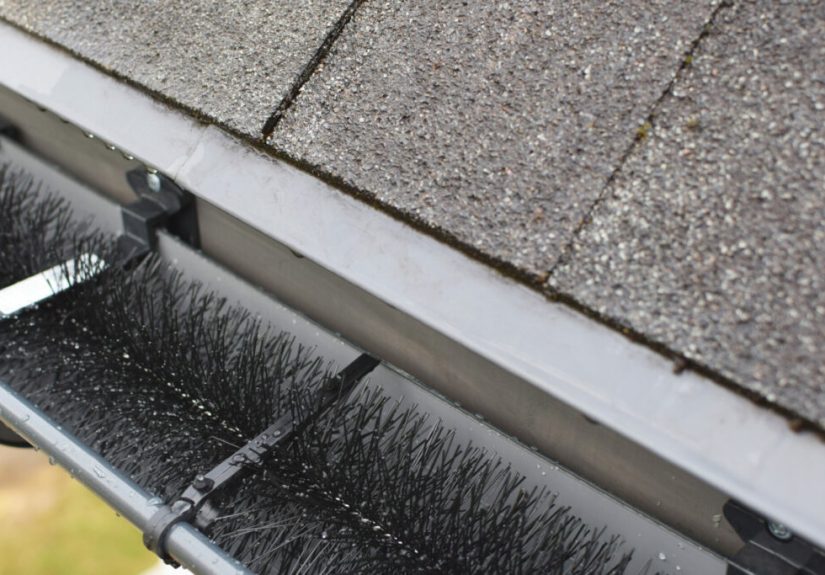
Brush guards look like giant pipe-cleaners (or a fuzzy caterpillar with a mortgage). They sit inside the gutter,
and their bristles snag leaves and larger debris while water flows through the gaps.
Where they shine
- Easy DIY installation and removal
- Blocking larger debris like leaves, small twigs, and pinecones
- Homeowners who prefer something they can pull out and shake off
Watch-outs
- Tangling: needles and small twigs can get caught in bristles and become stubborn to remove.
- Fine debris: dust and granules can still settle in the gutter underneath.
- Wet climates: soggy debris can mat into the brush and reduce water flow.
Best fit example: A one-story home where the owner wants a removable system they can clean without special toolsbrush guards are “hands-on,” but convenient.
How to choose the right gutter guard for your home
The “best gutter guard” depends less on marketing and more on matching the product to your specific conditions.
Here’s a practical way to narrow it down.
Step 1: Identify your main debris (this decides everything)
- Mostly big leaves: screen, mesh, or reverse-curve can work well.
- Pine needles + fine debris: micro-mesh is usually the strongest option; some homeowners also try foam or brush with more frequent cleaning.
- Roof grit (shingle granules): micro-mesh helps prevent that “sandbar” buildup inside the gutter trough.
Step 2: Respect your climate
- Heavy rain: prioritize systems that handle high flow and are installed at the correct pitch. Test with a hose after installation.
- Snow/ice: consider how the guard interacts with freeze-thaw cycles. Any guard can become part of an ice problem if your roof is prone to ice dams.
- Fire-prone regions: remember that debris in gutters is a serious hazard. Guards can help reduce accumulation, but regular cleaning remains essential. Metal options and non-combustible designs may be preferred where embers are a risk.
Step 3: Decide how “DIY” you really want to be
Many homeowners start optimistic (“I will install these perfectly on Saturday!”) and end up bargaining with their gutters by lunch.
As a rule of thumb:
- Most DIY-friendly: foam inserts, brush inserts, some snap-on screens
- DIY possible but picky: many mesh and micro-mesh products (fit and fasteners matter)
- Often best pro-installed: reverse-curve/surface-tension systems and higher-end micro-mesh systems
Step 4: Choose materials that match your expectations
- Stainless steel micro-mesh: durable and rust-resistant, often a premium choice
- Aluminum: common, lightweight, can be durable when well-made
- Plastic: budget-friendly but more prone to warping or cracking over time
- Copper (less common): durable and corrosion-resistant, typically pricier
Installation tips that prevent 80% of complaints
Clean and flush before you install anything
Installing guards on top of clogged gutters is like putting a clean shirt on after a mud run. Clean the trough, then run water through the system
and confirm downspouts drain properly.
Check slope and fasteners
Guards don’t fix a gutter that’s pitched wrong, sagging, or pulling away from fascia. If water already pools in sections, fix that first.
Use fasteners appropriate for your gutter style and follow manufacturer instructionsespecially where guards meet corners and downspout outlets.
Do a “hose test” in multiple spots
After installation, run a hose at roofline height (safely) and watch what happens. If water shoots over the edge, you may need adjustments:
different guard pitch, better sealing, or a higher-capacity gutter/downspout configuration.
Maintenance: what “low maintenance” actually means
Even excellent gutter protection needs periodic checks. Plan for:
- Seasonal inspections: especially after heavy storms or high winds
- Top-side cleanup: blowing or brushing off leaf mats that block water entry
- Downspout attention: a guard won’t stop a tennis-ball-sized clog inside a downspout
- Pest checks: sheltered spots can attract nests if debris builds up
So… which type is “best”?
If you want a simple rule that usually holds:
- Best all-around filtration (especially for fine debris): micro-mesh
- Best budget starting point: screen or basic mesh
- Best “shed the leaves” approach: reverse-curve (when correctly installed)
- Best quick DIY stopgap: foam or brush inserts
The smart move is picking the system that matches your debris type and climateand accepting that you’ll still do occasional checkups.
The goal isn’t “never think about gutters again.” The goal is “stop cleaning them every other weekend like it’s your new hobby.”
Real-World Experiences : What homeowners notice after installing gutter guards
Product descriptions often make gutter guards sound like a one-time purchase that ends the gutter-cleaning era forever. In real life, homeowners tend to
report something more nuancedand honestly more useful: the work changes. You might do fewer deep cleanouts inside the gutter trough,
but you’ll still do quick checkups on top of the guard and at downspouts.
1) The “my problem wasn’t leaves” moment
A common surprise is discovering that leaves were never the main villain. Many people install a basic screen and then notice the gutter still slows down
or overflows during storms. When they investigate, they find fine debrisroof grit, pollen, tiny seeds, or pine needlescreating a muddy layer inside the gutter.
This is where homeowners often feel the difference between screen/mesh and micro-mesh. If your yard has pine trees,
micro-mesh tends to feel less like a cosmetic upgrade and more like an actual solution.
2) Leaf “mats” become the new maintenance task
With many top-mounted guards (screen, mesh, micro-mesh, reverse-curve), debris doesn’t disappearit relocates. After a storm, wet leaves can form a mat on top.
The good news: you’re not digging inside the gutter anymore. The not-so-fun news: that mat can block water entry if it gets thick and soggy.
Homeowners who are happiest long-term are usually the ones who accept a simple habit: after major leaf drop or storms, they do a quick walk-around and
remove the obvious buildup (a leaf blower on low, a soft brush, or careful hand removal from a laddersafely).
3) Reverse-curve systems are “either amazing or annoying” depending on install quality
Homeowners often describe reverse-curve guards in extremes: “my gutters never clog” or “water shoots over the edge like it’s avoiding commitment.”
That split usually comes down to roofline geometry, correct angle, and local rainfall intensity. In steady rain, they may perform beautifully.
In heavy downpours (or when water rushes off a steep roof), some people notice spillover if the system isn’t matched to the flow rate.
A practical takeaway many homeowners share: if you choose reverse-curve, prioritize a reputable installer and insist on a water test before the job is considered done.
4) Foam and brush inserts feel easy… until they’re due for cleaning
Foam and brush inserts win on day one. They’re quick, they’re DIY-friendly, and they don’t change the look of your roofline much.
Over time, experiences vary. Some homeowners like the “pull it out, rinse it, put it back” simplicity. Others discover that wet debris can embed into foam
or tangle in brush bristles, turning cleaning into a messier project than expected. The pattern is pretty consistent:
in dry or moderate climates with mostly larger debris, inserts can be a convenient approach; in wet climates with fine debris, they may demand more frequent attention.
5) The unexpected win: fewer pest problems (when maintained)
Homeowners often underestimate how attractive clogged gutters are to pests. Standing water invites mosquitoes, and damp debris can become nesting material.
Many people report that once water stops pooling and debris stops accumulating inside the trough, they see fewer “mystery guests.”
The important asterisk: if debris piles up on top of guards and stays wet, it can still create a sheltered habitat. The happiest outcomes happen when guards
are paired with seasonal checks.
6) The “gutter guards revealed my gutter issues” effect
This one surprises people: adding guards can expose existing gutter problems. If a gutter is pitched wrong, sagging, or undersized for the roof area,
the guard won’t fix itand it may make the failure more obvious (because water spills over sooner).
Homeowners who get the best results usually treat gutter guards as part of a system upgrade:
fix the slope, secure the hangers, confirm downspouts drain, and then add guards.
Bottom line from real-world experience: gutter guards are absolutely worth considering, but they’re not a “delete gutters from your brain” purchase.
They’re a “trade constant deep cleanouts for quick checkups” purchaseand for most homeowners, that’s a deal worth taking.
Conclusion
Choosing among the different types of gutter guards comes down to matching the guard to your debris and weather.
Screens and mesh are budget-friendly and effective for larger debris. Micro-mesh is the go-to for pine needles and fine grit.
Reverse-curve systems can shed leaves impressively but demand precise installation. Foam and brush inserts are DIY-friendly but typically need more hands-on upkeep.
Pick the type that fits your home’s reality, plan on a few seasonal checks, and your gutters can go back to doing their jobquietly, efficiently, and without drama.