Table of Contents >> Show >> Hide
- Quick Snapshot: What the Vastus Lateralis Is (and Why You Should Care)
- Location: Where the Vastus Lateralis Lives
- Origin & Insertion: Where the Vastus Lateralis Starts and Ends
- Function: What the Vastus Lateralis Actually Does
- Innervation & Blood Supply
- How the Vastus Lateralis Works With Its Neighbors
- Common Problems Involving the Vastus Lateralis
- How to “Find” the Vastus Lateralis on Your Body (No Lab Coat Needed)
- Training & Care: Supporting a Happy, Strong Vastus Lateralis
- Clinical Relevance: Why Healthcare Pros Talk About the Vastus Lateralis
- Real-World Experiences With the Vastus Lateralis (Extra Detail)
- Conclusion
If your thigh had a “power department,” the vastus lateralis muscle would be running the whole place like an over-caffeinated manager.
It’s the big, bold muscle on the outer front side of your thighpart of your quadriceps groupand it’s a major reason you can straighten your knee,
stand up from a chair, climb stairs, sprint, jump, and dramatically recover from tripping without fully eating the sidewalk.
This guide breaks down the vastus lateralis in plain English: where it is, where it starts (origin),
where it ends (insertion), and what it does. We’ll also connect the anatomy to real lifebecause muscles don’t exist
just to impress biology textbooks. They exist to get you through Monday.
Quick Snapshot: What the Vastus Lateralis Is (and Why You Should Care)
The vastus lateralis is the largest of the quadriceps muscles and sits on the lateral (outer) side of your thigh.
“Vastus” basically means “huge,” and honestly… accurate. It’s built for generating force, especially when your knee needs to extend
(straighten) under loadthink rising from a squat, pushing pedals, landing from a jump, or hiking downhill when gravity is feeling rude.
Beyond raw power, the vastus lateralis helps keep your kneecap (patella) tracking in a stable way as your knee bends and straightens.
That sounds small until you remember the kneecap is basically a tiny bone trying to behave like a smooth pulley under pressure. Stability matters.
Location: Where the Vastus Lateralis Lives
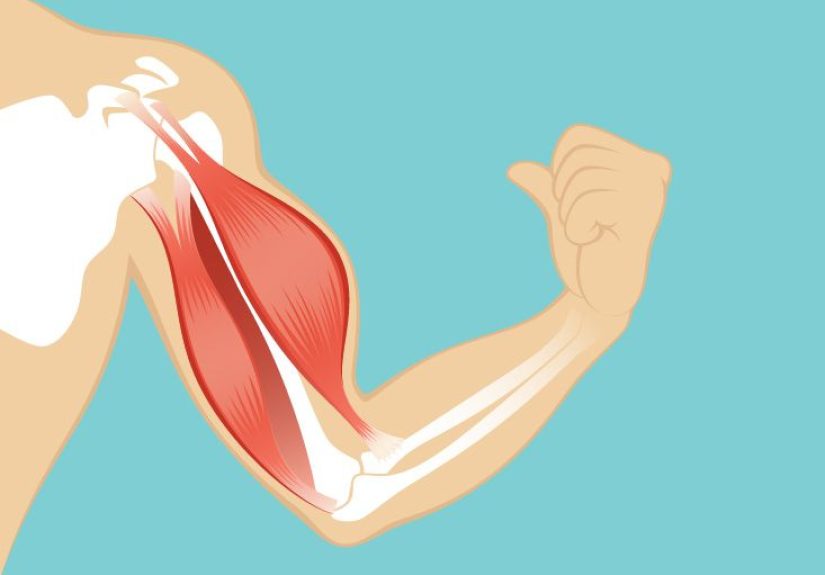
The vastus lateralis is located in the anterior compartment of the thigh and runs along the outer aspect of the femur (thigh bone).
If you place your hand on the outside of your thigh and gently straighten your knee against resistance, you can often feel the muscle firm up.
It sits above the knee, below the hip, and contributes to the thick muscular “sleeve” that surrounds the femur.
How it fits into the quadriceps family
The quadriceps (“quads”) are a group of muscles on the front of your thigh that work together to extend the knee. Traditionally, people learn four:
rectus femoris, vastus lateralis, vastus medialis, and vastus intermedius. Modern anatomy references often describe additional structural complexity
in this region, but functionally, the main story stays the same: the quads straighten the knee and help control movement when the knee bends under load.
Origin & Insertion: Where the Vastus Lateralis Starts and Ends
Muscles create movement by pulling on bones. The origin is the more “anchored” attachment (usually closer to the body’s center),
and the insertion is the attachment that moves more when the muscle contracts. With the vastus lateralis, both attachments involve
your femur and the extensor mechanism of the knee (the tendon system that includes the patella).
Origin (proximal attachments)
The vastus lateralis has a broad origin on the proximal femur. Key origin points commonly described include:
- Intertrochanteric line (near the upper femur)
- Greater trochanter (the prominent bony area near the hip)
- Lateral aspect of the linea aspera (a ridge running down the femur)
- Gluteal tuberosity (an attachment region for powerful hip/thigh structures)
- Lateral intermuscular septum (connective tissue partitioning compartments of the thigh)
Insertion (distal attachments)
The vastus lateralis fibers converge and contribute to the quadriceps tendon, inserting onto the
lateral aspect of the patella. From there, force continues through the patellar tendon/ligament
to the tibial tuberosity on the shinbone.
Translation: when the vastus lateralis contracts, it pulls through a tendon chain that helps straighten the knee.
The patella acts like a pulley to improve leveragelike giving your quads a mechanical “bonus.”
Function: What the Vastus Lateralis Actually Does
1) Primary function: knee extension
The headline job of the vastus lateralis is extending the knee. That’s the action of straightening the lower leg
at the knee jointused in walking, running, kicking, jumping, rising from a chair, climbing stairs, and every squat you’ve ever regretted.
2) Secondary function: patellar stability and tracking
Your kneecap glides in a groove at the end of the femur. The quadriceps tendon and surrounding connective tissues help guide it.
The vastus lateralis contributes to the lateral (outer) pull and stabilization forces on the patella. Balanced coordination with the
medial-side quad structures helps keep the patella tracking smoothly instead of drifting into an irritated, noisy protest.
3) Real-life movement: braking, absorbing force, and controlling descent
Quads don’t just “push.” They also control movement. When you go downstairs or walk downhill, your quads often contract
eccentricallythey’re active while lengtheningto slow your knee flexion and prevent your body from collapsing into gravity.
That’s why downhill hikes can make your thighs feel like you fought a bear (and lost) the next day.
Innervation & Blood Supply
Innervation (nerve supply)
The vastus lateralis is innervated by muscular branches of the femoral nerve, typically involving nerve roots
L2, L3, and L4. Practically, this matters because femoral nerve problems can affect knee extension strength and make
tasks like stairs feel unexpectedly difficult.
Blood supply
The main blood supply is commonly described as coming from the lateral circumflex femoral artery, with additional contributions
from perforating branches of the deep artery of the thigh (profunda femoris). Good blood supply supports performance and healingone reason
thigh muscles can be both powerful and (sometimes) dramatic when injured.
How the Vastus Lateralis Works With Its Neighbors
Muscles are team players. The vastus lateralis works in sync with:
- Vastus medialis (inner quad): contributes to medial support and helps balance patellar forces
- Vastus intermedius (deep quad): assists knee extension under the rectus femoris
- Rectus femoris (front/center): extends the knee and also crosses the hip, assisting hip flexion
The connective tissues around the kneeoften discussed as retinacular structuresalso matter. The vastus lateralis blends into connective expansions
that help stabilize the patella and support the front of the knee capsule. When strength, timing, flexibility, and alignment are working together,
the knee tends to glide smoothly. When they aren’t… the knee may file a complaint.
Common Problems Involving the Vastus Lateralis
Quadriceps strain (pulled quad)
A strain happens when muscle fibers are overstretched or tornoften during fast, forceful movements like sprinting, sudden changes of direction,
jumping, or kicking. People frequently describe a sharp pain, tightness, swelling, reduced motion, or weakness soon after the injury.
Severe strains can cause significant loss of strength and can take longer to heal.
Patellofemoral pain and tracking irritation
Pain around or behind the kneecapespecially worse with squatting, stairs, or prolonged sittingis often discussed under
patellofemoral pain syndrome (PFPS). PFPS has many contributors (training load, hip/foot mechanics, strength balance, flexibility,
and more). The quadricepsincluding the vastus lateralisoften become part of the conversation because they influence how the patella is guided
during movement.
Quadriceps tendon irritation or tear
The quadriceps muscles meet above the patella to form the quadriceps tendon, which is essential for knee extension.
Overuse can irritate the tendon, while a major overload (like an awkward landing) can cause a partial or complete tear.
A complete tear is serious and can make it impossible to straighten the knee normally.
How to “Find” the Vastus Lateralis on Your Body (No Lab Coat Needed)
- Sit with your knee bent about 90 degrees.
- Place your hand on the outer front thighroughly the area between the hip and the outer side of the knee.
- Try gently straightening your knee (or press your foot into the floor) so the thigh tightens.
- You should feel a firm band of muscle activating along the outer thighhello, vastus lateralis.
This isn’t a medical testjust a simple way to connect anatomy to your own movement. If you feel sharp pain, swelling, or instability,
that’s a “pause and get evaluated” situation.
Training & Care: Supporting a Happy, Strong Vastus Lateralis
Because the vastus lateralis is a major knee extensor, it’s heavily involved in quad-focused strengthening. In general fitness settings,
exercises that often train the quadriceps (including the vastus lateralis) include:
- Squats (bodyweight, goblet, back squat)
- Step-ups and step-downs (great for control)
- Lunges and split squats
- Leg press and leg extensions (gym-based options)
- Cycling and uphill walking (endurance-focused loading)
The key is dosage: progressive loading with enough recovery. Many knee issues don’t come from one “bad” exercisethey come from
doing a perfectly fine exercise with too much intensity, too soon, too often, while sleeping like a raccoon in a trash can.
If you’re dealing with kneecap-area pain, many rehab approaches emphasize improving overall lower-limb mechanics and gradually strengthening
the quadriceps and hip muscles. A clinician can help tailor a plan to your specific situation and identify contributing factors.
Clinical Relevance: Why Healthcare Pros Talk About the Vastus Lateralis
The vastus lateralis is not just a gym muscleit has real clinical importance. In particular, the anterolateral thigh region
(where the vastus lateralis sits) is widely referenced as a preferred site for intramuscular injections in certain age groups,
especially infants, because it provides a large muscle mass away from major vulnerable structures. This is something healthcare
professionals are trained to do using established guidelines.
Additionally, because the vastus lateralis is innervated by the femoral nerve, nerve dysfunction can contribute to weakness with knee extension,
difficulty on stairs, or a sensation that the knee may buckle.
Real-World Experiences With the Vastus Lateralis (Extra Detail)
Anatomy is neat, but what does the vastus lateralis feel like in real life? People often “meet” this muscle in a few classic wayssometimes proudly,
sometimes painfully, and sometimes while questioning why stairs exist at all.
1) The “outer quad sweep” experience (strength training):
Lifters frequently talk about the outer thigh “sweep”that curved look along the lateral quad. While appearance depends on genetics and overall
development, the vastus lateralis is a major contributor. People often notice it most when they start training squats, split squats, or leg press
consistently. A common experience: the first few weeks feel fine, then one day the soreness hits and sitting down becomes a slow-motion negotiation.
That soreness often shows up along the outer front thigh, especially after higher-volume sets or new ranges of motion.
2) The “downhill destroyed me” experience (eccentric control):
Hikers and runners frequently report that going down is harder on the thighs than going up. That’s eccentric work: your quadsespecially
the vastus lateralis as part of the knee-extensor teamact like brakes. People often describe the next-day feeling as “my legs are fine until I try
stairs,” because the muscle gets reminded of its job the moment the knee must control descent. It’s also why step-down drills can be so useful:
they mimic the real-world demand that tends to trigger symptoms.
3) The “front-of-knee grumble” experience (patellar irritation):
Some athletes and active people notice a dull ache around the kneecap during squats, stairs, or long sitting. They may describe it as “pressure,”
“tightness,” or “a cranky kneecap.” Many learn that the fix isn’t a single magic stretch; it’s usually a combination of managing training volume,
strengthening (often quads and hips), and cleaning up movement habits. People often report that small changeslike reducing jump volume for a few weeks,
adding controlled quad work, or improving step-down mechanicsmake a bigger difference than trying to “push through” pain.
4) The “sudden pull” experience (strain):
In sports involving sprinting, kicking, or rapid direction changes, people sometimes feel a sharp pull in the thigh with immediate weakness or pain.
Even milder strains can make the muscle feel tight and unreliablelike it’s waiting to complain again if you accelerate too hard.
Many athletes describe the hardest part as not the first day, but the temptation to return too soon. A controlled progression back to speed and power
is commonly what separates a smooth return from an annoying cycle of re-aggravation.
5) The “medical landmark” experience (healthcare settings):
Some people first hear the phrase “vastus lateralis” in a clinic or vaccination context. They may remember it as “that outer thigh muscle” and later
recognize it in anatomy diagrams. For caregivers, it’s often reassuring to learn that the site selection is based on anatomy and safety principlesnot
random preference. And for many, it becomes a weirdly memorable fact: the outer thigh has a name, and it’s doing important work every time we move.
The big takeaway from these experiences is simple: the vastus lateralis is built for work. If you build its capacity gradually and respect recovery,
it usually behaves like an excellent teammate. If you overload it suddenlyor ignore persistent knee painit may respond with the time-honored muscle
tradition of “fine, I’m going to be loud about this.”
Conclusion
The vastus lateralis muscle is the powerhouse on the outer front thigh, originating broadly from the proximal femur and inserting
into the quadriceps tendon and patellar system to help extend the knee. It supports everyday movement (walking, stairs) and athletic performance
(running, jumping), and it plays a meaningful role in patellar stability. Understanding its location, attachments, and function helps you connect
symptomslike outer-thigh soreness, quad strains, or kneecap irritationto the mechanics underneath.