Table of Contents >> Show >> Hide
- What Makes a Vintage Tibetan Wool Rug Different?
- A Brief History Without Turning This Into a Lecture Hall
- Design Traits Buyers Love
- How to Tell if a Vintage Tibetan Wool Rug Is Worth Buying
- How to Style a Vintage Tibetan Rug at Home
- How to Care for a Vintage Tibetan Wool Rug
- Why Vintage Tibetan Wool Rugs Still Matter
- Common Mistakes to Avoid
- Conclusion
- Living With a Vintage Tibetan Wool Rug: The Experience
A vintage Tibetan wool rug is the kind of design piece that can make an ordinary room look like it suddenly developed excellent taste and a passport. It brings texture, history, and just enough mystery to make people ask, “Where did you find that?” Unlike mass-made rugs that show up, do their job, and quietly disappear into the floor, Tibetan rugs tend to have personality. They are often hand-knotted, richly tactile, and filled with subtle irregularities that remind you a human beingnot a machine on a caffeine bingeactually made them.
For homeowners, collectors, and interior designers, vintage Tibetan rugs offer a rare mix of beauty and utility. They can be soft underfoot, visually striking, and durable enough to handle real life. That matters because rugs are not museum labels. They are meant to be lived with. Whether you are shopping for a faded khaden, a dragon motif piece, or a hand-knotted Tibetan carpet with moody reds and earthy neutrals, understanding what makes these rugs special will help you buy smarter, style better, and avoid paying premium money for something that only looks old because it had a difficult week.
What Makes a Vintage Tibetan Wool Rug Different?
The first thing is right there in the name: wool. Tibetan rugs are strongly associated with wool fibers, and that matters because wool is resilient, naturally warm, and pleasantly forgiving. It has body, texture, and a slightly rich hand that synthetic materials rarely fake convincingly. A good vintage Tibetan wool rug does not just sit flat and lifeless. It has presence.
The second difference is construction. Traditional Tibetan rugs are commonly associated with hand-knotting techniques that create a distinctive feel and surface texture. Even when the pattern is simple, the rug can still look layered and expressive because the wool, pile height, and knotting give it movement. In practical terms, that means a vintage Tibetan rug can work beautifully in interiors that need softness without looking fussy.
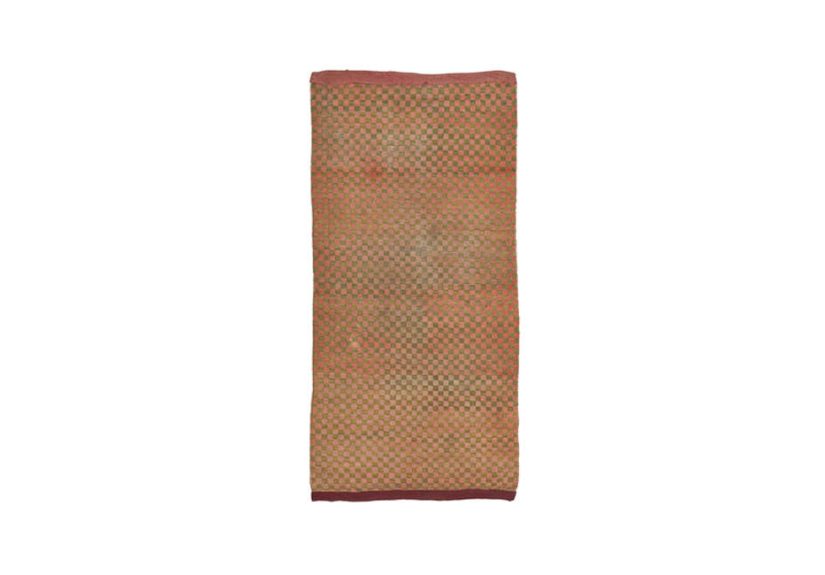
Another hallmark is scale. Many older Tibetan rugs were made in smaller sizes for practical daily use, including sleeping rugs, seating rugs, and saddle-related forms. That is one reason collectors often find vintage Tibetan rugs in compact dimensions that work especially well in entryways, studies, beside beds, or layered over a larger neutral base rug.
A Brief History Without Turning This Into a Lecture Hall
Tibetan rug weaving has deep roots, and its original function was often practical before it became a design obsession for stylish apartments. Rugs were used for warmth, seating, sleeping, wall display, and horse tack. In other words, these were not born as “accent pieces.” They were part of daily life. That grounding is part of their appeal today. A vintage Tibetan wool rug feels useful even when it is beautiful, which is a lovely trait in a world full of decorative objects that seem emotionally committed to being fragile.
Design traditions evolved over time, influenced by local culture, religious symbolism, trade, and outside demand. Earlier Tibetan rugs often used a smaller palette and more restrained scale, while later market-facing production introduced broader colors and formats more familiar to Western buyers. The result is a wide visual range. Some pieces feel meditative and minimal. Others arrive with dragons, clouds, geometric borders, or tiger imagery and absolutely no interest in being subtle.
It is also important to note that not every rug sold today as “Tibetan” was woven in Tibet itself. Much modern Tibetan-style production has been centered in Nepal and India, especially through Tibetan weaving communities. That does not make those rugs fake or lesser. It simply means buyers should understand the difference between a vintage Tibetan rug, an antique Tibetan rug, and a newer Tibetan-style rug made elsewhere using related techniques or materials.
Design Traits Buyers Love
Color
Vintage Tibetan wool rugs often feature earthy, grounded colors: red, brown, blue, gold, charcoal, beige, and weathered neutrals. Some are soft and faded in a way that designers adore because the palette feels collected rather than shouty. Others use bolder contrasts that can energize a room instantly.
Motifs
Common Tibetan design language includes geometric forms, medallions, floral elements, cloud bands, and iconic imagery such as dragons or tiger patterns. These motifs are not random decoration. They often carry symbolic or cultural associations, which gives the rug more depth than a trendy pattern purchased because it matched a throw pillow once.
Texture
The wool texture is a major part of the charm. Some pieces have a dense, velvety feel; others show striation, variation, and age-softened pile. That slight inconsistency is not a flaw. It is often the visual proof that the rug has lived a life and still has stories left in it.
How to Tell if a Vintage Tibetan Wool Rug Is Worth Buying
This is where romance must briefly step aside and let common sense hold the flashlight.
Check the Back
A handwoven rug usually tells the truth on the reverse side. You should be able to see the pattern from the front echoed on the back. Natural fiber backing is a good sign. Heavy synthetic backing or glue is not. If the rug looks suspiciously perfect on the front and weirdly anonymous on the back, step away slowly.
Understand the Age Terms
In the rug world, “vintage” and “antique” are not the same thing. Antique generally refers to a rug that is about 100 years old or older. Vintage usually means it is younger than that but still old enough to have character, history, and real wear. Sellers sometimes treat these words like interchangeable accessories. They are not. Ask for an estimated date range and a direct explanation of why the dealer believes it.
Look for Repairs, Smells, and Edge Damage
Minor wear can be charming. Major structural issues can be expensive. Check the side cords, fringe, corners, and areas of low pile. Ask whether the rug has been repaired, rewoven, patched, or shortened. Also trust your nose. Persistent odors, moldy smells, or signs of long-term damp storage are not romantic signs of age. They are warnings wearing a costume.
Study the Wear Pattern
Good vintage wear usually looks consistent and believable. It softens color, lowers pile, and gives the piece a mellow patina. Bad wear looks chaotic, weak, or destructive. If one section seems oddly newer than another, or the back shows mismatched yarns, repairs may be involved.
How to Style a Vintage Tibetan Rug at Home
One of the reasons designers love vintage Tibetan rugs is their flexibility. They can anchor a room without overpowering it, especially if the palette is muted. A softly worn red Tibetan rug can warm up a white room. A cream and brown piece can ground a modern interior that feels a little too proud of its own minimalism.
In a living room, a vintage Tibetan rug pairs beautifully with wood, linen, leather, and matte metals. In a bedroom, it can add warmth and soul underfoot, especially beside or beneath the bed. In a home office, a smaller Tibetan wool rug can provide just enough pattern to keep the room from feeling like a tax form.
If the rug is small, layering works well. Place it over sisal, jute, or another understated base rug to create scale. This is especially smart when you fall in love with a vintage piece that is not large enough for the whole room. The layered look can feel collected and intentional rather than “I measured with optimism.”
How to Care for a Vintage Tibetan Wool Rug
Good rug care is mostly about restraint. Do less, but do it correctly.
Vacuum Gently
Use suction rather than an aggressive beater bar when possible, especially on older or delicate rugs. High-traffic areas can be vacuumed regularly, but a genuinely vintage rug benefits from a lighter touch. For smaller pieces, shaking out dust outdoors can help.
Blot Spills Fast
If something spills, blot immediately with a clean, light-colored cloth. Do not rub. Rubbing pushes moisture and pigment deeper into the fibers and can rough up the pile. In rug care, panic is rarely a winning strategy.
Rotate the Rug
Rotate the rug every six to twelve months so wear happens evenly. Sunlight, foot traffic, and furniture pressure all create patterns over time. Rotation is simple, free, and somehow still ignored by people who will alphabetize spices for fun.
Use a Rug Pad
A proper rug pad keeps the rug from slipping and helps protect the fibers from being crushed against the floor. It also adds comfort and extends the life of the rug. This is not glamorous advice, but neither is replacing a damaged vintage rug.
Know When to Call a Professional
Very old, especially fragile, or color-sensitive rugs are often better handled by a professional cleaner who understands handwoven wool rugs. Harsh chemicals, over-wetting, and rough scrubbing can cause bleeding, shrinkage, or structural damage. A vintage Tibetan rug deserves better than a cleaning experiment inspired by confidence and a spray bottle.
Why Vintage Tibetan Wool Rugs Still Matter
Part of the appeal is aesthetic, of course. A vintage Tibetan carpet can make a room feel warmer, deeper, and more personal. But there is also a broader value here. Buying vintage means choosing an object with longevity over disposable decor. It means bringing in something handmade, durable, and rooted in craft tradition.
Collectors appreciate the regional history, symbolic motifs, and one-of-a-kind nature of these rugs. Designers love the way they soften modern rooms and add authenticity. Homeowners love that they are both practical and beautiful. Everyone wins, except perhaps the bland beige rug that was hoping to keep its job.
Common Mistakes to Avoid
The biggest mistake is buying only with your eyes. Yes, appearance matters. But so do structure, condition, age, provenance, and scale. Another common mistake is assuming “old” automatically means valuable. Some rugs are old and excellent. Others are old and tired. There is a difference.
It is also a mistake to ignore how the rug will function in your home. A delicate antique piece in a high-traffic mudroom is a bold choice in the same way wearing suede in a thunderstorm is a bold choice. Match the rug’s condition and importance to the demands of the room.
Conclusion
A vintage Tibetan wool rug is more than a floor covering. It is a practical artwork, a design anchor, and a material link to a longer craft tradition. The best examples combine strong wool, handwoven character, balanced wear, and a sense of quiet confidence. They do not need to scream for attention because they already know they look good.
If you are shopping for one, focus on construction, condition, age, and authenticity as much as color and pattern. If you already own one, care for it gently and use it well. These rugs were made to be part of life, not hidden away in fear of a coffee cup. And when you find the right one, you will understand why so many designers and collectors stay loyal to them: a vintage Tibetan rug does not merely decorate a room. It gives the room a point of view.
Living With a Vintage Tibetan Wool Rug: The Experience
Owning a vintage Tibetan wool rug is a little different from owning a brand-new rug that arrived rolled in plastic and smelling faintly like a chemistry lab. A vintage Tibetan piece enters the room with more confidence than that. It already has texture, presence, and a kind of visual calm that takes most furniture years to figure out. The first thing many people notice is not even the pattern. It is the feeling. Wool has a softness with structure to it. It feels substantial underfoot, warm in the morning, and strangely comforting on a day when the rest of the house looks like an online shopping cart exploded.
There is also the quiet pleasure of noticing details slowly. In the first week, you see the colors. In the second week, you start spotting the irregularities in the weave, the way one border is just a touch different from the other, or how the worn areas catch the light in a softer way. Months later, you realize the rug has changed how the entire room feels. The space becomes less staged and more lived-in. Less “showroom,” more “someone with excellent instincts lives here.”
A vintage Tibetan wool rug also has a useful emotional trick: it makes ordinary furniture look smarter. A plain wood bench becomes intentional. A simple linen sofa suddenly feels layered. Even a slightly awkward corner can become charming once the rug gives it a visual center of gravity. That may sound dramatic for a floor covering, but a good rug really is the difference between a room that feels assembled and a room that feels finished.
Then there is the seasonal experience. In colder months, wool feels especially satisfying, adding literal and visual warmth. In brighter months, the faded colors and handmade texture keep the room from looking flat. Unlike some decor items that feel tied to one season, a vintage Tibetan rug tends to work year-round. It adapts. It settles in. It never seems to be trying too hard, which is a trait many of us would like to borrow.
Perhaps the best part is that these rugs age with grace. Small signs of use do not automatically ruin them. Often, they deepen the charm. A bit of soft wear, a mellowed palette, a surface that has relaxed over timethese things can make the rug more beautiful, not less. Living with one teaches you to appreciate materials that improve through use instead of demanding perfection every day. That is refreshing.
In the end, the experience of owning a vintage Tibetan wool rug is not just about decoration. It is about atmosphere. It is about the way natural wool changes a room’s acoustics, how handcrafted texture softens hard surfaces, and how one thoughtful piece can make the entire home feel more grounded. It becomes part of daily life in small, satisfying ways. You walk across it half asleep. You sit near it with coffee. The afternoon light hits it differently every day. And somewhere along the line, it stops being “the rug” and becomes one of the details that makes home feel like home.