Table of Contents >> Show >> Hide
- The Blink-and-You-Miss-It Record: 1.80 Seconds
- What Counts as a “Pit Stop Time” (and What Doesn’t)
- Anatomy of a Sub-Two-Second Stop
- Why the Fastest Tire Change Is So Hard in Modern F1
- The Gear That Makes It Possible
- Training Like Athletes (Because They Are)
- Fast Pit Stops Win Races: Strategy in Real Life
- Records, Rivals, and the Arms Race in the Pit Lane
- How to Watch It Like a Pit-Crew Nerd (In a Good Way)
- What It Feels Like Up Close: of Pit-Stop “Experience”
- Conclusion
In Formula 1, “fast” is a slippery word. Cars go fast. Drivers think fast. Engineers compute fast. And then there’s the pit crewwho look like they’ve
been trained by a secret government program to teleport rubber onto rims.
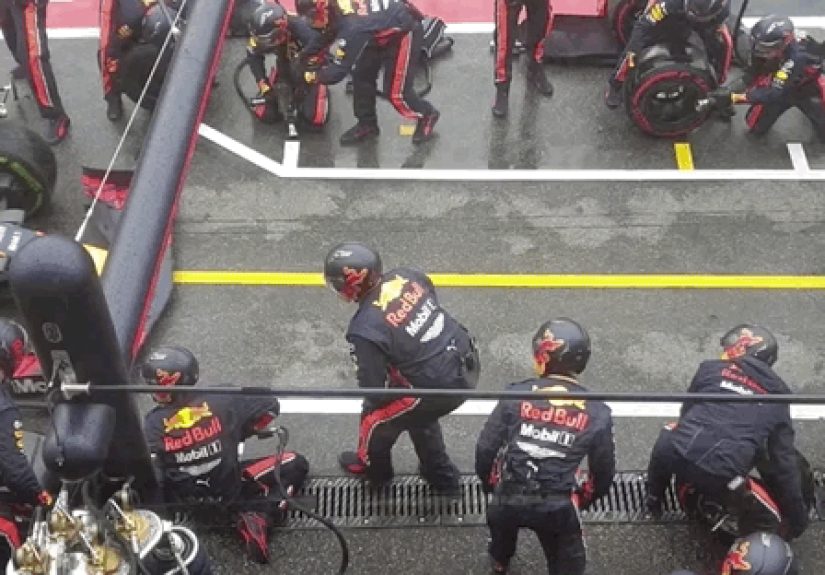
The fastest tire change (pit stop) in Formula 1 history is an almost-rude-to-your-eyes 1.80 seconds. That’s not “pretty quick.”
That’s “you blinked and accidentally missed a world record.”
The Blink-and-You-Miss-It Record: 1.80 Seconds
The current benchmark everyone chases is 1.80 seconds, set by McLaren for Lando Norris at the
2023 Qatar Grand Prix. One moment the car stops; the next moment it’s already leaving like it forgot it left the oven on at home.
What makes this record extra wild is the context: Qatar 2023 was a race weekend where teams were forced into frequent pit activity under strict tire-use
constraints. More stops usually means more chances to mess upyet McLaren delivered the cleanest, fastest “four tires off, four tires on” moment the sport
has ever logged.
What Counts as a “Pit Stop Time” (and What Doesn’t)
When fans argue pit stop records, they’re often mixing up three different clocks:
- In-lane time: from pit entry line to pit exit line (includes driving through the lane).
- Total pit loss: how much lap time you lose compared to staying on track (depends on track layout and traffic).
- Stationary time: the car is stopped in the boxthis is the headline number for “fastest tire change.”
That last onestationary timeis the number used for the wow-factor clips and the official “fastest pit stop” bragging rights.
It’s the pure tire-change choreography, stripped of speed limit, entry angle, and whether the driver found the pit box like it was a hidden Easter egg.
Anatomy of a Sub-Two-Second Stop
A modern F1 tire change looks like chaos if you’re seeing it for the first time. But it’s not chaosit’s a rehearsed sequence where everyone has a single
job, a single position, and a single mission: do the same perfect movement every time, even when the car arrives a little crooked and your heart rate is
basically a drum solo.
Before the car arrives: the “quiet sprint”
The pit crew is staged like a Broadway production, except the props are carbon fiber and the consequence of missing your mark is a disaster.
Fresh tires are ready, wheel guns are connected to air lines, and the crew is balanced on the edge of motion. Timing begins when the car is stationary,
but the real pit stop starts earlierbecause positioning is everything.
0.0 to ~0.6 seconds: jack hits, guns bite
The moment the car halts, the front jack engages and the car gets lifted. The wheel gunners (one at each corner) immediately hit the single center-lock
wheel nut with pneumatic wheel guns. Wheel-off and wheel-on mechanics work in a rhythm that’s designed to overlap, not wait. In elite stops, the “wheels off”
moment happens insanely earlyaround the time your brain is still processing that the car has actually stopped.
~0.6 to ~1.2 seconds: wheels off, wheels on
Each corner is a mini-team. One person pulls the old wheel away, another slots the new wheel onto the hub. The motion is practiced so much that it becomes
“muscle memory,” except the muscles are wearing fireproof gear and operating under stadium-level pressure.
~1.2 to 1.80 seconds: tighten, verify, release
Tightening a wheel nut isn’t just “zap and hope.” Teams rely on confirmation systems and procedural checks because a loose wheel is a safety nightmare.
The final release is controlledoften via a “traffic light” systemso the driver only leaves when the car is secure and the lane is safe. A great stop
is fast, but a great team is fast and boringly correct.
Why the Fastest Tire Change Is So Hard in Modern F1
Cars are bigger and tires are heavier
Today’s cars are physically larger than earlier eras, and the tires are substantial. That matters because pit work is not done by robots on rails; it’s done
by humans moving heavy equipment precisely, repeatedly, in heat, noise, and chaos. Shaving hundredths of a second now is like trying to make a racecar lighter
by removing the driver’s eyelashes.
One crew, two cars, all weekend
F1 teams generally use one pit crew to service both cars. That means the same group may do dozens of live stops across practice, qualifying weekends with
sprint formats, and race day. The challenge isn’t only hitting one record-breaking stopit’s staying sharp stop after stop, because fatigue is real and
the sport does not pause for your legs to stop shaking.
Safety pressure is always in the room
The public sees the highlight: “1.80 seconds!” The teams see the risk: a mis-torqued wheel nut, a jack snag, an unsafe release into traffic. F1 has
tightened procedures over time, including directives designed to prevent anticipation and ensure steps can’t be completed “too fast” for the checks to be real.
Speed lives under the shadow of safety, and that’s a good thing.
The Gear That Makes It Possible
The single center-lock wheel nut
F1 wheels use a single center nut rather than multiple lug nuts. That choice is basically the foundation of modern pit stop speed: one fastener per corner,
designed for rapid removal and reinstallation. It’s also why the wheel gun is such a critical tooland why every corner’s timing must be almost identical.
Pneumatic wheel guns and overhead lines
Those wheel guns are not your neighborhood tire shop’s impact driver. They’re specialized, powerful, and tuned for one job: engage instantly, operate cleanly,
and deliver consistent results. Overhead rigs help keep hoses from tangling, because nothing ruins a “fastest pit stop” moment like turning the pit box into
a jump-rope competition.
Jacks, stabilizers, and backup roles
The front and rear jack operators are the anchors of the stop. Stabilizers keep the car steady so the wheels align smoothly. Many teams also keep spare jack
operators and safety staff ready, because F1 is built on redundancy: the fastest teams plan for the moment something goes wrongso the moment stays fast anyway.
Training Like Athletes (Because They Are)
The pit crew isn’t a group of mechanics who “also do pit stops.” At top teams, pit work is treated as a performance skill. It’s trained, measured, refined,
and obsessed over like qualifying laps.
Repetition plus ruthless video review
Teams run practice stops constantlythen review footage frame by frame. They look for wasted motion, tiny hesitations, wheel alignment micro-errors, and
the kind of body positioning details that sound ridiculous until you realize a tenth of a second is the difference between “great stop” and “we lost track
position and now we’re yelling into the radio.”
Strength and precision under fatigue
Pit work is explosive: sprint, brace, lift, align, tighten, release. You need strength, but you also need finesse, because the wheel has to slide on cleanly
and the gun has to seat properly. When the race is brutal and the temperature is nasty, the crew still has to perform like it’s their first stop of the day.
Communication without talking
People assume the crew is chatting the whole time. In reality, the stop is so short that most “communication” is muscle memory, hand positioning,
and the release signal. The driver focuses on the lights. The crew focuses on execution. Everyone else tries not to breathe for 1.80 seconds.
Fast Pit Stops Win Races: Strategy in Real Life
A record pit stop is fun, but pit speed also changes outcomes. A clean stop can make the undercut work, protect track position, or turn a Safety Car window
into a “free” tire change. A slow stop can take a driver from clean air into trafficwhere even a faster car becomes a frustrated car.
The undercut: the pit stop as a weapon
The undercut is simple: pit earlier, get fresh tires, push hard, and use the extra grip to leapfrog a rival when they pit. But it only works if the stop is
tidy. If your crew loses half a second, the undercut can turn into an “oops, now we’re behind a slower car and contemplating our life choices” situation.
When 0.3 seconds ruins your Sunday
In modern F1, cars are often separated by tiny margins. Losing three tenths in the pits can negate a whole lap of hard pushing. That’s why teams care about
consistency almost as much as raw speed. One record-breaking stop is cool; a season of reliably fast stops is championships-level useful.
Records, Rivals, and the Arms Race in the Pit Lane
McLaren’s 1.80-second stop didn’t appear out of nowhere. It was the next step in a pit-lane sprint that’s been accelerating for years. Before McLaren,
Red Bull set the standard with a 1.82-second stop for Max Verstappen in Brazil in 2019a record that stood for four seasons and made every
other crew look like they were changing tires in oven mitts.
What’s fascinating is that the “fastest of the year” isn’t always the all-time record. Some seasons top out around the high-1.8s or low-1.9s, depending on
regulation tweaks, equipment, and how cautious teams need to be. The all-time record sits there like a dare: Sure, you can try… but you’ll have to be perfect.
How to Watch It Like a Pit-Crew Nerd (In a Good Way)
If you want to truly appreciate the fastest tire change in F1 history, don’t just watch it once. Watch it the way teams watch it:
- Replay in slow motion: focus on one corner at a time. The symmetry is the point.
- Watch the front jack first: the “lift” timing sets the whole stop’s tempo.
- Then watch the gunners: the gun engages immediately and cleanlyno wobble, no re-seat.
- Look at wheel alignment: the new wheel slides on like it’s guided by magnets.
- Finally, watch the release: the car leaves only when the system says it’s safe.
And here’s the most important viewing tip: don’t blink. Seriously. This is the rare sports highlight where your eyelids are the main competitor.
What It Feels Like Up Close: of Pit-Stop “Experience”
The first time you try to “really” watch an F1 pit stop, you realize your eyes have been lying to you. On TV, it looks like: stop… chaos… go. In person
(or even on a high-frame-rate replay), it looks more like a magic trick where the magician refuses to explain anything, and the audience is left whispering,
“Waithow did the wheel already come off?”
I remember doing the classic fan move: pausing the video at the exact moment the car stops, then dragging the timeline one tiny notch at a time like I’m
analyzing security footage for a heist. At normal speed, the McLaren 1.80-second record is basically a jump cut. But frame-by-frame, you can see the real
story: the front jack is perfectly centered, the gunners don’t “search” for the nut (they already know exactly where it will be), and the wheel-on mechanics
place the tire with a confidence that screams, “I have done this a terrifying number of times.”
What surprised me most is how quiet the decision-making feels. Not quiet in soundwheel guns are loud enough to make your skeleton humbut quiet in
communication. There’s no visible hesitation, no “you go, no you go.” Everyone moves because the choreography tells them to move. It’s like watching a
perfectly rehearsed dance, except the dancer is a 1,700-pound car that costs more than my entire neighborhood.
The other weirdly emotional part is the teamwork. Sports talk loves lone heroes, but pit stops are the opposite of that. The fastest tire change isn’t
one superstar mechanic. It’s a group of people doing their individual jobs so cleanly that it becomes one single action. When it works, it’s satisfying
in the same way a perfect drumline is satisfying: every hit lands exactly where it should, and the rhythm feels inevitable.
It also changes how you watch races. Once you’ve “trained” your brain to notice pit work, you start reacting to tiny things: a wheel that doesn’t seat
instantly, a gunner who has to re-engage, a rear jack that drops a fraction late. Those micro-moments used to be invisible. Now they feel loud, because you
know that two tenths is a lifetime in F1.
And if you ever want to humble yourself, try recreating the concept at homesafely, with something harmless. Time yourself swapping four objects from one box
to another with perfect alignment, no fumbling, and no dropped pieces. You’ll discover a powerful truth: F1 pit crews aren’t just fast. They’re fast while
being exact. That’s the part that makes the 1.80-second record feel less like “they hurried” and more like “they mastered time for a living.”
Conclusion
The fastest tire change in Formula 1 history isn’t just a fun clipit’s a snapshot of what makes the sport different. F1 is engineering, strategy,
and human performance stacked on top of each other until the margins become microscopic. McLaren’s 1.80-second stop proves that perfection is possible,
at least for a heartbeat.
So yeswatch the record. Rewatch it. Slow it down. Pick a corner and follow it like it’s a mystery. Because in 1.80 seconds, you’re not just seeing a tire
change. You’re seeing a team execute a near-flawless, high-speed ritual where every movement has a purposeand the purpose is winning.