Table of Contents >> Show >> Hide
- What are trans fats?
- How are industrial trans fats made (and why did anyone do this)?
- Are trans fats bad for you?
- Waitdidn’t the U.S. ban trans fats?
- Where are trans fats found today?
- How to spot trans fats on a label (without needing a PhD in Snackology)
- Are natural trans fats just as harmful as artificial ones?
- How much trans fat is “too much”?
- Healthier fat swaps that don’t taste like sadness
- How to reduce trans fats in real life
- Trans fats vs. saturated fats: don’t mix them up
- Quick myth-busting: common trans fat misunderstandings
- Conclusion: So, are trans fats bad for you?
- Experiences: What trans fats look like in everyday life (and what people learn the hard way)
Trans fats have a reputation, andunlike most internet dramathey earned it. These fats are famous for showing up in
pastries, fried foods, and “snacks that somehow taste better when you’re stressed,” then quietly making your heart’s
job harder. The good news: trans fats are far less common in the U.S. food supply than they used to be. The not-so-fun
news: they can still sneak into certain foods, especially if you trust the front of the package more than the ingredient list.
Let’s break down what trans fats are, why they exist, what they do in your body, how U.S. regulations changed the game,
and how to keep your intake as low as possiblewithout turning grocery shopping into an Olympic endurance event.
What are trans fats?
“Trans fat” (short for trans fatty acids) is a type of unsaturated fat. The word “trans” refers to the shape of the
fat moleculebasically, how its atoms are arranged. That shape matters because it changes how the fat behaves in food
and how your body handles it.
Two main types: natural vs. industrial
Trans fats come from two places:
- Naturally occurring trans fats: Found in small amounts in meat and dairy from ruminant animals (like cows and sheep).
- Industrially produced trans fats: Made when manufacturers partially hydrogenate vegetable oils to make them more solid and shelf-stable.
These are the “artificial trans fats” that public health experts have targeted for decades.
If trans fats were a movie, natural trans fats are the minor background character. Industrial trans fats are the villain
with way too much screen time.
How are industrial trans fats made (and why did anyone do this)?
Industrial trans fats are largely created through partial hydrogenation, a process that adds hydrogen to liquid vegetable oils.
This makes oils more solid at room temperatureuseful for spreads, baking, and frying.
For food companies, partially hydrogenated oils used to be a dream ingredient because they:
- Improved texture (think flaky pie crusts and crisp cookies)
- Extended shelf life (the snack still tastes “fresh-ish” weeks later)
- Handled high-heat frying well (fast food loved this)
- Were cheaper than some alternatives
So yes, trans fats helped make certain foods taste and feel amazing. Unfortunately, they also helped make arteries less amazing.
Are trans fats bad for you?
In a word: yesespecially industrial trans fats. Health authorities have been blunt about this for years because the evidence is consistent:
trans fats negatively affect cholesterol levels and are linked to a higher risk of heart disease.
What trans fats do to cholesterol
Trans fats are known for a double hit:
- They raise LDL (“bad” cholesterol)
- They lower HDL (“good” cholesterol)
That combo is a big reason trans fats are associated with higher cardiovascular risk. Think of LDL as cholesterol delivery trucks
that sometimes drop boxes in the wrong neighborhood (your artery walls), while HDL is the cleanup crew. Trans fats add trucks
and fire some of the cleaners. Rude.
Heart disease risk: why even small amounts matter
Research has found that even relatively small intakes of trans fats are associated with increased heart disease risk.
That’s why many recommendations boil down to: keep trans fat intake as low as possible in a nutritionally adequate diet.
Waitdidn’t the U.S. ban trans fats?
Sort of. The U.S. took major steps to remove partially hydrogenated oils (PHOs)the main source of industrial trans fatfrom foods.
The FDA determined PHOs were no longer “generally recognized as safe” and set compliance timelines that effectively pushed them out of most products.
However, trans fat isn’t completely gone because:
- Small amounts occur naturally in certain animal products.
- Very low levels can appear in some oils and processing methods.
- Labeling rules can allow “0 g trans fat” per serving even when a food contains a small amount.
Translation: industrial trans fats are dramatically reduced in the U.S., but your best strategy is still to know where
they hide and how labels work.
Where are trans fats found today?
Because PHOs were widely removed from many foods, the classic “trans fat hotspots” are less common than they used to be.
But trans fats can still show upespecially in certain packaged baked goods, frosting, microwave popcorn, and fried foods
depending on ingredients and preparation methods.
Common food categories to watch
- Packaged baked goods: pies, pastries, cookies, doughnuts, shelf-stable cakes
- Frosting and creamers: some non-dairy creamers and whipped toppings
- Snack foods: certain crackers, chips, and “crispy” snacks made with shortening
- Fried foods: depending on the oil used (and how often it’s reused)
- Older-style shortenings: some baking shortenings can still contain trans fats unless reformulated
And don’t forget the “natural trans fats” category:
- Beef and lamb
- Butter, milk, cheese
Those natural amounts tend to be much smaller than what people used to get from PHOs, but they’re part of why “zero forever”
is hard to promise.
How to spot trans fats on a label (without needing a PhD in Snackology)
Step 1: Check the Nutrition Facts panel
Look for “Trans Fat” under “Total Fat.” If it lists a number greater than 0, that’s straightforward: the product contains trans fat.
Step 2: Know the “0 grams” loophole
Here’s the plot twist: under U.S. labeling rules, a food can list 0 g trans fat if it contains less than a small threshold per serving.
That means you could eat multiple servings and end up with a meaningful amountespecially if you snack like it’s your job.
So “0 g” doesn’t always mean “none exists in the universe.” It means “low enough per serving to round down.”
Step 3: The real MVPread the ingredient list
If you see “partially hydrogenated oils” in the ingredient list, that’s the biggest red flag for industrial trans fats.
Even if the Nutrition Facts panel says 0 g trans fat, “partially hydrogenated” means trans fats are (or were) involved.
Also keep an eye out for terms like:
- partially hydrogenated soybean oil
- partially hydrogenated cottonseed oil
- shortening (not always trans-fatty, but worth checking)
Are natural trans fats just as harmful as artificial ones?
This is where nuance matters. Natural trans fats in meat and dairy exist in smaller amounts, and many concerns have focused on
industrially produced trans fats from partially hydrogenated oils.
Health guidance typically emphasizes minimizing trans fats overall, especially industrial sources. If your diet is heavy in highly
processed foods, cutting those tends to reduce trans fats and improve other nutrition factors (like sodium, refined carbs, and excess calories).
If your trans fat intake is mostly coming from occasional dairy or meat in a balanced diet, your bigger wins are often elsewherelike improving overall
fat quality and adding more fiber-rich foods.
Bottom line: you don’t need to fear a splash of milk like it’s a supervillain. But you should still aim to keep total trans fat intake low,
with special attention to industrial sources.
How much trans fat is “too much”?
Many major health organizations recommend keeping trans fats as low as possible. Unlike some nutrients, trans fats don’t come with a “recommended amount”
because your body doesn’t need them for health.
Practically, that means:
- Avoid foods with partially hydrogenated oils whenever possible.
- Limit foods that are likely to contain trans fats (certain packaged baked goods and fried foods).
- Choose fats that support heart healthespecially unsaturated fats.
Healthier fat swaps that don’t taste like sadness
Reducing trans fats is easier when you know what to replace them with. Generally, nutrition guidance encourages swapping “solid fats”
(like shortenings and certain processed fats) for unsaturated fats.
Better choices most of the time
- Oils: olive, canola, sunflower, soybean, avocado (choose what fits your cooking style and budget)
- Nuts and seeds: almonds, walnuts, chia, flax
- Fatty fish: salmon, sardines, trout
- Avocados: nature’s butter-with-benefits
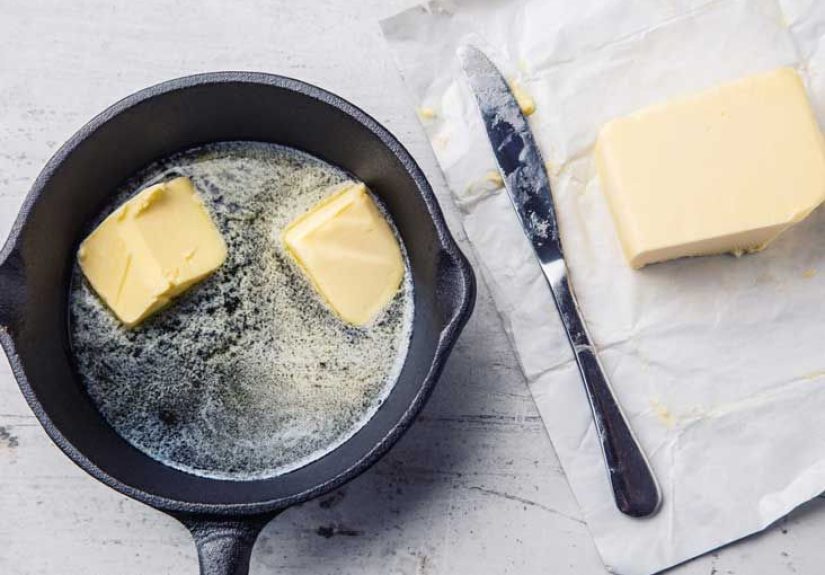
What about butter vs. margarine?
This used to be a trans-fat minefield because older margarines often relied on partially hydrogenated oils. Many modern spreads are reformulated and may contain
no PHOs, but you still have to check. Your best move is boring but effective: scan the ingredient list for “partially hydrogenated oils.”
How to reduce trans fats in real life
You don’t need a “perfect diet.” You need a few reliable habits that work even when you’re tired, busy, or being emotionally blackmailed by a box of donuts.
Grocery strategies
- Make “partially hydrogenated” your dealbreaker. If you spot it, put it back.
- Watch serving sizes. If a snack lists 0 g trans fat but you eat three servings, that rounding rule can add up.
- Choose fewer ultra-processed baked goods. Not foreverjust less often.
- Cook simple meals more often. When you control the oil, you control the plot.
Eating out strategies
- Favor grilled, baked, roasted over deep-fried when you can.
- Ask what oils are used if you’re a frequent fryer-food fan (some places are transparent; others act like it’s a state secret).
- Balance the meal. If you choose something indulgent, pair it with fiber-rich sides (salad, beans, veggies) and keep it occasional.
Trans fats vs. saturated fats: don’t mix them up
Saturated fats and trans fats both tend to be solid at room temperature, and both can affect cholesterol. But trans fats are generally considered worse because
of the LDL-up/HDL-down double effect and the strength of evidence linking them to heart disease risk.
You don’t have to treat all fats like enemies. Many fatsespecially unsaturated fatsare part of a healthy pattern. The goal is quality:
focus on unsaturated fats most of the time, keep saturated fats moderate, and keep trans fats as low as you can.
Quick myth-busting: common trans fat misunderstandings
Myth: “If it says 0 g trans fat, it has none.”
Not always. It may be low enough per serving to round down. Check the ingredient list for “partially hydrogenated oils.”
Myth: “Trans fats are only in junk food.”
They’re mostly associated with processed foods, but small natural amounts exist in some meat and dairy. The bigger concern is still industrial sources.
Myth: “Switching off trans fats automatically makes a food healthy.”
Reformulation can improve a product, but the replacement matters. Some products swap trans fats for saturated fats or add other ingredients.
Use the whole labelingredients, overall fat quality, fiber, sodium, and added sugarsto judge the big picture.
Conclusion: So, are trans fats bad for you?
Yesespecially industrial trans fats from partially hydrogenated oils. They’re strongly linked to worse cholesterol profiles and higher heart disease risk,
and that’s why the U.S. pushed them out of most foods. Still, small amounts can show up through labeling rounding rules or naturally in animal foods.
The most realistic, effective approach is simple:
avoid partially hydrogenated oils, keep packaged baked goods and deep-fried foods as occasional treats, and build your everyday meals around
unsaturated fats and whole foods. Your heart doesn’t need trans fatsand your grocery cart doesn’t need them either.
Experiences: What trans fats look like in everyday life (and what people learn the hard way)
If you’ve ever tried to “eat healthier” and immediately felt like every label was written in a secret language, you’re not alone. For many people,
trans fats become real not during a dramatic doctor’s appointment, but during a random Tuesday in the snack aislewhen they realize “0 g trans fat”
doesn’t always mean “zero,” and the ingredient list is where the truth lives.
A common experience goes like this: someone switches to “healthier” packaged snacksmaybe crackers, a protein bar, or a shelf-stable pastry because it’s convenient.
The front label looks innocent: “0 g trans fat,” “no cholesterol,” “baked, not fried.” But then they flip the package and spot it:
partially hydrogenated oil. It’s a moment of betrayal that feels weirdly personal, like the snack was gaslighting them. That discovery often becomes
a turning pointnot because it makes people obsessive, but because it teaches a practical skill: marketing lives on the front, details live on the back.
Another typical experience shows up when people start paying attention to how they feel after certain foods. While trans fats don’t cause an immediate,
dramatic symptom you can point to (they work more like “slow paperwork problems” in the body), many people notice patterns around heavily processed,
fried, or pastry-heavy eating: sluggish energy, more frequent cravings, and meals that somehow don’t feel satisfying for long. When they begin swapping
those foods for meals with better fat qualitylike using olive oil at home, adding nuts or avocado, or choosing less-processed snacksthey often describe
feeling more “steady” between meals. The takeaway isn’t that trans fats are the only factor, but that improving the overall fat profile usually improves
the overall diet.
Eating out can be its own learning curve. People who try to cut trans fats sometimes start by avoiding obvious fried foodsthen realize the bigger challenge
is consistency. One week you’re ordering a grilled bowl, and the next week you’re holding crispy fries that smell like nostalgia. Many find a middle-ground
approach works best: they don’t ban fried foods forever, but they stop treating them as an everyday default. Some people pick “treat meals” on purpose,
which reduces impulse decisions. Others share fries instead of ordering their own portion, which sounds unglamorous until you realize it works.
Baking is another place where trans fat awareness changes habits. Home bakers who grew up with older shortening brands sometimes discover that the “classic”
flaky texture they remember came from partially hydrogenated oils. When they switch to reformulated shortenings or butter-based recipes, the first attempt
may feel differentsometimes softer, sometimes less crisp. Over time, many adapt by tweaking technique: chilling dough longer, using butter plus a neutral oil,
or simply choosing recipes that don’t depend on the old chemistry. The experience becomes empowering: instead of relying on mystery fats, they learn how
texture actually happens.
Finally, there’s the “label-reading confidence” experience: the moment people stop feeling overwhelmed and start scanning like pros. They learn a small set
of ruleswatch serving sizes, don’t trust “0 g” blindly, avoid “partially hydrogenated,” and choose unsaturated fats most of the time. That skill sticks.
It turns shopping from stressful into quick and intentional. And that’s the real win: not perfection, but control. Your heart gets better fuel, and you
still get to enjoy foodjust with fewer sneaky villains in the ingredient list.